
Views: 0 Author: Site Editor Publish Time: 2026-07-17 Origin: Site


Achieving the precise balance between aromatic efficacy, therapeutic benefit, and hardware longevity in an essential oil diffuser requires more than guesswork. Operators often rely on the generic advice of adding three to five drops of oil into their water reservoir. This standard recommendation fails to account for varying tank sizes, differing room dimensions, and specific hardware mechanisms. Incorrect dosing inevitably leads to wasted product, degraded hardware components like clogged ultrasonic plates, or adverse respiratory reactions from overexposure.
To optimize performance and ensure safe deployment, users must adopt a systematic approach to calculating essential oil ratios. This involves evaluating tank capacity, understanding the differences between ultrasonic and nebulizing hardware, assessing oil volatility, and factoring in spatial dimensions. Applying these metrics guarantees a consistent scent profile without crossing into olfactory fatigue or risking equipment failure.
Establishing a measurable baseline for scent throw is the first step in protecting the internal mechanisms of your Essential Oil Diffuser. The goal is to maximize aromatic output without saturating the water to a point where the device struggles to operate. The volume of the water reservoir dictates the absolute maximum oil load the unit can handle. When you exceed this load, the oil forms a thick barrier on the water's surface, preventing the ultrasonic transducer from functioning properly.
Applying a standardized dilution chart prevents the common error of under-dosing large tanks or over-dosing compact desktop models. You need to match the drop count directly to the milliliter capacity of the reservoir. The following ratios serve as a reliable baseline for pure oils in standard operating environments:
| Diffuser Capacity | Recommended Drops | Ideal Application Space | Maintenance Frequency |
|---|---|---|---|
| 100ml | 3–5 drops | Desktops, small bedrooms, bathrooms | Wipe down every 3 days |
| 200ml | 6–10 drops | Standard residential rooms, small offices | Wipe down every 4 days |
| 300ml | 9–12 drops | Open-concept living spaces, waiting areas | Weekly deep clean |
| 500ml+ | 15–20 drops | Large areas requiring careful monitoring of oil dispersion | Bi-weekly deep clean |
A strict operational constraint is the "max fill line" marked inside the reservoir. Adding water above this line prevents the ultrasonic plate from vibrating at the necessary frequency to create mist. When users see low mist output due to overfilling, they often mistakenly add extra oil to compensate. This compounds the problem, leaving heavy oil residue on the static plate. Always fill slightly below the maximum line to ensure optimal agitation.
Furthermore, using pure, unadulterated essential oils is mandatory for hardware longevity. Synthetic fillers and carrier oils alter the required dosage and leave thick, greasy deposits that permanently damage ultrasonic plates. Pure oils disperse cleanly in water when agitated, whereas adulterated oils separate and coat the internal plastic components, leading to premature hardware failure.
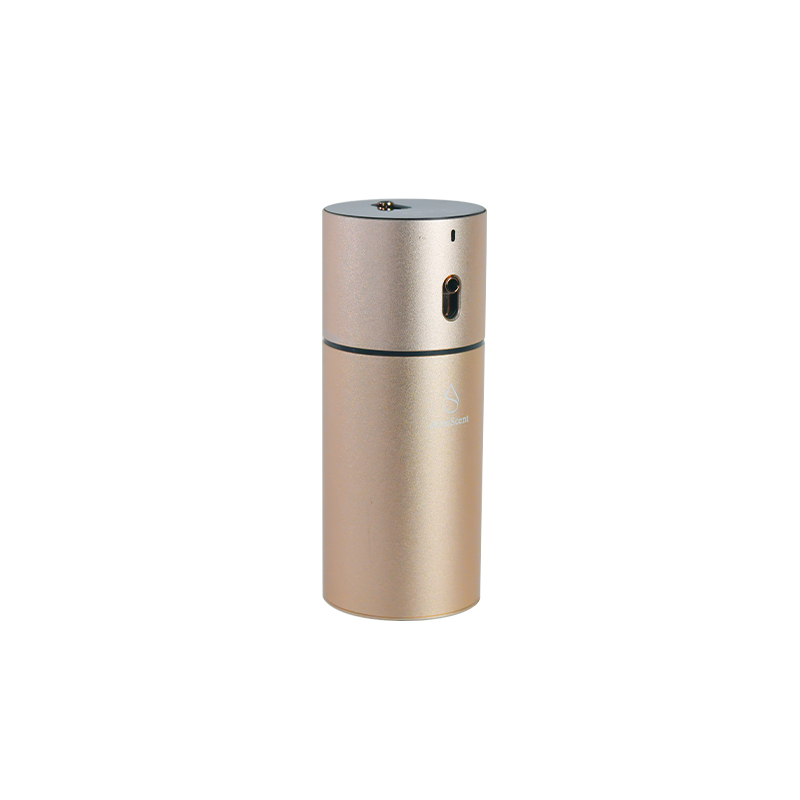
The internal mechanics of your device fundamentally change how you should approach dosing. Different technologies atomize liquids at different rates, meaning a universal drop count is ineffective across varying platforms. You must adjust your approach based on the specific hardware you deploy.
An ultrasonic aroma diffuser uses electronic frequencies to create rapid vibrations in the water, dispersing a fine mist of water and oil into the air. The dosing reality here is highly dependent on the water-to-oil ratio. Over-saturating the water with too many drops increases the fluid's density. This prevents the ultrasonic transducer from vibrating efficiently, leading to weak mist output and rapid mechanical degradation. You must stick to the baseline ratios to keep the transducer functioning.
Nebulizing systems operate without water, using pressurized air to atomize pure essential oil directly from the bottle into a micro-fine vapor. Because they do not dilute the oil, they consume product at a significantly higher rate. Dosing evaluation for nebulizers must focus on programmable run-times rather than drop counts. Setting the device to run for 10 minutes on and 50 minutes off prevents over-exposure and excessive oil consumption. You control the dose through time, not volume.
These older mechanisms rely on airflow from a fan or low heat to evaporate the oil from a pad or tray. Their dosing reality involves lower efficiency and requires continuous manual application. Heat alters the chemical composition of the oil, degrading its aromatic profile. These units are not recommended for precise, scalable scenting operations because you cannot accurately control the dispersion rate.
Not all essential oils behave identically inside a diffuser. Their chemical makeup, specific gravity, and evaporation rates dictate how many drops are required and how they interact with the hardware. You must evaluate the oil before you determine the dose.
Identifying pure oils is mandatory before establishing a dosing routine. The paper ring test—placing a drop of oil on white paper—helps identify cheap synthetic brands. Pure oils evaporate cleanly, while those cut with carrier oils leave a permanent grease ring. Diluted oils require higher drop counts to achieve the same scent throw but leave heavy, damaging residues inside the tank. You will spend more time cleaning the unit than enjoying the scent if you use adulterated oils.
Oils extracted from citrus fruits like lemon and sweet orange, along with certain herbs like peppermint, consist of small, light molecules. They disperse quickly and evaporate fast. When using top notes exclusively, you may require slightly higher initial dosing or mid-cycle replenishment to maintain the scent profile throughout the water tank's run time. They flash off quickly, leaving the water mostly un-scented near the end of the cycle.
Extracts like lavender, tea tree, and eucalyptus provide a stable, consistent scent profile. Their molecular weight allows them to evaporate at a steady rate alongside the water mist. These oils adhere closely to standard baseline ratios and form the reliable core of most diffusion blends. You can rely on the standard dilution chart when working with middle notes.
Resins and woods such as vetiver, patchouli, and cedarwood are thick and heavy. They evaporate slowly and linger in the air. Due to their high viscosity, they require conservative dosing—often just 1 to 2 drops per 100ml. Overusing base notes guarantees rapid residue buildup on the diffuser's oscillating plate, requiring immediate deep cleaning with rubbing alcohol. Treat base notes with caution to protect your hardware.
Implementing a strict operational protocol ensures consistent aromatic output and extends the lifespan of the equipment. Follow these sequential steps for every cycle to avoid common operational errors.
The physical environment heavily influences how essential oil vapor disperses. A dosage that overwhelms a small office might be entirely undetectable in a large lobby. You must assess the room before you set the dose.
Mapping the diffuser's stated mist output against the room's square footage determines if a higher oil dose or a larger hardware unit is required. Attempting to scent a 500-square-foot room with a 100ml diffuser by doubling the oil drops will only break the machine. Instead, match the tank capacity to the room size. You cannot force a small machine to do a large machine's job by simply adding more oil.
Active ventilation, high ceilings, and open windows rapidly dilute scent concentration. HVAC systems with high air exchange rates pull vapor out of the room before it settles. In these environments, rather than increasing the drop count to unsafe levels, operators should deploy multiple units strategically across the space to ensure even coverage. This maintains safe concentration levels while achieving the desired aromatic effect.
Operators must also account for olfactory fatigue—the physiological phenomenon where the nose becomes blind to a continuous scent after 15 to 20 minutes. The solution is implementing intermittent diffusion schedules rather than increasing the oil dosage. Pulsing the scent allows the olfactory receptors to reset, maintaining the perception of a strong aroma without wasting product or over-saturating the air.
When transitioning from single residential units to facility-wide scenting, procurement and operational strategies must adapt. Purchasing an essential oil diffuser bulk order ensures consistent hardware across multiple rooms in clinics, spas, or corporate environments. Consistency in hardware allows for consistency in dosing.
Standardizing operational protocols is critical when managing multiple units. Create strict dosing Standard Operating Procedures (SOPs) for staff. Provide exact drop counts per machine and mandate specific water fill levels. This prevents individual staff members from over-dosing units, which leads to hardware damage and an inconsistent client experience across different zones of the facility. You must remove the guesswork from the daily operation.
Factor in the maintenance overhead when running multiple units at maximum recommended oil capacities. High-frequency use requires scheduled deep cleaning protocols—typically a weekly cycle running water and white vinegar through the system—to dissolve mineral scale and heavy oil residues. Proper maintenance scheduling prevents unexpected hardware failures across the fleet and keeps the units operating at peak efficiency.
Ignoring baseline ratios and over-dosing the water reservoir carries immediate physical and environmental consequences. Excess essential oil acts as a solvent. Over time, it corrodes internal plastic reservoirs, degrades silicone water seals, and permanently clogs the ultrasonic transducer, rendering the unit inoperable. You will destroy the machine if you consistently exceed the recommended drop count.
Beyond hardware degradation, over-dosing introduces toxicity and health compliance risks. High-concentration diffusion around vulnerable populations requires strict oversight. Pets, specifically cats and dogs, lack certain liver enzymes necessary to process specific volatile organic compounds found in oils like tea tree, eucalyptus, and citrus. Infants and individuals with asthma or reactive airway diseases can experience severe respiratory irritation from heavy particulate concentration in the air.
To mitigate these risks, always establish a "start low, go slow" testing protocol. When introducing a new oil or deploying new hardware, start with half the recommended baseline dosage. Monitor the room for 30 minutes to assess scent intensity and ensure there are no adverse reactions before incrementally increasing the drop count in subsequent cycles. This conservative approach protects both the hardware and the occupants.
The optimal amount of essential oil is a calculated intersection of tank size, hardware type, and oil viscosity. It is never a static, universal number. Relying on accurate water-to-oil ratios protects your equipment and ensures a safe, consistent aromatic environment. When shortlisting hardware, evaluate your spatial requirements first. Choose a small ultrasonic unit for targeted areas, or invest in programmable nebulizers or larger bulk hardware for expansive spaces. This prevents the operational trap of over-dosing a small unit in an attempt to scent a large room.
A: Over-dosing increases the fluid density, preventing the ultrasonic plate from vibrating properly. This results in weak mist output, heavy residue buildup, potential corrosion of plastic parts, and an increased risk of respiratory irritation for occupants.
A: For a 300ml water reservoir, the standard baseline recommendation is 9 to 12 drops of pure essential oil. Adjust slightly based on the oil's viscosity and the room's ventilation.
A: You can only do this if you are using a nebulizing diffuser designed specifically for waterless operation. Adding pure oil to an ultrasonic diffuser without water will permanently damage the oscillating plate and internal sensors.
A: The most common cause is overfilling the water reservoir past the maximum fill line. Pour out a small amount of water to allow the ultrasonic transducer enough space to agitate the fluid and create mist.
A: Continuous diffusion can cause olfactory fatigue and overexposure. It is highly recommended to use a diffuser with an intermittent timer setting, such as 30 minutes on and 30 minutes off, if operating it overnight.
A: No. A nebulizer uses significantly more oil because it atomizes pure essential oil directly from the bottle without diluting it in water. Ultrasonic units consume oil at a much slower rate.


