
Views: 0 Author: Site Editor Publish Time: 2026-08-06 Origin: Site


The market is flooded with poorly constructed diffusers that fail within months, leak on your furniture, or lack the power to adequately scent a room. Buyers constantly struggle to identify a reliable unit that balances optimal mist output, acoustic discretion, and material longevity. You need a device that operates consistently without introducing moisture damage or mold risks to your environment. To solve this, we must establish a strict technical evaluation framework. You need to assess tank capacity, material safety, mist control, and maintenance requirements. This framework helps you select the exact model suited for your specific room size and lifestyle. Finding the best essential oil diffuser ultrasonic model requires looking past the exterior design. You must understand the internal mechanics, the plastics used, and the daily operational demands to make a sound investment.
An ultrasonic aroma diffuser operates using a small piezoelectric transducer, commonly known as a ceramic disc, located at the base of the water reservoir. When you power the unit on, this disc vibrates at ultrasonic frequencies, typically around 2.4 million times per second (2.4 MHz). These rapid vibrations create cavitation in the water. The intense pressure changes break down the surface tension of the water and the added essential oils, atomizing the liquid into microscopic particles. A small internal fan then pushes this fine mist up through the directional spout and out into your room.
This technology relies entirely on a specific water-to-oil dilution ratio. Because you mix a few drops of oil into a larger volume of water, the resulting mist carries a lighter, more dispersed scent profile. The dilution rate directly impacts how long the scent lasts and how far it travels across the room. Higher water volumes require more oil to achieve a noticeable fragrance. You control the strength by adjusting the number of drops you add to the tank.
This manual oil-loading process requires you to physically drop oils directly into the water reservoir before each use. You must measure the drops based on your personal preference and the tank size. This contrasts sharply with nebulizing devices. Nebulizers do not use water at all. Instead, they attach directly to the essential oil bottle and use pressurized air to atomize the pure oil via the Bernoulli principle. Nebulizers deliver a much stronger, highly concentrated scent but consume your expensive oils at a significantly faster rate.
You should prioritize an ultrasonic model if your ideal user profile favors subtle, continuous scenting. These devices excel at creating a gentle background fragrance rather than intense, overwhelming bursts of aroma. They are perfect for daily use in living rooms, bedrooms, and home offices where you want a pleasant atmosphere without experiencing olfactory fatigue. If you run a nebulizer in a small office, the scent often becomes overpowering within ten minutes. An ultrasonic unit provides a steady, manageable output.
A significant secondary benefit is slight ambient humidification. Because these devices emit a water-based mist, they add a small amount of moisture to the air. While they cannot replace a dedicated room humidifier designed to output gallons of water a day, this micro-humidification provides localized relief in dry climates or during winter months when indoor heating dries out the air. It helps soothe dry skin and respiratory passages slightly while delivering your chosen aromatherapy.
Acoustic profiles differ greatly between the two technologies. Ultrasonic models produce a soft, rhythmic water trickle and a very low internal fan hum, usually registering under 30 decibels. Many users find this white noise relaxing and conducive to sleep. Nebulizers, however, rely on an internal air pump. This pump often creates a distinct vibrating hum that can be highly distracting in quiet environments. If you need a device for a bedroom, a nursery, or a meditation space, the acoustic discretion of an ultrasonic unit is vastly superior.
Affordability remains a major deciding factor. Ultrasonic models are generally much more cost-effective upfront compared to nebulizing alternatives. The internal components—a ceramic disc and a small fan—are simpler to manufacture than high-pressure air pumps and custom glass nebulizing nozzles. This lower barrier to entry allows you to experiment with aromatherapy without a massive initial investment. You can easily place multiple units in different rooms for the cost of a single high-end nebulizer.
Tank size directly dictates how you should use the device and where you should place it. Small capacity models typically hold between 100ml and 150ml of water. Manufacturers engineer these for localized use. They work perfectly on office desks, in small bathrooms, or on bedside tables. They effectively cover spaces up to 150 square feet. The primary benefit of a small tank is frequent water turnover. You use the water quickly, meaning you empty and refill it often. This prevents water from stagnating and keeps the internal reservoir much cleaner over time.
Large capacity models hold anywhere from 300ml to over 500ml. You need these larger tanks for open-concept living spaces, large master bedrooms, or areas exceeding 300 square feet. They offer extended runtimes, often operating for 10 to 14 hours continuously on a single fill. This means you do not have to monitor the water level or refill them multiple times a day.
However, you must understand the output trade-off. A larger tank dilutes the oil much more than a smaller tank. If you put five drops of oil in a 100ml tank, you get a distinct, easily recognizable scent. If you put those same five drops in a 500ml tank, you will barely smell it. Larger tanks require significantly more drops of essential oil to maintain the same scent strength. You will consume more oil per fill to achieve the desired room coverage.
| Tank Capacity | Ideal Room Size | Typical Runtime | Best Use Case |
|---|---|---|---|
| 100ml - 150ml | Up to 150 sq ft | 3 - 5 hours | Desks, bathrooms, nightstands |
| 200ml - 300ml | 150 - 300 sq ft | 6 - 8 hours | Standard bedrooms, small kitchens |
| 400ml - 500ml+ | 300+ sq ft | 10 - 14 hours | Open living rooms, large basements |
The internal reservoir material is the most important safety component of the entire device. It must be constructed from medical-grade, BPA-free plastics. Polypropylene (PP) is the industry standard for high-quality units. Essential oils are highly concentrated plant extracts. Citrus oils, in particular, contain high levels of a compound called limonene. Limonene acts as a natural solvent. If a manufacturer uses cheap, non-grade plastic like standard polystyrene, citrus and caustic oils will literally melt or degrade the reservoir over time. This leads to toxic plastic compounds leaching into your mist and eventual device leakage.
Exterior materials dictate aesthetic longevity and how well the unit handles daily wear and tear. Ceramic, glass, and metal outers offer a premium look and resist degradation from stray oil drops. They integrate beautifully into high-end home decor. Conversely, many budget models use plastic faux-wood finishes. While affordable, these finishes are essentially printed films applied over a plastic base. Over time, exposure to water, accidental oil spills, and general handling can cause this faux finish to peel, bubble, or warp. If you choose a plastic exterior, opt for solid, matte colors rather than printed wood grains for better visual durability.
Basic models only offer a simple on/off switch, running until the water depletes. Advanced models provide intermittent and continuous misting modes. Intermittent mode is necessary for preventing olfactory fatigue. The human nose quickly adapts to constant smells, causing you to stop noticing the fragrance after about 15 to 20 minutes. By pausing the mist every 30 seconds, an intermittent setting allows your olfactory receptors to reset. You continue to smell the oil for hours without adding more drops to the tank.
High and low output toggles are equally important for environmental control. They help you manage localized humidity levels. If you run a high-output device in a small, cool room, the mist will not evaporate into the air quickly enough. It will settle as condensation on surrounding furniture, potentially damaging wood finishes, warping books, or shorting out nearby electronics. A low output setting prevents this moisture buildup while still delivering a steady stream of aroma.
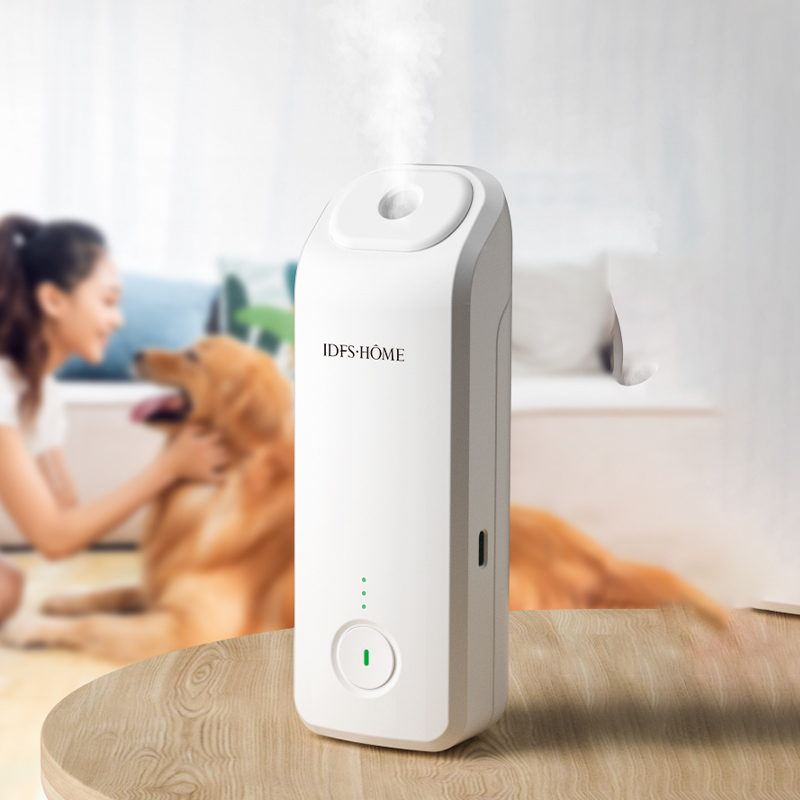
When selecting an essential oil machine, you face a direct trade-off between premium aesthetics and functional durability. High-end models often feature beautiful glass or ceramic domes. They offer superior interior design integration, looking like art pieces rather than appliances. However, they are inherently fragile. A simple bump while cleaning or a curious cat can shatter the cover instantly. Furthermore, the thick walls of ceramic or glass often force manufacturers to use smaller internal water reservoirs to keep the overall footprint manageable.
Contrast this with standard plastic models. They are highly durable, lightweight, and completely shatterproof. If you knock a plastic unit off a table, it will likely survive without a scratch. The trade-off is visual appeal. Standard plastic units look exactly like what they are: functional household appliances. You must decide if household safety and drop-resistance outweigh the desire for a premium aesthetic, especially in homes with hard floors, children, or pets.
The market now offers smart models featuring Wi-Fi connectivity, smartphone app controls, and voice assistant integration. These features allow you to schedule misting times, check water levels remotely, or change LED colors from your phone. However, you must evaluate the practical utility of these features against the increased risk of electronic failure. Every additional sensor, printed circuit board (PCB), and wireless chip introduces a new potential point of failure. Water and complex electronics are natural enemies. A simple unit with physical buttons often outlasts a smart unit simply because there is less circuitry to short out from ambient moisture.
LED lighting integration is standard on almost all models today. While color-changing lights add ambiance to a living room, you must prioritize a "lights-off" feature. If you intend to use the device in a bedroom, the ability to run the mist while turning off all illumination is an absolute necessity. Even a small, glowing indicator light can disrupt sleep for light sleepers. Always verify that the model allows independent control of the mist mechanism and the LED array.
Ultrasonic diffusers are the most popular type globally due to their low barrier to entry. You can find models ranging from extremely cheap to moderately expensive. This affordability allows anyone to start using essential oils immediately without saving up for a major appliance.
However, you must avoid ultra-cheap models found on discount marketplaces. Devices sold at rock-bottom prices cut corners on internal components. They use weak ultrasonic plates that fail after a few weeks and cheap plastics that degrade rapidly. They also lack meaningful warranty support. The best models balance an accessible price point with proven motor longevity and manufacturer backing. Long-term value comes from buying a mid-range unit once, rather than replacing a cheap, broken unit three times a year.
The type of water you use dictates the lifespan of your device. The chemical reality of hard tap water is a major implementation risk. Tap water contains dissolved minerals like calcium and magnesium. When the ultrasonic disc atomizes the water, these minerals do not evaporate. They are left behind, forming a hard, white crust on the ceramic plate and the reservoir walls.
This mineral scaling will permanently damage the ultrasonic disc. It restricts the disc's ability to vibrate at the required 2.4 MHz frequency, drastically reducing mist output and eventually burning out the motor as it works harder to push through the scale. To ensure optimal device lifespan, you face the ongoing cost and logistical requirement of sourcing distilled or filtered water. Distilled water contains zero parts per million (PPM) of dissolved solids, ensuring the ultrasonic plate remains clean and functional for years.
Maintenance is not optional; it is a strict requirement. You must implement a daily cleaning protocol. This involves emptying any residual water after use and wiping the reservoir completely dry with a clean cloth or paper towel. Leaving stagnant water in the tank creates a perfect breeding ground for bacterial biofilms and pink mold (Serratia marcescens). You must never let water sit in an unused unit for days.
Beyond daily wiping, you must perform a deep-cleaning process every few weeks. Oil residue is sticky and builds up over time, trapping dirt and altering the scent of fresh oils. Follow this specific protocol to maintain your unit:
You must adhere strictly to the specific usage instructions for your purchased model. Manufacturers design these devices with specific tolerances. Ignoring these guidelines will instantly void your warranty and ruin the machine.
The most common way users void warranties is by ignoring the maximum fill line. Overfilling the tank prevents the ultrasonic waves from breaking the water surface, resulting in zero mist and potential water ingress into the motor housing. Additionally, using unapproved cleaning solvents like bleach or harsh abrasives will destroy the plastic. Finally, diffusing incompatible synthetic fragrance oils—which often contain chemical carriers not meant for ultrasonic atomization—can clog the mechanism and melt the reservoir.
Placement risks require careful consideration. Keep your mist diffuser away from unsealed wood furniture, as prolonged exposure to moisture will warp the wood or strip the finish. Keep it away from laptops, televisions, and other electronics to prevent internal condensation. Avoid placing it directly under or next to HVAC vents, as forced air will disrupt the mist plume and push the moisture directly onto nearby walls, causing paint damage.
Pet and child safety is a major concern. The water inside the reservoir contains concentrated essential oils. Accidental spills pose a significant ingestion or skin contact hazard for small children and animals. Place the unit on a stable, elevated surface out of reach. Furthermore, you must research pet-safe essential oils before diffusion. Oils like tea tree, eucalyptus, and peppermint are highly toxic to cats and dogs when inhaled or ingested. Always consult a veterinarian regarding the scents you plan to use in a shared household.
A: They are highly affordable, produce a subtle and customizable scent profile, and offer the dual benefit of acting as a micro-humidifier. This combination of low cost, ease of use, and gentle output makes them ideal for everyday home use compared to more intense, expensive nebulizers.
A: Yes, they can. High output in cool or already humid rooms can cause localized condensation because the mist fails to evaporate quickly. We recommend using low-output settings and placing the device on water-resistant surfaces or trays to protect wood finishes.
A: You should empty residual water and wipe the reservoir dry daily. Perform a deep clean with white vinegar or rubbing alcohol every 3 to 5 uses, or whenever you switch scent profiles. This prevents oil buildup and adheres to manufacturer guidelines.
A: Yes, but only if the device uses high-quality, medical-grade plastics. Citrus oils contain compounds that can degrade cheap plastics. Using BPA-free Polypropylene (PP) reservoirs is mandatory to prevent the plastic from melting, which causes leaks and voids warranties.
A: The most common culprits are mineral scale buildup on the ceramic ultrasonic plate, overfilling the reservoir past the maximum water line, or a burnt-out internal motor. Check the water level first, then clean the plate gently with vinegar.
A: No. Diffusers output a very small amount of moisture specifically designed to carry essential oil scents into the air. Humidifiers are built with much larger tanks to significantly alter and raise the overall humidity levels of an entire room.
A: A good baseline ratio is typically 9 to 12 drops for a 300ml tank. You can adjust this based on the oil's viscosity and your desired scent strength. Remember that ultrasonic models require manual dropping, so you control the exact concentration.


