
Views: 0 Author: Site Editor Publish Time: 2026-08-08 Origin: Site


Traditional plug-in fragrance devices restrict your placement options. You are forced to position them near wall outlets, leaving centerpieces, floating shelves, and high-traffic walkways without proper scent coverage. Moving a standard unit means unplugging it, resetting timers, and disrupting the room's atmosphere. We see this problem constantly in both residential setups and commercial spaces. You need consistent, long-term scent dispersion without the tether.
Switching to battery power introduces new challenges. Most entry-level portable units suffer from rapid battery drain, weak scent throw, and inconsistent output. They fail to last through a standard workday or a full night's sleep. To solve this, you must evaluate the internal mechanics of these devices. Selecting the right essential oil diffuser rechargeable requires looking past the exterior design.
You have to analyze the diffusion technology, battery capacity, material safety, and maintenance demands to ensure reliable, long-term performance. This guide breaks down the exact specifications and field-tested criteria you need to evaluate before deploying a battery-powered fragrance system in any space.
The way you plan to use the device dictates the hardware specifications you need. Room-to-room portability demands lightweight construction and spill-resistant water tanks. This allows you to carry the unit from a home office to a living room without interrupting the scent flow or making a mess. On the other hand, stationary use in off-grid areas—like floating kitchen islands, bathroom shelves, or reception desks—prioritizes aesthetic integration and sustained output over physical mobility.
We define the baseline requirement for long-term fragrance in a battery-operated format as eight or more hours of continuous or intermittent output. This duration covers a standard sleep cycle or a full workday, eliminating the annoyance of mid-day recharging. Devices that fail to meet this eight-hour threshold usually rely on undersized batteries or inefficient atomizers. They are impractical for set-and-forget applications.
You must calibrate your scent throw expectations for a rechargeable aroma diffuser against standard plug-in models. Tethered units draw continuous high voltage from the wall to power heavy-duty fans and pumps. Battery-operated units have to manage power draw carefully to avoid killing the cell in an hour. Because of this, a portable unit often requires strategic placement closer to the user or the use of intermittent pulsing settings to achieve a similar olfactory impact without draining the battery prematurely.
Square footage directly impacts how a portable scent machine performs. A compact device built for a 150-square-foot bedroom will completely fail in a 600-square-foot open-plan living area. You have to evaluate the manufacturer's coverage area claims against the actual dimensions of your target room. This prevents under-scenting the space and overworking the device's motor.
Ambient airflow and HVAC systems heavily alter the effectiveness of cordless units. Forced-air heating or cooling rapidly disperses scent particles, diluting the fragrance before it reaches the intended zone. If you place a portable unit near an HVAC return vent, the system will pull the scent straight out of the room. Positioning it near a supply vent can help push the aroma across the space, but only if the device has enough output to match the air volume.
Coverage area metrics generally fall into distinct categories based on the internal technology. Ultrasonic models typically cover up to 200 square feet, making them suitable for localized scenting near a desk or bed. Nebulizing models, which disperse pure essential oils without water, can push fragrance across 500 to 1000 square feet. Continuous diffusion in unventilated spaces requires caution. You must use intermittent settings to prevent the accumulation of volatile organic compounds (VOCs) and to stop olfactory fatigue. This ensures the scent remains perceptible and the indoor air quality stays balanced.
| Room Size | Recommended Technology | Expected Scent Throw | HVAC Consideration |
|---|---|---|---|
| Small (Up to 150 sq ft) | Ultrasonic / Evaporative | Localized, subtle | Keep away from return vents |
| Medium (150 - 400 sq ft) | High-Capacity Ultrasonic | Moderate, room-filling | Place near gentle cross-breeze |
| Large (400 - 1000+ sq ft) | Nebulizing (Waterless) | Strong, expansive | Use supply vents to aid dispersion |
Operational noise is measured in decibels (dB). It is a primary evaluation metric for any motorized device. Different motor and pump types generate entirely different acoustic profiles. A device built for a loud, bustling office can tolerate a higher decibel rating than one sitting on a bedside table. You need to understand the mechanical source of the noise. It might be the hum of an air pump, the trickling sound of agitated water, or the whir of a cooling fan. Knowing this helps you match the device to the environment.
Sleep and spa rituals demand whisper-quiet operation. Ultrasonic or evaporative models are the standard in these contexts. They usually operate below 30 dB, which is quieter than a library. Pressurized nebulizers are powerful, but they use internal air pumps that produce a noticeable vibration or humming sound, often hitting 40 to 50 dB. Some high-end nebulizers feature sound-dampening enclosures, but they can still disrupt light sleepers or interfere with the quiet required for massage therapy.
Customizable timer functions are mandatory for therapeutic and contextual use. An auto-shutoff feature after 60 or 120 minutes is perfect for sleep sessions. It ensures the device does not run dry or consume battery power while you are asleep. In office settings, interval timers are better. Setting the unit to run for 10 minutes every hour maintains a consistent background aroma without overwhelming the workspace or requiring you to press buttons all day.
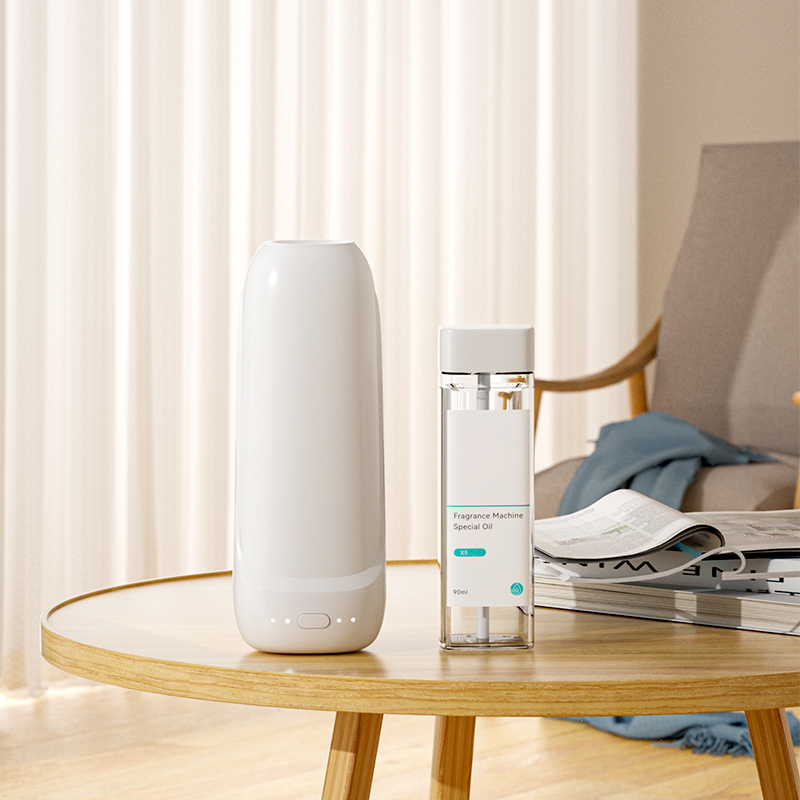
Ultrasonic technology relies on a small piezoelectric transducer. This is typically a ceramic disk located at the very bottom of the water reservoir. When an electrical current hits this disk, it vibrates at ultrasonic frequencies, usually around 2.4 million times per second. This rapid vibration creates ultrasonic waves in the water, breaking the essential oil and water mixture into microscopic particles. The device then releases these particles into the air as a fine, cool mist.
Nebulizing technology operates on Bernoulli's principle. It uses pressurized air to atomize pure essential oil. An internal air pump forces air through a small micro-tube, creating a vacuum. This vacuum pulls the essential oil from the glass or plastic reservoir up to the surface of a distribution nozzle. The high-velocity air stream shatters the oil into microscopic droplets and blows them directly into the room. It uses zero heat and zero water.
Evaporative models rely on basic airflow or gentle heat to disperse scent. In fan-assisted units, you apply drops of essential oil to a reusable absorbent pad or filter. A small internal fan blows air across the pad, accelerating the natural evaporation process and pushing the scent out. Heat-assisted models use a low-temperature heating element to warm the oil, increasing its volatility so it evaporates faster.
Evaluating the lithium-ion battery capacity is the first step in assessing true cordless performance. Battery capacity is measured in milliampere-hours (mAh). For a device to provide reliable, long-term use across multiple days or a full 12-hour cycle, you need a minimum capacity of 2000mAh to 4000mAh. Units with sub-1000mAh batteries require daily recharging and will fail to sustain output on higher intensity settings.
Charging standards dictate the convenience and speed of power replenishment. USB-C is the universal standard. It offers faster charging times and broader compatibility with existing household cables and power banks. If you see a legacy micro-USB port on a device, it usually indicates older internal circuitry and slower charging speeds. This becomes frustrating for a device meant for continuous daily use.
Pass-through charging capability is a mandatory feature for uninterrupted operation. This technology allows the device to operate while plugged into a power source without degrading the battery's lifespan. Devices lacking proper power management systems will overheat or experience accelerated battery wear if you run them continuously while charging. Verifying pass-through support ensures the unit can transition seamlessly between stationary tethered use and portable operation.
| Battery Capacity (mAh) | Estimated Run Time (Ultrasonic) | Estimated Run Time (Nebulizing) | Best Use Case |
|---|---|---|---|
| 1000mAh - 1500mAh | 3 - 5 Hours | 1 - 2 Hours | Short travel, car use |
| 2000mAh - 3000mAh | 8 - 12 Hours | 4 - 6 Hours | Bedrooms, home offices |
| 4000mAh+ | 15+ Hours | 8 - 10 Hours | Large living spaces, commercial |
In ultrasonic models, the water tank size must align logically with the battery capacity. A device boasting a 10-hour battery life is functionally useless if its 50ml water tank runs dry in two hours. Conversely, a massive 300ml tank is unnecessary if the battery dies in four hours. You have to evaluate the ratio between fluid consumption rates and battery longevity. This ensures you do not have to constantly intervene to refill water or recharge the unit.
Intermittent mist settings are critical for extending both battery life and fragrance duration. Operating a device on a continuous setting drains power rapidly and leads to olfactory fatigue. Settings that alternate operation—such as 30 seconds on and 30 seconds off, or 1 minute on and 5 minutes off—drastically reduce power consumption. This pulsing delivery method maintains a consistent ambient scent profile while maximizing the time between charges.
High-end nebulizing units often utilize smart vial systems or direct-bottle attachments. Instead of pouring oil into a built-in reservoir, you screw a standard 10ml or 15ml essential oil bottle directly into the atomizer head. This closed-system approach prevents spills during transport and protects the oil from oxidation. Advanced systems allow for weeks of intermittent use from a single bottle without manual refilling. This represents the peak of low-maintenance cordless design.
The chemical interaction between the volatile organic compounds (VOCs) found in essential oils and cheap plastics is a major failure point. Citrus oils contain high levels of limonene. Limonene is a natural solvent that rapidly degrades, clouds, or melts standard polystyrene or low-grade plastics. Using incompatible materials compromises the structural integrity of the device and risks leaching plastic compounds into the dispersed mist.
Evaluating build materials is necessary for longevity and safety. Internal reservoirs and atomizer components must be constructed from BPA-free polypropylene (PP) or high-density polyethylene (HDPE). These plastics are highly resistant to essential oil corrosion. Premium devices utilize tempered glass, medical-grade resins, or ceramic for the internal pathways to ensure zero chemical interaction with the fragrance.
External housings made from unglazed ceramic, stone, or treated wood offer secondary passive diffusion benefits. If a drop of oil spills on unglazed ceramic, it absorbs and slowly evaporates, adding to the room's scent profile. These materials provide superior aesthetic longevity compared to plastic housings, which yellow, scratch, or degrade under UV light exposure over time. The internal components, particularly the vibrating plate in ultrasonics or the air pump in nebulizers, must be robust enough to withstand the physical shocks associated with high-movement, portable environments.
An inherent inverse relationship exists between strong scent dispersion and battery longevity. Nebulizing technology delivers the highest scent intensity and largest coverage area, but it relies on mechanical air pumps that draw significant current. A nebulizer will drain a 3000mAh battery much faster than an ultrasonic device utilizing a low-power piezoelectric disk. You must decide whether your priority is filling a large room quickly or having a device that runs for days on a single charge.
Manufacturer run-time claims require realistic assessment. Marketing materials highlight the maximum possible battery life. They achieve these numbers by testing the device on the lowest intermittent setting (e.g., 10 seconds on, 3 minutes off). If you intend to run the device on a continuous or high-output setting, the actual battery life will be a fraction of the advertised duration. Reading the technical specifications carefully to understand the testing conditions prevents post-purchase frustration.
The inclusion of app connectivity, Bluetooth controls, or smart-home integration adds convenience. You can adjust schedules, monitor oil levels, or change LED lighting via a smartphone. However, these features introduce complex circuitry into a device that operates in a high-moisture or oil-heavy environment. This increases the risk of electronic failure over time.
Wireless connectivity causes parasitic battery drain. Maintaining an active Bluetooth connection or searching for a Wi-Fi signal consumes power even when the device is not actively diffusing scent. This standby power draw reduces the total available active diffusion time. You must evaluate whether the convenience of remote control outweighs the necessity of more frequent charging cycles and the loss of active performance.
Lithium-ion battery technology has a finite lifespan. It typically ranges from 300 to 500 full charge cycles before capacity degrades significantly. As the battery ages, the maximum run-time of the cordless diffuser naturally decreases. Understanding this limitation helps you set realistic long-term performance expectations.
Implementing best practices for charging mitigates rapid degradation. Avoid deep discharges. Constantly draining the battery to zero percent stresses the internal chemistry. Recharge the unit when it drops to 20%. If the device lacks advanced overcharge protection circuitry, leaving it permanently plugged into a charger accelerates wear. Unplugging the unit once it reaches full capacity preserves the battery's overall health and longevity.
Waterless nebulizers require strict maintenance, particularly when using highly viscous essential oils such as Vetiver, Patchouli, or Sandalwood. These thick oils dry and harden inside the micro-tubes of the atomizer, causing permanent clogs if left unattended. Routine maintenance involves running a small amount of high-proof rubbing alcohol through the device for a few minutes. This dissolves residual oils and clears the internal pathways.
Ultrasonic models demand rigorous cleaning protocols to prevent mold, mildew, and mineral scale buildup. Stagnant water provides a breeding ground for bacteria, which the device then aerosolizes into the room. Hard water leaves calcium and magnesium deposits on the piezoelectric disk, drastically reducing mist output and device efficiency. Wiping the reservoir dry after each use and performing a weekly deep clean with a water and white vinegar solution maintains optimal performance and hygiene.
Establishing guidelines for safe diffusion intervals prevents sensory adaptation, commonly known as olfactory fatigue. When exposed to a constant scent, the human olfactory system adapts and stops registering the aroma. This leads users to mistakenly believe the device has stopped working or the oil has lost its potency. Utilizing intermittent timers ensures the scent is delivered in pulses. This allows the olfactory receptors to reset and ensures the fragrance remains perceptible over long-term use.
The optimal battery-powered fragrance solution hinges on balancing battery capacity with the preferred diffusion method. Ultrasonic models provide subtle scenting, long battery life, and quiet operation, making them ideal for localized use and sleep environments. Nebulizing models offer powerful, waterless scent dispersion suitable for larger spaces, though they require larger batteries and more frequent recharging.
When shortlisting devices, apply a clear decision matrix based on environmental context. Choose a compact, evaporative, or small ultrasonic device for travel and personal desktop use. Opt for a high-capacity nebulizing unit with direct-bottle attachment for large open-plan living spaces or commercial reception areas. Select a whisper-quiet ultrasonic model with a low-light profile and auto-shutoff timers for bedside or spa use.
To finalize your selection, take the following actionable steps:
A: Battery life varies widely based on capacity and technology. A standard 2000mAh ultrasonic model lasts 4 to 8 hours on continuous mode, or up to 15 hours intermittently. High-powered nebulizers drain batteries faster, requiring a recharge after 4 to 6 hours of active use unless equipped with larger 4000mAh power banks.
A: Ultrasonic models use water and a vibrating disk to create a cool mist, offering subtle scent and lower battery drain. Nebulizing models use an air pump to atomize pure essential oil without water, providing a much stronger scent throw and larger room coverage, but consuming more battery power.
A: Yes, provided the device has sufficient battery capacity and an auto-shutoff feature. Ultrasonic models are preferred for overnight use due to their quiet operation. Ensure the unit is set to an intermittent mode to conserve battery and prevent overwhelming the room with scent while you sleep.
A: For ultrasonic units, empty residual water daily, wipe the tank dry, and clean weekly with a water and vinegar solution to remove mineral scale. For waterless nebulizers, run a few milliliters of rubbing alcohol through the system periodically to dissolve thick oil residue and prevent atomizer clogs.
A: You should only use citrus oils if the device's internal components are made from high-quality, BPA-free polypropylene (PP) or high-density polyethylene (HDPE). Citrus oils contain limonene, which melts or degrades cheap plastics, potentially ruining the device and leaching chemicals into the air.
A: This is due to olfactory fatigue, or nose blindness. Your brain adapts to continuous scents and stops registering them. To fix this, use the intermittent timer settings on your device to give your olfactory receptors time to reset.


