
Views: 0 Author: Site Editor Publish Time: 2026-08-24 Origin: Site


Bathrooms present a hostile environment for home fragrance. Fluctuating humidity, poor ventilation, and tight spatial constraints make standard devices fail rapidly. Hot showers push ambient moisture levels past normal indoor thresholds. Adding ultrasonic mist to this already damp space actively promotes mold growth, mildew, and peeling paint. Furthermore, placing poorly insulated electronics near sinks introduces severe safety hazards. Standard units lack the environmental shielding required for safe operation next to water sources. Selecting the ideal unit requires evaluating the underlying technology—waterless, ultrasonic, or passive—against your specific square footage, outlet availability, and exhaust fan capacity. Finding the right device means prioritizing structural integrity and moisture control over aesthetics. We will break down exactly how to match the hardware to your bathroom's unique environmental load.
Full bathrooms experience extreme moisture fluctuations that fundamentally alter how fragrance devices operate. Before a shower, a bathroom might sit at a comfortable 40 percent relative humidity. Within ten minutes of running hot water, that humidity spikes to 90 percent or higher. Suspended water droplets linger in the air, eventually hitting the dew point and condensing on cold surfaces like mirrors, porcelain tiles, and granite countertops. This baseline moisture load dictates what type of device can operate safely without degrading the room's infrastructure.
Utilizing water-based systems in these environments introduces significant structural risks. When you operate a standard ultrasonic device in a room already saturated with steam, you push the moisture load past the evaporation point. The additional mist struggles to dissipate, leading to heavy condensation pooling on horizontal surfaces. Over time, this chronic dampness penetrates standard drywall, accelerates the deterioration of moisture-resistant green board, causes latex paint to blister, and creates the perfect breeding ground for toxic mold spores. Managing indoor air quality in a wet environment requires minimizing any additional water output from your fragrance hardware.
Counter space in the average bathroom is a premium commodity. Between sinks, toiletries, and daily grooming tools, finding a stable, dedicated footprint for a fragrance device is difficult. Devices with large, cumbersome water reservoirs are highly susceptible to being knocked over during routine bathroom use. You need a footprint-to-output ratio that is highly efficient, delivering maximum fragrance from a minimal physical chassis.
Electrical safety further complicates placement. The National Electrical Code mandates strict adherence to GFCI (Ground-Fault Circuit Interrupter) compliance due to the proximity of water sources. Outlets are located directly adjacent to sinks, meaning any plugged-in device sits within a high-risk three-foot splash zone. Routing standard power cables across wet countertops is a severe shock hazard. Therefore, the chosen device must feature a low-voltage DC power supply, utilize battery operation, or be positioned safely away from all splashing water. This reality severely limits viable installation locations and often rules out bulky plug-in units entirely.
Dispensing fragrance effectively relies heavily on room airflow, a dynamic that behaves erratically in bathrooms. Standard bathroom exhaust fans pull anywhere from 50 to 110 Cubic Feet per Minute (CFM). They are designed to rapidly extract moisture and odors by creating negative pressure, pulling air under the door and venting it outside. If a fragrance device operates while the exhaust fan is running, the essential oil micro-particles are immediately sucked into the ceiling grate before they can settle or scent the space. This results in massive oil waste.
Conversely, when doors are closed and fans are off, the bathroom becomes a sealed chamber. Scent particles become trapped, rapidly increasing the olfactory concentration. Without proper output control, a device will quickly overwhelm the small space, leading to scent fatigue, headaches, or respiratory irritation. Understanding how your specific bathroom vents air is critical for timing your diffusion cycles and positioning the hardware for optimal scent retention.
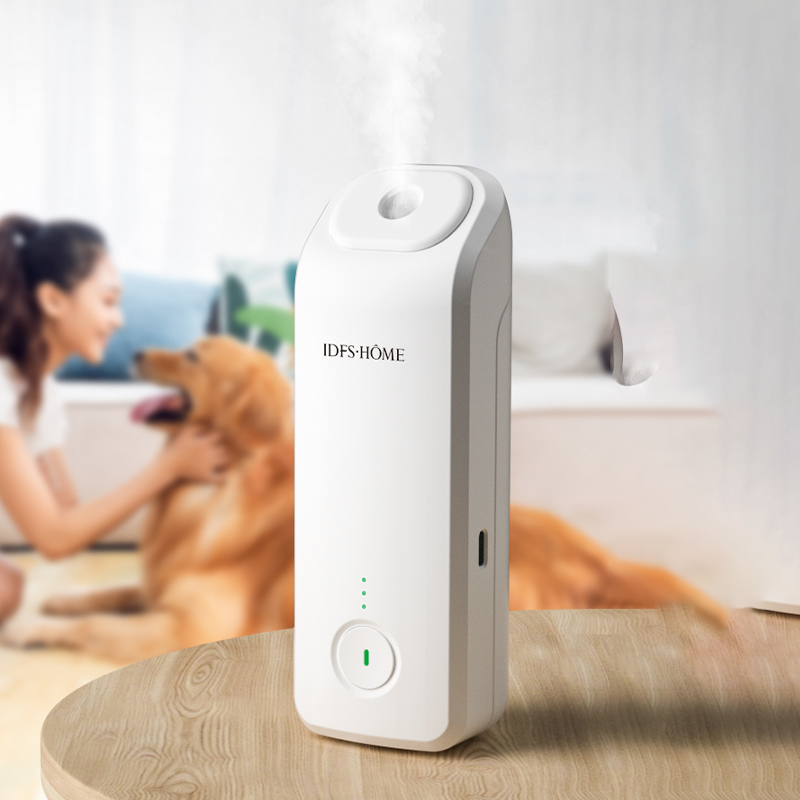
Ultrasonic technology relies on a piezoelectric transducer vibrating at roughly 2.4 million times per second to agitate a reservoir of water and essential oil. This rapid vibration breaks the liquid into a fine, cool mist that is propelled into the air by a small internal fan. It is the most common technology found in the consumer market due to its simplicity and low manufacturing cost.
The primary advantages of this technology include affordability, quiet operation, and versatile designs. Many units incorporate LED lighting, allowing them to double as functional bathroom nightlights. They are highly effective at dispersing lighter top-note oils and provide a gentle, ambient scent profile. Because they dilute the oil in water, they consume essential oils at a relatively slow rate, making them economical to run daily.
However, the drawbacks in a bathroom setting are substantial. By definition, they actively add moisture to the air. Furthermore, if tap water is used, the ultrasonic process will atomize the calcium and magnesium present in the water, depositing a fine white mineral dust across dark bathroom tiles and mirrors. To prevent this, users must supply distilled water, adding an ongoing logistical burden. Consequently, a standard room diffuser utilizing ultrasonic technology is best reserved strictly for dry half-baths or powder rooms that lack bathing facilities.
Nebulizing technology operates on Bernoulli's principle and the Venturi effect. It utilizes a pressurized air pump to force pure essential oil through a microscopic glass tube. This process shatters the raw oil into an ultra-fine, dry vapor without the use of heat or water. The resulting nanoparticles are incredibly light, allowing them to remain suspended in the air for extended periods and travel further distances.
The benefits of waterless atomization align perfectly with full bathroom environments. Because they add zero moisture to the air, they completely eliminate the risk of compounding humidity or promoting mold growth. They deliver a highly concentrated, pure scent profile that can neutralize harsh bathroom odors almost instantly. For expansive master baths, an advanced aroma machine provides unmatched coverage and intensity control, pushing scent past glass shower enclosures and partition walls.
The disadvantages center around cost, maintenance, and noise. These units carry a higher upfront price tag and consume pure essential oil much faster than water-based models. They are notoriously harder to clean, as the microscopic tubes easily clog if heavy, viscous oils like vetiver or patchouli dry inside them. Additionally, the internal air pump generates a distinct humming vibration, which can be amplified if the unit is placed on a hard, resonant bathroom vanity.
Passive scenting systems rely on natural physical processes rather than mechanical or electrical components. Reed diffusers use capillary action to draw fragrance oil up through porous rattan sticks, evaporating the scent into the air. Ceramic stones and unglazed terracotta absorb essential oils directly into their porous structure, slowly releasing the volatile compounds over several days as the oil evaporates.
The absolute greatest advantage of passive scenting is safety. Requiring zero electricity, these systems can be placed directly on the edge of a bathtub, on the back of a toilet tank, or right next to a sink without any shock hazard. They provide a steady, continuous background fragrance without demanding any mechanical maintenance, water refills, or power cord routing.
The limitations are primarily performance-based. Passive systems offer no output control; you cannot turn them off or instantly boost their strength. The scent throw is highly localized, typically limited to the immediate three-foot radius around the object. While ineffective for large master suites, passive scenting remains the safest, most reliable baseline option for small, consistently damp spaces where electronics are simply impractical.
| Technology Type | Moisture Added | Maintenance Level | Best Bathroom Application |
|---|---|---|---|
| Ultrasonic | High | Moderate (Weekly descaling) | Dry powder rooms and half-baths |
| Nebulizing (Waterless) | Zero | High (Bi-weekly alcohol flush) | Full master bathrooms with showers |
| Passive (Reeds/Ceramic) | Zero | Low (Occasional reed flipping) | Small, highly damp water closets |
Essential oils are highly concentrated, volatile organic compounds that act as aggressive natural solvents. When pure oils come into prolonged contact with cheap, low-grade plastics like Acrylonitrile Butadiene Styrene (ABS), they break down the polymer chains. This degradation not only destroys the device's reservoir but can also leach toxic chemical compounds, such as phthalates and bisphenols, directly into the mist being propelled into your breathable air. In a confined bathroom space, this chemical exposure is magnified.
Prioritizing medical-grade Polypropylene (PP) for internal reservoirs is non-negotiable for electronic units. Polypropylene resists the solvent nature of citrus and pine oils. For the exterior housing, materials like ceramic, glass, and treated metal offer superior durability against high bathroom humidity and frequent handling. Glass and ceramic are completely impervious to essential oils, ensuring that the structural integrity of the device remains intact and your indoor air quality remains uncompromised over years of daily use.
Matching the device's output capacity to the specific square footage of the bathroom is critical to avoid olfactory fatigue. Bathrooms range from tiny 20-square-foot water closets to massive 300-square-foot spa retreats. Deploying a high-output device in a confined powder room will result in an overwhelming, headache-inducing scent concentration within minutes.
For small spaces under 50 square feet, precise interval timing is mandatory. Look for units that offer adjustable duty cycles, such as operating for thirty seconds and resting for two minutes. This maintains a pleasant ambient scent without saturating the tight space. Conversely, expansive master bathrooms require robust hardware. Finding the best essential oil diffuser for bathroom use in a large space means upgrading to a high-capacity unit. These units ensure the micro-particles have enough velocity to circulate past shower glass and partition walls, providing even coverage throughout the entire room.
Given the hazards of operating electronics near water and on crowded countertops, autonomous safety features are a primary evaluation metric. A dedicated bathroom unit must feature an automatic waterless shut-off mechanism. Capacitive liquid sensors detect when the reservoir runs dry. If this happens while you are away or asleep, the device must instantly cut power to the transducer to prevent overheating and potential fire risks.
Tip-over protection is equally vital. Bathroom counters are high-traffic zones prone to bumped elbows and moving towels. If the unit is knocked over, an internal gyroscope or physical switch should immediately terminate operation. Furthermore, low-voltage power supplies, typically 24V DC or lower, mitigate the severity of electrical hazards if the cord or plug accidentally comes into contact with pooled water on the vanity.
The reality of bathroom maintenance dictates that any device requiring complex, daily teardowns will quickly be abandoned. You must evaluate the realistic cleaning burden before purchase. Water-based ultrasonic units require a strict weekly cleaning protocol to dissolve hard water scale and eliminate the biofilm where mold spores breed.
Waterless nebulizers demand a different maintenance approach. While they do not grow mold, the microscopic glass atomizers are highly susceptible to oil crystallization. Periodic flushing with high-proof rubbing alcohol is required to dissolve viscous oil clogs and keep the pressurized air pathway clear. Understanding these distinct maintenance protocols ensures you select a device that aligns with your willingness to perform routine upkeep.
The most severe risk of improper device selection is over-humidification. Continuously pumping water vapor into a full bathroom that already struggles to dry out post-shower creates a compounding moisture crisis. This excess humidity penetrates porous surfaces, causing drywall to soften, paint to peel, and damp towels to develop a sour, musty odor. More critically, it provides the exact environmental conditions required for toxic black mold to colonize behind mirrors and inside vanity cabinetry.
Mitigating this risk requires strict environmental management. The most effective strategy is exclusively utilizing waterless atomization technology in full baths, completely removing the introduction of external moisture. If an ultrasonic bathroom diffuser must be used, it should only be operated concurrently with the bathroom exhaust fan, or the bathroom door must remain fully open to allow the excess humidity to dissipate into adjacent, drier hallways.
Bathrooms are confined spaces where airborne particles settle rapidly onto floors, bath mats, and low countertops. This presents a specific toxicity risk for households with pets. Cats and dogs lack the liver enzymes necessary to metabolize certain volatile compounds, specifically phenols and ketones, found in popular essential oils like eucalyptus, tea tree, peppermint, and citrus. When these heavy concentrations settle on surfaces, pets can easily absorb them through their paws or ingest them while grooming.
To mitigate veterinary risks, strict oil selection and spatial management are required. Only utilize verified pet-safe oils when animals have access to the bathroom. Ensure the chosen device is positioned on a high shelf, completely out of reach. For homes with highly sensitive animals or birds, abandon active electronic dispersion entirely and rely on passive diffusion methods, which keep the scent localized and prevent micro-particles from coating the floor.
A common implementation failure is scent clashing. Bathrooms are already filled with heavily fragranced products: scented soaps, strong shampoos, and harsh chemical cleaners containing bleach or ammonia. Introducing a complex, heavy essential oil blend into this environment often results in a chaotic olfactory experience, leading to scent fatigue and nausea.
Mitigation involves tailoring the essential oil profile to the bathroom's primary utility and existing chemical footprint. For high-traffic powder rooms focused on sanitation, opt for clean, high-terpene single-note oils. Terpenes excel at rapid odor neutralization, cutting through mercaptans and other foul bathroom odors. Reserve heavy, relaxing spa-like oils exclusively for master baths during dedicated soaking times, ensuring they do not compete with daily cleaning chemicals.
| Bathroom Type | Recommended Oil Profile | Odor Neutralization Level |
|---|---|---|
| Guest Powder Room | Lemon, Sweet Orange, Bergamot | High (Cuts through harsh odors) |
| Master Bath (Relaxation) | Lavender, Ylang-Ylang, Cedarwood | Low (Focuses on ambient mood) |
| Shared Family Bath | Eucalyptus, Peppermint, Tea Tree | Moderate (Provides a sanitary, crisp scent) |
A: Using an ultrasonic unit in a full bathroom is risky because it actively adds water vapor to an already damp environment. This compounding moisture accelerates mold growth, mildew, and peeling paint. If you must use one, ensure the bathroom exhaust fan runs concurrently to pull excess humidity out of the room, or keep the door wide open during operation.
A: A room diffuser typically refers to a standard, water-based ultrasonic unit designed for localized scenting in small to medium areas. An aroma machine generally denotes a commercial-grade, waterless cold-air nebulizer. These advanced machines deliver highly concentrated, pure oil micro-particles, offering significantly stronger output and the ability to cover expansive square footage without adding moisture.
A: High-terpene, single-note citrus and herbaceous oils are highly effective for odor neutralization. Lemon, sweet orange, lime, and eucalyptus contain natural compounds that mask unpleasant smells and provide a crisp, sanitary scent profile. These clean aromas cut through dampness much better than heavy, floral blends, which can clash with existing bathroom odors.
A: Water-based ultrasonic units require weekly cleaning with white vinegar to remove hard water mineral scale and prevent mold colonization in the reservoir. Waterless nebulizers should be flushed with rubbing alcohol bi-weekly to dissolve sticky oil residue and prevent the microscopic glass atomizers from clogging. Consistent maintenance is critical for longevity in humid spaces.
A: No, a single reed diffuser lacks the output capacity to scent a large master bathroom. Passive diffusion relies on localized evaporation and has a very limited scent throw. For spaces exceeding 100 square feet, you must either place multiple reed diffusers strategically in cross-ventilated areas or upgrade to an active, electronic device to ensure adequate fragrance coverage.


