
Views: 0 Author: Site Editor Publish Time: 2026-07-16 Origin: Site


Operating an essential oil device extends beyond simply adding water and pressing a button. Improper use directly compromises therapeutic efficacy, indoor air quality, and device longevity. Consumers and commercial buyers frequently experience poor scent throw, rapid device failure, or mold accumulation due to fundamental misunderstandings of diffusion mechanics, spatial placement, water temperature parameters, and material compatibility. Many users treat these devices like basic humidifiers, ignoring the chemical interactions between volatile organic compounds, water minerals, and plastic reservoirs. When you place a unit in a dead airflow zone or use the wrong water temperature, you instantly degrade the oil's profile and risk damaging the internal transducer. This guide provides an evidence-based framework for operating, maintaining, and evaluating diffusers. We will break down the exact protocols for spatial positioning, water chemistry, and routine maintenance to ensure maximum output. Whether you are setting up a single unit in a living room or sourcing hundreds of devices for a commercial space, these operational standards remain the same.
Selecting the wrong diffusion method leads to wasted essential oils, inadequate room coverage, or altered chemical profiles of the oils. Different environments demand specific atomization technologies to achieve the desired concentration of volatile organic compounds. Understanding the mechanical differences between devices prevents operational inefficiencies and ensures the therapeutic integrity of the oils remains intact. If you deploy a low-output device in a high-square-footage area, the scent will dissipate before reaching the occupants. Conversely, using a high-output nebulizer in a small, unventilated room leads to rapid olfactory fatigue and potential respiratory irritation.
An ultrasonic essential oil diffuser uses high-frequency electronic frequencies to vibrate a small disk or plate located at the base of the water reservoir. This rapid vibration creates a fine mist of water and essential oils, dispersing them simultaneously into the surrounding environment. The transducer plate typically vibrates at frequencies around 2.4 million times per second, breaking the water and oil into micro-particles. This technology is ideal for adding slight humidity and achieving moderate, sustained scent distribution in standard-sized rooms ranging from 150 to 250 square feet. However, there are trade-offs. This method dilutes the essential oil with water, reducing the absolute potency of the scent throw. It also requires consistent access to clean water and routine maintenance to prevent mineral scaling on the vibrating disk.
Nebulizing diffusers operate entirely without water or heat. They utilize pressurized air and the Bernoulli principle to atomize pure essential oils into microscopic particles. High-velocity air passes through a small tube, creating a vacuum that pulls the oil upward and shatters it against a glass surface. This creates an exceptionally fine aerosol that remains suspended in the air for longer periods. This method is best for clinical applications, large open spaces, and achieving maximum therapeutic potency. The primary trade-offs include a significantly higher rate of oil consumption and a noticeable humming noise generated by the internal air pump. Nebulizers also require more aggressive cleaning protocols, as pure essential oils can quickly oxidize and clog the delicate glass micro-tubes.
Traditional passive methods, such as the direct inhalation or steam bowl method, involve inhaling over a towel-covered bowl of hot water. While useful for short-term, localized respiratory support, these manual options lack the capacity for sustained ambient scenting. Heat and evaporative devices are generally considered inferior for broad therapeutic use. Heat alters the delicate chemical constituents of the oil, potentially destroying its beneficial properties and changing the intended scent profile. Evaporative methods fractionate the oil, releasing lighter top notes rapidly while heavier base notes linger and eventually degrade on the evaporation pad.
| Diffusion Technology | Mechanics | Primary Advantage | Notable Drawback |
|---|---|---|---|
| Ultrasonic | High-frequency vibration in water | Adds ambient moisture, cost-effective | Dilutes oil potency, requires regular cleaning |
| Nebulizing | Pressurized air (Bernoulli principle) | Maximum potency, pure oil dispersion | High oil consumption, operational noise |
| Evaporative/Heat | Airflow or thermal element | Silent operation, simple mechanics | Alters chemical profile, uneven scent release |
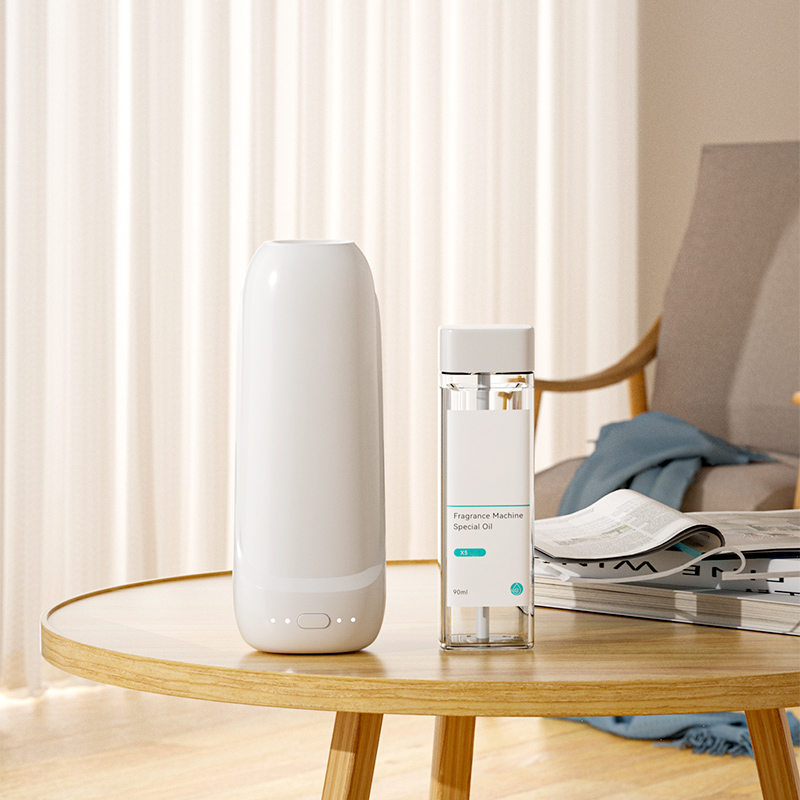
A high-quality aromatherapy diffuser will underperform if placed incorrectly or configured with suboptimal raw inputs. Proper commissioning ensures maximum scent dispersion while protecting the device hardware and the surrounding furniture. Field experience shows that 80% of user complaints regarding poor scent throw are resolved simply by relocating the device or adjusting the water volume.
Always use cool or room-temperature water. The temperature rule is absolute: warm or hot water can degrade the ultrasonic transducer disk and cause premature degradation of the oil's volatile chemical compounds. Regarding mineral composition, distilled or purified water is highly recommended. Distilled water prevents scale buildup on the internal components, whereas hard tap water accelerates calcification, leading to rapid motor failure and the dispersion of white mineral dust into the air. This white dust is aerosolized calcium and magnesium, which can settle on furniture and electronics.
| Water Type | Impact on Device | Impact on Air Quality |
|---|---|---|
| Distilled Water | Zero mineral scaling, extends lifespan | Clean mist, no white dust |
| Purified/RO Water | Minimal scaling, requires standard cleaning | Very low risk of mineral dust |
| Hard Tap Water | Rapid calcification of transducer plate | High risk of aerosolized white mineral dust |
The "Two-Foot Rule" dictates that diffusers must be elevated at least two feet above the floor. This elevation allows the mist to disperse into the ambient air and evaporate before settling onto the ground. Avoid placing the unit in tight corners or directly against walls. Positioning the device near the center of the active zone with open space around it maximizes natural convection. Consider HVAC positioning carefully. Keep the unit away from direct return vents, open windows, and high-speed ceiling fans to prevent the immediate extraction or aggressive scattering of the diffused oils. If placed directly under a supply vent, the forced air will push the mist straight to the floor, ruining the dispersion pattern.
Continuous exposure to microscopic water and oil droplets poses a risk of moisture damage to unsealed wood. Highly concentrated essential oils can also degrade painted surfaces and certain synthetic finishes. Placing a ceramic or sealed tray beneath the unit mitigates these risks and protects valuable furniture. Never place a unit directly on antique wood, unsealed marble, or near exposed paper documents.
Standard baselines dictate adding 3 to 5 drops of essential oil per 100ml of water. Several variables influence this ratio. Larger rooms or areas with high ambient humidity may require a slight increase in dosage. Additionally, the viscosity and inherent potency of the specific essential oil play a role. A highly pungent oil like Peppermint requires fewer drops than a subtle, heavier oil like Sandalwood. Over-saturating the water with oil does not linearly increase the scent throw; instead, it coats the transducer plate and suppresses mist production.
Modern devices offer various operational modes. Utilizing these settings correctly aligns the hardware capabilities with specific environmental or therapeutic goals, optimizing both oil usage and olfactory impact. Understanding how to manipulate timer settings, mist output volumes, and light functions separates amateur users from professionals.
The human olfactory system adapts rapidly to constant stimuli. Olfactory fatigue, commonly known as nose blindness, occurs when the nose stops detecting scents after 15 to 30 minutes of continuous exposure. To combat this, utilize intermittent settings. Running the device on a cycle of 30 seconds on and 30 seconds off conserves expensive essential oils while maintaining a consistent, detectable scent perception throughout the room. Continuous diffusion should only be used for short, targeted sessions, such as clearing cooking odors or providing immediate respiratory support during a cold.
Thick, resinous oils like Vetiver, Myrrh, or Patchouli possess high viscosity. When used alone in an ultrasonic unit, these heavy oils can coat and clog the vibrating plate, halting mist production. To mitigate this issue, blend heavy resins with lighter, highly volatile carrier-style essential oils. Mixing a thick resin with a citrus or floral oil reduces the overall viscosity of the blend, ensuring proper atomization and protecting the hardware.
| Oil Category | Viscosity Level | Diffusion Recommendation |
|---|---|---|
| Citrus (Lemon, Orange) | Low (Thin) | Excellent for standalone diffusion; clears plates. |
| Floral (Lavender, Rose) | Medium | Good for standalone or blending. |
| Resin (Vetiver, Myrrh) | High (Thick) | Must be blended with lighter oils to prevent clogging. |
Neglecting routine maintenance leads directly to bacterial growth, severe calcification, and catastrophic device failure. Stagnant water and residual oil create an ideal environment for biofilm and mold formation, which are then aerosolized into the breathing space. A fouled transducer plate forces the motor to work harder, eventually leading to thermal overload and permanent failure.
Daily maintenance requires unplugging the unit, emptying any residual water, and wiping the reservoir completely dry with a clean microfiber cloth. This simple step prevents biofilm accumulation. Bi-weekly deep cleaning is mandatory for consistent performance. Fill the reservoir halfway with clean water and add one teaspoon of distilled white vinegar. Run the cycle for 5 minutes to dissolve mineral deposits. Afterward, empty the reservoir and use a cotton swab dipped in vinegar to gently clean the delicate ultrasonic chip at the base. Rinse with clean water and wipe dry. Never use harsh chemical solvents, bleach, or abrasive scrubbing pads, as these will permanently score the plastic and damage the transducer.
If the device produces no mist, first check for overfilling past the maximum line. Next, inspect the ultrasonic plate for oil clogs or mineral scale, and verify all power cord connections are secure. If the unit is leaking from the base, check for improper lid seating. Leaks can also result from degraded silicone seals or micro-cracks in the reservoir caused by using non-compatible plastics with highly acidic oils. If the mist output is weak, the water may be too cold, or the transducer plate may be coated in heavy resinous oil.
| Symptom | Probable Cause | Corrective Action |
|---|---|---|
| No mist production | Water level exceeds max fill line | Pour out excess water until below the line. |
| Weak mist output | Oil residue on transducer plate | Perform a deep clean with white vinegar and a cotton swab. |
| Water leaking from base | Improper lid seating or cracked reservoir | Re-seat lid; inspect plastic for chemical degradation. |
| Unit shuts off immediately | Low water level or uneven surface | Refill reservoir and place on a flat, hard surface. |
Toxicity risks must be evaluated before diffusing any substance. Thoroughly research essential oil safety regarding pets and infants. For example, tea tree and eucalyptus oils are highly toxic to cats and dogs, causing severe neurological and hepatic issues. Proper ventilation is also critical. Always leave a room door slightly ajar during operation to prevent VOC saturation in enclosed spaces, ensuring a safe breathing environment. Never diffuse continuously in a sealed room with infants or individuals with compromised respiratory systems.
For commercial buyers, spas, or wellness brands looking to create their own line of products, understanding manufacturing standards is critical. Sourcing requires rigorous evaluation of material science, electrical safety, and design adaptability. Purchasing off-the-shelf consumer units for high-volume commercial use will result in rapid failure rates and voided warranties.
Partnering with an essential oil diffuser ODM involves collaborating with a factory that designs and produces units that the buyer can rebrand. This model allows commercial entities to modify specific features such as tank capacity, LED lighting arrays, and exterior casing materials without funding ground-up engineering. An ODM provides a proven internal chassis and motor assembly, allowing the buyer to focus on exterior aesthetics and brand positioning.
Plastic grades dictate the lifespan of the unit. It is critical to specify Polypropylene (PP) over standard ABS plastic for the internal water reservoir. Highly acidic oils, particularly citrus varieties like Lemon or Grapefruit, will rapidly melt and corrode non-resistant plastics like ABS. When evaluating aesthetic versus functional housings, consider the durability of ceramic, glass, and faux-wood grain exteriors. Commercial environments require robust materials that withstand frequent handling and routine chemical cleaning. Glass is visually appealing but poses a shatter risk in high-traffic areas, whereas high-grade PP offers maximum durability and chemical resistance.
A stringent checklist for sourcing must include verifying international safety certifications. Ensure the manufacturing partner provides valid CE, RoHS, and FCC certifications. These documents guarantee electrical safety, environmental compliance regarding hazardous substances, and market legality across various global regions. Request physical copies of these certificates and verify them with the issuing testing laboratories before committing to a large production run.
Effective use of an Essential Oil Diffuser requires aligning the chosen technology with specific spatial requirements and therapeutic goals. Consumers should prioritize ultrasonic units for daily ambient scenting, while clinical users should opt for nebulizers to maximize potency. Commercial buyers must prioritize material grade, specifically demanding PP plastics, when evaluating manufacturing partners.
A: Distilled water is strongly preferred to prevent mineral buildup and the dispersion of white mineral dust into the air. While some manufacturers state tap water is acceptable, using it requires significantly more frequent deep cleaning to prevent the ultrasonic plate from calcifying.
A: Always use room-temperature or cool water. Warm or hot water can damage the internal ultrasonic components and prematurely degrade the therapeutic volatile chemical structures of the essential oils.
A: The industry standard baseline is 3 to 5 drops of essential oil per 100ml of water. You should adjust this ratio based on the total square footage of the room and the inherent pungency or viscosity of the specific oil being used.
A: You must empty residual water and wipe the reservoir dry daily to prevent biofilm. A deep clean using water and distilled white vinegar should be executed bi-weekly to dissolve mineral scale and clear oil residue from the transducer plate.
A: Running a unit continuously overnight is not recommended due to olfactory fatigue and the risk of VOC over-saturation in a closed bedroom. Utilize intermittent timer settings and ensure the room has adequate passive ventilation.


