
Views: 0 Author: Site Editor Publish Time: 2026-09-25 Origin: Site


Indoor air quality directly impacts daily comfort, yet finding a dispersion device that balances structural integrity with aesthetic appeal is a common engineering challenge. You want a unit that elevates your interior design without sacrificing mechanical performance or requiring constant replacement.
In this technical guide, we break down the fundamental differences between textured fabric models—specifically looking at popular designs like the Better Homes & Gardens fabric diffuser—and artisan ceramic units. As engineers who analyze fluid dynamics and material degradation, we will evaluate their durability, maintenance requirements, and true commercial value.
Before comparing external housings, it is crucial to understand the internal mechanics. The transition from traditional thermal warmers to kinetic technology has revolutionized ambient scenting. How exactly does this work?
When engineered correctly, an ultrasonic diffuser operates using a small piezoelectric ceramic disc at the base of a BPA-free polypropylene (PP) water tank. When powered, this disc vibrates at ultrasonic frequencies—typically 2.4 million oscillations per second. This rapid mechanical movement creates cavitation in the water, shattering the fluid and essential oil mixture into microscopic particles (usually 1-5 microns in size).
Recent industry trend analyses reveal a pronounced shift in how consumers and commercial spaces approach ambient scenting. Market data indicates a 45% year-over-year decrease in the use of heat-based dispersion, driven by a growing awareness of botanical preservation. Furthermore, as users experiment with highly concentrated, corrosive citrus and resinous oils, the industry is seeing a massive pivot away from porous plastics and textiles toward chemically inert materials like glass and high-fired ceramics. Buyers now expect laboratory-grade chemical resistance disguised as high-end home decor.
Because this atomization process relies entirely on kinetic energy rather than thermal energy, it produces a room-temperature mist. Why does this matter? Essential oils contain fragile terpenes. Exposing them to heat alters their chemical signature and destroys their therapeutic value. High-frequency vibration ensures the botanical integrity remains completely intact.
When evaluating accessible, budget-friendly options, the Better Homes & Gardens cool mist ultrasonic aroma fabric diffuser frequently emerges as a popular entry-level choice. This device attempts to bridge the gap between functional technology and soft interior furnishings.
The defining feature here is the exterior housing. Instead of standard injection-molded plastic, the unit is wrapped in a woven textile. This introduces a tactile element that blends effortlessly with upholstered furniture and linen curtains. For users who want their appliances to look like decorative pillows, this is a strong selling point.
From a mechanical standpoint, the internal components are standard. You will typically find a modest water reservoir (often 100ml to 250ml) equipped with basic operational logic:
However, the engineering flaws become apparent during daily operation. Essential oils act as natural solvents. If a rogue drop of dense Vetiver or acidic Lemon oil drips onto the fabric, it immediately absorbs. This not only causes permanent discoloration but can also dissolve the underlying adhesives binding the fabric to the plastic shell, leading to peeling and a lingering, oxidized odor.
| Fabric Diffuser Advantages | Fabric Diffuser Disadvantages |
|---|---|
| Low Barrier to Entry: Highly accessible price point for beginners. | Chemical Vulnerability: Fabric permanently absorbs spilled oils and stains easily. |
| Acoustic Insulation: Textile wrapping slightly reduces operational noise. | Adhesive Failure: Natural solvents in oils can degrade the glue holding the fabric. |
| Soft Light Diffusion: Naturally mutes internal LEDs for a warmer glow. | Sanitation Issues: The exterior cannot be sterilized or easily wiped down. |
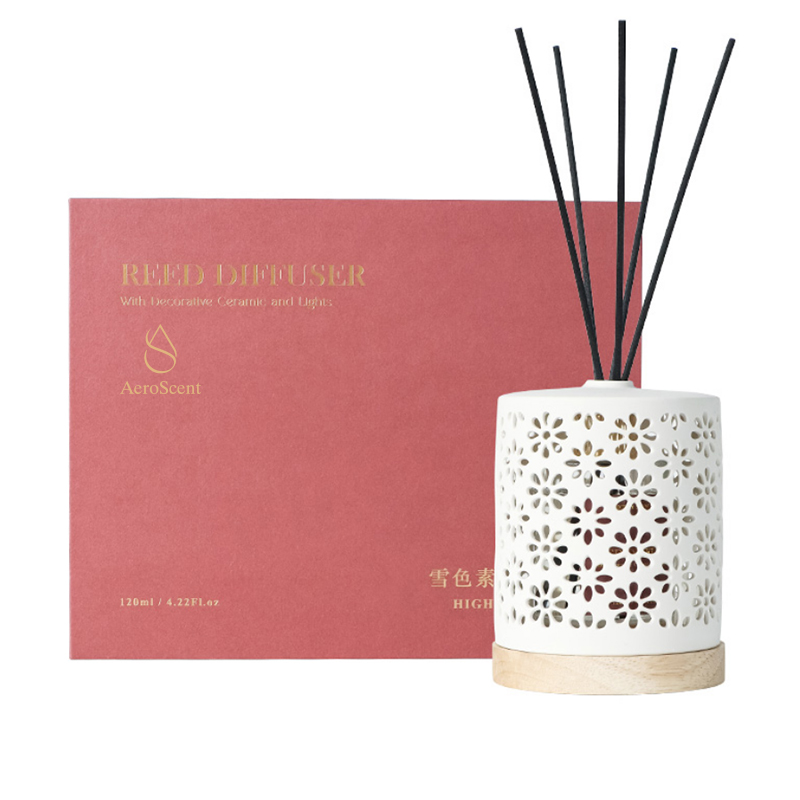
Moving away from porous textiles, the ceramic aroma diffuser represents a massive upgrade in material science. Stoneware and porcelain have been utilized for millennia due to their extreme durability. Integrating these materials into modern ultrasonic devices solves the primary failure points of cheaper models.
Ceramic covers are meticulously crafted from clay and fired at temperatures exceeding 1,200°C (2,192°F). This process creates a dense, non-porous shell. Take, for example, premium models like the Ramon Aroma Aero Scent White Ceramic Diffuser. Beneath its heavy, glazed stoneware exterior lies a highly efficient 2.4MHz ultrasonic base and a BPA-free reservoir. You get the same essential auto-shutoff safety features, but shielded by an impervious armor.
The true commercial value of ceramic is its absolute resistance to chemical degradation. Pure botanical extracts will melt cheap plastics and ruin fabrics. In contrast, a glazed ceramic surface remains entirely unaffected. If you spill dark blue Tansy oil on a ceramic unit, a quick wipe with isopropyl alcohol restores it to a pristine state in seconds.
| Ceramic Diffuser Advantages | Ceramic Diffuser Disadvantages |
|---|---|
| Chemically Inert: Will not stain, melt, or degrade when exposed to pure essential oils. | Impact Vulnerability: Prone to chipping or shattering if dropped onto hard surfaces. |
| Effortless Maintenance: Smooth, glazed surfaces can be sanitized instantly with a damp cloth. | Increased Weight: Heavier construction requires careful handling during tank refills. |
| Premium Lifespan: Maintains a "brand new" aesthetic for years, offering higher ROI. | Higher Initial Investment: Manufacturing high-fired ceramics costs more than plastic injection molding. |
Choosing between a fabric-wrapped unit and a ceramic model requires matching the material properties to your specific application. A device that works in a low-traffic guest room might fail miserably in a bustling wellness clinic.
Specifically, fabric models thrive in static, low-risk environments. If your primary goal is to match a specific bohemian decor style in a bedroom, and you rarely change your oil blends, a fabric unit is adequate. The textured exterior naturally absorbs minor sound vibrations, keeping noise levels below 30 decibels for optimal sleep hygiene.
Furthermore, integrating a cool mist diffuser into high-visibility areas like living rooms, marble-countertop kitchens, or professional offices demands a different approach. Ceramic units provide a sleek, architectural element. Because these spaces often involve frequent handling and swapping of various botanical blends, the risk of spills is high. The ceramic's ability to withstand these spills without degrading makes it the objectively superior choice for long-term durability and continuous daily operation.
Regardless of whether you choose fabric or ceramic, the internal mechanics require strict maintenance. Neglecting device hygiene is the leading cause of premature ultrasonic plate failure. Over time, sticky resinous residue from botanical extracts coats the transducer, insulating it and severely restricting mist production.
Additionally, users often complain about a fine, white powder settling on nearby furniture. This "white dust" phenomenon is a direct result of fluid dynamics. The vibrating disc shatters water into microscopic droplets. If you use standard municipal tap water, you are simultaneously aerosolizing dissolved minerals—primarily calcium and magnesium. When the water evaporates, the heavy minerals fall out of suspension.
To eliminate this issue and protect the lifespan of your essential oil humidifier, you must exclusively use distilled or demineralized water. Without dissolved solids in the water, there is nothing left behind to form scale on the transducer or dust on your tables.
Standard Engineering Cleaning Protocol (Bi-Weekly):
While mass-market fabric options provide a cheap entry point, users who prioritize maximum efficiency, superior build quality, and zero chemical degradation eventually seek professional-grade alternatives. Stop replacing stained, malfunctioning plastic and fabric units year after year.
For those ready to elevate their spatial scenting, exploring a professional home fragrance diffuser transforms the experience. Premium ceramic models, like those engineered by Ramon Aroma, feature advanced 2.4MHz cold-air atomization, whisper-quiet operation, and customizable ambient LED lighting—all housed within a resilient, high-fired glazed shell. By investing in commercial-grade materials, you ensure your device maintains peak performance and a flawless aesthetic for years to come.
Yes. Because the technology relies on high-frequency kinetic vibrations rather than thermal heat, there is no risk of the unit overheating or catching fire. However, ensure your specific model is equipped with a capacitive or mechanical waterless auto-shutoff sensor that cuts power to the transducer when the tank runs dry.
This is a direct result of aerosolizing hard tap water. The ultrasonic plate breaks down water and its dissolved minerals (calcium and magnesium) into a fine mist. Upon evaporation, these heavy mineral particles settle on surfaces as white dust. Switching to distilled water permanently resolves this issue.
From a structural standpoint, a ceramic shell can last indefinitely if not dropped. It is impervious to the corrosive VOCs found in essential oils. Fabric models typically show significant cosmetic degradation, staining, or adhesive failure within 12 to 18 months of regular use.
The most common engineering fault is a fouled transducer. Over time, polymerized essential oils and mineral scale coat the vibrating ceramic disc at the bottom of the tank, dampening its oscillations. A deep clean using isopropyl alcohol on the disc usually restores full mist output. Additionally, overfilling the tank past the "Max" line prevents the water from atomizing properly.
Yes. Pure essential oils are potent natural solvents. If oil drips down the side of a fabric device during refilling, it will permanently stain the textile, leave a lingering oxidized odor, and chemically dissolve the adhesives binding the fabric to the plastic housing.
Only on a micro-scale. Most standard ultrasonic models output roughly 20ml to 50ml of moisture per hour. While this provides a localized stream of cool moisture to your immediate breathing zone, it does not possess the output capacity (often hundreds of milliliters per hour) required to significantly alter the relative humidity of an entire room.
Ready to upgrade your ambient scenting experience? Ditch the high-maintenance fabrics and invest in lasting engineering. Explore the full range of chemically resistant, high-efficiency ceramic models at Ramon Aroma to find the perfect balance of artisan design and uncompromising performance for your space.


