
Views: 0 Author: Site Editor Publish Time: 2026-06-25 Origin: Site


Moving beyond mere aesthetics, commercial scenting is a measurable tool for facility management, brand differentiation, and customer experience. It silently shapes how people perceive a physical space the moment they arrive. For business owners and facility managers, deploying a commercial scent machine isn't about masking odors—it’s about strategically engineering an environment that influences dwell time, perception of cleanliness, and purchase intent. You need practical solutions capable of scaling efficiently across your entire floor plan. This guide breaks down the core applications, technological evaluations, and implementation realities of using commercial scent machines in B2B spaces. We will show you exactly how to navigate equipment choices, mitigate common risks, and achieve measurable business outcomes.
Strategic Application: Scenting serves distinct business goals depending on the industry, from increasing dwell time in retail to driving lease renewals in residential facilities.
Technology Matters: Not all scent diffuser machines scale. The choice between standalone nebulizing units and HVAC-integrated systems depends largely on the 50,000-cubic-foot threshold.
Risk Mitigation is Essential: Successful rollouts require strict attention to hypoallergenic formulations, VOC-free compliance, and precise intensity control to avoid customer alienation (the "over-scenting" effect).
Operational Reality: True cost ownership relies on predictable consumable lifespans (typically 30 days per bottle at 8 hours/day) and app-based management for ease of staff use.
Every commercial space operates with a distinct primary objective. A thoughtful ambient scenting strategy aligns directly with these operational goals. We see clear variations in how different industries apply fragrance to shape consumer behavior.
In the hospitality sector, the core goal involves establishing a proprietary brand identity. You want to set a baseline expectation of luxury and cleanliness immediately upon entry. Guests often arrive fatigued. Using elegant floral or deep woody notes in lobbies helps reduce travel stress. It signals to the brain a transition from chaos to comfort. Meanwhile, fitness centers and gyms face different challenges. They deploy bright citrus notes to manage perceived physical exertion. Crisp lemon or grapefruit profiles effectively neutralize residual sweat odors without relying on harsh, heavy chemical sprays.
Retailers leverage scent to shift consumers into a receptive buying mode. The primary objective is extending physical dwell time. The longer shoppers stay inside a boutique, the more likely they are to browse and purchase. High-end environments often utilize rich leather or tailored signature scents. These specific aroma profiles subconsciously increase the perceived value of high-ticket items. When an automotive showroom smells of refined leather and fresh wood, it elevates the entire vehicle browsing experience.
Property managers use scent for subconscious environment management. Tenant retention often hinges on perceived cleanliness and professional facility maintenance. Deploying subtle, clean scents in leasing offices sets a positive first impression. Extending this strategy to shared hallways and trash-chute areas is equally critical. It signals to current residents a high standard of ongoing care. A consistently fresh environment directly encourages lease renewals and justifies premium rental rates.
Medical environments focus heavily on anxiety reduction. Patients frequently experience elevated stress levels in waiting rooms. Clinics utilize calming notes like lavender, chamomile, or mild vanilla to lower patient stress. This creates a clinical yet highly welcoming atmosphere. It masks the sharp, sterile smell of medical-grade disinfectants. The result is a patient experience feeling much more comforting and far less intimidating.
To understand the return on investment, we must look at the underlying science. The human olfactory system connects directly to the brain's limbic system. This area governs emotion and memory processing. Scent completely bypasses our rational, logical filters. It makes spatial fragrancing highly effective at creating positive, lasting brand associations.
Olfactory marketing capitalizes on this unique neurological link. A specific aroma can instantly trigger deep nostalgia. It recalls past positive experiences vividly. When you pair a pleasant fragrance with your brand, you create a powerful memory anchor. Customers will remember how your space made them feel long after they forget visual details.
Industry studies consistently highlight impressive metrics. Historical hospitality data, such as famous Las Vegas casino tests, showed significant upticks in dwell time and slot machine revenue. Retail metrics reveal similar trends. Internal studies from global brands like Nike indicate up to an 82% increase in purchase intent when introducing scent to a retail environment.
However, you should view these data points critically. Frame them as indicators of potential rather than guaranteed outcomes. Scent acts as an amplifier to an already solid customer experience. It is not a band-aid for poor customer service or outdated store designs. A beautiful fragrance cannot rescue a fundamentally flawed business model.
There is a massive operational difference between masking odors and managing them. Cheap aerosol sprays simply layer heavy fragrances over existing bad smells. This creates a confusing, often nauseating mixture. High-quality commercial systems work differently. They neutralize offensive odors at a molecular level. They bind to malodor particles and alter their structure. This molecular neutralization is absolutely critical for gyms, public restrooms, and high-traffic facilities demanding genuine cleanliness.
Hardware selection dictates the success of your entire fragrance program. When evaluating a commercial scent diffuser machine, you must understand the underlying dispersal mechanics. Not all devices handle large commercial square footage effectively.
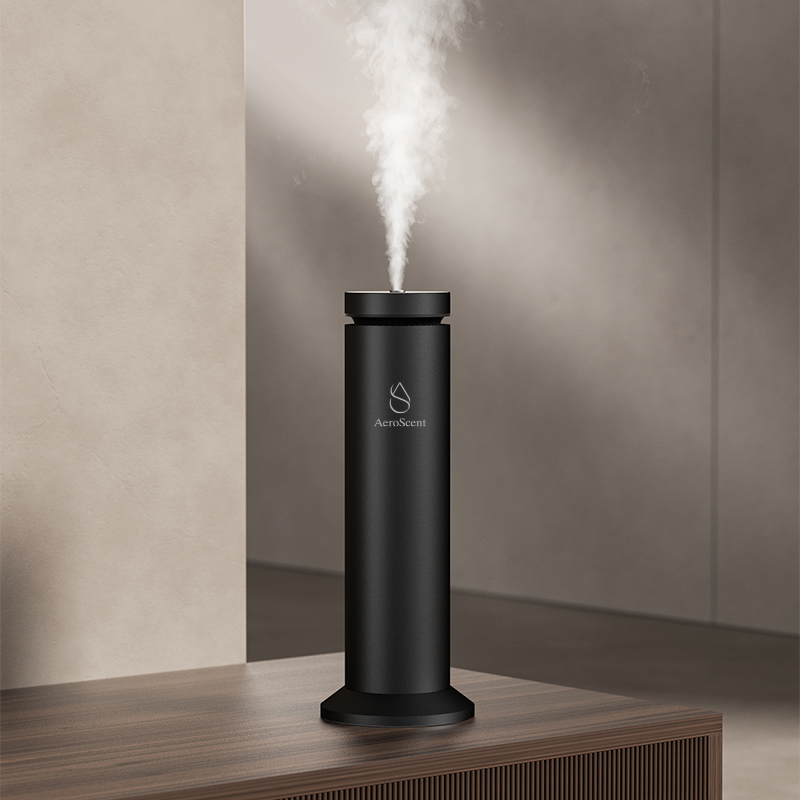
The industry recognizes two-fluid cold-air atomization as the commercial gold standard. This technology uses pressurized air to break pure essential oils into microscopic, dry-mist nanoparticles. It requires no heat and uses no water. This process perfectly maintains oil integrity. The dry mist leaves absolutely no residue on furniture or inventory. The nanoparticles are so light they remain suspended in the ambient air for hours.
Ultrasonic technology, conversely, uses water to disperse scent. The device vibrates water to create a humidified mist. This works adequately for small, localized spaces like individual spa treatment rooms. However, ultrasonic mist is heavy. It falls to the floor quickly. It lacks the necessary suspension time and overall coverage power for large commercial footprints.
Choosing between a localized unit and a central system depends entirely on your spatial volume.
Standalone Units: These are ideal for spaces under 50,000 cubic feet. They offer great flexibility in placement. You can move them as floor layouts change. However, they require highly strategic positioning near natural airflow to ensure even scent distribution.
HVAC Scenting Systems: Ultra-large or multi-zone environments require central integration. These systems inject dry-mist nanoparticles directly into the central ductwork. The HVAC fan then pushes the fragrance throughout the building. This guarantees uniform, seamless coverage and completely eliminates hot or cold scent spots.
Modern commercial equipment must feature robust digital controls. A modern machine needs Bluetooth or Wi-Fi connectivity paired with an intuitive mobile app. Relying on physical touch-screens mounted high on walls or hidden inside ceiling tiles leads directly to staff neglect. App-based scheduling allows you to program operating hours, adjust daily intensity levels, and monitor performance remotely.
Comparison of Commercial Scenting Technologies | |||
Technology Type | Dispersal Method | Best Application Environment | Maintenance Level |
|---|---|---|---|
Cold-Air Nebulizing | Pressurized dry-mist | Lobbies, large retail, HVAC integration | Low (Quarterly nozzle cleaning) |
Ultrasonic | Water and vibration | Small offices, single spa rooms | High (Daily water refills, mold prevention) |
Aerosol Sprays | Chemical propellants | Restrooms (temporary masking) | Medium (Frequent canister swaps) |
Implementing a scent program carries specific consumer risks. You must approach the rollout carefully to avoid alienating the very customers you want to attract.
Over-scenting is the single most common customer complaint. When a fragrance is too dense, it triggers headaches, nausea, or respiratory irritation. This usually happens when businesses buy cheap, synthetic fragrances and run machines at maximum power. A premium ambient experience should be barely noticeable at first. It should feel like a natural characteristic of the room, not a thick cloud of perfume.
B2B buyers must demand absolute transparency regarding oil formulations. You must specify oils verified as VOC-free (Volatile Organic Compounds). They must be completely aerosol-free and non-toxic. Demand documentation proving the formulations are safe for sustained exposure around children, pets, and individuals with respiratory sensitivities. Avoiding harmful chemical propellants protects both your guests and your liability.
To further protect building occupants, source only hypoallergenic scent profiles. When initiating a rollout, you must start low and go slow. We recommend starting your machine at the lowest possible intensity setting—typically around 5% to 10% capacity. Let the system run for a few days. Adjust the strength gradually based on actual foot-traffic feedback. Do not base your intensity settings purely on raw square footage calculations alone.
Facility managers frequently worry about damaging expensive ventilation equipment. True dry-mist cold-air diffusers will not damage ductwork. Because the mist contains no water or heavy carrier oils, it does not cause condensation. It will not leave sticky, oily residues inside your metal ducts. Furthermore, sub-micron particles pass freely through standard commercial filtration setups. They do not clog or compromise expensive HEPA filters.
Successful long-term operations require structured planning. You need precise spatial calculations, clear budgeting rules, and strict maintenance protocols.
Never rely solely on two-dimensional square footage when sizing a device. You must calculate the total cubic volume of the room. Always account for high ceilings, vaulted entryways, and open stairwells. Multiply length by width by ceiling height. If you ignore vertical space, you will severely under-specify the equipment. An undersized unit running at maximum capacity burns through oil rapidly and still fails to fill the room.
Setting realistic operational expectations prevents budget overruns. Operators commonly use the 30-Day Rule. A standard commercial system running eight hours a day at medium intensity typically consumes one standard bottle of fragrance oil per month. Use this baseline to accurately forecast your annual consumable spending per zone. High-intensity settings or 24-hour runtimes will significantly accelerate this consumption rate.
Equipment longevity depends on strict adherence to standard operating procedures (SOPs). You must integrate these tasks into your existing facility management schedules.
Evaluate Cartridge Accessibility: Ensure staff can easily reach the unit to swap empty bottles. Hard-to-reach machines get ignored.
Monthly Visual Inspections: Check the pump and nozzle area for any unexpected dust accumulation or minor blockages.
Quarterly Cleaning Cycles: Every three months, you must run plain rubbing alcohol through the system for fifteen minutes. This dissolves residual essential oil buildup. It prevents nozzle clogs and maintains optimal atomization efficiency.
Filter Checks: If your standalone unit features an internal dust filter, vacuum it out twice a year to maintain optimal air intake pressure.
A commercial scent system proves itself as a highly functional business asset. It moves far beyond simple interior decoration. It actively manages ambient perception, neutralizes stubborn facility odors, and subtly drives consumer behavior in your favor. Whether you manage a boutique hotel or a sprawling corporate office, controlling your olfactory environment delivers a competitive advantage.
As you prepare for implementation, prioritize the right technology. Advise your purchasing teams to demand cold-air diffusion hardware and verify all VOC-free oil certifications. Most importantly, practice restraint during the initial launch. Start with subtle, app-controlled intensity levels. Gather feedback from staff and visitors, and slowly dial in the perfect atmospheric balance to ensure a positive, measurable impact on your venue.
A: While strong odors can trigger sensitivities, commercial-grade systems mitigate this by using hypoallergenic, VOC-free cold-air diffusion that doesn't rely on aerosols or toxic propellants. Proper intensity tuning is key.
A: Depending on the bottle capacity and machine settings, a standard setup running 8 hours a day will generally last about 30 days before requiring a refill.
A: Yes, provided the system uses sub-micron cold-air atomization (dry mist). This technology ensures the scent remains suspended in the air without causing condensation or leaving oily residue inside ductwork.


