
Views: 0 Author: Site Editor Publish Time: 2026-06-27 Origin: Site


Modern offices are rapidly moving away from basic aerosol air fresheners toward smart, automated scenting solutions. Facility managers increasingly recognize commercial scenting as a vital component of workplace environment control rather than a mere aesthetic luxury. When you rely on closed-loop HVAC systems, stale air easily accumulates over the workweek. Lingering breakroom odors, printer fumes, and high-stress environments can negatively impact employee focus and heavily skew client perceptions. Managing this indoor air quality requires a far more sophisticated approach than spraying consumer-grade fragrances.
Upgrading to a smart idiffuser transforms how an office feels and functions. These advanced systems give you precise digital control over the olfactory environment. You will learn how commercial technology neutralizes bad odors at the molecular level instead of just masking them. We will explore the technical benefits of cold-air nebulization, outline strategic scent mapping for different departmental zones, and provide clear sizing guidelines. By the end, you will understand exactly how to deploy and maintain this operational upgrade effectively.
Odor Neutralization over Masking: Commercial systems neutralize stale air and breakroom odors rather than layering artificial fragrances over them.
Waterless Nebulization: Advanced cold-air technology preserves essential oil integrity without adding humidity or mold risks to the office.
Automated Efficiency: Smart scheduling via WiFi/Bluetooth ensures the system only runs during business hours, optimizing essential oil consumption.
Scalability: Solutions range from 1,000 sq. ft. standalone units to 10,000+ sq. ft. HVAC-integrated systems.
Standard consumer air fresheners simply mask unpleasant smells. They layer strong artificial fragrances over existing bad air, creating a cloying, heavy mix that often triggers headaches. A commercial scent diffuser machine takes a vastly different approach by neutralizing odors at the molecular level. Modern offices face specific air quality challenges. Closed-loop HVAC systems trap stale air. Microwaved food odors drift from the breakroom into the main workways, and damp carpets can emit musty smells. Professional scenting systems eliminate these baseline issues to maintain a fresh, breathable environment.
The psychology of productivity also builds a compelling business case for this upgrade. Neurological studies link specific scents directly to mental clarity and emotional regulation. Because the olfactory bulb connects directly to the brain's limbic system, scent instantly influences how we process information and manage stress. Introducing the right aromas can actively reduce employee error rates during complex tasks and mitigate late-day fatigue during the afternoon slump.
Consider brand perception in your reception areas. Olfactory memory, commonly known as the Proust effect, is incredibly powerful. The moment high-value visitors or nervous clients walk into your lobby, they judge the environment. High-end corporate hubs, legal firms, and dental offices use welcoming scents to instantly calm nerves and convey premium hospitality. A space that smells sophisticated feels inherently more trustworthy.
Finally, safety and compliance remain paramount for any facility manager. Strict fire codes often ban open-flame candles or synthetic aerosol sprays in commercial buildings due to highly flammable propellants. A waterless, cold-air system provides a perfectly safe, fire-code-compliant alternative. You eliminate open flames and toxic airborne chemicals while ensuring the workplace remains fully compliant with building regulations.
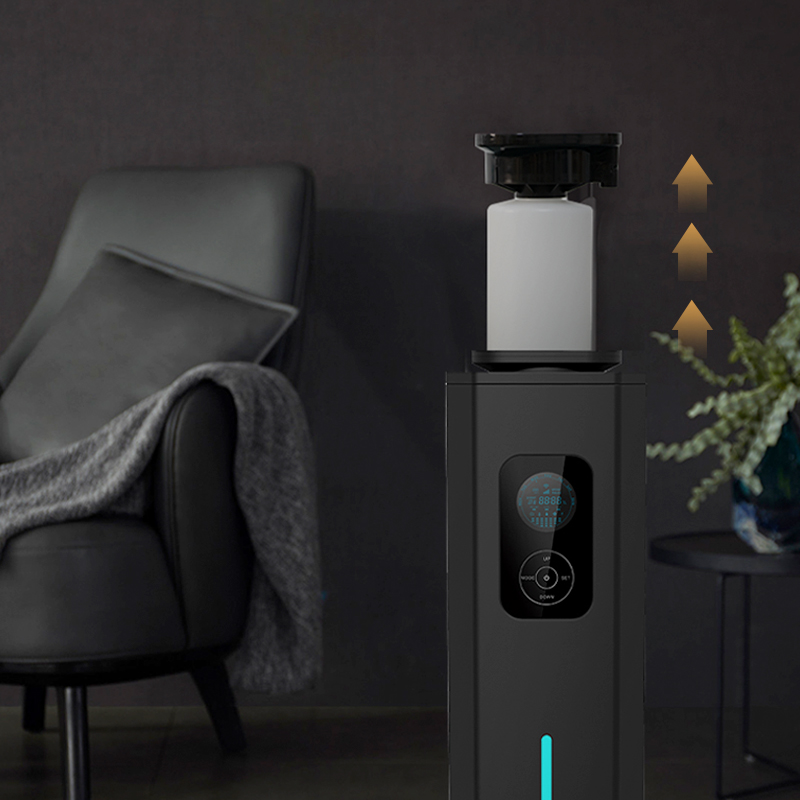
Understanding the internal hardware helps justify the operational upgrade from basic consumer diffusers to commercial systems. At the core of a professional smart diffuser is cold-air nebulization technology. This mechanism uses pressurized air to break down pure essential oils into a microscopic dry mist, with particles ranging between 1 and 5 microns. Because the system uses zero heat, the chemical composition and therapeutic properties of the essential oil never degrade. Heat destroys the delicate botanical compounds, while cold-air tech preserves them entirely.
Furthermore, this technology operates without water. Adding water dilutes the fragrance profile and introduces dangerous mold or bacterial growth risks within the device's reservoir. Waterless systems keep the office humidity stable and the air pristine.
Smart automation elevates these systems into true facility management tools. Managers can control units directly via Bluetooth or WiFi smartphone applications. You can easily set customized operating schedules. For example, you might program the device to run exclusively from 8 AM to 6 PM, Monday through Friday. Granular intensity levels let you fine-tune the output minute by minute. This prevents scent fatigue among employees and drastically reduces consumable waste. You only burn oil when the building is actually occupied.
Many procurement teams worry about potential damage to office equipment. You can confidently assure stakeholders these systems offer completely residue-free operation. The micro-droplet diffusion creates a dry mist that evaporates seamlessly into the air currents. It will not leave an oily film on computer monitors, hardwood desks, or expensive glass partitions.
Applying the exact same scent across a massive facility often misses the mark. Different departments serve entirely different functions and experience varying stress levels. Strategic scent mapping lets you tailor the olfactory experience to support specific operational goals in distinct zones.
Open-Plan Workspaces (Focus & Alertness): Large desk pools demand high energy and sustained concentration. We highly recommend bright citrus profiles like lemon, bergamot, or sweet orange. These scents stimulate mental clarity and help keep teams sharp during data entry or analytical tasks. Peppermint provides another excellent choice for high-energy sales floors to boost overall alertness.
Conference Rooms (Stress Reduction): High-stakes meetings, boardroom presentations, and deadline-driven environments require a more grounded approach. You want to lower anxiety and encourage steady, rational focus. Stable, woody profiles work best here. Use sandalwood, cedarwood, or a very subtle lavender blend to keep cortisol levels low and stress manageable.
Lobbies and Waiting Areas (Welcoming): First impressions matter most at the front door. Your reception area should feel immediately premium, inviting, and comforting. Sophisticated blends containing warm vanilla, subtle florals, or rich amber create an instant sense of premium hospitality. They relax visitors the moment they walk off the elevator.
Hardware selection depends entirely on your spatial realities. Buying an underpowered unit leads to invisible, wasted results. Conversely, buying an overpowered unit for a small room causes severe fragrance fatigue and employee complaints. Use the framework below to shortlist the right equipment for your specific layout.
Coverage Area | Ideal Equipment Type | Best Office Applications |
|---|---|---|
Small to Medium Zones (500 – 1,500 sq. ft.) | Standalone, wall-mounted, or desktop units | Private executive suites, isolated breakrooms, small reception desks, and private meeting rooms. |
Large Open Offices (2,000 – 4,000 sq. ft.) | Mid-capacity pillar units | Open desk pools and large collaborative spaces. Requires strategic placement near natural airflow. |
Facility-Wide Coverage (5,000+ sq. ft.) | HVAC-integrated systems | Entire office floors, multi-zone corporate headquarters, and sprawling open-concept layouts. |
Small to medium zones between 500 and 1,500 square feet require basic standalone models. You can easily mount these directly on a wall or place them discreetly on a bookshelf. They work perfectly for isolated breakrooms or private executive suites where occupants want localized, targeted control.
For large open offices spanning 2,000 to 4,000 square feet, mid-capacity pillar units perform best. Placement strategy becomes highly critical in these spaces. Always position these units near natural airflow pathways, such as main hallways or near supply vents. Keep them far away from direct extraction vents or open windows, which would quickly suck the scent outside before it circulates.
Facility-wide coverage for spaces over 5,000 square feet requires professional HVAC integration. Connecting a heavy-duty diffuser directly to the building’s ductwork provides seamless, invisible, and uniform scenting. A small tube feeds the dry mist directly into the main supply air handler. The system then pushes the scent evenly across entire floors, guaranteeing consistent coverage without multiple standalone units cluttering the floor space.
Adopting a new facility-wide scent system requires careful change management. Building trust with your staff means addressing the friction points of adoption head-on and establishing a realistic, consistent maintenance routine.
Navigating employee sensitivities represents your very first hurdle. Scent remains highly subjective, and some people naturally react strongly to new environmental factors. We strongly recommend conducting pre-deployment surveys using anonymous digital forms. This helps identify existing allergies, asthma triggers, or severe fragrance sensitivities among staff. Once deployed, always start the system at the absolute lowest intensity setting. Following the "less is more" rule prevents overwhelming the space while everyone slowly adjusts to the new atmosphere.
Routine maintenance requirements are surprisingly straightforward, provided you follow standard operating procedures. The hardware type dictates your workload:
Cold-Air Diffusers: These advanced machines require very little manual upkeep. A simple quarterly maintenance SOP involves removing the spray nozzle and soaking it in standard rubbing alcohol for ten minutes. This quickly dissolves any thickened essential oil residue and prevents the micro-pump from clogging.
Ultrasonic Units: If you use older, water-based ultrasonic units, they require rigorous daily cleaning. You must scrub out the water scale and sanitize the tank to prevent hazardous mold growth. This high-maintenance reality is exactly why most commercial facility managers strictly avoid them.
Consumable forecasting helps procurement teams budget accurately for the fiscal year. Operational costs depend heavily on your scheduled runtimes, ceiling height, and chosen intensity levels. Generally, a standard 500ml essential oil bottle placed inside an efficiently programmed smart diffuser lasts anywhere from 30 to 60 days. Limiting operation exclusively to active business hours—and powering down on weekends—stretches this supply significantly.
Implementing a commercial scent strategy effectively transitions your office from a subjective luxury into an automated, measurable facility enhancement. The right technology effortlessly neutralizes stubborn odors, enhances employee focus through aromachology, and secures a premium first impression for visiting clients. Automated app scheduling ensures you never waste essential oils during off-hours, while cold-air nebulization keeps your workspace safe, dry, and entirely residue-free.
To begin upgrading your workspace, take these actionable next steps:
Audit your office square footage to determine whether you need targeted standalone units or full HVAC integration.
Identify your high-priority zones, such as the main client lobby or the high-stress open sales floor.
Request a sample fragrance kit or arrange a small-scale trial deployment from a commercial provider to test employee reactions before scaling up to the entire floor.
A: Yes, they are incredibly safe. Unlike synthetic aerosols, they do not release harmful VOCs or toxic chemical propellants. Because they use zero heat, there is absolutely no fire risk. High-quality commercial systems use 100% natural essential oils, providing a clean atmosphere that fully complies with strict commercial building and fire safety codes.
A: It is surprisingly simple. The process generally requires minimal drilling into the main supply ductwork. A small tube securely feeds the dry mist directly into the airflow. A standard facility manager or a professional HVAC technician can usually complete this installation quickly without disrupting daily office operations.
A: No. Cold-air nebulization technology breaks the essential oils down into microscopic particles ranging from 1 to 5 microns. This creates a completely dry mist that evaporates instantly into the air currents. It will not settle as an oily film on desks, computer monitors, keyboards, or glass surfaces.
A: Refill frequency depends entirely on your usage settings, but smart scheduling greatly extends oil life. By using a WiFi or Bluetooth app to run the system only during active business hours, a standard 500ml bottle typically lasts one to two months before needing a replacement.


