
Views: 0 Author: Site Editor Publish Time: 2026-06-13 Origin: Site


Ambient scenting in commercial spaces has dramatically shifted over recent years. It moved from a mere luxury afterthought to a highly measurable component of facility management and brand identity. Operations and property managers frequently struggle to quantify the true value of scent marketing. They face constant challenges when choosing equipment capable of scaling safely. Many fear provoking guest allergy complaints. Others worry about creating impossibly high maintenance burdens for their busy staff. Overcoming these hurdles requires a highly strategic approach. Implementing an industrial or commercial aroma diffuser office hotel setup demands moving well past consumer-grade ultrasonic units. Facility leaders must instead evaluate advanced cold-air technologies. They must consider seamless HVAC integration for uniform coverage. They must also strictly adhere to IFRA-compliant fragrance protocols. Doing so ensures long-term safety, operational efficiency, and ultimate guest satisfaction. Read on to discover how to properly execute a commercial scenting strategy.
Olfactory branding strongly anchors guest memories in hospitality settings. The human brain links scent directly to emotion and memory recall. A signature fragrance instantly elevates the perceived value of any property. Guests subconsciously associate pleasant smells with luxury and impeccable hygiene. They consequently tend to linger longer in pleasantly scented common areas. We see realistic outcomes like improved guest survey scores rather than exaggerated revenue promises. A carefully chosen scent profile tells your unique brand story. It makes a lasting impression long after guests check out. Consistent ambient scenting builds deep customer loyalty.
Workplaces also benefit immensely from specific ambient profiles. Stale indoor air frequently drags down afternoon productivity. Scents like citrus or peppermint effectively mitigate this common issue. They actively combat midday employee fatigue. They sharpen daily focus and boost natural energy levels. Furthermore, crisp scents improve perceived workplace cleanliness. Employees feel much more comfortable in a fresh-smelling environment. They appreciate the invisible investment in their daily workspace. This subtle sensory upgrade boosts overall morale and sustains high team productivity.
Standard air fresheners merely layer heavy perfumes over bad smells. This creates a confusing and often nauseating atmospheric blend. High-grade commercial units act quite differently. They neutralize existing malodors at a distinct molecular level. Special active ingredients bind to odor molecules and alter their structure. Stubborn smells from nearby kitchens vanish entirely. Lingering dampness or gym odors disappear without a trace. True odor remediation creates a pristine atmospheric baseline. You must achieve this clean slate before introducing pleasant fragrances. This methodical approach ensures your space always smells effortlessly sophisticated.
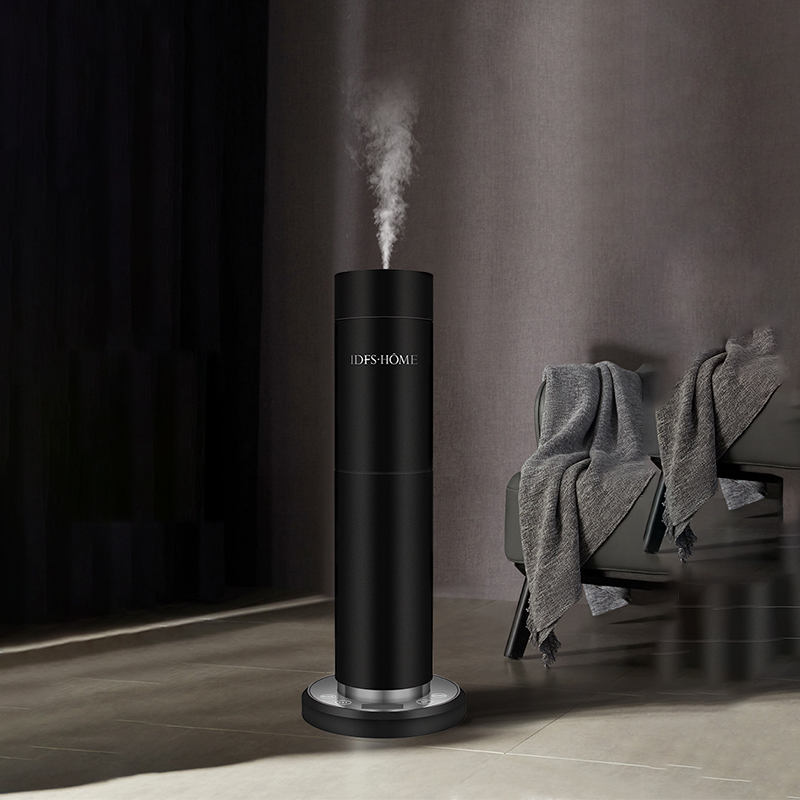
Consumer ultrasonic units fail miserably in commercial spaces. They simply cannot push fragrance across large square footage. More importantly, they add excess moisture to the indoor air. Heavy water droplets fall quickly to the floor. They damage expensive lobby carpets and hardwood finishes. This moisture accumulation creates severe mold risks over time. Cold-air atomization serves as the necessary baseline for any reliable office/hotel diffuser. Nebulizers use highly pressurized air. They break essential oils into microscopic dry nanoparticles. These particles float weightlessly on natural air currents. They leave absolutely zero residue and pose no moisture threat whatsoever.
You must choose the correct delivery method for your specific layout. Facility managers generally choose between standalone models and integrated systems.
Modern facility management demands highly intelligent technology. Bluetooth and Wi-Fi connected units represent absolute necessities today. They allow facility managers to adjust fragrance intensity remotely via mobile apps. You can easily scale output based on predicted foot traffic peaks. Smart programming lets you define specific operating hours. The machine automatically powers down overnight. This automation saves expensive essential oils during closing times.
| Feature | Standalone Units | HVAC Connected Units |
|---|---|---|
| Coverage Area | Targeted zones (lobbies, restrooms, hallways) | Whole-building or multi-floor uniformity |
| Installation Complexity | Simple plug-and-play or basic wall mounting | Requires professional ductwork integration |
| Maintenance Labor | Frequent manual refills required | Centralized, less frequent cartridge swaps |
| Moisture Risk | None (utilizing cold-air nebulizing tech) | None (waterless operation strictly required) |
| Visual Footprint | Visible to guests (requires sleek design) | Hidden entirely inside utility closets |
People naturally express skepticism regarding indoor air quality today. You must proactively frame scenting discussions around verifiable safety and science. High-quality essential oils and aroma compounds diffuse perfectly safely. Advanced cold-air technology disperses them without spiking harmful Volatile Organic Compounds (VOCs). A properly calibrated commercial machine never degrades your building's breathable air. It merely enhances the sensory experience safely. You should readily share material safety data sheets with concerned employees or guests.
You must strictly mandate globally compliant fragrance selections. Oils must meet International Fragrance Association (IFRA) standards. These stringent industry guidelines prevent dangerous allergen exposure. The IFRA rigorously tests ingredients for respiratory and dermatological safety. We strongly advise against using unknown third-party oils found online. Cheap alternatives often contain unregulated synthetic fillers. These toxic fillers can easily trigger asthma attacks. They might also cause severe allergic reactions among sensitive guests.
Pet-friendly hotels need specialized and highly cautious fragrance protocols. You must provide a solid framework for universally safe scent profiles. Many common essential oils prove highly toxic to dogs and cats. They lack specific liver enzymes needed to process certain compounds. You must avoid using high-phenol oils entirely. Exclude clove, eucalyptus, tea tree, and citrus oils from pet-friendly zones. Opt instead for mild, pet-safe alternatives like chamomile or soft cedar. Always consult your vendor's safety specialists before finalizing a lobby scent.
Facility managers face a highly unique sensory risk called olfactory adaptation. People frequently call this phenomenon "nose-blindness". Constant daily exposure numbs the olfactory receptors. Managers might mistakenly believe the fragrance has faded. They subsequently turn the machine intensity up entirely too high. This error overpowers newly arriving guests immediately. It often causes immediate customer complaints. You must establish a strict protocol for objective scent auditing. Ask rotating staff members to evaluate lobby fragrance levels. Visitors entering the building offer the most accurate sensory feedback.
You must remain highly transparent about the ongoing labor involved. Commercial units do not run flawlessly forever without attention. Neglected machines eventually break down, clog, or leak oil. You must outline realistic maintenance schedules. Proper upkeep prevents sudden equipment failure and protects your investment.
Here is a highly effective standard maintenance protocol:
We highly recommend utilizing a phased rollout approach. Do not immediately commit to full HVAC integration across multiple floors. Start small to minimize any potential operational disruption. Deploy a standalone unit in a high-traffic, non-critical zone. Gather honest employee and guest feedback over several weeks. Adjust the scent profile based on their direct responses. Fine-tune the operating hours and intensity levels. Once perfected, confidently scale up to a centralized system.
Buyers often make critical mistakes when calculating machine capacity. You must accurately match machine output to actual environmental physics. Do not rely solely on basic flat floor space measurements. You must seriously consider ceiling height and complex airflow dynamics. A sprawling lobby with a standard ceiling requires moderate power. A spacious atrium with vaulted ceilings requires drastically higher cubic foot per minute (CFM) output. Measure total cubic footage carefully. This ensures the fragrance actually reaches human height rather than disappearing upward.
Hardware acts merely as the starting point of your scenting journey. You must heavily emphasize vendor warranties and service agreements. Reliable customer support proves crucial for precise HVAC tuning. Complex installations sometimes require multiple adjustments. Look for vendor partners offering rapid replacement programs for faulty units. Extended downtime ruins the carefully crafted brand experience. Choose vendors who provide comprehensive troubleshooting guides. Excellent partners also offer proactive service visits and responsive technical support. A strong vendor relationship guarantees long-term operational success.
Investing in an industrial scenting ecosystem represents a highly strategic facility decision. It expertly balances immersive brand experiences with strict air quality management. Transitioning away from basic aerosols entirely eliminates moisture risks. Modern cold-air nebulization delivers incredibly consistent, memorable environments. It elevates perceived brand value seamlessly.
Follow these action-oriented next steps to ensure a flawless deployment:
A: High-quality systems rarely trigger allergies when managed correctly. Commercial setups utilize advanced cold-air diffusion technology. This process creates dry nano-particles falling well below typical respiratory allergen thresholds. You must exclusively use IFRA-compliant oils to ensure maximum safety. Avoid cheap synthetic blends containing harsh chemical fillers. Proper intensity programming also prevents overwhelming sensitive individuals.
A: Commercial scenting costs vary based on exact cubic footage and technology type. Standalone units feature lower upfront hardware prices but require manual refills. HVAC-integrated systems cost more to install professionally. Many reputable vendors offer flexible subscription models. These usually cover ongoing oil deliveries and routine machine maintenance. Always request a custom quote based on your specific architectural layout.
A: Yes, it remains completely safe when executed correctly. You must use professional-grade, waterless nebulizing systems. These specialized units prevent any moisture buildup or mold growth inside your ductwork. Professional installation remains an absolute requirement. Technicians must map out precise airflow dynamics to ensure even distribution. Never attempt to rig consumer water-based units into commercial ventilation shafts.


