
Views: 0 Author: Site Editor Publish Time: 2026-06-20 Origin: Site


Transitioning from consumer-grade air fresheners to a professional scenting strategy requires moving from subjective aesthetics to an objective business decision. You need measurable outcomes, rather than just a pleasant room. Inconsistent scenting, high consumable costs, manual maintenance, and potential allergen risks plague many businesses today. These problems quickly multiply when you deploy inadequate, non-commercial solutions across high-traffic environments. Facilities often struggle to maintain a uniform atmosphere because they rely on basic retail hardware. This approach severely limits control over the customer experience. We designed this guide to provide facility managers, operators, and business owners an evidence-based breakdown. We detail the operational, financial, and experiential benefits of upgrading to commercial-grade scenting architecture. You will discover how advanced diffusion technology directly enhances brand perception. We also explore how it reduces daily upkeep while creating a safer, more engaging indoor environment for guests.
A signature scent serves as invisible architecture for your business. It bridges the gap between visual design and emotional connection. When customers walk into a luxury hotel or a premium retail store, they immediately notice the atmosphere. A commercial diffuser machine standardizes this brand experience across multiple locations. You establish a consistent identity. People remember how a space smells long after they forget specific visual details. By utilizing commercial-grade hardware, you guarantee the fragrance profile remains identical whether a customer visits your flagship location or a regional branch.
Established environmental psychology principles show a direct link between ambient scenting and consumer behavior. A pleasant, unobtrusive aroma can increase the time shoppers spend inside a store. It also improves their willingness to engage staff members. When spaces smell inviting, people naturally relax. They browse longer. They evaluate products more positively. Commercial systems achieve these results precisely because they maintain a subtle, consistent fragrance level. They never overwhelm the senses, ensuring the psychological benefits remain effective throughout the entire day.
Standard air fresheners simply layer heavy fragrances over operational odors. This creates a confusing and often unpleasant sensory clash. Commercial scenting machines take a completely different approach. They utilize neutralizing agents acting at the molecular level.
You achieve a truly clean environment. The technology destroys the offensive odor molecules before dispersing the desired brand fragrance into the room.
Water-based or heated consumer systems fail spectacularly in B2B environments. Water breeds mold in large, poorly ventilated spaces. Ultrasonic devices add unnecessary humidity to the air, which damages sensitive inventory. Heated systems destroy the delicate top-notes of premium fragrances. The heat alters the chemical composition of the oil. This results in a burnt or synthetic smell. Furthermore, legacy systems produce highly inconsistent output. They release strong bursts of scent initially, but the intensity drops sharply as the reservoir empties.
Modern commercial hardware relies on sub-micron atomization technology. This process converts pure essential or fragrance oils into a dry mist. It completely avoids water or heat. The machine breaks the oil down into microscopic nanoparticles. These particles act like a dry gas. Because they are so light, they travel much further through the air. They linger significantly longer than traditional droplets. Most importantly, this dry mist leaves zero residue on expensive inventory, glass surfaces, or wooden furniture. You protect your assets while scenting the space.
The primary logistical advantage of commercial systems is their ability to route directly into existing ductwork. This setup achieves seamless, invisible, whole-building coverage. Standalone units work well for lobbies, but HVAC integration scents entire floors evenly. The mist travels along the natural airflow of your climate control system. You eliminate localized "scent bombs" entirely. Every corner of the facility receives the exact same ambient experience. It provides the most efficient distribution method available for large commercial spaces.
| Feature | Legacy Systems (Ultrasonic/Heat) | Cold-Air Atomization |
|---|---|---|
| Scent Delivery | Water vapor or heated evaporation | Dry, sub-micron nanoparticles |
| Coverage Area | Small rooms (up to 500 sq. ft.) | Massive spaces (up to 10,000+ sq. ft.) |
| Residue Risk | High (water condensation and oil drops) | Zero (acts as a dry gas) |
| Fragrance Integrity | Compromised by heat or dilution | 100% preserved pure oil profile |
Granular programming sets commercial units apart from basic alternatives. You can set specific operating hours and exact intensity levels. The machine only runs when foot traffic justifies it. You prevent massive oil waste during overnight hours or closed periods. If your peak hours are between noon and four, you simply program higher output for that window. This precise scheduling makes the lifetime use of premium fragrance oils highly manageable. It prevents the rapid depletion commonly seen in simpler models.
Staff members waste countless hours managing retail-grade equipment. Compare the daily refilling of a standard diffuser unit to the automated nature of commercial models. Professional systems feature high-capacity reservoirs. They typically require monthly or even quarterly replacement schedules. Your maintenance team reclaims their time. They no longer spend daily shifts mixing water and oil. A quick cartridge swap every few months is all it takes. This massive reduction in labor directly streamlines your daily facility operations.
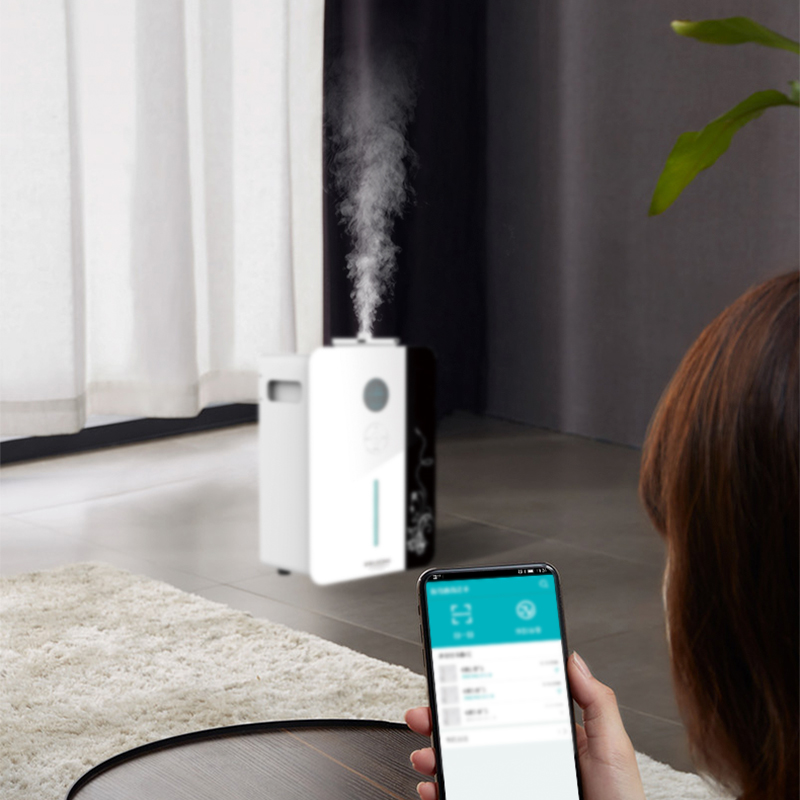
Managing scent across a sprawling hotel or a multi-location retail chain used to be a nightmare. Modern systems solve this through Wi-Fi and Bluetooth connectivity. Facility managers can monitor oil levels across multiple zones simultaneously. You adjust intensity settings directly from a single digital dashboard. If the lobby needs a stronger scent on a busy weekend, you change it from your smartphone. You gain total oversight of your entire fleet of machines. You eliminate the need to physically interact with each individual device.
Public safety remains a top priority for any facility manager. Commercial scenting systems provide peace of mind through strict regulatory adherence. Professional machines are specifically designed for compatibility with IFRA (International Fragrance Association) certified oils. These standards guarantee the fragrances contain safe ingredients. You avoid the unknown chemicals often found in cheap, imported air fresheners. By pairing commercial hardware with IFRA-compliant oils, you protect your staff and customers from harmful exposure.
Traditional aerosol sprays rely heavily on harmful propellants. Regulatory bodies are actively phasing out these products due to their high VOC (Volatile Organic Compound) emissions. Commercial cold-air atomizers provide the sustainable, regulatory-friendly alternative. They use zero propellants. They require zero compressed gases. The mechanical pump does all the work. You significantly reduce your facility's environmental footprint. You also stay ahead of increasingly strict air quality regulations governing commercial real estate.
Many business owners face skepticism regarding fragrance sensitivities. Customers often worry about allergic reactions. However, dry-mist commercial systems address these concerns directly. They allow for highly controlled, hypoallergenic dispersion at safe parts-per-million (PPM) ratios. The concentration remains low enough to avoid triggering sensitivities, yet high enough to register psychologically. Reputable commercial oil suppliers also provide full allergen transparency documentation. You can confidently deploy these systems knowing you maintain a safe, welcoming environment for everyone.
Selecting the right hardware requires precise environmental calculations. Do not guess your coverage needs.
Choosing the right form factor depends entirely on your specific infrastructure. Use this quick decision framework:
You must evaluate vendors on their holistic support structure, not just their hardware. A machine is only valuable if it runs consistently. Scrutinize their maintenance support protocols. Ask about oil subscription transparency to avoid hidden fees. Review their replacement unit policies closely. If a pump fails, you need a swap within 48 hours, not a lengthy repair process. Strong SLAs ensure your brand experience never suffers from prolonged equipment downtime.
Investing in commercial scenting architecture represents a major operational upgrade. You move away from chaotic, manual air freshening toward a precise, automated brand experience. It targets consistent customer engagement, significant labor reduction, and strict environmental safety. The shift to cold-air diffusion eliminates residue risks while preserving fragrance integrity.
Your next step should focus on validation. Encourage your decision-makers to request an HVAC scent-mapping audit from a reputable vendor. Alternatively, run a small-scale pilot test in a single high-traffic zone. This allows you to evaluate the measurable impact on customer behavior before rolling out a system across all business locations.
A: Typically, you just need a simple oil cartridge swap every 30 to 90 days. You should also perform a routine nozzle cleaning. The exact timeline depends heavily on the unit size and your specific run schedule.
A: No. True cold-air atomizers break the oil down into sub-micron nanoparticles. These particles act exactly like a dry gas. This technology entirely prevents condensation, buildup, or residue inside your expensive ductwork.
A: Commercial units demand a higher upfront investment. However, they provide far superior long-term efficiency. You benefit from granular programmable schedules, zero daily labor waste, and highly concentrated, undiluted fragrance usage over the machine's lifespan.


