
Views: 0 Author: Site Editor Publish Time: 2026-06-25 Origin: Site


Commercial spaces are rapidly moving away from localized, plug-in air fresheners. They now favor integrated, facility-wide scent management systems. This shift transforms ambient scenting from a patchy afterthought into a seamless architectural feature. A reliable commercial hvac scent diffuser standardizes the customer experience across massive footprints. You find these systems hard at work inside premium hotels, sprawling retail centers, and modern corporate offices. Poorly managed standalone units waste labor hours and create frustrating scent hot spots. Connecting scent delivery directly to air handling units solves these core operational bottlenecks. This article evaluates the operational, financial, and technical advantages of HVAC-integrated scenting. Decision-makers will learn exactly how these systems improve spatial ambiance, ensure strict safety compliance, and simplify ongoing facility maintenance.
Managing dozens of localized units drains hidden maintenance hours away from critical facility tasks. We see this happen constantly in large retail chains and sprawling hotel lobbies. Staff must physically walk the floor to manually refill reservoirs. They constantly check battery lives or replace power cords. They reset disconnected devices after cleaning crews accidentally unplug them. Over time, these seemingly small tasks multiply into massive operational waste. Your maintenance teams spend valuable time servicing plastic towers instead of handling vital building repairs. You essentially pay skilled workers to pour oil into small cups.
Standalone units push scent outward from a single point. This creates intense, overpowering scent hot spots right next to the machines. Guests often find this localized intensity highly unpleasant. Conversely, high-traffic corridors often become complete dead zones. Visitors walk through an invisible wall of heavy fragrance, only to smell absolutely nothing a few feet away. This inconsistency ruins the desired ambient experience. It breaks the psychological immersion you try to create for your guests.
Cluttered floor plans present obvious aesthetic issues for luxury brands. Interior designers hate seeing occupied wall outlets and bulky plastic devices interrupting sleek architectural lines. Public-facing environments also face genuine risks of tampering. Freestanding diffusers often get knocked over by luggage carts or children. This spills highly concentrated, expensive fragrance oils onto premium flooring. Spilled oil creates immediate slip hazards and often leaves permanent stains on expensive carpets.
You leverage existing air handling units (AHUs) to distribute scent evenly. The fragrance rides the natural, engineered airflow of your building. Customers experience a consistent, subtle aroma from the grand entryway all the way back to the executive offices. A centralized commercial hvac scent diffuser eliminates spatial gaps effortlessly. You no longer worry about corners where the scent drops off completely. The system works harmoniously alongside your climate control infrastructure to blanket the entire space simultaneously.
Modern enterprise units rely entirely on high-pressure, heatless nebulization. Applying heat can destroy delicate fragrance oil profiles. It fundamentally alters how they smell. Cold-air technology preserves oil integrity perfectly. More importantly, it prevents dangerous moisture buildup inside your expensive ducts. The internal compressor breaks oils into microscopic dry mist particles. Because the mist remains completely dry, it never condenses inside the ductwork.
Facility managers program custom intensity levels via a single digital interface. Many systems even offer a secure smartphone app for remote adjustments. You easily set strict operating schedules to match actual business hours. For instance, you can program the system to run from 8:00 AM to 6:00 PM. You can also schedule automatic weekend pauses to conserve oil. You manage the entire building's olfactory footprint from one central screen. This completely eliminates the need to physically touch individual machines.
You drastically reduce the cost per cubic foot of scenting. Commercial units accommodate massive high-capacity fragrance canisters. These canisters hold anywhere from 500ml to 5 liters of pure oil. Buying bulk fragrance oil directly from manufacturers is inherently cheaper than purchasing small retail bottles every few weeks. You also drastically reduce plastic waste by avoiding disposable cartridges. Over a multi-year period, volume discounting on bulk oil yields significant financial relief for your facility budget.
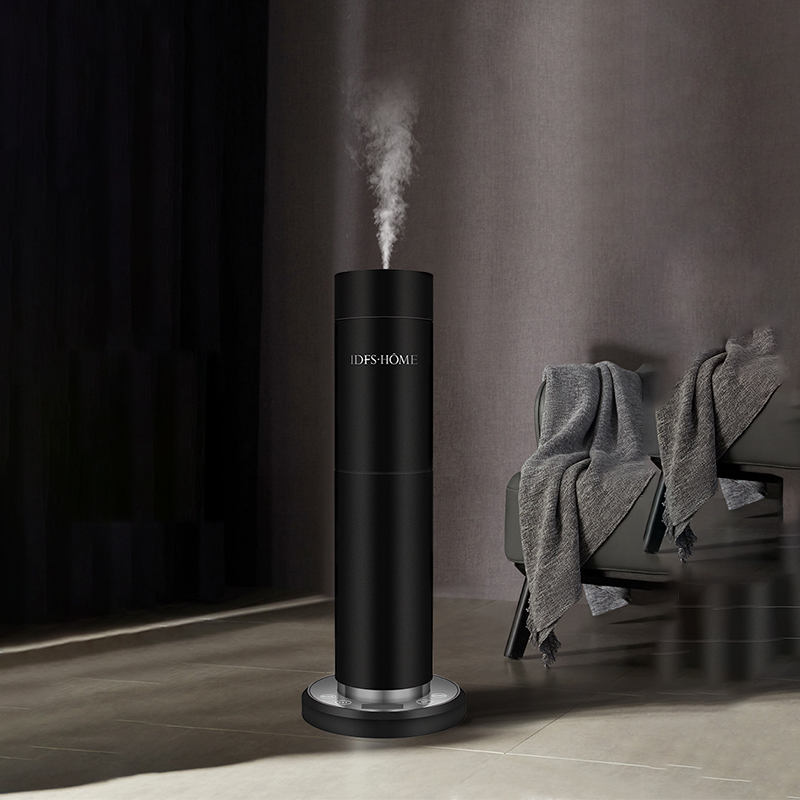
A common fear involves oil ruining expensive HVAC infrastructure. Validating sub-micron particle size matters immensely here. Quality diffusers output particles typically under 1 micron in diameter. This creates a completely dry, weightless mist. It travels freely through the high-velocity airstream without leaving sticky oily residue on galvanized metal walls. It also passes safely through high-efficiency MERV filters without clogging the pleated media. If a diffuser produces larger droplets, those droplets will eventually pool inside the duct. This creates massive sanitation issues.
Protecting indoor air quality is paramount for any commercial space. You must verify your fragrance oils follow strict global guidelines. Reputable suppliers provide IFRA (International Fragrance Association) compliant oils. These specific commercial formulas must be cruelty-free. They must also be completely free of harmful volatile organic compounds (VOCs). Avoiding VOCs ensures you do not trigger allergic reactions among staff or guests. It also keeps you fully compliant with modern commercial building health standards.
You must remember one simple rule: scenting follows airflow perfectly. Areas featuring negative pressure require special attention before you install anything. Commercial kitchens or public restrooms usually pull air out of the building. Pushing scent into them via central supply ducts might fail entirely. Exhaust fans immediately suck the fragrance outside. Isolated return vents also alter dispersion patterns. Proper zoning considerations prevent wasted oil and ensure the aroma actually reaches the intended target area.
| Observed Challenge | Likely Cause | Systemic Solution |
|---|---|---|
| Oily residue near vents | Poor atomization causing heavy droplets | Clean nebulizer nozzle or upgrade to true cold-air diffusion. |
| Scent disappears at noon | HVAC fan cycles off during temperature holding | Set AHU fan to "On" rather than "Auto" during business hours. |
| Faint smell overall | Unit installed before the air filter | Relocate insertion tube to a post-filter position. |
You need adequate physical access to the main supply ductwork. Installation requires placing the flexible insertion tube strictly post-fan and post-filter. If you insert the mist before the filter, the expensive filter media simply catches and traps all the fragrance. You must evaluate whether your mechanical rooms offer enough wall clearance. You need sufficient space to mount the heavy metal main canister securely.
You must decide exactly who performs the installation. In-house facility maintenance teams can handle setups if they possess basic sheet metal skills. However, hiring a certified HVAC contractor often proves much safer for commercial warranties. Professionals guarantee proper drilling into the sheet metal. They ensure airtight sealing around the insertion tube using commercial-grade mastic or rubber grommets. This prevents unwanted, whistling air leaks in your main supply lines.
Centralized systems still require some attention, albeit far less than standalone units. You should plan for bi-monthly or quarterly canister replacements depending on your specific usage schedules. Routine nozzle cleaning prevents atomization degradation. Neglected nozzles spit larger oil droplets. This quickly ruins the dry mist effect. You can usually clean a nozzle simply by running rubbing alcohol through the system for fifteen minutes.
Choosing the right unit requires specific spatial math. You match the output capacity not just to square footage, but to the total cubic volume of the space. You also must calculate the CFM (Cubic Feet per Minute) rating of your existing HVAC system. A machine built for a lobby with normal ceilings will fail completely inside an open warehouse. High ceilings demand stronger output. You must push enough concentrated mist into the airstream to survive the journey through the ductwork.
You must evaluate the financial differences between buying equipment outright versus entering a subscription-based scent management service. Buying outright requires a larger initial capital expense. However, it significantly lowers your monthly operational costs moving forward. You control the asset entirely. Conversely, subscription models often bundle the equipment, the bulk oil, and regular maintenance visits. They charge one flat monthly fee. You must decide which specific financial structure best fits your operational budget and capital expenditure limits.
Shortlist your potential vendors very carefully. Look closely at warranty terms for the main internal compressor. This represents the most critical moving part. Ask about commercial technical support availability. Your team needs fast, accurate answers if the machine stops nebulizing on a busy Friday morning. Finally, demand absolute transparency regarding fragrance ingredients to ensure continuous compliance. A trustworthy vendor gladly supplies all safety data sheets immediately upon request.
| Space Volume (Cubic Feet) | Recommended Diffuser Type | Ideal HVAC CFM Rating | Typical Maintenance Cycle |
|---|---|---|---|
| Up to 50,000 | Medium-Capacity Commercial | 1,500 - 3,000 CFM | 90 Days |
| 50,000 - 150,000 | Large-Capacity Enterprise | 3,000 - 8,000 CFM | 60 Days |
| 150,000+ | Multi-Unit Networked System | 8,000+ CFM | 30-45 Days |
Integrating scent into your HVAC system transitions sensory marketing from a tedious manual chore into a fully automated, invisible architectural feature. You instantly eliminate the daily hassle of refilling scattered floor units. Facility managers regain lost labor hours while ensuring completely uniform, edge-to-edge fragrance coverage. Furthermore, true cold-air diffusion guarantees your air handling units and filters remain entirely safe from sticky residue. You standardize the guest experience effortlessly.
Your next step is simple and highly actionable. We strongly recommend conducting a comprehensive facility HVAC audit today. Identify your post-filter supply lines clearly and calculate your total cubic footage accurately. Then, request commercial trial units from reputable vendors. Testing an HVAC diffuser dispersion path before committing to full-scale deployment ensures total success.
A: No. Enterprise-grade units use cold-air nebulization. This technology creates a completely dry mist made of sub-micron particles. These microscopic particles float freely through the high-velocity airstream without clinging to metal walls or damaging internal mechanical components.
A: A standard large-capacity cartridge usually lasts between 30 to 90 days. The exact lifespan depends entirely on your programmed intensity settings, the building's total cubic volume, and your specific daily operating hours.
A: Yes, but only if your facility utilizes separate air handling units for different zones. A single AHU distributes one scent uniformly. To vary fragrances across distinct departments, you must install distinct diffusers on separate, independent HVAC zones.
A: Yes, provided you strictly select certified commercial oils. Always ensure your vendor supplies IFRA-compliant, cruelty-free formulas. These professional-grade oils contain absolutely zero harmful VOCs. This ensures strict indoor air quality compliance while prioritizing overall occupant safety.


