
Views: 0 Author: Site Editor Publish Time: 2026-06-18 Origin: Site


Walking into a beautifully designed hotel lobby only to encounter a stale, damp odor ruins the entire experience instantly. Physical spaces struggle constantly to keep guests engaged. Retailers, hospitality brands, and corporate offices fight to increase dwell time and build brand recall. They also frequently battle environmental odors. They often try using weak residential air fresheners. These basic sprays fail to mask tough smells.
Upgrading to a commercial scent machine solves this persistent challenge. These systems transcend simple room sprays. They utilize programmable, advanced diffusion technology. Many units integrate directly into your existing HVAC infrastructure. This approach achieves consistent, measurable atmospheric changes across large square footages.
We will evaluate the real return on investment of scent marketing. You will learn how to select the right equipment. We will explore spatial requirements, technology types, and maintenance realities. This pragmatic guide offers an evidence-based approach to implementing sensory marketing successfully.
Ambient scenting directly influences measurable business outcomes, including extended customer dwell time and increased willingness to spend.
Commercial-grade systems offer precise control, neutralizing malodors at the molecular level rather than just masking them.
Selecting the right scent diffuser machine requires evaluating spatial square footage, existing HVAC infrastructure, and maintenance bandwidth.
Professional implementation mitigates safety concerns by utilizing IFRA-compliant, residue-free cold-air diffusion technology.
Sensory marketing directly impacts your bottom line. Business leaders often view ambient scenting as a luxury. However, historical data proves it functions as a powerful revenue driver. Retail environments deploying pleasant ambient scents see immediate behavioral shifts. Shoppers in these spaces are willing to spend 10 to 20 percent more on average. They perceive the merchandise as higher quality. They feel more relaxed during their browsing experience.
Olfactory memory creates a massive retention advantage. Our brains process scents in the limbic system. This area directly controls emotion and memory. Human scent memory retains 65 percent accuracy after an entire year. Visual memory performs poorly by comparison. It drops to a mere 50 percent accuracy after just three months. A signature fragrance drives repeat visits. It builds subconscious brand loyalty long after the customer leaves.
Dwell time optimization represents another major financial benefit. Specific scent profiles manipulate physiological responses. Hospitality venues frequently deploy lavender or vanilla. These particular notes actively lower human anxiety levels. They also reduce resting heart rates. Calm guests naturally linger longer in lobbies. Relaxed shoppers spend more time walking retail floors. Longer dwell times consistently correlate to larger transaction sizes.
We must also consider workplace productivity. Corporate spaces benefit heavily from internal scenting strategies. Managers introduce citrus or peppermint profiles into office environments. These specific notes improve employee alertness. They boost daily productivity metrics. Some statistical studies show incredible results in corporate settings. Workers exhibit up to a 54 percent reduction in data entry errors. The environment simply keeps them focused and energized.
Facility managers face constant challenges regarding environmental smells. Dampness, smoke, or proximity to food courts create unpleasant atmospheres. Standard aerosol sprays perform terribly here. They simply mask smells temporarily. They drop heavy droplets onto surfaces. The original foul odor quickly returns.
A true commercial scent system operates differently. It utilizes molecular malodor remediation. Commercial units disperse proprietary odor-neutralizing compounds. These active agents bind to bad odor molecules in the air. They alter the chemical structure of the foul smell. They counteract the smell rather than hiding it. This leaves a clean, neutralized baseline.
Consistent dispersion eliminates the dreaded scent fatigue. Cheap plug-ins create localized overpowering smells. Guests near the outlet feel overwhelmed. Guests twenty feet away smell nothing. Programmable systems fix this completely. They ensure a uniform ambient layer. The intensity remains identical throughout operating hours. This creates a subtle, professional background atmosphere.
Aesthetic discretion matters in high-end environments. Luxury spaces cannot feature bulky plastic dispensers on their walls. Commercial systems remain completely unobtrusive. They operate silently behind the scenes. Installers can hide them out of sight. They avoid visual clutter entirely. The fragrance simply exists in the space naturally.
Below is a quick comparison chart detailing how commercial units outperform residential sprays.
Feature | Standard Aerosol Sprays | Commercial Diffusion Systems |
|---|---|---|
Odor Treatment | Masks odors temporarily | Neutralizes malodors molecularly |
Dispersion Consistency | Highly uneven, causes scent fatigue | Uniform ambient layer all day |
Visual Aesthetics | Visible wall-mounted cans | Hidden, silent, HVAC-integrated |
Residue Left Behind | Heavy droplets on floors/merchandise | Zero residue (dry micro-mist) |
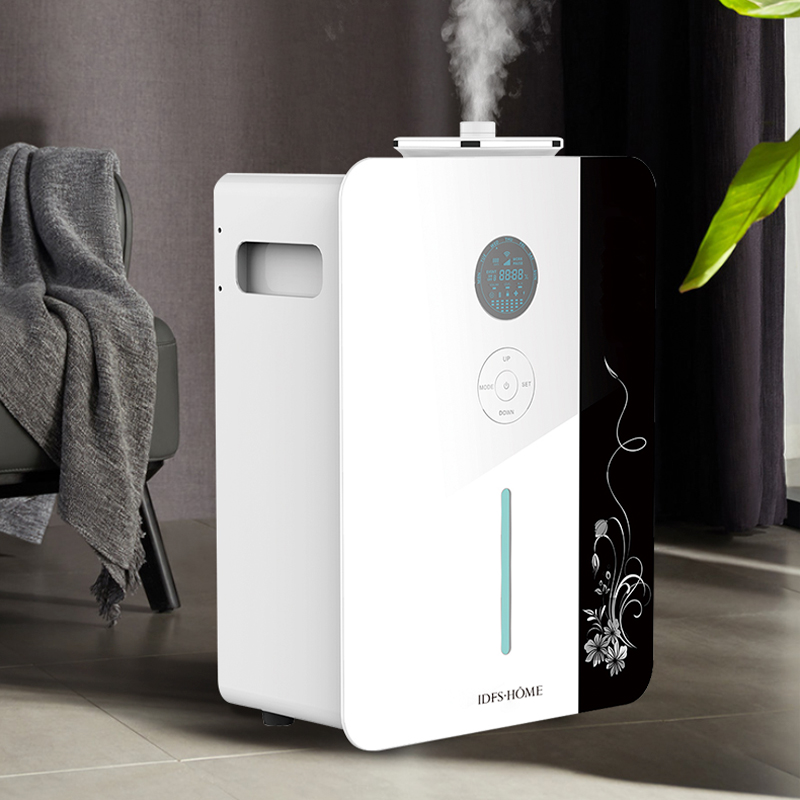
Choosing the correct equipment prevents operational headaches. You must evaluate spatial square footage first. You also need to assess existing ductwork. Maintenance bandwidth plays a major role in your final decision. Let us examine the three primary categories of diffusion technology.
These units represent the pinnacle of scent marketing. They are best suited for casinos, large hotels, and sprawling retail environments. They easily cover spaces exceeding 10,000 square feet.
The mechanism relies on central air ductwork. Technicians plumb the unit directly into your existing HVAC supply lines. The system pushes fragrance through your vents.
Pros: They ensure absolutely even distribution. The unit remains completely hidden from view. They demand the lowest daily maintenance.
Cons: They require professional installation. You need accessible ductwork.
Many businesses lack accessible central ductwork. A standalone scent diffuser machine solves this effectively. They are perfect for lobbies, medium retail spaces, and fitness centers. They typically cover 1,000 to 4,000 square feet.
The mechanism utilizes pressurized cold air. The machine breaks essential oils into a dry micro-mist. These particles measure between 1 and 5 microns. The process uses absolutely zero heat or water.
Pros: It preserves the chemical integrity of the fragrance oil. It leaves zero residue on merchandise or expensive electronics.
Cons: It requires periodic cartridge swaps by your staff. The unit occupies physical floor or wall space.
Sometimes you only need to address specific zones. These smaller units work well for restrooms, elevator banks, or small individual offices.
Ultrasonic units use water and high-frequency vibration. Evaporative units use fans blowing over saturated scent pads.
Pros: They are highly accessible and easy to deploy instantly.
Cons: They require heavy daily maintenance. You must clean water tanks constantly to prevent mold growth. They are absolutely not viable for scaling across an entire commercial footprint.
Safety concerns frequently arise during initial consultations. Skeptics worry about indoor air quality. We must address these concerns directly using established industry standards.
Commercial-grade oils adhere to strict health and air quality standards. Reputable providers formulate their fragrances according to IFRA guidelines. The International Fragrance Association sets rigorous safety benchmarks. These standards dictate permissible concentration levels for human exposure. Compliant oils contain no harmful propellants. They ensure your indoor air quality remains safe for continuous inhalation.
We must also clarify pet and human allergen transparency. Synthetic chemical sprays from hardware stores often trigger allergies. Professional commercial scenting utilizes hypoallergenic ingredients. The oils are VOC-compliant. This means they do not release harmful volatile organic compounds. Sensitive individuals generally tolerate these controlled dry mists perfectly well.
Zero-residue guarantees protect your physical assets. Nebulization physics makes this possible. The system produces a micron-sized mist. The liquid oil transforms into a dry vapor. The process uses no heavy carrier oils. It uses no water. Therefore, the vapor will not damage your sensitive HVAC coils. It will not settle on luxury retail inventory. Delicate computer electronics remain completely safe from moisture damage.
Launching a successful sensory marketing program requires structure. Haphazardly plugging in diffusers yields inconsistent results. Follow this three-phase roadmap for a seamless implementation.
Phase 1: Spatial and Brand Consultation
You must first evaluate your physical space. Assess your natural airflow patterns. Calculate your exact square footage. Identify any existing odors you need to neutralize. Next, match the fragrance family to your brand identity. A luxury boutique might select Woody or Sandalwood profiles to convey elegance. A high-energy fitness center should choose Citrus profiles to project vitality.
Phase 2: Customization and Testing
Installation marks the beginning of the testing phase. You must program the diffusion equipment strategically. Base your intensity levels on foot traffic peaks. A busy afternoon might require a higher intensity setting. You should also align the schedule with your operating hours. Turn the system off at night to conserve fragrance oil. Gather staff feedback during the first week. Adjust the diffusion rates until you achieve a subtle, welcoming background scent.
Phase 3: Ongoing Maintenance SOPs
Facility managers need realistic operational expectations. Establish clear Standard Operating Procedures (SOPs). Outline the exact frequency for fragrance cartridge replacements. Schedule routine nozzle checks to prevent microscopic clogs. Coordinate scent maintenance with your standard HVAC filter synergies. Changing your air filters regularly ensures the fragrance travels efficiently through the ductwork.
To further assist in Phase 1, here is a reference table for selecting appropriate fragrance families based on business types.
Fragrance Family | Primary Psychological Effect | Ideal Business Environments |
|---|---|---|
Citrus / Peppermint | Energizing, improves alertness | Corporate offices, gyms, modern retail |
Lavender / Vanilla | Calming, reduces anxiety | Hotel lobbies, spas, medical waiting rooms |
Woody / Sandalwood | Grounding, conveys luxury | High-end boutiques, luxury car dealerships |
Gourmand (Coffee/Spice) | Nostalgic, creates comfort | Cafes, bakeries, real estate open houses |
Upgrading to a professional diffusion system transforms your physical space completely. It represents a vital shift in facility management. You move away from reactive odor control. You step into proactive sensory marketing. The environment actively works to engage your customers.
The measurable benefits are undeniable. You extend customer dwell time. You build powerful subconscious brand recall. You optimize workplace productivity. You achieve all this while neutralizing foul environmental odors at the molecular level.
Take action on these insights today. Schedule a thorough spatial consultation with a scenting professional. Request a fragrance sample kit. Verify how this cold-air diffusion technology performs in your specific environment. Elevate your brand experience immediately.
A: Monthly operational factors depend heavily on your exact square footage. Running an HVAC-integrated unit continuously requires more fragrance oil than a standalone machine in a small lobby. Subscription models for fragrance oils offer predictable monthly rates. You typically only pay for the consumable cartridges your specific diffusion schedule requires.
A: No. Commercial-grade systems utilize dry-mist nebulizing technology. This process uses compressed air to break oils into microscopic particles. It introduces zero moisture or heavy carrier fluids into your ductwork. It leaves absolutely no residue on your sensitive HVAC coils.
A: You should always use hypoallergenic, IFRA-compliant fragrance oils. These formulas adhere strictly to global safety standards and are VOC-compliant. Setting appropriate, subtle concentration levels further minimizes risks. A properly calibrated commercial mist rarely triggers sensitivities compared to cheap, synthetic chemical sprays.
A: Yes. Commercial systems utilize a convenient plug-and-play cartridge design. You can effortlessly swap your standard signature scent for seasonal alternatives. Many retailers transition to pine or spiced notes during holiday marketing pushes to enhance the festive shopping atmosphere.


