
Views: 0 Author: Site Editor Publish Time: 2026-08-04 Origin: Site


Scent marketing has evolved from a luxury hospitality tactic into a measurable operational strategy for retail, corporate, multi-family residential, and clinical environments. Facility managers and business owners often attempt to scent large commercial spaces using residential-grade, water-based diffusers. This usually results in inconsistent coverage, high maintenance overhead, and unprofessional aesthetic footprints across the property. Transitioning to a commercial essential oil diffuser shifts the approach from localized air freshening to automated, scalable ambient scenting. You stop relying on staff to manually fill small water tanks and instead leverage technology designed for continuous, high-volume output. This guide breaks down the operational advantages, technical evaluation criteria, and implementation realities of enterprise-grade scenting. We will look at how these systems integrate with existing infrastructure and why they outperform standard consumer units in every measurable category.
Facility managers often try to cut corners by purchasing consumer-grade ultrasonic diffusers for commercial lobbies, corridors, or retail floors. These units rely on water to disperse essential oils. You fill a small reservoir, add a few drops of oil, and a vibrating disc creates a wet mist. This technology works fine for a 150-square-foot bedroom. It fails completely in a 3,000-square-foot open-concept commercial space.
The physical limitations become obvious within days of deployment. Water-based mist is heavy. It falls to the ground within a few feet of the device. This creates slippery surfaces on hard floors and damages wood finishes. The scent dispersion remains highly localized. Guests standing right next to the unit get overwhelmed by the smell, while people twenty feet away smell nothing.
Beyond poor performance, residential units create severe operational headaches. Consider the daily reality of managing these devices:
Managing a fleet of these small units across a large property drains labor resources and ultimately costs more in wasted time than the hardware itself.
Enterprise-grade scenting abandons water entirely. A commercial scent machine operates on the principle of cold air diffusion, also known as nebulization. This process utilizes high-velocity pressurized air to force pure essential oil through a microscopic atomizing nozzle. The sheer force of the air breaks the liquid down into dry nanoparticles.
These particles are incredibly small, often measuring less than one micron in diameter. Because they are so light, they do not fall to the floor. They remain suspended in the ambient air currents, floating evenly throughout the designated space. This dry mist leaves absolutely no residue on furniture, retail inventory, or electronics.
Cold air diffusion preserves the therapeutic and chemical integrity of the essential oil. Heat-based diffusers alter the molecular structure of the fragrance, often burning the top notes and leaving a synthetic, plastic-like smell. Nebulization keeps the oil at room temperature. You get the exact scent profile intended by the perfumer.
This technology scales effortlessly. A single nebulizing unit can scent thousands of square feet using just a few milliliters of oil per day. The hardware features industrial-grade air pumps designed to run continuously for years without motor fatigue.
Scent connects directly to the limbic system, the part of the brain responsible for memory and emotion. Visual and auditory cues take time to process. Olfactory cues trigger an immediate, visceral reaction. When you deploy a signature scent across your properties, you create instant brand recognition.
Consumers widely recognize this as the hotel diffuser effect. Luxury hospitality brands have spent decades perfecting their lobby scents. A guest walks through the revolving doors and immediately smells a specific blend of white tea and thyme. Their shoulders drop. They relax. They instantly associate that smell with high-end service and comfort.
You can replicate this effect in any commercial environment. A high-end auto dealership might use leather and sandalwood notes to reinforce the feeling of luxury. A modern apartment building might use fresh linen and citrus in the corridors to communicate cleanliness and proactive property management. The right ambient scent elevates the perceived value of the products and services offered within that space.
Ambient scenting directly influences consumer behavior. Retailers use fragrance strategically to slow down the shopper's walking pace. When a store smells pleasant, customers naturally want to stay in that environment longer.
Industry data consistently shows that increased dwell time correlates with higher sales volume. Shoppers who linger in a space interact with more merchandise. They speak with sales representatives longer. They feel less rushed to complete their transaction and leave.
This applies beyond traditional retail. In a casino, a welcoming scent keeps players at the tables longer. In a coffee shop, a complementary aroma encourages patrons to order a second drink and stay for another hour. You actively engineer an environment that makes people want to stay.
Different commercial zones serve different functions. You can tailor the fragrance profile to support the specific goal of each room.
High-energy environments require stimulating scents. Corporate sales floors, fitness centers, and co-working spaces benefit from citrus, peppermint, or eucalyptus. These profiles promote alertness and perceived energy. They help combat the mid-afternoon slump.
Relaxation environments require calming scents. Spas, dental waiting rooms, and hotel lounges benefit from lavender, chamomile, or cedarwood. These profiles help lower perceived stress levels and reduce anxiety for waiting patients or tired travelers.
Keep your expectations grounded in reality. Ambient scenting acts as an environmental enhancement. It improves the general mood and comfort of the occupants. Do not make unverified medical claims about curing illnesses or treating clinical anxiety. The goal is simply to create a more pleasant, supportive atmosphere.
Traditional commercial air care relies heavily on aerosol sprays and chemical plug-ins. These legacy methods damage the environment and degrade indoor air quality. Aerosol cans release volatile organic compounds (VOCs) and utilize harmful chemical propellants. Wall plug-ins generate massive amounts of single-use plastic waste.
Upgrading to a nebulizing fragrance system aligns with modern sustainability initiatives. Cold air diffusers use pure liquid oils without any chemical propellants. The hardware consists of durable metals and high-grade polymers designed to last for years.
The efficiency of nebulization also reduces consumable waste. Because the machine breaks the oil down into microscopic particles, it uses a fraction of the liquid required by older technologies. You get maximum scent coverage from a minimal amount of natural resource.
Many commercial spaces battle persistent malodors. Gym locker rooms, public restrooms, and multi-family trash chutes generate smells that ruin the customer experience.
Standard air fresheners attempt to mask these odors by spraying heavy, synthetic perfumes over them. This creates a nauseating mixture of floral chemicals and garbage. The human nose easily detects both layers.
Commercial scenting systems utilize molecular odor remediation. The essential oil blends contain specific neutralizing agents. When dispersed into the air, these nanoparticles bind with the malodor molecules. They alter the chemical structure of the bad smell, effectively neutralizing it. Once the malodor is destroyed, the system leaves behind only the clean, intended fragrance.
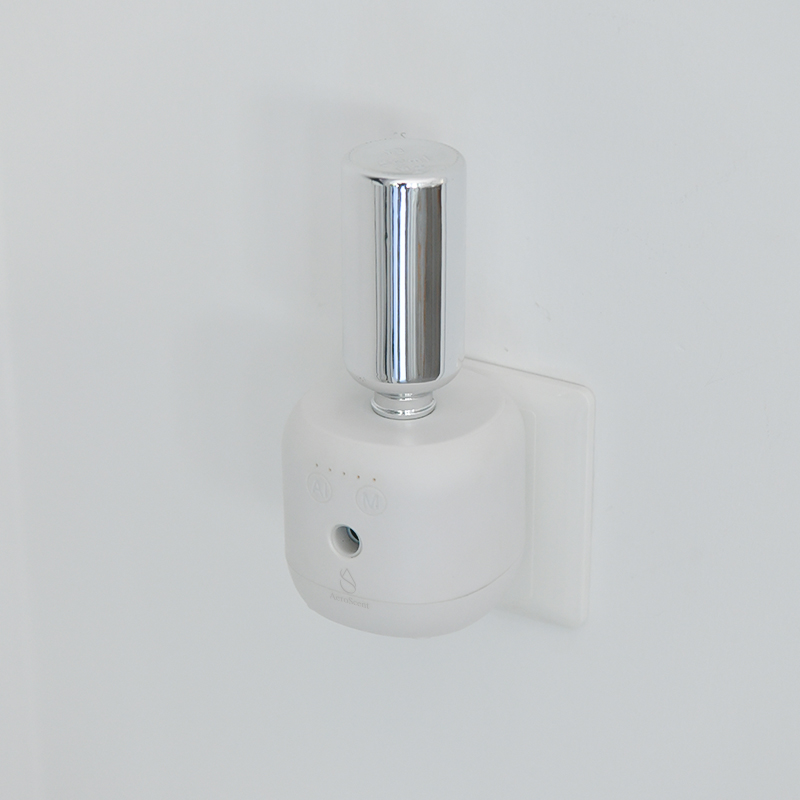
Facility managers must choose between standalone units and HVAC-integrated systems. The decision depends entirely on the size of the space and the layout of the ductwork.
Standalone units work perfectly for targeted zones. You can mount them on a wall, place them on a high shelf, or set them on a reception desk. They typically cover spaces ranging from 500 to 2,000 square feet. They require only a standard electrical outlet and take minutes to install.
HVAC-integrated systems provide whole-building coverage. Installers mount the scent machine in the mechanical room. They drill a small hole into the supply air plenum and insert a flexible PTFE tube. The machine pumps the dry nanoparticle mist directly into the moving air stream. The HVAC system then carries the scent through the ductwork, distributing it evenly across massive floor plans.
| Feature | Standalone Commercial Diffuser | HVAC Integrated System |
|---|---|---|
| Coverage Capacity | 500 to 2,000 sq. ft. | 2,000 to 10,000+ sq. ft. |
| Installation Method | Plug-and-play, wall mount, or freestanding. | Requires drilling into supply duct and professional setup. |
| Scent Distribution | Localized to a specific room or open zone. | Whole-building, uniform dispersion via air vents. |
| Maintenance Access | Easy access in public spaces. | Requires access to locked mechanical rooms. |
| Best Use Case | Lobbies, waiting rooms, small retail shops. | Casinos, large hotels, multi-floor corporate offices. |
You cannot run a commercial diffuser at full blast 24 hours a day. That wastes oil and overwhelms the occupants. Modern systems feature advanced digital programming to control the exact output.
Facility managers set specific duty cycles. A common setting might run the pump for 60 seconds and then pause for 120 seconds. This intermittent burst maintains a consistent ambient scent without saturating the air.
You also program the operating schedule to match your business hours. The machine turns on at 8:00 AM and shuts down at 6:00 PM. Advanced units feature Wi-Fi or Bluetooth connectivity. You can adjust the intensity, change the schedule, or check oil levels directly from a smartphone app. This remote management capability proves essential for operators managing multiple properties.
Commercial systems drastically reduce maintenance labor. Instead of refilling a water tank every day, staff only interact with the machine once a month or once a quarter.
These units hold large aluminum or PET bottles of pure essential oil, typically ranging from 500ml to 1000ml. Because nebulization is highly efficient, a 500ml bottle easily lasts 30 to 60 days depending on the duty cycle and operating hours.
Routine maintenance involves simply unscrewing the empty bottle, screwing in a full one, and occasionally wiping down the atomizing nozzle with rubbing alcohol to prevent clogs. This takes five minutes per machine.
Procuring a commercial scenting system involves choosing between capital expenditure and operational expenditure.
Purchasing the hardware outright requires a higher initial investment. You own the machines permanently. This makes sense for facilities with available capital budgets and in-house maintenance teams capable of swapping the oil bottles.
Leasing operates on a scent-as-a-service model. You pay a flat monthly fee. The vendor provides the hardware, the oil, and the maintenance labor. If a machine breaks, the vendor replaces it. This shifts the cost to an operational expense and removes the maintenance burden from your staff entirely. Evaluate your internal labor capacity before choosing a path.
The true cost of a scenting program lies in the ongoing oil consumption. Pay close attention to the hardware ecosystem you select.
Some manufacturers build closed systems. Their machines only accept proprietary fragrance cartridges. You cannot pour your own oil into their bottles. This guarantees the manufacturer a recurring revenue stream and locks you into their specific fragrance catalog.
Open systems feature refillable bottles. You can purchase bulk essential oils from any third-party supplier and pour them into the machine. This provides massive flexibility and protects your facility from supply chain disruptions. Always verify the bottle design before committing to a fleet of machines.
Pumping fragrance into a public space carries inherent liability. You must ensure the safety of the air quality.
Always source oils that comply with the International Fragrance Association (IFRA) standards. IFRA dictates the safe usage levels for specific fragrance compounds to prevent allergic reactions and respiratory irritation. Request the Safety Data Sheets (SDS) and IFRA certificates from your oil vendor. Keep these documents on file in the facility management office.
Communicate your scenting program transparently. If an employee expresses concern about allergies, you can produce the documentation proving the oils are diffused at safe, ambient concentrations without harmful VOCs.
Scent fatigue, or olfactory adaptation, occurs when the human nose stops registering a continuous smell. After spending an hour in a scented lobby, the receptionist will no longer smell the fragrance.
This creates a major operational risk. The receptionist might think the machine is broken or empty. They turn up the intensity dial. Now, when a new guest walks through the front door, they get hit with an overwhelming, suffocating wall of perfume.
Mitigate this by locking the machine settings. Do not allow front-line staff to adjust the output based on their own noses. Rely on objective feedback from people who have just entered the building. Trust the programmed duty cycle to maintain the correct ambient level.
A commercial essential oil diffuser serves as a highly effective facility management tool. It shapes brand perception, neutralizes malodors, and improves the overall experience of the built environment. Standard residential units fail in commercial applications due to poor coverage and massive labor requirements. Upgrading to cold-air nebulization solves these operational bottlenecks.
To successfully implement a scenting program, follow these steps:
A: Commercial units utilize cold air nebulization to break pure oil into dry nanoparticles. They offer HVAC integration, digital duty cycles, and cover thousands of square feet. Residential units rely on water and ultrasonic vibrations, cover very small areas, and require daily manual refills.
A: Yes. Installers mount the unit in the mechanical room and run a PTFE tube into the supply air duct. The machine disperses the dry fragrance mist into the moving air stream, providing even, invisible coverage throughout the entire building.
A: Oil consumption depends entirely on your programmed duty cycle and operating hours. Under normal commercial scheduling, a standard 500ml bottle of essential oil typically lasts between 30 and 60 days before requiring a replacement.
A: Yes, provided you source high-quality, IFRA-compliant oils. Cold-air diffusion disperses these oils at safe, ambient concentrations without using heat or water. Always keep Safety Data Sheets on file to verify the absence of harmful chemical propellants.
A: Yes. Cold-air nebulization eliminates the need for aerosol cans, harmful VOC propellants, and single-use plastic plug-ins. The highly efficient nanoparticle dispersion also maximizes the lifespan of the oil, reducing overall consumable waste.
A: Track specific facility metrics before and after implementation. Monitor changes in customer dwell time, retail sales volume, and guest satisfaction scores. Compare these operational gains against the eliminated labor costs of staff manually refilling standard water-based diffusers.


