
Views: 0 Author: Site Editor Publish Time: 2026-08-31 Origin: Site


Scenting confined environments—such as home offices, bathrooms, or studio apartments—presents a unique challenge: balancing effective odor neutralization with the risk of overwhelming the space. Utilizing oversized diffusers in small rooms often leads to excessive humidity, condensation damage, and olfactory fatigue. Conversely, relying on synthetic room sprays or wall plug-ins introduces volatile organic compounds (VOCs) and artificial chemicals into poorly ventilated areas. Airflow dynamics in rooms under 150 square feet dictate that standard high-output units simply push too much moisture and particulate matter into the environment. Right-sizing your device by selecting a small space essential oil diffuser resolves these issues. This guide evaluates the technical advantages, operational trade-offs, and implementation realities of compact diffusion systems to help you select the optimal unit for your specific square footage.
Spatial volume dictates diffusion requirements. We define a small space as any enclosed area between 50 and 150 square feet. Typical examples include home offices, powder rooms, walk-in closets, and reading nooks. A standard 10x10 foot room with an 8-foot ceiling contains 800 cubic feet of air. Standard diffusers feature reservoirs of 300ml to 500ml and output 30ml to 50ml of moisture per hour. These units are engineered for open-concept living rooms with high cubic feet per minute (CFM) air exchange rates. Placing a high-capacity unit in a 100-square-foot room creates immediate environmental imbalances. The mist output far exceeds the room's natural air exchange rate. The ambient air cannot absorb the dispersed water and oil particles fast enough. This leads to heavy particulate suspension, rapid surface settling, and a saturated environment that feels heavy and damp.
High-output devices overwhelm your olfactory receptors rapidly. When a small room fills with dense aromatic compounds, your nose adapts to the stimulus. This biological response is called olfactory fatigue or sensory adaptation. The receptors in your nasal cavity downregulate to prevent sensory overload. You stop smelling the essential oil within 15 to 20 minutes of operation. The aromatherapy becomes entirely ineffective from a sensory standpoint. Users often mistakenly assume the scent has dissipated and add more oil to the tank. This exacerbates the problem significantly. High concentrations of volatile botanical compounds suspended in a small air volume can trigger headaches. It can also cause mild respiratory irritation, dry throat, and watery eyes. A smaller unit prevents this sensory overload by maintaining a subtle, detectable scent profile that stays below the threshold of olfactory fatigue.
Ultrasonic diffusers emit a continuous stream of water vapor alongside the essential oil. In unventilated areas, this moisture has nowhere to escape. The ambient relative humidity spikes rapidly, often exceeding the recommended 30% to 50% indoor range. Excess water vapor condenses on cooler surfaces due to the dew point shift. You will notice water droplets forming on windows, mirrors, and metal fixtures. Over time, this localized moisture causes severe physical damage to the room's infrastructure. It warps medium-density fiberboard (MDF) desks and swells wooden bookshelves. It causes drywall paint to peel, blister, and flake. More severely, chronic dampness promotes localized mold and mildew growth. Fungal spores thrive behind heavy furniture, inside closets, and in dark corners where airflow is stagnant. Right-sizing your diffuser prevents this destructive moisture accumulation entirely.
Many people default to aerosol sprays in small rooms for quick odor control. Synthetic plug-ins are also heavily utilized in bathrooms. These commercial products rely on chemical concentrates, artificial fragrances, and aerosol propellants. They frequently contain phthalates, benzene derivatives, and synthetic VOCs. Deploying these in a confined, unventilated room is highly problematic. The chemicals become trapped in the small air volume, drastically reducing indoor air quality. You inhale these concentrated toxins directly into your lungs. This irritates the respiratory tract and can exacerbate asthma or allergies. Natural essential oils offer a much safer alternative for odor management. However, they must be dispersed correctly to be effective and safe. Proper dispersion requires a mechanical device scaled precisely to the room's cubic volume.
A successful compact device must meet specific operational and physical criteria to function well in tight quarters. First, it must offer intermittent misting modes. Pausing the output (e.g., 30 seconds on, 30 seconds off) prevents air saturation and extends the run time. Second, it needs low-lumen or disableable lighting. Bright LED rings are highly distracting in small bedrooms or dark home offices. Third, the physical footprint must be minimal. Crowded desks, narrow bathroom shelves, and small bedside tables lack available surface area. The device should fit seamlessly into tight corners without hanging over edges. It must feature a stable base to prevent accidental tipping when reaching for other items. Meeting these criteria ensures the device enhances the space functionally without dominating it physically.
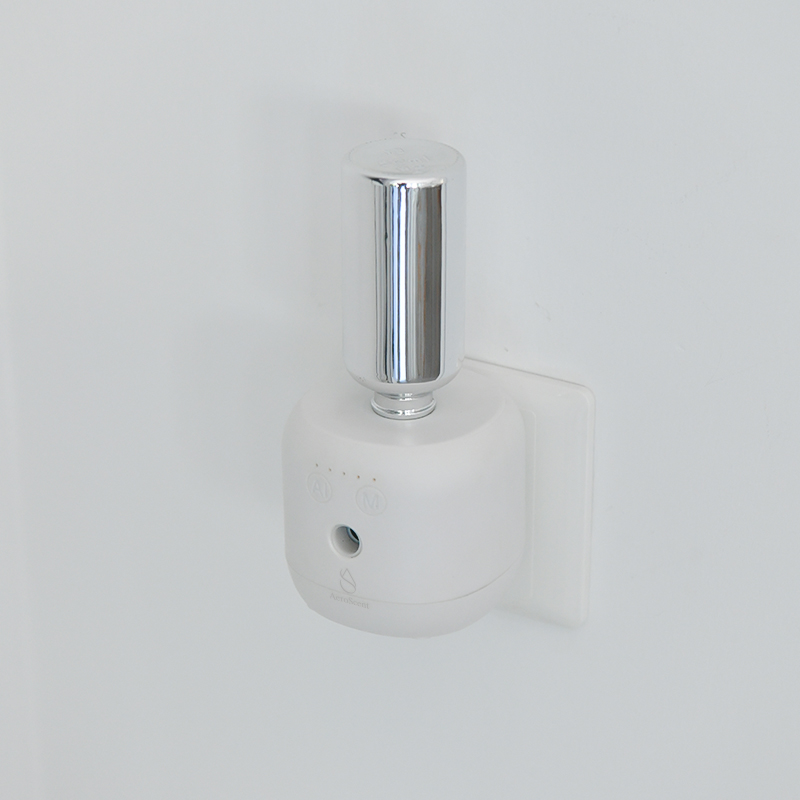
Lower output rates provide distinct advantages for environmental management. A compact diffuser releases micro-bursts of aroma rather than a heavy, continuous cloud. This allows for a subtle, sustained ambiance. You avoid sudden, overpowering fragrance spikes that can cause discomfort. Precision control means the scent remains pleasant and lingers in the background. This is highly practical for shared walls or adjacent rooms in apartments. You can scent your home office with peppermint without the aroma bleeding into the hallway or living room. The aromatic compounds stay contained within the target zone. This controlled dispersion respects the boundaries of your immediate environment and prevents scent clashing throughout the house.
Confined spaces trap stale odors easily due to poor air circulation. Bathrooms, closets, and entryways are particularly susceptible to stagnant air. Leveraging this confined volume works to your advantage when using the right equipment. A mini aroma diffuser provides rapid results because it has less air to treat. It fills the small cubic footage quickly, achieving an instant aroma boost. Natural botanical compounds neutralize odors effectively at a molecular level. Oils like lemon, tea tree, and eucalyptus bind to odor molecules rather than just masking them with heavy perfumes. You eliminate smells using plant extracts instead of synthetic chemicals. This creates a genuinely clean environment. The fast action is perfect for sudden odor issues in bathrooms or kitchens.
Localized diffusion supports specific physical and emotional states without affecting the entire household. You can create tailored micro-environments based on your immediate needs. Place a small unit on your desk and diffuse rosemary or sweet orange oil. This improves focus, mental clarity, and motivation during intense work hours. Alternatively, place a unit on your bedside table and diffuse lavender, cedarwood, or chamomile 30 minutes before sleep. This encourages relaxation, lowers the heart rate, and helps you unwind. You achieve these physiological benefits without altering the scent profile of the entire house. Targeted wellbeing means applying the right botanical tool in the exact location it is needed. It maximizes the therapeutic value of the oils while minimizing waste.
Premium, unadulterated essential oils are expensive commodities. Conserving them is a practical necessity for long-term use. A small unit offers excellent cost-to-yield efficiency. A 50ml to 100ml tank requires very little oil to reach the optimal concentration. You only need 2 to 3 drops to achieve the desired aromatic effect in a 100-square-foot room. In contrast, larger 500ml units require 10 to 15 drops per session to achieve the same concentration in the water. The smaller tank maximizes the efficacy of every single drop. You waste less oil scenting empty space or pushing vapor into HVAC return vents. The localized dispersion ensures you actually breathe the compounds you are diffusing. This efficiency significantly extends the lifespan of your essential oil collection.
| Diffuser Capacity | Drops Required Per Session | Sessions Per 15ml Bottle (approx. 250 drops) | Estimated Lifespan of One Bottle (Daily Use) |
|---|---|---|---|
| 50ml - 100ml (Compact) | 2 - 3 drops | 83 - 125 sessions | 2.5 to 4 months |
| 300ml (Standard) | 6 - 8 drops | 31 - 41 sessions | 1 to 1.5 months |
| 500ml+ (Large Room) | 10 - 15 drops | 16 - 25 sessions | 2 to 3 weeks |
Compact designs offer unmatched versatility in daily operation. Many modern models are USB-powered, drawing minimal amperage. Others operate on internal rechargeable lithium-ion batteries. This cordless flexibility is a major operational advantage. You can move the device seamlessly throughout your daily routine. Take it from your car cup holder during the morning commute directly to your office desk. Move it to your bedside table at night without searching for an available wall outlet. You are not tethered to specific locations dictated by building wiring. This portability ensures you always have access to aromatherapy regardless of your environment. It adapts to changing locations, travel schedules, and temporary setups effortlessly.
Ultrasonic technology dominates the current market due to its reliability and low manufacturing cost. These devices utilize a small piezoelectric ceramic disc located at the base of the water reservoir. When powered, this disc vibrates at ultrasonic frequencies, typically around 2.4 million times per second (2.4 MHz). These intense vibrations break the essential oil and water mixture into micro-fine particles. A small internal fan then blows this cool mist out of the nozzle and into the room. This mechanism requires regular water refills and routine cleaning. It is highly effective for adding micro-humidity to the air. This slight moisture increase is highly beneficial in dry, small spaces, particularly winter home offices running forced-air heating. Ultrasonic units offer a reliable balance of scent dispersion, quiet operation, and affordability.
Nebulizers operate on a completely different physical principle. They do not use water, heat, or ultrasonic vibration. Instead, they utilize the Bernoulli principle. An internal pump forces pressurized air through a small tube. This high-velocity air creates a vacuum that pulls pure essential oil up through a delicate glass nozzle. The oil is atomized into a micro-fine vapor and dispersed directly into the room. This mechanism is perfect for damp areas. Bathrooms, basements, and laundry rooms do not need extra humidity. A nebulizer provides the most potent, unaltered aroma possible. It delivers an immediate, intense mood shift. Because it uses pure oil without water dilution, the scent throw is exceptionally strong. You must use strict intermittent timers with nebulizers to avoid overwhelming a small space quickly.
Passive diffusion requires no electricity, moving parts, or water. It relies entirely on natural ambient evaporation. Porous materials absorb the essential oil and release it slowly into the surrounding air. Common materials include unglazed ceramic stones, rattan reeds, terracotta discs, and natural wood blocks. The oil travels through the microscopic capillaries of the material and evaporates from the surface. A room fragrance diffuser of this type is ideal for ultra-small, confined spaces. Closets, powder rooms, gym bags, and car interiors are perfect locations. Passive units produce zero operational noise. They require no power outlets, batteries, or USB cables. The scent throw is very mild and localized. It provides a constant, subtle background fragrance without any mechanical intervention or maintenance beyond adding more oil.
| Diffuser Technology | Operating Mechanism | Ideal Small Space Environment | Moisture Output Level | Maintenance Requirement |
|---|---|---|---|---|
| Ultrasonic | Piezoelectric Vibration + Water | Dry offices, bedrooms, hotel rooms | Low to Moderate | Weekly wiping, water refills |
| Nebulizing | Pressurized Air + Pure Oil | Bathrooms, damp areas, entryways | Zero | Regular nozzle soaking in alcohol |
| Passive | Capillary Action + Evaporation | Closets, drawers, car interiors | Zero | Minimal (add oil when faded) |
Evaluating a compact unit requires analyzing the run time against your daily habits. You must balance the physical footprint of the device with the frequency of required refills. A 50ml to 100ml tank is the standard capacity for small spaces. You need to verify how long that specific water volume lasts under normal operation. Continuous mist settings deplete a 100ml tank in roughly 2 to 3 hours. Intermittent settings (e.g., 30 seconds on, 30 seconds off) stretch the run time to 4 to 6 hours. You want a device that lasts through a standard work session or a full sleep cycle. Constantly refilling a tiny tank interrupts your focus and becomes a chore. Always check the manufacturer's specifications for the exact mist output rate (measured in ml per hour) to calculate true run times.
Build quality is a critical evaluation dimension that impacts longevity. Essential oils are highly concentrated, volatile plant extracts. Many oils act as natural solvents that break down synthetic materials. Citrus oils, containing high levels of d-limonene, degrade cheap plastics rapidly, causing them to crack or melt. Heavy resin oils, like frankincense or vetiver, can clog delicate mechanisms if the material cannot be cleaned vigorously. Your device must be constructed from appropriate materials to survive daily use.
Acoustics matter significantly in small, enclosed rooms. Large living rooms mask motor noise easily with ambient sound. A quiet bedroom or a private study does not offer this acoustic buffer. Motor whine from a cheap fan becomes highly distracting when placed two feet away on a desk. The sound of trickling water can disrupt light sleepers. You must evaluate the decibel (dB) rating of the unit before deployment. Look for devices rated under 30 decibels (whisper-quiet). Ultrasonic units produce a slight bubbling sound and a faint fan hum. Nebulizers often emit a noticeable vibrating hum from the internal air pump, which can be disruptive in silent rooms. Passive diffusers are completely silent. Choose the technology that matches your noise tolerance for that specific environment.
Physical design impacts daily usability and safety. A compact unit must fit your space physically and visually without causing obstructions. Consider the power cord length and placement. A short cord limits where you can position the unit, often forcing it too close to the edge of a desk. Look for models with directional mist nozzles. This allows you to point the water vapor away from laptops, monitors, and paper documents. Assess the base stability carefully. Tall, narrow units tip over easily on uneven surfaces or when bumped. A wide, weighted base prevents accidental spills that could ruin electronics or stain wood finishes. The aesthetic should blend with your interior decor, utilizing matte finishes or natural wood grains rather than glossy, cheap plastics.
Using essential oils safely requires an understanding of indoor airflow. Even 100% pure, therapeutic-grade oils can cause indoor air pollution if used recklessly. Confined spaces trap particulate matter, allowing concentrations to build rapidly. You must mitigate this risk through intentional cross-ventilation. Crack a window an inch or leave the room door slightly open during operation. Allow fresh air from the HVAC system to circulate through the room and dilute the airborne compounds. Run the device on intermittent settings to give the room time to process the particles. If using a diffuser in a bathroom, run the exhaust fan for 10 minutes after your session to clear residual moisture and heavy scent molecules. Proper ventilation supports physical wellness while allowing you to enjoy the aromatic benefits safely.
Small spaces amplify toxicity risks for vulnerable occupants. Higher particulate concentrations affect the small lungs and livers of pets much faster than humans. You must implement strict safety protocols when diffusing in confined areas. Identify oils that are highly toxic to animals. Eucalyptus, tea tree, pennyroyal, wintergreen, and pine are dangerous to cats and dogs. Citrus oils can also cause severe respiratory and dermal reactions. Never trap an animal in a room with an active diffuser. Ensure the door is open so they can freely leave the scented area if they feel discomfort. Keep the device pushed back on shelves, out of reach of children and pets. Store the essential oil bottles securely in a closed box. Always consult a qualified veterinarian before introducing new botanical scents into a home with animals.
Compact units require meticulous, regular maintenance to function correctly. The small internal components, especially the ultrasonic plate and the nebulizer micro-tubes, clog easily. You must establish a strict cleaning cadence to prevent hardware failure.
This protocol removes lipid buildup, prevents bacterial growth in the water tank, and ensures optimal mist output. For nebulizers, soaking the glass nozzle in isopropyl alcohol weekly dissolves thick resin blockages.
The mechanical device is only as good as the liquid you put inside it. The advantages of a compact unit vanish entirely if used with poor inputs. Avoid synthetic fragrance oils completely. They contain artificial chemicals that leave sticky, permanent residues on the ultrasonic plate. Avoid adulterated products mixed with heavy carrier oils (like fractionated coconut oil or jojoba oil). Carrier oils do not evaporate; they coat the internal mechanisms, clog the mist output, and ruin the device permanently. Source 100% pure, therapeutic-grade essential oils from reputable suppliers who provide GC/MS (Gas Chromatography/Mass Spectrometry) testing reports. High-quality oils vaporize cleanly, deliver true botanical benefits, and protect your hardware investment.
A: Due to the confined square footage, a mini aroma diffuser provides an instant aroma boost. It typically neutralizes odors and establishes the desired mood within 5 to 10 minutes of operation. The small air volume allows the botanical compounds to circulate rapidly and reach your olfactory receptors without delay.
A: For a 50ml to 100ml compact diffuser, 2 to 3 drops of pure essential oil is typically sufficient. This amount scents a room under 150 square feet effectively. Using more drops can cause olfactory fatigue, trigger headaches, and overwhelm the small space with dense particulate matter.
A: Yes, but you must choose the right technology. A waterless nebulizing diffuser or a passive ceramic diffuser is recommended over an ultrasonic model. This avoids adding unnecessary humidity to an already damp, unventilated space, which could promote mold growth on drywall and fixtures.
A: Evidence-based aromatherapy suggests running a diffuser intermittently. Try cycles of 30 minutes on and 30 minutes off. Do not run it continuously all night. Intermittent use maximizes relaxation benefits, prevents sensory adaptation, and avoids over-saturating the room with moisture and volatile compounds.
A: If placed too close to surfaces or run continuously without ventilation, ultrasonic diffusers can leave residue. Tap water causes fine white mineral dust. Heavy oils can leave an oily film. Always use distilled water, elevate the unit off wooden surfaces, and ensure proper airflow.
A: Safety depends entirely on the oil used and room ventilation. Many common oils, like tea tree and eucalyptus, are highly toxic to pets. Small spaces concentrate these particles faster. Always consult a veterinarian and ensure your pet can leave the room freely at any time.
A: A compact diffuser is designed primarily to disperse aroma. It uses very little water (50ml-100ml) to boost wellbeing and neutralize odors. A humidifier is designed to output high volumes of moisture (often gallons per day) to significantly alter the room's overall relative humidity levels.


