
Views: 0 Author: Site Editor Publish Time: 2026-08-21 Origin: Site


Buyers struggle to find an aromatherapy solution that balances therapeutic efficacy, safety, and aesthetic placement without being restricted by power outlets or dealing with the loud operation of nebulizers. Traditional tethered devices restrict you to wall outlets, limiting where you can enjoy your favorite scents. Heat-based warmers degrade delicate essential oils, destroying their natural benefits. Nebulizers operate with a loud, disruptive hum that ruins a quiet atmosphere. You need a modern device that offers spatial flexibility, ecological sustainability, and uncompromised oil integrity. The cordless ultrasonic essential oil diffuser serves as a stylish, hybrid solution to these common problems. Understanding its specific mechanics, battery trade-offs, energy efficiency, and maintenance requirements is essential for making an informed purchasing decision.
Defining effective diffusion requires looking at several specific performance metrics. A successful device must deliver a consistent scent throw that fills a standard room without overwhelming the senses. It must operate with zero heat degradation to protect the therapeutic properties of the oils. Safe operation is mandatory to prevent accidents in homes with children or pets. Finally, energy efficiency keeps power consumption low. Traditional units often fail to meet all these criteria simultaneously. Tethered models limit placement to the perimeter of a room. Candles introduce fire hazards and soot. Identifying a device that meets these success criteria improves your indoor environment safely and effectively.
To evaluate a device properly, we look at four main success criteria:
Inside the base of the unit sits a small ceramic disc, known as a piezoelectric transducer. When powered on, this disc vibrates at ultrasonic frequencies, typically between 1.7 and 2.4 million times per second. These rapid vibrations create ultrasonic waves in the water tank. The waves agitate the water and the added essential oils, causing a phenomenon called cavitation. Cavitation creates microscopic bubbles that rapidly expand and collapse. This intense agitation breaks the liquids down into microscopic particles, usually less than 5 microns in diameter. The device then expels these particles as a fine, cool mist using a small internal fan.
This process requires absolutely no heat. Using an ultrasonic diffuser preserves the delicate chemical structure of the essential oils. The cool mist disperses easily into the surrounding air currents, carrying the intact oil molecules throughout the room. Because the particles are so small, they remain suspended in the air for longer periods, providing a lasting aromatic experience.
Lithium-ion battery integration fundamentally changes how these devices operate. The internal battery, often utilizing standard 18650 cells, powers both the ultrasonic vibrating plate and any optional LED lighting. This architecture differs significantly from standard plug-in models. Plug-in models draw continuous AC power from a wall outlet and use a transformer to step it down. Battery-operated units rely on efficient DC power management from the start.
Engineers optimize the power draw to maximize runtime between charges. The circuitry includes a boost converter to step up the 3.7V battery voltage to the higher voltage required by the piezoelectric disc. The system must balance the energy required for mist generation against the available battery capacity. Pulse Width Modulation (PWM) is often used to control the mist output, allowing for intermittent settings that save power. This careful balance ensures the device functions reliably without being tethered to a wall.
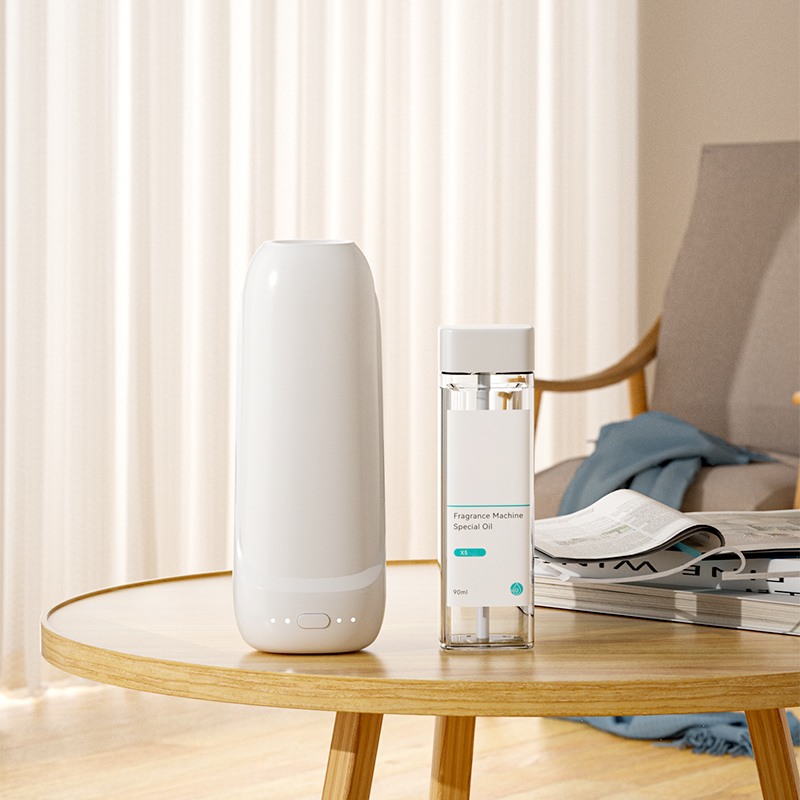
The primary advantage of a cordless diffuser is the elimination of wall outlet dependency. You no longer have to hide power cords behind furniture or restrict your device to the edges of a room. This freedom allows for unrestricted placement across various environments. You can place the unit directly in the center of a dining table during a meal without creating a tripping hazard. You can move it to a bathroom counter during a relaxing bath, keeping it safely away from water sources and outlets. You can even pack it in a suitcase for travel applications, ensuring you have your preferred scents in hotel rooms.
Smart controls enhance this portability. Built-in timers and interval settings manage the mist output automatically. You do not need to manually turn the device on and off. This maximizes convenience and ensures consistent aromatherapy wherever you go. The ability to move the scent source closer to your immediate breathing zone makes the device far more effective than a static unit stuck in a corner.
Heat diffusers, such as candles and ceramic warmers, rely on high temperatures to evaporate oils. This heat causes rapid oxidation. It fundamentally alters the volatile organic compounds (VOCs) present in the oils. Many citrus and floral oils have low flash points and degrade quickly when exposed to heat, losing their therapeutic properties and sometimes producing a burnt odor. Cold-mist technology avoids this destructive process entirely.
Avoiding heat prevents the degradation of these complex chemical structures. Preserving the oil connects directly to your wellness outcomes. You receive the full therapeutic benefits exactly as intended by the plant extract. High-quality oils can provide mood enhancement, an energy boost, or better rest at night. Maintaining the integrity of the oil ensures these benefits are not lost during the diffusion process. You get exactly what you put into the tank.
Noise levels play a major role in the ambient experience of any room. Ultrasonic technology operates with an incredibly gentle diffusion process. These devices typically produce noise levels under 30 decibels (dB). To put this in perspective, a quiet library is around 40 dB, and normal breathing is about 10 dB. This acoustic profile serves as a critical evaluation metric for anyone sensitive to sound.
Users often intend to place the device in sensitive environments. Silence is paramount in bedrooms, nurseries, or focused workspaces. A loud motor or the buzzing sound of an air pump disrupts sleep architecture and breaks concentration. The near-silent operation of the ultrasonic plate ensures the device enhances the environment without causing auditory distractions. The only sound you might hear is the faint, relaxing trickle of water.
These devices provide a secondary benefit beyond scent dispersion. They add micro-droplets of water to the air. This action combats dry indoor environments, especially during winter months when heating systems strip moisture from the air. The gentle moisture can alleviate dry skin, reduce static electricity, and soothe irritated respiratory tracts.
However, you must understand the limitations of this feature. This provides localized moisture only. It functions as a mild humidifier for the immediate surrounding area, typically adding 10 to 20 milliliters of water to the air per hour. Frame this as a supplemental benefit rather than a replacement for a whole-room HVAC humidifier. It improves the air quality in your personal breathing zone, making it ideal for bedside tables or office desks.
Ultrasonic technology consumes significantly less energy compared to traditional plug-in vaporizers. Heat-based warmers require substantial power to maintain high temperatures. Heavy-duty humidifiers draw massive amounts of electricity, sometimes up to 300 watts, to boil water or drive large fans. An ultrasonic unit typically draws between 4 and 10 watts of power. The low energy consumption makes it highly efficient.
This positions the device as an ecological and stylish alternative. You can actively avoid synthetic, single-use air fresheners that contribute to landfill waste and release artificial chemicals. You also eliminate the need for toxic paraffin candles that release harmful soot and volatile organic compounds into your home. The rechargeable nature of the device further reduces battery waste compared to devices using disposable alkaline batteries.
Buyers must understand the inverse relationship between performance settings and battery longevity. The battery capacity, measured in milliampere-hours (mAh), dictates the total energy available. Running the device on continuous high-mist settings drains the battery rapidly. Activating LED lighting features further reduces the available runtime, as LEDs can draw an additional 100 to 200mA of current. You must trade maximum output for battery life.
Intermittent mist modes offer a practical solution to this trade-off. These modes pause the misting process at set intervals, such as 30 seconds on and 30 seconds off. This extends the runtime significantly on a single charge, often doubling the battery life. Smart timers automatically power down the unit after a specific duration, preventing the device from running in an empty room. Utilizing these features helps manage power consumption effectively and extends the time between charges.
The physical size of a portable diffuser directly dictates its water volume. Compact designs prioritize mobility and aesthetic appeal. Consequently, the water tanks typically range from 50ml to 150ml. You must set realistic expectations for refill frequency based on this volume.
A smaller tank requires more frequent water additions compared to larger, tethered units. Tethered units often hold 300ml to 500ml of water, allowing them to run for 10 to 12 hours continuously, but they completely lack mobility. With a 90ml tank and an evaporation rate of 15ml per hour, you can expect about 6 hours of continuous operation. You trade continuous, all-day operation for the freedom to move the device effortlessly from room to room.
Understanding the differences between these two technologies helps refine your choice. Both offer unique advantages depending on your specific needs, budget for consumables, and spatial requirements.
| Feature | Cordless Ultrasonic Diffuser | Waterless Nebulizing Diffuser |
|---|---|---|
| Mechanism | Piezoelectric vibration creates a cool water mist. | Pressurized air atomizes pure essential oil (Bernoulli principle). |
| Oil Consumption | Dilutes 5-10 drops of oil in water (Highly cost-effective). | Consumes pure essential oil rapidly (Higher ongoing cost). |
| Scent Throw | Subtle, gentle, and localized scent dispersion (up to 200 sq ft). | Heavy, rapid, and intense room saturation (up to 800 sq ft). |
| Noise Level | Near-silent operation (Under 30dB). | Noticeable humming or vibrating sound from the internal air pump (40-50dB). |
| Maintenance | Requires regular wiping and daily water changes. | Requires deep cleaning with alcohol to prevent severe clogs. |
The fundamental mechanics differ entirely. Ultrasonic models rely on water and high-frequency vibration from a ceramic disc. Nebulizing models use an internal air pump to create pressurized air. This air forces pure essential oil through a small glass tube, atomizing it directly into the air using the Bernoulli principle. Nebulizers do not use water at all, which eliminates the humidification benefit but provides a purer scent.
Ultrasonic models dilute a small amount of oil in a reservoir of water. You typically use 5 to 10 drops per tank. This method is highly cost-effective. A single 15ml bottle of essential oil lasts much longer. Nebulizers consume pure oil directly from the bottle. They operate at a much faster rate, sometimes using 1 to 2ml of oil per hour. This leads to significantly higher ongoing consumable costs for the user.
The scent profile varies significantly between the two devices. An ultrasonic unit provides a subtle, gentle, and localized scent. It is perfect for personal spaces, desks, bedside tables, or standard bedrooms. A nebulizer delivers heavy, rapid room saturation. It quickly fills large, open-concept spaces, lobbies, or living rooms with a strong, concentrated aroma. If you want a background scent, go ultrasonic. If you want to aggressively scent a large area, a nebulizer works better, though it sacrifices quiet operation.
Using hard tap water introduces a specific implementation risk. Tap water contains dissolved minerals like calcium and magnesium. Over time, as the water evaporates, these minerals are left behind. They cause hard scaling on the delicate ultrasonic ceramic disc and the walls of the tank. This buildup impedes the vibrations, reduces mist output, and can eventually cause the transducer to fail entirely.
Mitigation strategies are simple but necessary. Always use distilled or filtered water. Distilled water has all minerals removed, preventing any deposits from forming. If you must use tap water, you will need to increase your cleaning frequency significantly to maintain device longevity and ensure consistent mist production.
Lithium-ion batteries have a finite lifespan measured in charge cycles. A standard cycle is one full discharge and recharge. Most batteries handle 300 to 500 cycles before their capacity drops to 80% of the original rating. Battery degradation over time is a hardware reality you cannot avoid, but you can manage it.
You can slow this process by following best practices for charging. Avoid total battery depletion (0%) before plugging the unit in. Deep discharges stress the battery chemistry. Unplug the device once it reaches a full charge. Leaving it plugged in continuously can generate excess heat and stress the battery cells. Proper charging habits maximize the overall hardware lifespan and keep your runtime consistent.
Routine cleaning prevents mold growth and the cross-contamination of different scents. Stagnant water breeds bacteria quickly, and diffusing bacteria into the air is a health hazard. Outline a strict maintenance routine to keep the device sanitary.
A cordless ultrasonic essential oil diffuser stands as the optimal choice for modern indoor environments. It perfectly serves users prioritizing quiet operation, therapeutic oil preservation, energy efficiency, and the freedom to move the device throughout their living space. By utilizing cold-mist technology, it protects the delicate chemical structures of your oils. The battery-operated design eliminates cord clutter and outlet dependency. When shortlisting options, evaluate spec sheets carefully. Look specifically for battery capacity and tank size. Prioritize models featuring smart controls like intermittent mist settings to maximize battery life.
Follow these clear next steps to finalize your decision:
A: The average battery life ranges from 3 to 8 hours on a single charge. This duration depends heavily on your specific settings and the battery capacity. Continuous high-mist output drains the battery quickly. Utilizing intermittent mist settings, smart timers, and keeping the LED lights turned off will significantly extend the runtime.
A: Yes, most modern units feature pass-through charging capabilities. This allows you to run the misting function while the battery recharges. Occasional use while plugged in is safe. However, constantly running it while tethered generates excess heat inside the unit, which can slightly degrade long-term battery health.
A: No, it actually protects them. Ultrasonic technology is completely heat-free. It uses high-frequency vibrations to break down the oil and water molecules. Heat alters the chemical structure of oils, but cold-mist diffusion preserves their therapeutic properties, ensuring you receive maximum wellness benefits.
A: Yes, they are highly energy efficient. They rely on low-voltage DC power from a lithium-ion battery. They consume a fraction of the electricity required by heat-based warmers or traditional heavy-duty humidifiers. This low power draw makes them an excellent, eco-friendly choice for daily aromatherapy.
A: The primary difference lies in output volume and purpose. A diffuser has a small tank designed for gentle scent dispersion and localized moisture in a small area. A traditional humidifier features a massive tank built for heavy climate control, designed to significantly raise the humidity levels of an entire room.
A: You should establish a realistic and consistent cleaning schedule. Provide a quick rinse and wipe down the interior tank with a dry cloth after every use. Perform a deep clean weekly by wiping the ultrasonic sensor with rubbing alcohol to remove stubborn oil residue and prevent scaling.
A: Yes, they are generally very safe. Most high-quality units come equipped with standard safety features. The most important is the automatic waterless shut-off mechanism, which powers down the device immediately when the tank is empty. Built-in smart timers also ensure the unit does not run indefinitely.


