
Views: 0 Author: Site Editor Publish Time: 2026-08-25 Origin: Site


Traditional aromatherapy setups often come with a frustrating limitation: the power cord. Relying on wall outlets restricts where you can place your device. It forces you to manage unsightly cables and limits your ability to maintain a consistent scent profile across different rooms. Consumers and wellness professionals need reliable scent dispersion and air quality improvement in dynamic environments. Whether you are in a car, a bathroom, or moving a centerpiece across a dining table, you need a solution that works without tethering you to a specific location or risking water spills.
The rechargeable cordless essential oil diffuser serves as a functional upgrade. By integrating battery-powered and waterless technologies, these devices shift the evaluation criteria for aromatherapy. Portability, battery efficiency, acoustic performance, and advanced diffusion technology become the primary focus. This guide explores the tangible benefits of cutting the cord and how to select the right portable unit for your space.
Plug-in diffusers restrict your spatial design. You must place them within a few feet of a wall outlet. This forces you to hide the unit in a corner or behind furniture. Tucking a unit away compromises the dispersion of the essential oils. Cord management becomes a daily nuisance. Trailing wires disrupt the clean lines of a well-designed room. They create visual clutter on countertops and nightstands.
Tethered units lack environmental flexibility. Moving your relaxation scent from your home office to your living room requires unplugging the device. You have to carry a reservoir full of water and find a new outlet. This clumsy process discourages consistent use. You lose the ability to maintain a continuous atmosphere as you transition through different areas of your daily routine. Think about bathroom vanities. Most lack convenient outlets away from the sink. A corded unit here is impractical and unsafe.
When you transition to a cordless aroma diffuser, the metrics for success change. A high-performing portable unit must deliver a consistent scent throw that rivals traditional plug-in models. It cannot simply produce a weak mist. The device needs a reliable battery runtime that supports your daily schedule without requiring constant recharging.
Appropriate room coverage is another factor. The diffuser must effectively scent your intended space. This could be a compact car interior or a spacious open-concept kitchen. Durability during transport matters immensely. If you carry the unit in a travel bag or move it between rooms, it must withstand minor bumps without leaking. Ease of maintenance determines long-term viability. A portable unit should feature accessible components that you can clean quickly.
Removing the power cord changes how you utilize aromatherapy. You gain the freedom to place the unit exactly where it performs best. Central room placement becomes entirely possible. You can position the diffuser on a kitchen island, a coffee table, or a dining room centerpiece. This central location optimizes 360-degree scent dispersion. The aroma fills the room evenly rather than getting trapped against a wall.
This spatial versatility extends to areas previously off-limits. You can place a portable unit on a floating shelf, inside a walk-in closet, or on an outdoor patio table during an evening gathering. The absence of a cord means the device integrates into your decor. It functions as a standalone design element rather than an appliance tethered to the architecture.
Portability turns aromatherapy into a reliable wellness tool. You do not have to interrupt your relaxation when you change locations. You can carry your preferred scent throughout your day. Start your morning with an energizing citrus blend in the bathroom. Move the same unit to your home office for focus. Finally, bring it to your bedroom for evening relaxation.
This continuity reinforces the psychological benefits of scent association. Consistently pairing a specific aroma with a desired mental state helps sustain your mood. A portable device ensures that your environment supports your well-being, regardless of where you are sitting.
Cordless operation improves household safety. Traditional diffusers pose electrical hazards when placed near water sources. By eliminating the cord, you can safely use a battery-powered unit on a bathroom vanity. You do not have to worry about water splashing onto a live electrical connection.
Trailing cables create tripping hazards. This is especially true in high-traffic areas or homes with children and pets. Removing the cord eliminates this risk entirely. You can place the diffuser on low tables or the floor during yoga sessions without creating a dangerous obstacle course. This enhanced safety profile makes portable units ideal for active households.
A rechargeable diffuser excels outside the home. Many models feature compact, cylindrical designs engineered to fit into standard vehicle cup holders. This allows you to upgrade your daily commute. Instead of relying on synthetic chemical air fresheners, you can diffuse pure essential oils. This helps reduce driving stress and eliminates stale environmental odors.
Travelers benefit immensely from this portability. Hotel rooms often harbor lingering odors or harsh cleaning chemical smells. Packing a portable diffuser allows you to personalize your temporary space. You can establish a familiar environment that promotes better sleep in unfamiliar surroundings. The rugged build of premium portable units ensures they survive the rigors of luggage transport.
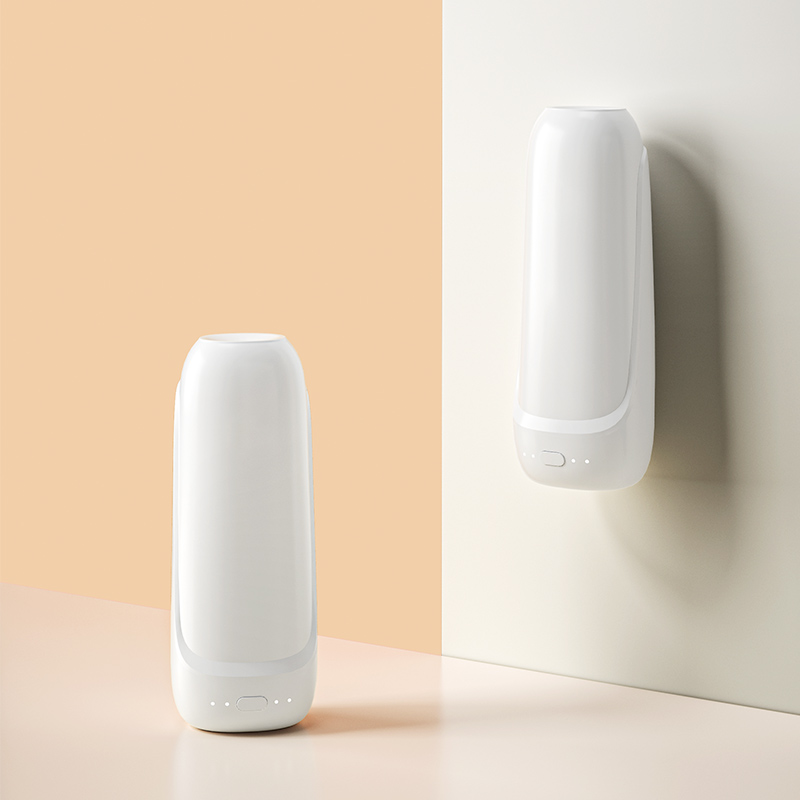
Waterless models represent the peak of modern diffusion technology. These devices use pressurized cold air to force pure essential oils through a micro-tube. This process atomizes the oil into a micro-fine vapor that disperses rapidly into the air. Because it does not use heat, the chemical composition of the essential oil remains entirely intact.
The benefits of cold-air nebulization are substantial. First, there is no water reservoir. This eliminates the risk of mold or bacteria breeding inside the unit. Second, waterless models do not add any humidity to the room. This makes them ideal for damp climates or spaces with sensitive electronics. Third, they deliver a much stronger, unaltered aroma. Finally, the operation is completely mess-free. The micro-fine vapor leaves absolutely no oily residue on surrounding furniture or floors.
Battery-operated ultrasonic units adapt traditional technology for portable use. These devices require you to fill a small reservoir with water and add a few drops of essential oil. A small ceramic disc at the base vibrates at ultrasonic frequencies. This creates a fine mist of water and diluted oil that blows into the room.
These models offer specific advantages. They act as mild humidifiers. This helps improve air quality in dry environments or air-conditioned rooms. Because the oil is diluted in water, the resulting scent profile is subtler. This makes ultrasonic models suitable for smaller, enclosed spaces. They work well for users who prefer a gentle background aroma rather than a robust scent throw.
Understanding the operational differences helps you select the right device for your specific needs. The table below outlines how waterless and ultrasonic portable models perform across key metrics.
| Feature / Metric | Waterless (Cold-Air Nebulizing) | Ultrasonic (Water-Based) |
|---|---|---|
| Scent Intensity | High; delivers pure, undiluted aroma. | Subtle; aroma is diluted by water volume. |
| Maintenance Requirements | Requires periodic cleaning with rubbing alcohol to prevent clogs. | Requires frequent emptying and wiping to prevent mold growth. |
| Noise Levels | Produces a slight mechanical hum from the air pump. | Ultra-quiet operation; near silent misting. |
| Battery Drain | Higher power draw due to the pressurized air pump. | Lower power draw; generally offers longer continuous runtime. |
| Best Use Case | Cars, travel, large open spaces, and premium scenting. | Personal desks, bedside tables, and dry environments. |
When evaluating a wireless diffuser, battery capacity dictates convenience. Manufacturers measure battery size in milliampere-hours (mAh). Standard portable units typically feature batteries ranging from 2000mAh to 4000mAh. A larger mAh rating generally translates to longer use between charges. However, output settings heavily influence actual runtime.
Continuous diffusion drains the battery rapidly. To combat this, most portable units utilize intermittent diffusion settings. For example, a device might diffuse for 10 seconds and pause for 50 seconds. Using intermittent settings can extend a standard 2000mAh battery from a few hours of continuous use to over 40 hours of operational runtime. Always check the runtime specifications based on the lowest intermittent setting to understand the maximum battery life.
| Battery Capacity (mAh) | Estimated Continuous Runtime | Estimated Intermittent Runtime (Low Setting) |
|---|---|---|
| 2000mAh | 2 - 4 Hours | 20 - 30 Hours |
| 3000mAh | 4 - 6 Hours | 35 - 50 Hours |
| 4000mAh+ | 6 - 8 Hours | 50 - 70+ Hours |
Square footage capabilities vary wildly among battery-powered units. High-output nebulizers excel in large, open-concept spaces. Because they atomize pure oil into microscopic particles, the scent travels further. It lingers longer in the air currents. A quality waterless unit can effectively scent areas up to 500 square feet. Placing the unit near an HVAC return vent can distribute the scent even further throughout a home.
Conversely, smaller ultrasonic models are best suited for localized scenting. Their mist is heavier due to the water content. This causes it to fall out of the air more quickly. These units typically cover 100 to 200 square feet effectively. They are perfect for personal desks, small bathrooms, or vehicle interiors where you want the aroma contained to an immediate radius.
Acoustic performance is a major factor, especially if you plan to use the device during sleep or focused work. Ultrasonic models are ultra-quiet. The vibrating disc produces almost no audible sound. The only noise you might hear is a faint trickling of water.
Waterless nebulizers operate differently. The internal pump required to pressurize the air generates a slight mechanical humming or vibrating sound during the active diffusion cycle. While modern engineering has reduced this noise, it remains noticeable in a completely silent room. If you are highly sensitive to noise while sleeping, an ultrasonic model usually provides a better acoustic experience.
The build material directly impacts the longevity and aesthetic appeal of your device. Premium portable units often feature aluminum casings. Aluminum offers superior durability. This makes it ideal for travel and automotive use where the device might get jostled. It also provides a sleek, modern aesthetic that blends into high-end interiors.
Standard plastic housings are lighter but present long-term risks. Pure essential oils, particularly citrus oils, act as natural solvents. Over time, exposure to undiluted oils can degrade, crack, or melt cheap plastics like standard ABS. If you opt for a plastic model, ensure it uses high-grade, oil-resistant polymers like PP (polypropylene) or PET to prevent structural failure.
Effective control mechanisms preserve both your battery life and your essential oil reserves. Look for devices that offer multiple intensity levels. This allows you to scale the scent throw based on the room size. A high intensity works for a living room, while a low intensity prevents overwhelming a car interior.
Timer settings and auto-shutoff features are equally important. An auto-shutoff function ensures the device powers down after a set period. This prevents unnecessary battery drain if you forget to turn it off. For water-based models, an automatic shutoff when the water level drops too low is a mandatory safety feature. It prevents damage to the ultrasonic disc.
All portable devices face the reality of lithium-ion battery degradation. Over hundreds of charge cycles, the battery's maximum capacity will slowly diminish. You will eventually notice shorter runtimes between charges. This is unavoidable chemistry.
You can mitigate this degradation through proper charging habits. Avoid leaving the device plugged in continuously after it reaches a full charge. Do not let the battery drain completely to zero before recharging it. Utilizing modern USB-C charging standards helps regulate power delivery efficiently. Review the manufacturer's warranty terms regarding battery lifespan before making a purchase.
Waterless diffusers provide a superior scent experience, but they consume essential oils at a significantly faster rate than water-diluted models. Because you are diffusing pure oil, a standard 10ml bottle will empty much quicker than it would in an ultrasonic unit. Thicker oils like vetiver or sandalwood will also diffuse differently than thin citrus oils, sometimes requiring higher pump settings.
To manage consumption, rely heavily on intermittent timer settings. You rarely need continuous diffusion with a waterless model because the scent is so concentrated. Start with the lowest intensity setting and shortest diffusion burst. Only increase the output if the scent does not adequately fill your intended space.
Maintenance is non-negotiable for portable diffusers. Waterless nebulizing nozzles are prone to clogging if left uncleaned. Essential oils can thicken and solidify inside the micro-tubes, completely halting the diffusion process.
To prevent clogs, implement a strict cleaning protocol. Follow these steps to maintain optimal performance:
For ultrasonic models, wipe the reservoir with a damp cloth and use a cotton swab with alcohol to gently clean the ceramic disc.
The primary value of a portable aroma system lies in its environmental flexibility and wellness continuity. By eliminating the power cord, you gain the ability to place the unit optimally for 360-degree scent dispersion. When paired with waterless technology, these devices deliver superior scent quality, zero mess, and an elevated aesthetic that traditional plug-in models cannot match. The shift from tethered appliances to portable wellness tools empowers you to control your environment effortlessly.
Your shortlisting logic should center entirely on your primary use case. If you need a rugged device for your car, frequent travel, or scenting large open spaces, select a waterless aluminum model. It provides the durability and pure scent throw required for those environments. If your goal is personal relaxation at a desk or bedside, and you prefer a near-silent operation with mild humidification, a high-capacity battery ultrasonic model will serve you best.
A: Battery life generally ranges from 10 to 50 hours per charge. This variance depends heavily on the battery's mAh capacity and your chosen output settings. Using continuous diffusion drains the battery in a few hours, while selecting the lowest intermittent setting maximizes runtime.
A: Yes, most modern units support pass-through charging, allowing you to use them while plugged in. However, doing this frequently can generate excess heat, which may accelerate the degradation of the lithium-ion battery over time.
A: Yes, particularly waterless nebulizing models. Battery-powered cold-air nebulizers often exceed the scent throw of standard plug-in ultrasonic units, effectively covering up to 500 square feet with pure, undiluted aroma.
A: It depends on the technology. Portable ultrasonic models are virtually silent. Waterless nebulizers produce a slight mechanical hum or vibration due to the internal air pump required to pressurize and atomize the essential oils.
A: Not always. The market is split into two categories: portable ultrasonic models, which require water to create a mist, and waterless nebulizers, which use pressurized air to disperse pure essential oils directly from the bottle.
A: Fill an empty essential oil bottle with a small amount of isopropyl alcohol. Attach it to the diffuser and run the unit for 10 to 15 minutes. The alcohol flushes the micro-tubes, dissolving any thickened oil residue and preventing clogs.
A: No. Extreme heat can damage the lithium-ion battery, posing a safety risk. Additionally, high temperatures quickly degrade the therapeutic properties and scent profile of the essential oils stored inside the unit.


