
Views: 0 Author: Site Editor Publish Time: 2026-08-20 Origin: Site


Professionals face constant environmental friction throughout the workday. Stale office air, afternoon fatigue, and high-stress periods routinely disrupt cognitive performance. You likely lack localized, non-disruptive tools to regulate your immediate workspace. Modifying the entire floor plan or adjusting the central thermostat is rarely an option. You need a personal intervention that works quickly without bothering your colleagues.
Integrating an essential oil diffuser for office desk use provides a practical solution. This low-footprint device allows you to control your localized environment. It supports mood elevation, sustained attention, and occupational stress management. Successful implementation requires careful hardware selection. You must align your device and scent choices with professional etiquette and strict safety standards.
Workspace optimization requires clear success criteria. You want to improve focus, boost your mood, and reduce stress. You also need to manage local air quality. You must achieve all this without impacting your coworkers. A well-chosen diffuser meets these criteria by creating a controlled micro-environment. We see this approach work well in high-density corporate environments where employees have limited control over their surroundings.
Specific olfactory stimuli interact directly with your limbic system. This is the brain center responsible for emotions and memory. Inhaling peppermint or lemon essential oils combats mid-day fatigue effectively. These scents stimulate the nervous system, increasing alertness and motivation during long tasks. You can use them to push through complex analytical work or heavy email backlogs.
The olfactory response is incredibly fast. Inhaling essential oils changes your mental state more rapidly than consuming caffeine. Caffeine takes up to thirty minutes to enter your bloodstream. Scent receptors send signals to your brain almost instantly. This makes aromatherapy a powerful tool for immediate cognitive support when you hit a sudden wall during a long shift.
You must maintain realistic expectations. Aromatherapy supports focus, but it does not replace adequate sleep or proper task management. Avoid exaggerated claims that a diffuser will magically double your output. Instead, view it as a supplementary tool. It provides the sensory friction needed to snap your brain out of a distracted state.
Consider these specific botanical compounds for cognitive support:
High-stakes projects and back-to-back meetings trigger acute stress. Your sympathetic nervous system goes into overdrive. Adaptogenic and calming scent profiles help regulate this response. Lavender, chamomile, and clary sage lower your heart rate and reduce cortisol levels. They provide a mental break without requiring you to leave your workstation.
You can use scent cues to transition between different work states. Active work requires high energy. Recovery states require relaxation. Diffusing a calming oil for ten minutes after a difficult client call signals your brain to unwind. This intentional transition prevents stress from compounding throughout the day. It protects your baseline mental health in demanding environments.
Using a desk diffuser for stress mitigation is highly tactical. You control the timing and the dosage. A quick burst of chamomile before a performance review grounds your nerves. This localized control empowers you to manage your autonomic responses proactively rather than reacting passively to office stressors.
Follow these steps to build a stress-reduction scent routine:
Poorly ventilated office buildings often suffer from stale air. Lingering lunch odors from the breakroom easily drift into your workspace. A desktop unit neutralizes these unpleasant smells effectively. Citrus and eucalyptus oils contain natural compounds that break down odor molecules. They replace stale air with a crisp, refreshing profile.
We must clarify common air purification claims. A personal diffuser provides mild freshening effects. It does not replace the mechanical filtration of a true HEPA purifier. Essential oils have minor antimicrobial properties, but they do not remove dust, pollen, or heavy particulate matter from the air. Rely on them for odor management, not medical-grade air sanitation.
It is necessary to differentiate your personal setup from a commercial office scent machine. Commercial machines integrate directly into the building's HVAC system. They scent massive square footages uniformly. Your desktop unit creates a localized micro-environment. It serves only you, keeping the scent plume confined to a three-foot radius around your chair.
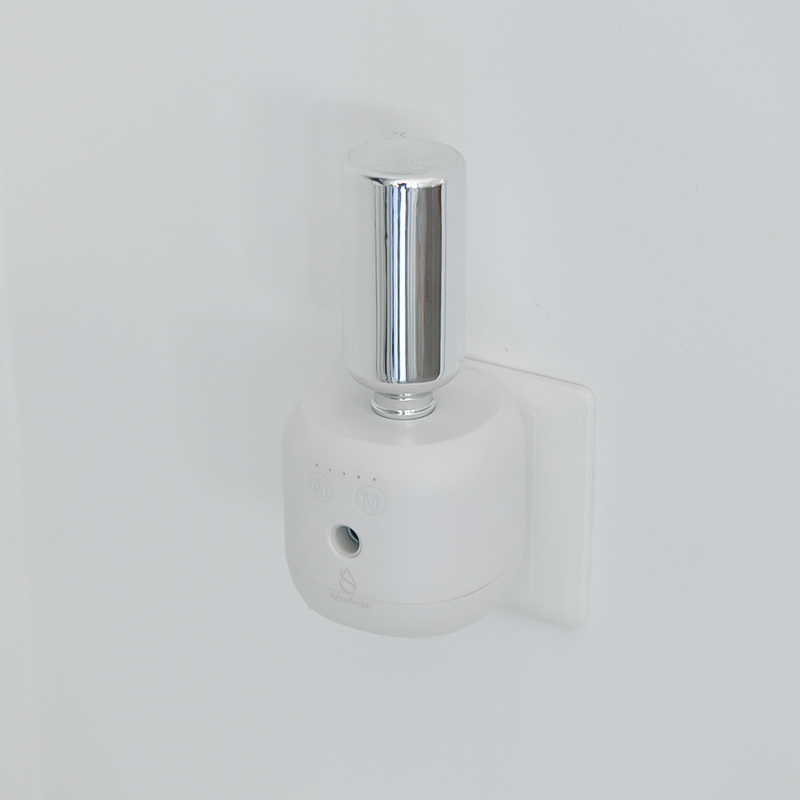
Selecting the right hardware dictates your success. You must match the technology to your specific workspace constraints. The three primary categories are ultrasonic, nebulizing, and passive diffusers. Each mechanism offers distinct advantages and drawbacks for professional environments.
| Diffuser Type | Mechanism | Pros for Desk Use | Cons for Desk Use |
|---|---|---|---|
| Ultrasonic | Water + piezoelectric transducer creates mist | Adds slight humidity; compact; affordable | Spill risk; requires water access; needs regular cleaning |
| Nebulizing | Pressurized air atomizes pure oil via Bernoulli principle | Potent scent; no water spills; zero humidity | Higher oil consumption; motor noise; can overpower small spaces |
| Passive | Natural evaporation (ceramic, reed, wood) | Silent; zero spill risk; highly localized | No output control; scent degrades linearly |
Ultrasonic models are the most common choice for workstations. They use water and a high-frequency piezoelectric transducer to create a fine mist. This mist carries the essential oil particles into the air. The mechanism is generally quiet, producing only a faint water trickling sound. The droplet size is typically around 5 microns, allowing the mist to disperse easily in a small area.
The primary advantage is the addition of slight localized humidity. Office HVAC systems often dry out the air, irritating your eyes and throat. An ultrasonic unit combats this dry micro-climate. They are widely available in compact, aesthetically pleasing designs that fit easily next to a monitor stand. You can find models shaped like small cylinders or geometric blocks that blend into modern office decor.
Ultrasonic models present specific operational challenges. They require daily access to a water source. You face a constant spill risk when refilling them near your keyboard or laptop. Stagnant water breeds bacteria rapidly. You must clean the reservoir regularly with white vinegar to prevent mold from blowing into your face. If you neglect maintenance, the transducer will calcify and fail.
Nebulizing technology operates entirely without water. These units use an internal air pump to force pressurized air through a small tube. This creates a vacuum that pulls the essential oil to the surface, atomizing it into a micro-fine vapor. This process preserves the complete chemical profile of the botanical compounds. The resulting scent delivery is immediate, potent, and highly concentrated.
For desk use, nebulizers eliminate the risk of water spills entirely. You never have to worry about knocking over a reservoir onto your mechanical keyboard. They add zero humidity to the air. This is ideal if you work in an already damp climate or near sensitive paper documents. You simply attach the essential oil bottle directly to the unit and turn it on.
The drawbacks include higher essential oil consumption, as they do not dilute the oil with water. Nebulizers utilize an internal air pump. This motor hums audibly, which might distract you during deep work. Their sheer potency can easily overpower a small cubicle if you do not strictly control the run time. You must use models with built-in interval timers to prevent flooding the office with scent.
Passive diffusers rely on natural evaporation. Ceramic stones, terracotta discs, or wooden blocks absorb the oil and release it slowly. Some models use a low-power, silent fan to blow air across an oil-soaked pad. They produce absolutely no mist or vapor. The scent relies entirely on ambient airflow to reach your nose.
These are exceptional for shared or open-plan offices. They produce zero noise and carry zero spill risk. The scent throw is highly localized. Your desk neighbor three feet away will likely smell nothing. This makes passive diffusion the safest choice for strict corporate environments where HR policies heavily restrict airborne particulates.
The main disadvantage is the complete lack of output control. You cannot press a button to stop the scent. It degrades linearly over time as the oil evaporates. If you apply too much peppermint in the morning, you simply have to wait for it to dissipate naturally. You also cannot switch scents quickly without changing the ceramic stone or the absorbent pad.
You must map hardware features directly to professional outcomes. A unit designed for a large living room will fail in a cubicle. Evaluate potential devices based on acoustics, physical footprint, and output control. These dimensions determine whether the device enhances your workflow or disrupts it.
Always check the decibel (dBA) rating before bringing a device to work. A quiet office hovers around 40 dBA. Your diffuser should operate well below this threshold. Look for models rated under 30 dBA. Anything louder will create a noticeable background drone that causes fatigue over an eight-hour shift.
Consider the specific type of noise the device makes. Ultrasonic models produce a subtle water trickling sound. Some find this relaxing, while others find it maddening during deep study sessions. Nebulizers produce a mechanical vibration. This motor hum can transmit through your desk surface, creating an irritating resonance. Placing a small neoprene mat under a nebulizer can dampen this vibration.
Acoustic disruption extends to your digital communications. High-quality microphones easily pick up background hums. If you spend hours on video conferences, a noisy motor will annoy your clients and colleagues. Test the device while recording your own voice to ensure it remains undetectable on calls. Position the diffuser at least three feet away from your primary microphone.
Modern minimalist desks and compact cubicles offer limited real estate. A standard corporate desk measures 48 by 24 inches. You cannot sacrifice prime working space for a bulky appliance. Measure your available footprint before selecting a unit. A cylindrical design with a base smaller than a coffee mug is usually ideal for crowded study tables.
Power connectivity dictates where you can place the unit. Evaluate your daily movement patterns to choose the right power source.
| Power Source | Best Use Case | Limitations |
|---|---|---|
| USB-Powered | Plugging directly into monitor hubs or laptop docks. | Lower power draw results in weaker mist output. |
| AC Adapter | Dedicated desk setups with accessible wall outlets. | Requires cable management; less portable. |
| Battery-Operated | Moving between hot desks and conference rooms. | Requires frequent recharging; heavier base. |
Continuous diffusion leads directly to olfactory fatigue. Your brain quickly ignores constant sensory input. This phenomenon is known as receptor adaptation or nose blindness. If you run a device continuously, you will stop smelling the oil after twenty minutes. You might then add more oil, inadvertently overwhelming your coworkers.
Intermittent timers solve this problem. The best desktop units feature interval settings. Look for a device that runs for five minutes and then rests for ten minutes. This pulsing cycle prevents olfactory fatigue. It keeps your brain responsive to the scent cues throughout the entire afternoon.
Adjustable mist volume is equally critical. You must control the radius of the scent plume. A high-output setting pushes the vapor across the room. A low-output setting confines the aroma to your immediate breathing zone. Always run your device on the lowest possible setting in a shared environment. If you cannot smell it on the lowest setting, move the device closer to you rather than turning up the volume.
Introducing botanical compounds into a shared workspace carries inherent risks. You must prioritize the comfort and safety of your colleagues above your personal preferences. Successful implementation requires proactive communication, adherence to corporate rules, and strict spill mitigation protocols.
Essential oils emit volatile organic compounds (VOCs). While natural, these compounds trigger severe biological reactions in some individuals. Colleagues with asthma, chronic migraines, or multiple chemical sensitivities may experience genuine distress from your diffuser. You cannot dismiss their physical reactions just because the oil is natural.
Initiate considerate conversations with your desk neighbors before deploying any device. Do not simply turn it on and wait for complaints. Ask them directly if they have any aversions to specific scents. Frame the conversation around mutual comfort. Offer to test a mild scent for one hour and ask for their honest feedback afterward.
If a coworker expresses discomfort, cease diffusion immediately. Do not argue about the purity or natural origins of the oil. An allergic trigger is an allergic trigger. Switch to a personal inhaler stick instead. This provides the cognitive benefits of aromatherapy without releasing any VOCs into the shared air.
Review your employee handbook thoroughly. Many modern corporations enforce strict fragrance-free workplace clauses. These policies exist to protect employees from synthetic perfumes, but they often apply to natural essential oils as well. Violating these rules can result in formal HR reprimands.
Always secure approval from your direct supervisor before bringing a desktop diffuser into a shared environment. Explain your intent clearly. Emphasize that you plan to use it for focus and stress management, not merely as an air freshener. Detail the specific steps you will take to keep the scent localized.
If active misting is prohibited, request accommodations. Ask if ultra-localized passive diffusers are acceptable. A ceramic stone with two drops of oil rarely violates the spirit of a fragrance-free policy, as the scent throw is virtually zero. Always document these approvals to avoid future misunderstandings with HR or facility managers.
Water and expensive electronics do not mix. An accidental spill can destroy company-owned laptops, mechanical keyboards, and critical paper documents. You must assess this risk realistically. Never place a water-filled reservoir directly above or immediately adjacent to your primary workstation tools.
Establish strict placement protocols. Maintain a minimum 24-inch clearance between the diffuser and any sensitive electronics. Place the unit on a stable, flat surface. Avoid putting it on stacks of books or wobbly monitor stands. Route the power cable carefully so you do not accidentally snag it and pull the unit down.
Follow these spill mitigation rules for office environments:
An essential oil diffuser for office desk environments serves as a practical tool for rapid personal state management. It provides targeted cognitive support and mitigates acute stress. You must select and deploy the hardware with strict adherence to your workspace context and professional etiquette.
Your shortlisting logic should follow your specific environment. For home offices, nebulizing or high-capacity ultrasonic models offer maximum control and benefit. For private corporate offices, compact ultrasonic models with intermittent timers strike the best balance. For open-plan cubicles, passive diffusers or personal inhalers remain the only universally compliant options.
Take these immediate steps to optimize your workspace:
A: Yes, provided you maintain a safe distance. Keep the unit at least 24 inches away from laptops, monitors, and keyboards. Ultrasonic models release moisture, which can accumulate on cold screens or internal components over time. Always direct the mist plume away from your electronics and ensure the power cable is routed safely to prevent accidental spills.
A: A desk diffuser creates a localized micro-environment, scenting only the immediate three-foot radius around your workstation. It is a personal tool. An office scent machine is a commercial-grade device, often integrated into the HVAC system, designed to distribute fragrance uniformly across large lobbies, hallways, or entire building floors.
A: Peppermint, rosemary, and lemon are highly effective for cognitive support. They stimulate the nervous system, combat fatigue, and improve sustained attention. Avoid sedating oils like clary sage, heavy lavender, or ylang-ylang during core working hours, as they can induce drowsiness and reduce your analytical sharpness.
A: Communication is critical. Ask your neighbors for permission first. Use a device with intermittent timer settings (e.g., 5 minutes on, 15 minutes off) and adjustable output controls. Keep the mist volume on the lowest setting. Alternatively, use a passive ceramic diffuser to ensure the scent does not travel beyond your immediate desk boundary.
A: USB models are highly convenient for study tables and workstations, as they plug directly into monitors or docks. However, they draw less power than AC plug-in models. This results in a weaker mist output and a smaller scent radius. They are perfect for localized personal use, but they will not scent a large private office effectively.
A: It is highly unlikely. Diffusers produce a cool water vapor or micro-fine oil mist, not combustion smoke. Standard office smoke detectors look for carbon particles or rapid temperature increases. Unless you place the device directly under an optical smoke sensor and run it on maximum output, the vapor will dissipate long before triggering an alarm.
A: No. While essential oils like tea tree and eucalyptus possess mild antimicrobial properties, a diffuser does not mechanically clean the air. It will neutralize lingering odors and make the space smell fresher, but it cannot remove dust, pollen, VOCs, or airborne viruses like a true HEPA air purifier can.


