
Views: 0 Author: Site Editor Publish Time: 2026-08-21 Origin: Site


The transition from manual room scenting to automated environmental control requires hardware that operates safely without constant supervision. Basic diffusers waste essential oils, disperse scent inconsistently, and create safety hazards if they run dry. Buyers often struggle to separate aesthetic novelties from reliable hardware built for sustained performance. Identifying the right automatic essential oil diffuser demands a strict evaluation of internal mechanisms, automation capabilities, user interface design, and long-term maintenance requirements. Moving beyond basic looks means inspecting duty cycle programming, sensor reliability, and the physical materials used in construction. We evaluate these devices based on how they handle daily operation in real-world spaces. This ensures the selected hardware meets specific spatial demands while mitigating the risks of hardware degradation and olfactory fatigue. You need a unit that works efficiently and safely every single day.
Before evaluating automation features, you must select the correct dispersion technology for your spatial requirements, oil types, and household demographics. The underlying mechanism determines how the essential oil breaks down and travels through the air. Selecting the wrong technology results in inadequate coverage, excessive oil consumption, or unwanted residue on surrounding furniture. A reliable scent dispenser relies on specific physical principles to atomize liquids into breathable mist. We see many users buy the wrong unit for their space simply because they do not understand the mechanics.
Ultrasonic technology relies on a small ceramic disc located at the base of the water reservoir. When powered, this disc vibrates at ultrasonic frequencies—typically around 2.4 million times per second. These rapid vibrations create ultrasonic waves that break down the mixture of water and essential oil into micro-particles. The resulting fine mist is then propelled into the air by a small internal fan. Because this process relies entirely on mechanical vibration rather than thermal energy, the chemical integrity of the essential oil remains intact.
This mechanism offers several distinct advantages. It adds ambient humidity to the room, which helps in dry climates or air-conditioned spaces. The operation is exceptionally quiet, making it suitable for bedrooms and focused work environments. Furthermore, because the essential oil is heavily diluted in water and no heat is involved, ultrasonic units are generally safer to operate around children and pets. The primary drawback is the reliance on water. You must frequently monitor and refill the reservoir. Additionally, the scent throw is inherently limited by the water-to-oil ratio. Achieving a highly concentrated fragrance profile is difficult without burning through large quantities of oil rapidly.
Nebulizing technology operates on the Bernoulli principle, utilizing pressurized air to atomize pure essential oils without the addition of heat or water. An internal air pump forces air through a small tube, creating a vacuum that pulls the essential oil from the reservoir to the surface of a specialized glass or metal nozzle. The high-velocity air stream shatters the oil into nano-particles, dispersing a highly concentrated, dry mist directly into the environment.
The primary advantage of a nebulizer is maximum scent concentration and rapid dispersion. Because there is no water to dilute the oil, the fragrance profile remains robust and true to the original extract. You do not need to monitor a water reservoir or worry about stagnant water. However, this performance comes with operational trade-offs. Nebulizers consume essential oils at a significantly faster rate than ultrasonic models. The internal air pump generates slightly higher operational noise, often presenting as a low hum. Due to the high concentration of airborne volatile organic compounds (VOCs), these units require careful placement and strict output management, especially in households with pets that may be sensitive to potent aromas.
Older dispersion technologies rely on heat or basic evaporation. Evaporative models use a fan to blow air through a pad or filter soaked in essential oil, causing the oil to evaporate faster than it would naturally. Heat models utilize a warming element to gently heat the oil, accelerating evaporation. While mechanically simple, these methods are largely obsolete for automated, continuous use.
Heat alters the delicate chemical compounds of essential oils, degrading their therapeutic properties and altering the intended scent profile. Continuous heating elements pose inherent fire safety risks if left unattended or if the oil completely evaporates. Evaporative models suffer from fractional evaporation. The lighter, more volatile components of the oil evaporate first, leaving behind heavier, thicker compounds that eventually clog the filter pads. Neither technology supports the precise, automated control required for modern environmental scenting.
| Feature | Ultrasonic Technology | Nebulizing Technology |
|---|---|---|
| Mechanism | High-frequency ceramic disc vibration | Pressurized cold air atomization |
| Carrier Medium | Water (dilutes oil) | None (pure essential oil) |
| Scent Concentration | Mild to Moderate | High to Very High |
| Ambient Humidity | Adds moisture to the air | No effect on humidity |
| Operational Noise | Near-silent (faint water trickling) | Low hum from internal air pump |
| Ideal Use Case | Bedrooms, small offices, dry climates | Large living spaces, retail environments |
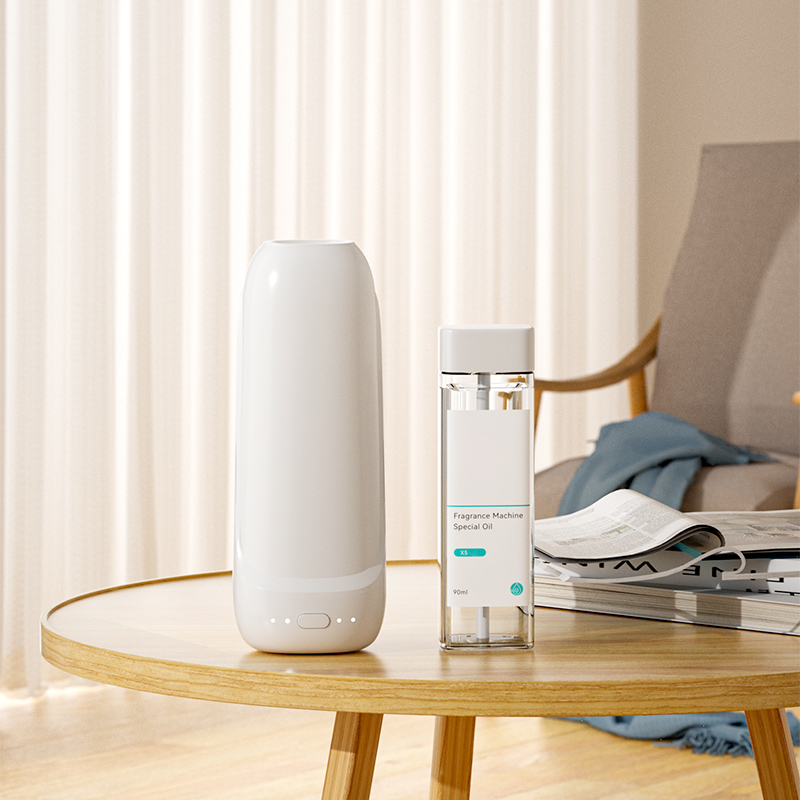
Assessing the specific features that allow a unit to operate independently, safely, and intuitively separates high-performance hardware from basic entry-level models. An effective automatic essential oil diffuser relies on a combination of physical controls, programmed logic, and internal sensors to manage output without requiring constant user intervention. We look for hardware that does the heavy lifting so you do not have to constantly adjust settings.
Evaluating baseline automatic models begins with the user interface. Many reliable units utilize simple, two-button physical interfaces. Typically, one button controls the misting function and timer settings, while the second button manages ambient lighting. This tactile approach offers immediate, frictionless operation. You can engage the device, select a timer preset, and walk away without needing to unlock a smartphone, navigate an application, or troubleshoot Bluetooth pairing issues.
An intuitive physical interface is often preferable for users who require straightforward functionality. In environments like guest rooms, spas, or shared office spaces, complex digital interfaces create unnecessary barriers to entry. Physical buttons with clear LED indicators provide instant visual feedback regarding the current operational state. When evaluating these interfaces, the tactile response of the buttons and the clarity of the indicator lights are strong indicators of overall build quality.
The distinction between continuous run times and intermittent duty cycles is a core component of automated scenting. Continuous operation simply runs the device until the reservoir is empty. Intermittent duty cycles introduce programmed pauses into the operation, such as running for 30 seconds and then pausing for 30 seconds. This specific feature is vital for two reasons: it prevents olfactory fatigue and conserves essential oils.
Olfactory fatigue, commonly known as nose blindness, occurs when the olfactory receptors in the nasal cavity become desensitized to a continuous stimulus. By introducing pauses, an intermittent duty cycle allows the receptors to reset, ensuring the scent remains noticeable over extended periods. Standard industry timer presets usually include 60-minute, 180-minute, and 360-minute intervals. Advanced models allow for custom programming, enabling you to define the exact duration of the "on" and "off" phases to match the specific potency of the oil being used.
The most important safety feature in any automated scenting device is the auto shut-off mechanism. Ultrasonic units utilize internal water-level sensors—often simple float switches or conductive probes—to monitor the reservoir. When the water level drops below a minimum threshold, the sensor triggers an automatic power-down sequence, cutting electricity to the ultrasonic disc and the internal fan.
This auto shut-off capability prevents motor burnout and eliminates electrical hazards associated with running a dry unit. It is the foundational feature that enables safe unattended operation, such as overnight use in a bedroom or continuous operation in an empty living room. Without a reliable water-level sensor, a device cannot be classified as truly automatic, as it would require constant human monitoring to prevent hardware failure.
Effective environmental scenting requires mechanisms for adjusting mist volume or atomization pressure. A single, fixed output level rarely suits all environments. Output controls allow you to scale the dispersion based on room size and ventilation. In ultrasonic models, this is typically achieved by altering the power supplied to the ceramic disc, resulting in a "high" or "low" mist setting. In nebulizing models, output is controlled by adjusting the pressure of the internal air pump.
Mapping output settings to room square footage is necessary for optimal performance. A low output setting is generally sufficient for a 150-square-foot bedroom, preventing the space from becoming overwhelmed by heavy fragrance. Conversely, a 500-square-foot open-concept living room requires a high output setting to ensure the mist physically reaches all corners of the space before dissipating. Units lacking variable output controls force you to manually dilute oils or physically move the device to achieve the desired concentration.
Evaluating when digital connectivity justifies a steeper learning curve depends entirely on your need for precision. A smart aroma diffuser introduces microprocessors and wireless connectivity to expand operational parameters far beyond standard physical timers. We only recommend these upgrades when the specific application demands strict scheduling.
Transitioning from physical buttons to smartphone control unlocks complex scheduling capabilities. Wi-Fi-enabled units connect to local networks, allowing you to manage settings via dedicated mobile applications. The primary advantage of this integration is the ability to create complex daily schedules that align with specific routines. For example, you can program the device to activate at 7:00 AM to assist with waking up, power down at 9:00 AM when leaving for work, and reactivate at 5:00 PM prior to returning home.
App integration also facilitates remote management. You can adjust intensity levels, check reservoir status, or power the unit off from outside the home. Many smart models integrate with voice assistants like Amazon Alexa or Google Home. This hands-free operation allows you to trigger specific scent profiles or adjust settings using simple voice commands, integrating the scenting hardware seamlessly into broader smart home ecosystems.
High-end automatic diffusers are designed to connect directly to home heating, ventilation, and air conditioning (HVAC) systems. This represents the pinnacle of automated environmental scenting. These units bypass localized dispersion entirely, injecting atomized essential oils directly into the ductwork. The HVAC system's blower fan then distributes the scent evenly throughout the entire structure.
The mechanics of whole-home scenting dictate a strict requirement for nebulizing technology. Ultrasonic mist contains water, and introducing moisture directly into HVAC ductwork creates severe risks of mold growth and structural damage. HVAC-integrated units use powerful air pumps to atomize pure essential oils into microscopic dry particles that travel effortlessly through the air ducts without leaving residue. These systems require professional installation. Technicians typically drill a small access port into the supply plenum of the furnace or air handler. We always use PTFE tubing for these connections, as standard vinyl tubing degrades rapidly when exposed to pure essential oils. Furthermore, the injection nozzle must be positioned downstream of the A-coil to prevent oil from coating the heat exchanger fins.
Many units incorporate LED lighting to provide secondary aesthetic value. Assessing these lighting options involves looking beyond basic color rotation. Standard models often feature a 7-color LED rotation, while more refined units allow you to fix the light on a single color or adjust the brightness levels to serve as a functional nightlight.
A strict evaluation point for any unit intended for bedroom use is the presence of an independent off-switch for the lighting. The lighting circuit must be entirely separate from the dispersion circuit. If the lighting cannot be disabled while the device continues to run, it will disrupt sleep architecture. High-quality hardware ensures that all indicator lights and ambient LEDs can be blacked out completely during nighttime operation.
The hidden labor and design flaws associated with long-term ownership often become apparent only after weeks of continuous use. Essential oils are highly concentrated plant extracts containing active chemical compounds like terpenes and phenols. These compounds interact aggressively with certain materials, making routine maintenance a strict requirement rather than an optional suggestion. We see many units fail prematurely simply because users ignore basic upkeep.
The chemical reality of essential oils means they can rapidly degrade cheap plastics over time. Prolonged exposure causes inferior plastics to crack, warp, or leach chemicals into the water reservoir. Evaluating build materials is non-negotiable. Reliable units utilize medical-grade plastics such as Polypropylene (PP) or Acrylonitrile Butadiene Styrene (ABS), which offer high chemical resistance. Premium models often incorporate glass, ceramic, or aluminum housings to eliminate plastic degradation entirely.
Assessing physical design for ease of cleaning directly impacts the unit's lifespan. Wide-mouth reservoirs allow you to easily wipe down the interior surfaces with a cloth. Conversely, narrow necks or complex internal baffles trap oil residue and stagnant water, making thorough cleaning nearly impossible. Standard cleaning protocols must be followed strictly.
Calculating the true runtime of a device requires looking at both tank size and output settings. A 100ml reservoir running on a high continuous output may deplete in three hours, requiring frequent manual refills. A 500ml reservoir running on an intermittent duty cycle can easily operate for 18 hours before triggering the auto shut-off sensor.
However, there is a distinct trade-off between large capacity and water stagnation risks. While a massive reservoir reduces the frequency of refilling, leaving a mixture of water and organic essential oils sitting at room temperature for several days creates an ideal environment for bacterial growth. You must balance the desire for long runtimes with the hygienic necessity of emptying and wiping down the reservoir regularly. For casual users, a smaller tank that is emptied and dried daily is often more sanitary than a large tank left sitting for a week.
Operational noise is a frequently overlooked implementation reality. Evaluating decibel (dB) ratings is necessary when placing units in bedrooms or quiet office environments. Ultrasonic units generally operate below 30 dB, producing only a faint trickling sound from the water agitation. Nebulizing units, relying on internal air compressors, typically operate between 40 and 50 dB. Placing a nebulizer on a solid wooden nightstand can amplify this vibration, requiring the use of a sound-dampening mat.
Understanding the expected lifespan of internal components helps set realistic expectations for hardware longevity. The ultrasonic ceramic discs eventually lose their oscillating efficiency due to mineral buildup and continuous mechanical stress. Similarly, the diaphragms inside nebulizer air pumps degrade over time. Regular cleaning extends the life of these components, but you should anticipate that heavy, daily use will eventually necessitate hardware replacement or the purchasing of specific replacement parts like atomizing nozzles.
A structured framework for matching features to specific user profiles and environments prevents over-purchasing unnecessary technology or under-equipping a large space. An automatic diffuser must align with the physical dimensions of the room and the daily habits of the user.
For standard residential applications—such as single bedrooms, home offices, or households with children and pets—a 300ml ultrasonic unit equipped with basic 60/180/360-minute timers is highly effective. The localized, humidifying mist provides sufficient coverage without overwhelming smaller spaces. The dilution of oils in water adds a layer of safety, and the tactile buttons ensure anyone in the household can operate the device without a smartphone.
Commercial requirements or large open-concept residential floor plans demand a different approach. Retail spaces, hotel lobbies, or expansive living rooms require high-capacity, app-controlled scent dispensers utilizing nebulizing technology. These environments benefit from the potent, dry mist that can travel through large volumes of air without settling on surfaces. The ability to program strict operating hours via a mobile app ensures the scenting aligns with business hours or daily routines, maximizing efficiency and minimizing manual oversight.
| Room Size (Sq. Ft.) | Recommended Technology | Ideal Output Setting | Typical Application |
|---|---|---|---|
| Under 200 | Ultrasonic (100ml - 300ml) | Low / Intermittent | Bedrooms, Bathrooms, Small Offices |
| 200 - 500 | Ultrasonic (500ml) or Small Nebulizer | Medium / Continuous | Living Rooms, Kitchens, Waiting Areas |
| 500 - 1,500 | Standalone Nebulizer | High / Intermittent | Open Floor Plans, Large Lobbies |
| 1,500+ | HVAC-Integrated Nebulizer | Programmed Duty Cycle | Whole-Home Scenting, Commercial Spaces |
Evaluating the availability of replacement parts ensures the hardware remains functional over years of use. High-quality manufacturers provide access to replacement power cords, glass reservoirs, and atomizing nozzles. A unit with a permanently sealed housing and no available replacement parts becomes entirely useless if a single component fails. Prioritizing hardware designed with modular, replaceable components guarantees long-term viability and sustained performance. We always check the manufacturer's parts catalog before committing to a specific model.
A: Runtime depends heavily on reservoir size and output settings. A standard 300ml ultrasonic unit running on low output can operate continuously for 8 to 10 hours before the water-level sensor triggers the auto shut-off. Nebulizing units attached to large 500ml oil bottles and programmed on intermittent duty cycles can run for several weeks before requiring an oil refill.
A: Most smart units require a Wi-Fi connection for initial setup and schedule programming. However, high-quality models feature onboard memory. Once the schedule is saved to the device, it will continue to execute the programmed duty cycles even if the Wi-Fi connection drops. Live app control and remote adjustments will be unavailable until the connection is restored.
A: A standard humidifier is designed to output massive volumes of water vapor to raise room humidity, utilizing plastics not rated for chemical exposure. An automatic diffuser uses medical-grade plastics resistant to the corrosive nature of essential oils and outputs a much finer, lower-volume mist specifically calibrated to carry volatile organic compounds without saturating the surrounding air.
A: Residue occurs when ultrasonic mist settles before evaporating, often due to placing the unit in a draft-free corner or running it on a high output setting in a small room. The water droplets carry heavy oil particles that fall onto surfaces. To prevent this, reduce the output setting, ensure proper room ventilation, or switch to a waterless nebulizing unit.
A: Yes, provided the unit is equipped with a reliable auto shut-off sensor that cuts power when the reservoir is empty. For overnight use, it is highly recommended to utilize intermittent duty cycles to prevent overwhelming the room with scent and to ensure all ambient LED lighting can be completely disabled to protect sleep quality.
A: Ultrasonic units require a quick rinse and wipe-down every time you change the oil scent, and a deep clean with water and white vinegar every 1 to 2 weeks to remove mineral scale. Nebulizing units should be cleaned monthly by atomizing a small amount of rubbing alcohol to dissolve thickened oil residue inside the microscopic glass nozzles.


