
Views: 0 Author: Site Editor Publish Time: 2026-09-29 Origin: Site


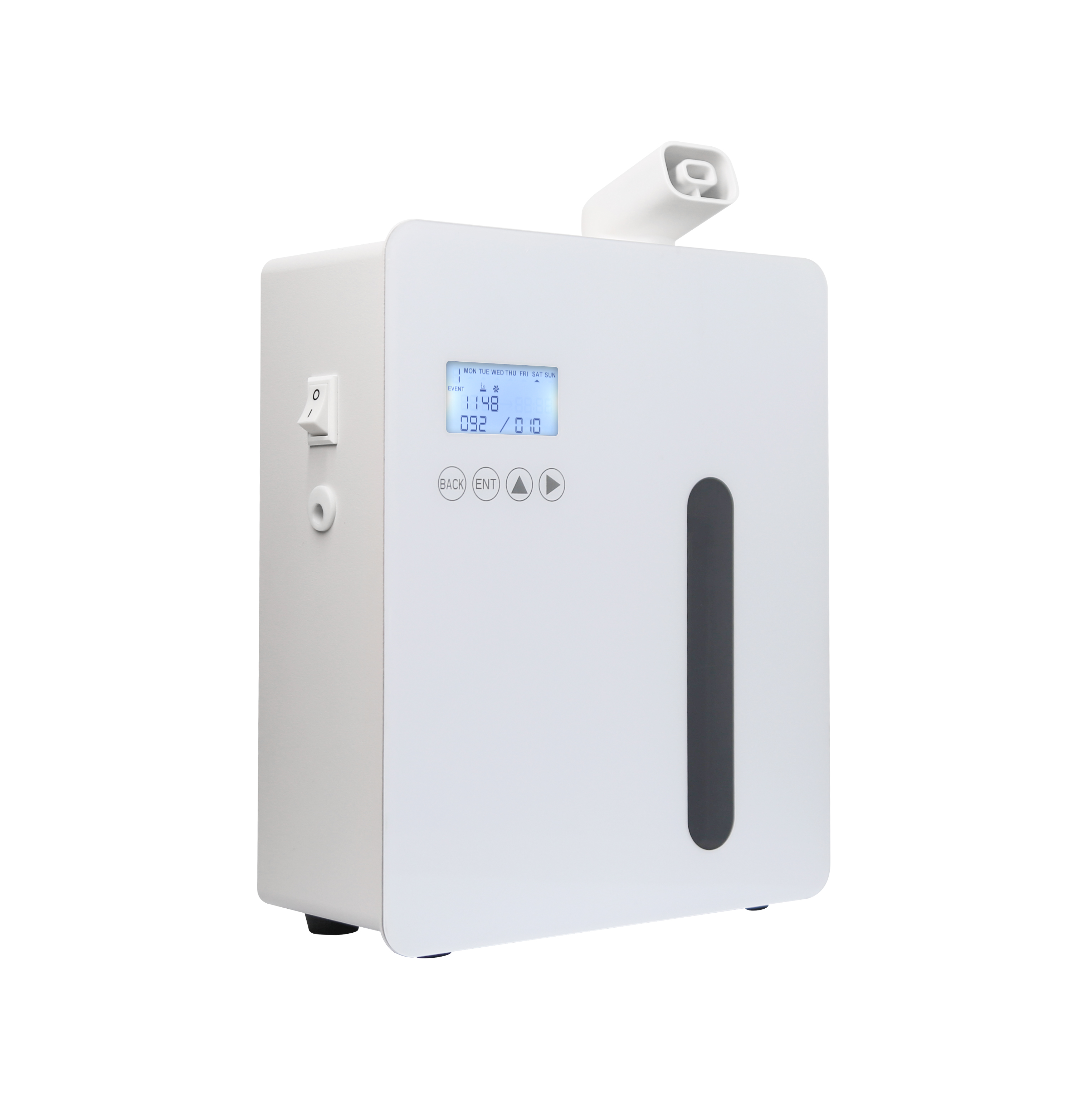
Investing in scent marketing often leads to a frustrating operational failure when the fragrance dissipates unevenly or fails to reach target zones. Facility managers frequently discover a massive gap between manufacturer-stated coverage capabilities—usually tested in empty, closed-door environments—and the realities of active commercial spaces. High foot traffic, complex floor plans, and aggressive ventilation systems actively disrupt scent distribution.
A stark contrast exists between weak, water-based residential diffusers that barely cover a single room and commercial-grade, waterless systems designed to deliver pure fragrance across massive footprints. This technical evaluation guide will help you accurately calculate spatial requirements and understand the physical limits of your equipment. We will explore how to select the right deployment method, comparing standalone units to HVAC integration, ensuring you achieve consistent, verifiable scent distribution across your entire facility without dead zones.
Cubic Volume Over Square Footage: Coverage must be calculated using cubic feet/meters; high ceilings drastically reduce the effective square footage range of any diffuser.
The 1,500 Sq. Ft. Threshold: Standalone units reliably cover up to 1,500 sq. ft. in open layouts (the "safe bet" baseline), while HVAC-integrated systems are required for scalable coverage from 1,500 to 5,000+ sq. ft.
Airflow Dictates Efficacy: High Air Changes per Hour (ACH) in commercial buildings dilute scent concentration, requiring a higher output rate or a large capacity diffuser to maintain ambient fragrance.
Strategic Zoning & Smart Management: Relying on a single high-output machine for partitioned spaces often results in overpowering scent near the source and dead zones elsewhere; multi-unit zoning managed via smart apps is frequently the more reliable architecture.
Adequate coverage means achieving consistent olfactory detection across a designated zone. Occupants should notice the fragrance immediately upon entry without feeling overwhelmed. Dead zones must be eliminated entirely. You want a seamless transition as guests walk through the main entrance, and the scent should remain stable regardless of foot traffic or open doors. Achieving this balance requires precise output calibration. Success means the fragrance integrates naturally into the environment rather than dominating it. When evaluating a Commercial Aroma Diffuser, you must look beyond the marketing claims and analyze the physical dynamics of your specific building.
Many facility operators make the mistake of assuming a machine set to maximum output will simply push scent further. In reality, forcing a single machine to overperform creates a highly concentrated cloud of fragrance immediately surrounding the unit, leading to olfactory fatigue for anyone working nearby. True coverage is measured by the evenness of the dispersion, not just the maximum distance a scent particle can travel under perfect conditions.
Square footage is a flawed baseline metric because it ignores vertical space. Scent particles fill a volume, not a flat surface. A 1,000 square foot room with standard 8-foot ceilings contains 8,000 cubic feet of air. A 1,000 square foot lobby with 20-foot ceilings contains 20,000 cubic feet of air. The lobby requires more than double the scent output despite having the exact same floor footprint. Relying solely on square footage leads to severe under-scenting.
Commercial spec sheets frequently list coverage in cubic meters (m³). You must decode these specifications to plan accurately. To convert cubic meters to cubic feet, multiply by 35.3. Calculate your facility's total volume before evaluating any machine. This mathematical approach prevents costly undersizing errors during procurement. When you calculate the total volume, you gain a realistic understanding of how much fragrance oil must be atomized per hour to maintain a detectable ambient scent.
Floor Area (Sq. Ft.) | Ceiling Height (Ft.) | Total Volume (Cubic Ft.) | Required Output Adjustment |
|---|---|---|---|
1,000 | 8 | 8,000 | Baseline (Standard Output) |
1,000 | 12 | 12,000 | +50% Output Required |
1,000 | 20 | 20,000 | +150% Output Required |
1,000 | 30 | 30,000 | +275% Output Required |
Baseline coverage stats often advertise "up to 2,000 sq. ft." Manufacturers generate these numbers in highly controlled environments. These test rooms lack drafts, open doors, and active HVAC systems. Real-world applications face constant disruption. Always apply a "headroom discount" to manufacturer claims. Reduce the stated maximum coverage by 20% to 30%. This buffer accounts for high ceilings and constant air movement.
If a machine claims 1,500 square feet, plan for 1,000 to 1,200 square feet of reliable performance. This conservative planning approach ensures you never run a machine at 100% capacity constantly, which accelerates wear and tear on the internal pump. Running a slightly larger machine at 60% capacity is far more reliable and quieter than running an undersized machine at maximum output.
Standalone units operate independently of building ductwork. A large area aroma diffuser utilizes waterless cold-air diffusion technology. This process uses the Venturi effect to shear essential oils into dry nanoparticles, typically less than one micron in size. Waterless operation is mandatory in commercial spaces. It prevents humidity buildup, protects sensitive electronics, and eliminates mold risks inside the equipment. These units handle spaces between 500 and 1,500 square feet effectively.
Retail boutiques, hotel reception desks, and waiting rooms represent ideal use cases. Open-plan offices with standard ceilings also benefit from standalone deployment. However, these machines have distinct physical limitations. They rely heavily on line-of-sight distribution. Standalone units struggle to push scent around physical corners. They cannot effectively navigate down long, winding corridors. The micro-currents lose momentum when hitting solid walls, causing the nanoparticles to eventually settle out of the air.
Ideal for open-concept spaces without heavy partitioning.
Requires access to standard 110V/220V wall outlets.
Must be placed strategically to utilize natural room airflow.
Offers plug-and-play installation without requiring specialized technicians.
Easily relocated if the floor plan or store layout changes.
HVAC-integrated systems connect directly to existing ductwork. They distribute nanoparticles evenly across massive footprints. The scent travels wherever the conditioned air goes. Casinos, large fitness centers, and multi-story lobbies require this approach. Sprawling car dealerships also depend on HVAC integration for consistent branding across showrooms and service centers.
These systems offer unmatched scalability. They treat thousands of cubic meters efficiently. The machine piggybacks on the building's Air Handling Unit (AHU). This guarantees invisible, perfectly even distribution. It eliminates the localized intensity issues common with standalone units. HVAC integration ensures every square foot receives the exact same fragrance concentration, creating a truly immersive environment.
The physics of HVAC scenting rely on the static pressure within the ductwork. The scent machine uses a high-pressure internal pump to force the atomized fragrance through a specialized tube and nozzle directly into the supply plenum. Because the particles are sub-micron in size, they do not coat the inside of the ductwork. Instead, they ride the air currents seamlessly through the vents and into the target zones.

Physical barriers disrupt airflow instantly. Walls, cubicles, and heavy furniture block micro-currents. A large area air diffuser needs clear pathways to function optimally. Scent particles bounce off solid surfaces and settle. Partitioned offices create isolated air pockets. Fragrance struggles to penetrate these closed-off zones without direct airflow assistance.
Open concept layouts maximize the coverage radius. Segmented floor plans require a different strategy entirely, often necessitating multiple units. If you place a standalone unit in a hallway, the scent will not naturally turn a 90-degree corner into an adjoining room unless there is a strong pressure differential pulling the air in that direction. You must map the physical barriers in your facility before finalizing a deployment strategy.
Commercial building codes mandate specific fresh air intake rates. Air Changes per Hour (ACH) measures how quickly old air is replaced with new air. High-ventilation environments actively exhaust scented air. Gyms, medical facilities, and laboratories maintain high ACH rates to ensure indoor air quality. This constant turnover dilutes scent concentration rapidly.
If a room replaces its air volume six times per hour, the diffuser must work continuously to replenish the scent. You must compensate for high ACH during the planning phase. The machine requires a higher output setting to maintain the baseline ambient fragrance. Failure to account for ACH results in a faint, barely noticeable scent profile, regardless of how powerful the machine is.
Facility Type | Typical ACH Rate | Impact on Scent Retention | Required Strategy |
|---|---|---|---|
Standard Retail Store | 2 - 4 | Low to Moderate | Standard output settings suffice. |
Corporate Office | 4 - 6 | Moderate | Slight increase in output required. |
Fitness Center / Gym | 8 - 12 | High (Rapid Dilution) | High output; frequent replenishment needed. |
Casino / Smoking Floor | 12 - 15+ | Extreme (Constant Exhaust) | Maximum output; HVAC integration mandatory. |
Cold-air diffusion relies on specific physical properties. Scent particles must remain suspended in the air. Heavy, humid air complicates this process. High moisture levels cause nanoparticles to clump together. They fall out of suspension faster. This reduces the total coverage radius significantly. Climate-controlled environments yield the most predictable scent distribution.
Unconditioned spaces require frequent output adjustments to maintain consistency throughout the day. In environments with high humidity, such as indoor pool areas or tropical open-air lobbies, you must deploy machines closer to the target audience. The scent simply will not travel as far before gravity and moisture pull the particles to the floor.
Coverage area and capacity represent two different metrics. Coverage dictates how far the scent travels. Capacity determines how much fragrance oil the unit holds. High-output requirements drain small bottles quickly. Massive spaces demand a large capacity diffuser. Reservoirs ranging from 500ml to 1000ml prevent daily refilling. This reduces maintenance overhead for facility teams.
A larger reservoir ensures uninterrupted scenting over long holiday weekends or extended operational hours. If you run a 24/7 operation like a hotel or casino, a 100ml bottle will run dry in a matter of days. Upgrading to a 1000ml capacity allows you to stretch maintenance cycles to 30, 60, or even 90 days depending on the intensity settings. This operational efficiency is critical for lean facility management teams.
Forcing one machine to cover a complex 3,000 square foot layout invites trouble. It creates a high risk of scent pooling. The area immediately surrounding the machine becomes overwhelmingly strong. Employees working near the device may experience olfactory fatigue. Meanwhile, distant corners remain completely unscented.
Multi-unit zoning solves this problem. Deploying three strategically placed 1,000 square foot units creates overlapping zones. This architecture delivers consistent fragrance without localized intensity spikes. It allows facility managers to fine-tune specific areas based on localized traffic patterns. You can set the unit near the entrance to a higher intensity to combat open doors, while keeping the unit near the seating area at a lower, more subtle setting.
Large facilities require Wi-Fi and Bluetooth-enabled smart diffusers. Manual adjustments across a massive campus waste valuable time. App-based management transforms operational efficiency. Facility managers can adjust intensity levels across multiple zones instantly. Remote monitoring tracks oil levels in real time. This prevents machines from running dry.
Automated alerts streamline the entire maintenance schedule, allowing teams to refill bottles only when necessary. Advanced systems allow you to program operating schedules down to the minute. You can program the machine to turn on 30 minutes before the building opens and shut down exactly at closing time, conserving expensive fragrance oil during unoccupied hours.
Bluetooth connectivity for localized, direct-to-device programming.
Wi-Fi integration for remote monitoring from off-site locations.
Customizable operating schedules to match peak business hours.
Adjustable intensity levels (e.g., 1-20) for precise output control.
Low-oil alerts sent directly to facility management dashboards.
Certain features directly impact spatial coverage outcomes. Programmable intensity levels allow precise calibration for different times of day. Variable operating schedules match scent output to peak foot traffic. Sub-micron atomization technology ensures pure, therapeutic-grade scenting. Smaller particles stay airborne longer, maximizing the coverage area.
The quality of the internal pump dictates the consistency of the atomization. Cheaper pumps struggle to maintain pressure, resulting in larger particles that fall to the ground quickly. Commercial-grade pumps maintain high pressure, ensuring the Venturi effect shears the oil into the finest possible mist. This technical distinction is what separates a machine that covers 500 square feet from one that covers 5,000 square feet.
Strategic placement dictates standalone success. Utilize natural airflow to carry the scent. Position the unit near entrances where incoming air pushes the fragrance inward. Avoid placing machines near return air vents. These vents suck the scent directly out of the room before it circulates. Mount the equipment at optimal heights. Keep units 3 to 6 feet off the ground. This aligns with the average human breathing zone.
Avoid placing units behind heavy furniture or dense indoor plants that block airflow. If you place a unit on the floor behind a reception desk, the desk acts as a physical barrier, trapping the scent. The fragrance will pool behind the desk, overwhelming the receptionist while leaving the guest waiting area completely unscented. Always prioritize clear, unobstructed pathways for the atomized mist.
HVAC integration carries specific technical requirements. The process involves drilling directly into the ductwork. Static pressure considerations dictate the insertion point. High-velocity ducts require specialized nozzles to prevent backflow into the scent machine. Consult with a certified HVAC technician prior to installation to ensure compliance with building codes.
The scent must be injected post-filtration on the supply side. Injecting pre-filtration on the return side ruins HEPA filters. The filters will trap the nanoparticles, wasting expensive fragrance oil and potentially clogging the filtration system. Proper installation ensures the AHU pushes the scent seamlessly into the target zones without damaging existing infrastructure or coating the cooling coils in essential oil.
Identify the main supply plenum downstream from the air handler unit.
Verify the static pressure of the duct to ensure the machine's pump can overcome it.
Drill a small access hole for the insertion tube.
Secure the insertion nozzle facing the direction of the airflow.
Seal the entry point with HVAC tape to prevent air leaks.
Mount the scent machine securely to the wall or floor nearby.
Test the system with the HVAC fan running continuously to verify dispersion.
Even with perfect planning, real-world variables require adjustments. If the scent is too weak, first check the HVAC fan settings. If the fan is set to "Auto," it only runs when heating or cooling is required. The scent machine will inject fragrance into a stagnant duct, causing it to pool. Switch the HVAC fan to "On" to ensure continuous air circulation.
If the scent is too strong in one area and weak in another, you are likely dealing with unbalanced ductwork or physical barriers. For standalone units, relocate the machine to a more central location or utilize a fan to help push the air. For HVAC systems, you may need to adjust the dampers in the ductwork to push more air toward the unscented zones.
Conduct a comprehensive site audit of your facility's HVAC capabilities and airflow patterns to determine integration feasibility.
Calculate the exact cubic volume of your target scent zones before reviewing equipment specifications or requesting quotes.
Map out potential installation points away from return vents, direct exhaust fans, and physical barriers.
Request a trial period from commercial scenting providers to test real-world dispersion and validate coverage claims.
A: Coverage ranges widely based on the technology. Standalone units typically cover 500 to 1,500 square feet effectively. HVAC-integrated systems scale dramatically, covering 1,500 to over 5,000 square feet. Ceiling height heavily impacts these numbers, as higher ceilings require more output to fill the expanded cubic volume.
A: Standalone units struggle to push scent through doorways or down corridors. They rely on line-of-sight airflow. To scent multiple enclosed rooms effectively, you must utilize an HVAC-integrated system or deploy multiple standalone units to create overlapping zones.
A: Yes. Scent particles fill a three-dimensional space. A room with 20-foot ceilings contains more than double the air volume of a room with standard 8-foot ceilings. You must calculate coverage using cubic feet or meters rather than flat square footage.
A: Waterless technology prevents unwanted humidity buildup. This protects commercial assets, electronics, and furnishings from moisture damage. Cold-air diffusion also breaks essential oils into sub-micron nanoparticles, allowing the scent to travel significantly further than traditional ultrasonic water diffusers.
A: Lifespan depends on output settings and operating hours. A 500ml to 1000ml reservoir operating 8 to 10 hours a day at medium intensity typically lasts between 30 and 60 days. This extended capacity significantly reduces maintenance requirements for facility staff.
A: HVAC scenting provides superior, even distribution across massive areas without localized intensity spikes. It remains invisible and highly efficient. Standalone diffusers offer plug-and-play convenience and work perfectly for smaller, open-concept spaces where ductwork access is limited.
A: Place the unit in areas with natural airflow to help disperse the scent. Keep it away from return air vents or open windows that exhaust air outside. Mount the machine 3 to 6 feet off the floor to align with the natural breathing zone.


