
Views: 0 Author: Site Editor Publish Time: 2026-08-07 Origin: Site


Ambient scenting in commercial spaces shapes brand perception. Hotels, retail floors, corporate offices, and wellness centers use targeted fragrances to cleanse the air and build a calming, immersive environment. Executing this at scale requires specialized hardware. Consumer-grade diffusers fail in commercial environments. They lack the square-footage coverage needed for large lobbies. They demand high maintenance, forcing staff into frequent refilling routines. Worse, they introduce humidity and residue that damage inventory and HVAC systems. We need to establish the strict technical criteria, operational realities, and safety standards required to evaluate and select hardware built for continuous, scalable, and eco-friendly commercial use.
Standard ultrasonic and passive reed diffusers possess severe square footage constraints. A typical consumer ultrasonic unit covers roughly 200 to 400 square feet. This localized coverage provides a weak scent profile that dissipates rapidly in open commercial layouts. Attempting to scent a 5,000-square-foot retail floor with consumer units requires deploying dozens of individual machines. You end up with an uneven olfactory experience. Guests walk through overpowering scent pockets near the machines and completely odorless dead zones elsewhere.
Beyond poor coverage, consumer units introduce massive hidden labor costs. Ultrasonic diffusers rely on small water reservoirs, usually ranging from 100ml to 500ml. These tanks require manual daily refilling. Facility staff must measure water, add exact drops of essential oil, clean the basins, and restart the units. Across a large property, this daily maintenance consumes hours of labor. The constant physical handling also increases the risk of spills, which ruins flooring and furniture.
Establishing baseline requirements is the first step in selecting a commercial diffuser. Success demands consistent olfactory branding across expansive areas, typically ranging from 1,000 to over 10,000 square feet. The fragrance must remain stable and uniform from the moment a guest enters the building until they leave. The system must maintain a therapeutic ambiance without overwhelming the occupants. Achieving this requires hardware engineered for high-capacity output and precise airflow management.
Operational success also hinges on minimal staff intervention. Commercial environments require automated scheduling systems. You need to program specific operating hours, matching the scent intensity to peak foot traffic periods. Tamper-proof designs are equally necessary. Lockable oil compartments and password-protected digital interfaces prevent unauthorized adjustments by guests or untrained staff. The goal is an infrastructure that operates reliably for weeks or months between oil refills.
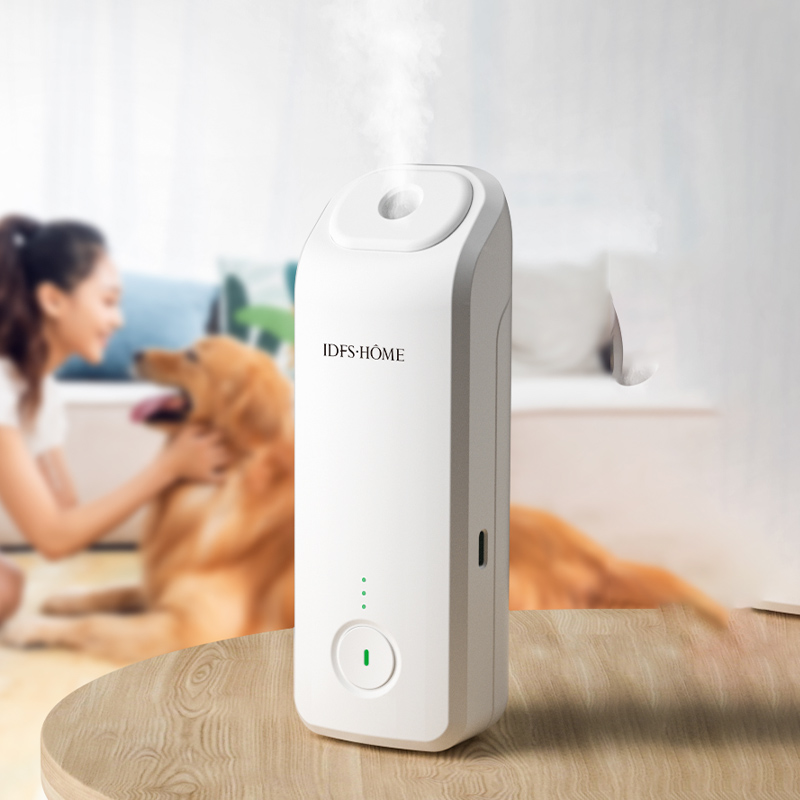
Understanding the mechanical differences between diffusion methods dictates commercial procurement. Cold air technology, also known as nebulization, utilizes pressurized air to break raw essential oils into dry nanoparticles. This process forces the oil through a specialized nozzle at high velocity using the Venturi effect. The resulting micro-mist is lighter than air. It travels easily through HVAC ducts and large open spaces. This method delivers a pure and intense aroma without altering the chemical structure of the fragrance.
Ultrasonic systems fail in commercial settings primarily due to their reliance on water. These units use a vibrating disc to create a water and oil mist. This introduces unwanted humidity into the environment. In commercial buildings, excess moisture creates severe mold risks, especially if the mist enters the HVAC ductwork. Furthermore, ultrasonic units dilute the scent profile. Because oil and water do not mix, the scent output is inconsistent. It starts strong and fades quickly as the oil evaporates faster than the water.
Passive systems like reed diffusers are entirely unsuited for high-traffic or large-volume commercial environments. Reed diffusers rely on natural evaporation. They lack any active dispersion mechanism to push the scent through the air. While they work for a small bathroom, they cannot combat the complex airflow patterns, high ceilings, and constant door openings found in commercial lobbies or retail stores.
| Diffusion Method | Mechanism | Coverage Area | Commercial Suitability | Residue / Moisture |
|---|---|---|---|---|
| Cold Air (Nebulizing) | Pressurized air breaks raw oil into dry nanoparticles. | 1,000 - 10,000+ sq ft | Excellent. Designed for HVAC integration and large spaces. | None. Dry mist leaves no residue or humidity. |
| Ultrasonic | Vibrating disc creates a water and oil mist. | 200 - 400 sq ft | Poor. Labor-intensive and dilutes the fragrance. | High. Introduces moisture and potential mold risks. |
| Passive (Reed) | Natural evaporation through porous sticks. | Under 100 sq ft | Unsuitable. Lacks active dispersion for high-traffic areas. | None, but highly localized and weak. |
Waterless diffusion is the defining characteristic of a premium aroma diffuser. This technology preserves the therapeutic and chemical integrity of raw essential oils. Many natural oils contain volatile compounds that degrade rapidly when exposed to heat. By utilizing cold air pressure instead of thermal elements, nebulizing diffusers ensure the natural benefits survive the dispersion process. The fragrance remains exactly as the perfumer intended, delivering a sophisticated and authentic olfactory experience.
The physics of nanoparticle dispersion guarantee a consistent, clean diffusion. When essential oils are broken down into particles smaller than one micron, they behave like a gas rather than a liquid. This prevents residue buildup on commercial furniture, expensive retail inventory, and delicate HVAC components. The dry mist remains suspended in the ambient air for extended periods, maximizing the efficiency of the oil and ensuring a spotless environment.
Connecting a fragrance machine directly to central air systems is the most efficient way to scent a massive commercial space. This requires specific technical capabilities, starting with duct insertion. The machine must feature a specialized output tube designed to penetrate the supply duct of the Air Handling Unit (AHU).
You must measure the static pressure inside the ductwork before installation. If the machine's pump is too weak, the air inside the duct will push the scent back into the machine. This causes internal damage and zero scent dispersion. Facility managers must ensure the unit's internal pressure rating exceeds the static pressure of the target duct.
Follow these standard steps for HVAC integration:
Airflow mapping is another technical requirement. Before installing an HVAC-integrated unit, facility managers must map the building's airflow to ensure even scent distribution. The system must be calibrated to match the cubic feet per minute (CFM) output of the AHU. Proper calibration prevents localized overpowering near the diffusion source and ensures the fragrance reaches the furthest corners of the building.
Advanced programmability separates professional hardware from basic models. Digital timers and multi-event scheduling are absolute necessities. A commercial space does not require scenting when the building is empty. Managers need the ability to program the machine to turn on 30 minutes before opening and shut down immediately after closing. Multi-event scheduling allows the intensity to increase during peak hours and decrease during quiet periods.
A typical retail environment benefits from a tiered scheduling approach. Monday through Wednesday, foot traffic is generally lower, requiring a baseline scent intensity of 30 seconds on, 90 seconds off. Thursday through Saturday, peak traffic demands a higher output, adjusting the interval to 50 seconds on, 60 seconds off. Sunday operations might require a delayed start time to align with reduced store hours.
Bluetooth and Wi-Fi management capabilities enable multi-zone control. Facility teams can manage dozens of machines across multiple properties from a single smartphone app or desktop dashboard. This connectivity allows for real-time monitoring of oil levels and operational status. Calculating oil consumption rates (measured in ml/hour) is necessary for projecting accurate monthly operational costs. Precision control allows managers to adjust the work/pause intervals down to the second.
Commercial-grade hardware must withstand harsh, continuous operation. Build quality and material integrity are paramount. Essential oils are highly concentrated and can be corrosive to cheap materials. A high quality essential oil diffuser utilizes eco-friendly, durable materials like recyclable anodized aluminum and specialized chemical-resistant polymers. These materials will not degrade, warp, or discolor from prolonged essential oil exposure. Cheap plastics quickly become brittle and crack, leading to internal leaks and catastrophic hardware failure.
Internal component durability dictates the lifespan of the machine. The pressurized air pump is the heart of a nebulizing diffuser. It must maintain high energy efficiency and consistent pressure during continuous-run cycles. Commercial pumps are engineered with brushless motors and high-grade O-rings to prevent wear and tear. Evaluating the sustainability of these components ensures the machine will not end up in a landfill after a few months of heavy use. Sustainable manufacturing practices and repairable internal modules indicate a superior product.
Deploying scent in public spaces requires careful navigation of indoor air quality (IAQ) concerns. Facility managers must ensure safe ambient concentration levels to maintain a non-toxic environment. Over-scenting a space can trigger allergies, headaches, or respiratory discomfort among guests and employees. Adhering to Volatile Organic Compound (VOC) regulations is mandatory. High-quality nebulizing systems allow for micro-adjustments, ensuring the fragrance concentration remains well below regulatory thresholds while still providing a noticeable ambiance.
Commercial oil sourcing must prioritize three characteristics: purity, grade, and integrity. Using synthetic, low-grade fragrance oils introduces unknown chemicals into the air. To mitigate this risk, buyers must demand verified Safety Data Sheets (SDS) from their fragrance suppliers. An SDS details the chemical composition, flash point, and potential hazards of the oil. Reviewing these documents prevents synthetic chemical reactions and guarantees that the ambient scenting strategy relies on safe, compliant, and high-integrity ingredients.
Even the most advanced hardware requires routine maintenance to function optimally. Establishing realistic preventative maintenance schedules is necessary for long-term success. The most common issue with nebulizing diffusers is a clogged nozzle, caused by thick essential oils drying inside the micro-tubes.
To prevent this, maintenance teams should execute a standard cleaning protocol:
| Issue | Potential Cause | Field Solution |
|---|---|---|
| Weak Scent Output | Clogged nebulizer nozzle | Run 90% isopropyl alcohol through the system for 15 minutes. |
| Unit Running but No Mist | Empty oil canister or disconnected internal tube | Refill canister and verify the polyurethane tube is seated firmly on the pump fitting. |
| Oil Pooling in HVAC Duct | Unit running while AHU fan is off | Interlock the diffuser power supply with the AHU fan relay. |
| Excessive Noise | Worn pump motor or loose mounting bracket | Inspect vibration-dampening mounts and replace the pump module if bearings are failing. |
Evaluating vendor warranties and support structures is a vital mitigation strategy. Commercial hardware represents a significant investment, and downtime impacts the brand experience. Facility managers must assess replacement part availability, ensuring items like nozzles, tubes, and pumps can be shipped overnight. Reviewing Service Level Agreement (SLA) terms guarantees that the vendor provides adequate technical support, troubleshooting guides, and rapid repair services if a unit malfunctions.
Procurement decisions often hinge on the initial price tag, but this approach is flawed when evaluating scenting systems. There is a trade-off between purchasing a cheaper initial machine and absorbing higher monthly costs due to inefficient oil waste. Budget-tier machines lack precision pump control. They consume oil at a rapid, uncontrollable rate, blowing through expensive fragrance reserves in a matter of days. The money saved on the hardware is quickly lost to excessive consumable expenses.
Investing in precision-control diffusers yields a significantly stronger return on investment. High-end units feature intelligent programming that pauses during off-hours and adjusts intensity based on real-time foot traffic. They utilize energy-efficient pumps that draw minimal electricity while maximizing scent dispersion. By atomizing the oil into microscopic particles, these machines use a fraction of the liquid to cover the same square footage. This operational efficiency drastically reduces the monthly consumption rate, ensuring the system provides sustainable value year after year.
Strategic deployment further enhances the value of the system. Placing standalone units in optimal airflow paths reduces the need for higher intensity settings. When integrating with HVAC systems, utilizing the building's existing fan schedules ensures the diffuser only operates when the air handler is actively pushing air. This prevents oil from pooling in the ductwork during idle periods. By combining high-quality hardware with intelligent deployment strategies, commercial facilities can maintain a premium olfactory environment while strictly controlling their monthly operational expenditures.
A: Commercial units use cold-air nebulizing technology to cover thousands of square feet without using water. They are built with durable metals and offer HVAC integration. Home diffusers typically use ultrasonic technology, rely on water, cover small rooms, and require daily manual refilling.
A: Depending on the specific model and whether it is integrated into the HVAC system, commercial units can effectively cover anywhere from 1,000 to over 10,000 square feet while maintaining a consistent scent profile.
A: Yes. Cold air diffusion creates ultra-fine dry nanoparticles. This waterless process leaves no sticky residue and introduces no moisture, completely protecting HVAC ducts, commercial furniture, and retail inventory from damage.
A: By avoiding heat and water, a premium unit maintains the delicate chemical integrity of the raw ingredients. The oils remain pure and unaltered, ensuring maximum therapeutic benefits without dilution or thermal degradation.
A: Yes. High-quality commercial units are specifically designed for HVAC integration. They connect directly to the supply ductwork, utilizing the building's existing airflow to distribute the fragrance evenly across massive open spaces.
A: No. Nebulizing technology breaks essential oils into microscopic dry particles. These particles are lighter than air, remaining suspended in the environment and dissipating naturally without leaving any oily residue on surfaces.


