
Views: 0 Author: Site Editor Publish Time: 2026-06-28 Origin: Site


You finally bring home a beautiful scent device. You plug it in eagerly, expecting a fragrant oasis. Soon, you feel deeply frustrated. The unit wildly underperforms in large rooms. It leaves a damp water residue on your favorite furniture. It consumes pure oil far too rapidly. We understand this annoyance perfectly. The right choice goes far beyond simple aesthetic appeal. It depends strictly on daily operational realities. You must carefully evaluate your actual space volume. You should determine your exact maintenance tolerance. You must also consider household safety and specific technology types. We promise to help you navigate these complex options. We provide an objective, evidence-based evaluation framework. You will learn how to choose between personal ultrasonic devices and high-capacity cold-air nebulizers. You will also understand exactly when whole-building systems make sense. We cut through the pervasive marketing fluff. You will find exactly what works for your unique space.
Match Technology to Intent: Ultrasonic models suit small, localized spaces but require water; cold-air nebulizers deliver pure, potent scent ideal for larger or commercial areas.
Sizing is Non-Negotiable: Relying on a small diffuser for a 1,000+ sq. ft. open floor plan results in scent dilution and wasted oil.
Safety First: Households with pets, children, or respiratory sensitivities must prioritize heat-free diffusion and phthalate-free, purely sourced oils.
The mechanism of diffusion dictates scent throw. It controls ambient intensity and limits physical residue. You must evaluate these factors based on your desired saturation level. Different machines process oils in distinct ways. Let us explore the primary technologies available today. We will look at their specific physical mechanisms.
This advanced method uses pressurized ambient air. It forces air through a small micro-tube. This process relies heavily on the Venturi effect. It breaks pure essential oils into a dry mist. This nano-mist measures just 1 to 5 microns in diameter. These tiny particles stay suspended in the air for hours.
Pros: It offers the highest possible scent concentration. You do not need to add any water. It preserves the chemical integrity of the oil completely. It leaves absolutely zero damp residue on nearby surfaces.
Cons/Risks: The system consumes pure oil much faster. It operates at a slightly higher baseline noise level. You will often hear a hum around 30 to 35 decibels. This sounds very similar to a quiet laptop fan.
These popular units rely on a small internal ceramic plate. This plate produces high-frequency ultrasonic vibrations. They mix oil drops into a water reservoir. This action releases a cool, fragrant mist into the room.
Pros: They are incredibly budget-friendly for beginners. They operate extremely quietly. They add slight localized humidity to dry winter rooms.
Cons/Risks: The added water dilutes the actual scent profile heavily. You must refill the water reservoir every single day. You risk dangerous mold and bacteria growth without meticulous cleaning.
We strongly recommend avoiding heat diffusion completely. Heat alters the delicate therapeutic chemistry of essential oils. It forces rapid oil oxidation. It also introduces a clear household fire risk. You should also limit evaporative fan diffusers for high-end applications. They release scent very unevenly. Lighter top notes evaporate first. Heavy base notes linger too long. This leaves a stale odor behind. Avoid these outdated methods for serious spatial scenting.
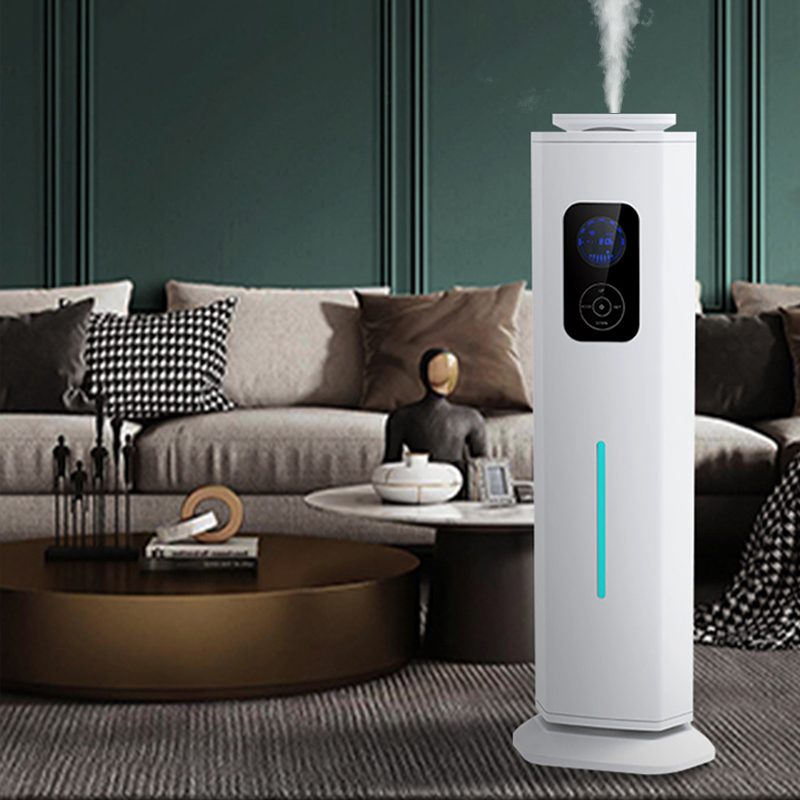
Under-sizing remains the most common buyer error. A single machine's efficacy is strictly bound by square footage. It also heavily relies on natural room airflow. Placing a tiny unit in a massive hall fails instantly. You must match the device hardware to the physical environment. We break down the standard sizing categories below.
Standard tabletop ultrasonic models work perfectly here. Compact waterless units also excel in these smaller zones. They provide sufficient coverage for standard bedrooms. They work beautifully in small home offices or bathrooms. You do not need massive power for a 200-square-foot room.
These demanding areas require standalone cold-air tower models. Proper physical placement becomes absolutely crucial here. You must place them in central zones. Leverage your natural HVAC return airflows. Place the tower near air intake vents. This helps carry the dry fragrance across open floor plans.
This massive tier requires robust, integrated solutions. This is exactly where a commercial scent machine becomes totally necessary. Look for advanced HVAC-integrated systems. These units connect directly to your existing ductwork. This setup guarantees invisible, uniform scenting. It covers multi-room estates flawlessly. It works perfectly for busy hotel lobbies. It elevates retail environments effortlessly.
Space Size | Recommended Technology | Ideal Placement Strategy |
|---|---|---|
Under 400 sq. ft. | Ultrasonic or Mini Waterless | Tabletops, desks, or nightstands. |
800–1,500 sq. ft. | Cold-Air Tower Nebulizer | Central living zones near return air vents. |
2,000+ sq. ft. | HVAC-Integrated Systems | Directly installed into main air supply ducts. |
The physical hardware is just a one-time setup. Ongoing oil usage and daily maintenance present recurring realities. You must understand these daily and weekly physical requirements. Ignored machines break down quickly.
Nebulizers offer highly programmable intensity levels. You might run a machine at 50% intensity. Doing this for 8 hours daily consumes pure oil rapidly. It uses drastically more essential oil than a basic unit. A standard ultrasonic unit simply uses five drops mixed in water. You should calculate the monthly usage volumes carefully. Compare proprietary scent capsules against open-system models. Open systems allow you to use third-party bulk essential oils freely. They offer significantly more flexibility over time.
Different machines demand very different cleaning routines. Ultrasonic units require weekly manual scrubbing. You must clean the vibration plate using rubbing alcohol. This prevents hard mineral buildup from tap water. It stops dangerous mold accumulation in the corners. Nebulizing and commercial systems operate quite differently. They require periodic maintenance cycles instead of daily scrubbing. You must run rubbing alcohol through the empty system. This clears out microscopic tube clogs effectively. Thick oils like vetiver or patchouli clog tubes easily. Regular alcohol runs ensure the nano-mist sprays perfectly every single time.
Diffusing volatile organic compounds (VOCs) impacts indoor air quality directly. Safety must always supersede mere aesthetic appeal. You must protect the vulnerable occupants in your specific space. Ignoring these realities poses severe health risks.
Certain animals possess distinct biological limitations. Birds and cats lack specific liver enzymes. They cannot process certain essential oils safely. Eucalyptus, peppermint, and tea tree oils are highly toxic to them. You must apply a strict decision lens here. Opt for machines offering rigid programmable timers. Set them for 30 minutes on and 30 minutes off. This exact schedule prevents dangerous olfactory fatigue. It avoids hazardous over-saturation in homes. It keeps sensitive occupants and pets safe.
You must verify the internal material quality closely. Ensure your machine uses high-grade medical plastics. High-density polyethylene (HDPE) and glass reservoirs provide excellent options. Pure citrus oils are highly acidic. They can quickly degrade cheap plastics over time. This slow degradation leaches toxic chemicals into your air. Always prioritize high-quality internal components for long-term health.
Always research pet-safe essential oils before operating any scent diffuser machine.
Use strict intermittent timers to prevent room over-saturation.
Ensure your room has adequate fresh air ventilation daily.
Leaving diffusers running continuously all day creates intense sensory overload.
Using cheap synthetic fragrances introduces harmful indoor air pollutants.
Placing ultrasonic units near unsealed wood furniture causes permanent moisture damage.
Smart features should reduce your daily operational friction. They should never create additional tech headaches. You must evaluate the stability of the device's technology stack. A bad app ruins a great machine.
These digital features are essential for high-capacity machines. They help align scenting schedules with specific business hours. They match your daily home routines perfectly. Proper scheduling prevents wasted oil overnight. It ensures the fragrance peaks exactly when you need it most. You can set it to run right before guests arrive.
Many smart diffusers face serious wireless connectivity issues. Assess if the machine relies exclusively on a 2.4GHz Wi-Fi network. This represents a massive failure point for modern dual-band routers. Modern routers often force devices onto 5GHz bands automatically. This drops the connection repeatedly. Localized Bluetooth offers a much more stable alternative. We highly recommend a specific fail-safe approach. Prioritize machines featuring onboard physical memory.
When evaluating smart capabilities, prioritize these three features:
Onboard physical memory storage to retain your programmed schedules securely.
Physical backup buttons that keep working even if the smartphone app crashes permanently.
Dual-band or stable Bluetooth connectivity that functions perfectly when your local Wi-Fi drops out.
Let us review the fundamental shortlisting logic. If your space is small and you tolerate daily cleaning, buy an ultrasonic model. If you want high-fidelity scent in an open-concept home, invest in a standalone cold-air nebulizer. If you demand zero-maintenance, holistic coverage for a massive area, upgrade your setup. You should install an HVAC-integrated commercial system for perfect uniformity.
Your immediate next step is highly practical. Measure the exact square footage of your target zone today. Audit your existing HVAC accessibility closely. Perform these physical checks before shortlisting any specific brands. This ensures you install the most effective technology possible.
A: Ultrasonic machines can contribute to localized mold if left uncleaned. Stagnant water sitting in the reservoir breeds bacteria quickly. Waterless nebulizing machines introduce absolutely zero moisture into the air. They carry no mold risk whatsoever.
A: It heavily depends on the manufacturer's exact specifications. Some brands require proprietary cartridges to maintain their warranties. Open-system nebulizers gladly accept any pure, undiluted essential or aroma oil. Never use heavy carrier oils like jojoba. They will permanently clog the nano-tubes.
A: Cold-air diffusion physically relies on an internal air compressor. Engineers design them to operate quietly. However, a faint hum around 30 to 35 decibels is physically unavoidable. For near-silent operation, you require full HVAC integration. This keeps the physical hardware far out of your living space.


