
Views: 0 Author: Site Editor Publish Time: 2026-08-14 Origin: Site


Moving from basic room fresheners to professional-grade scenting systems transforms a facility. Property managers and homeowners often struggle with inadequate scenting hardware. You face inconsistent fragrance dispersion and rapid oil depletion. Incompatible HVAC connections cause major installation headaches and airflow restrictions. Weak wall plug-ins and messy candles lack the power to cover large areas effectively. You need a centralized solution to replace toxic aerosols permanently. This guide provides a structured evaluation framework for scenting hardware. You will learn to assess technical specifications, pump mechanics, and diffusion technology. We cover the operational features necessary for reliable, daily performance. This ensures you select the exact hardware for your specific environmental requirements without relying on trial and error.
Calculating true cubic volume matters more than flat square footage. High ceilings and open floor plans drastically change the required output. You cannot rely solely on manufacturer square-footage claims. Multiply your room length, width, and ceiling height to find the cubic volume. A 1,000-square-foot room with twelve-foot ceilings requires significantly more power than one with standard eight-foot ceilings. Natural drafts and existing ventilation disrupt scent dispersion. Heavy foot traffic pushes vapor away from intended zones. HVAC return vents can suck the scent out of a room prematurely. You must account for these airflow dynamics to achieve an even scent profile. When installing units in lobbies, observe the primary air currents from entry doors. Position the dispenser upstream of these currents. This allows the natural airflow to carry the nanoparticles across the room. Failing to map the airflow results in heavy scent concentration in corners while the center of the room remains odorless.
Standalone units offer ultimate flexibility. They require zero installation and plug directly into standard outlets. You can move them easily between different rooms. HVAC-connected systems provide an invisible footprint. They distribute scent evenly through your existing ductwork. This creates whole-building consistency without visible hardware. Ultra-portable, rechargeable devices work perfectly for micro-spaces. You can use them in cars, hotel rooms, or personal office desks. HVAC integration requires specific prerequisites. You need accessible ductwork downstream from the air handler. Improper installation disrupts your existing climate control and alters static pressure. You must tap into the supply plenum, not the return. Injecting scent into the return pulls oil through your air filter and evaporator coil. This fouls the equipment and restricts airflow. Always use mastic sealant around the injection tube to prevent conditioned air from escaping into the utility closet.
Cold-air diffusion breaks essential oils into nanoparticles. It operates entirely without heat or water. The system uses the Venturi effect to draw oil up a small tube. Pressurized air forces the oil through a specialized nozzle. It shatters the oil against a baffle inside the chamber. This creates a dry micro-mist that floats effortlessly in the air. This method is mandatory for preserving chemical integrity. Heat destroys delicate aromatic compounds instantly. Water dilutes the scent profile and alters the smell. Cold-air technology ensures a consistent, pure fragrance experience. The nanoparticles measure less than one micron in diameter. They remain suspended in the ambient air for hours. This maximizes the efficiency of the oil. A high-quality internal air compressor generates the necessary PSI to atomize thick essential oils without clogging the nozzle assembly.
Ultrasonic and evaporative diffusers fall short for large-scale applications. Ultrasonic units rely on water to disperse scent. This adds unwanted humidity to your environment. Heavy water droplets fall to the ground quickly. This damages hardwood floors and leaves residue on furniture. Evaporative models use fans to blow air over an oil-soaked pad. The lighter top notes evaporate quickly. Heavy base notes linger behind, creating an unbalanced smell. These legacy systems pose significant operational risks. You face potential mold growth and uneven scent distribution. They cannot compete with modern fragrance diffuser equipment. Facility managers constantly battle water damage from ultrasonic units. The constant refilling of water tanks wastes valuable maintenance hours. Evaporative pads require frequent replacement as they become saturated with dust and degraded oil.
Scent consistency means experiencing the exact same aroma intensity daily. Advanced internal pumps maintain steady vapor concentration. They perform flawlessly even as the oil reservoir depletes. Older technologies lose power as the oil level drops. High-quality systems deliver a long-lasting, even aroma over a thirty-day cycle. You never experience an overwhelming burst of scent followed by weak performance. The micro-mist stays suspended in the air for hours. This maximizes the efficiency of your chosen fragrance oils. A reliable aroma fragrance machine uses a digital controller to regulate pump speed. This ensures the output remains identical on day one and day thirty. The internal microprocessor compensates for the changing fluid dynamics inside the bottle.
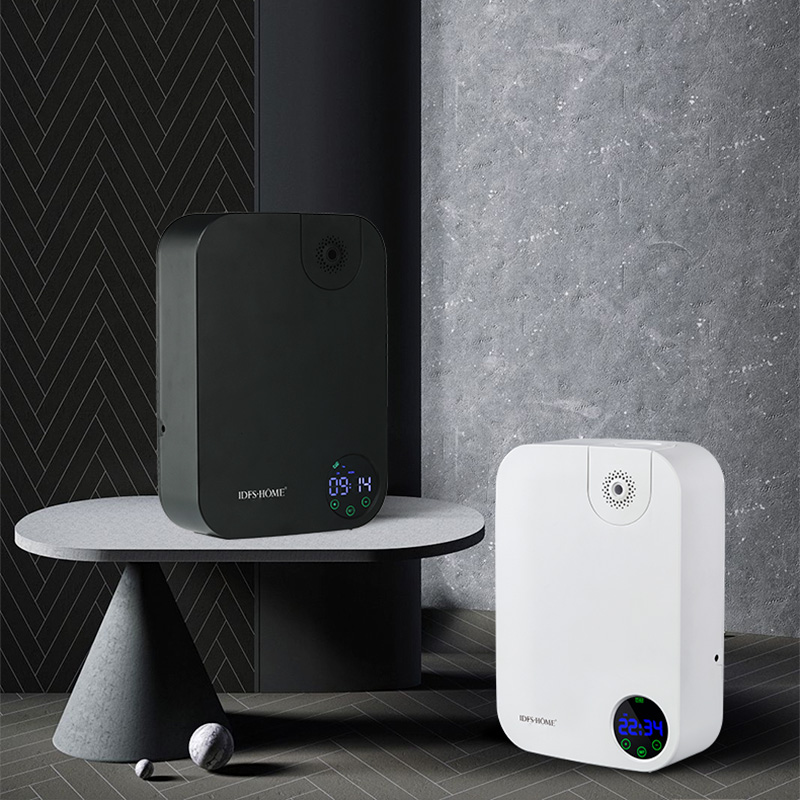
Frequent maintenance disrupts your daily routine. You must choose a capacity that aligns with your lifestyle constraints. Facility managers need large reservoirs to minimize service calls. Homeowners might prefer smaller, easily accessible bottles. Larger bottles reduce the risk of the pump running dry. Running a dry pump damages the internal motor quickly. Let us look at a breakdown of typical reservoir sizes and expected refill intervals.
| Reservoir Size | Ideal Space Application | Expected Refill Interval (Average Use) |
|---|---|---|
| 100ml | Small Rooms / Cars / Desks | 2 - 4 Weeks |
| 500ml | Large Living Areas / Retail Floors | 1 - 2 Months |
| 1000ml | Whole Home HVAC / Large Lobbies | 2 - 3 Months |
| 5000ml (Bulk) | Casinos / Airports / Stadiums | 6 - 12 Months |
A 1000ml bottle installed in a commercial lobby might run for twelve hours daily. This setup requires a robust pump designed for continuous duty. Smaller 100ml bottles work well for residential bathrooms but require bi-weekly checks. Always factor in the physical accessibility of the unit when selecting the bottle size. Units mounted high on walls require ladders for servicing, making larger bottles a safer choice.
Casing materials dictate durability and vibration dampening. Aluminum and steel enclosures outperform cheap plastic models. Metal housings reduce internal pump noise significantly. Internal tubing should utilize high-grade silicone rather than stiff PVC plastic. PVC hardens over time when exposed to concentrated essential oils. Interior design integration matters heavily for standalone units. They must feature a clean, modern aesthetic. Your device should blend seamlessly into high-end decor. Acceptable decibel ranges vary by environment. Bedrooms and spas require ultra-quiet operation below 30 decibels. Retail lobbies tolerate slightly higher noise levels around 40 decibels. Heavy-duty rubber feet isolate the unit from hard floors. This prevents annoying rattling sounds from echoing through the space.
Mounting and placement options dictate spatial integration. Look for wall-mounted brackets and freestanding floor models. Some advanced units offer track-lighting compatibility. Versatility ensures you can position the device for optimal airflow. Security features remain necessary for public-facing spaces. Lockable compartments prevent unauthorized access to the oil reservoir. They also protect the digital programming interface from tampering. Proper placement prevents the mist from hitting walls or windows directly. If the nozzle points directly at a cold window, the vapor will condense. This wastes oil and creates a sticky film on the glass. Always aim the output toward the center of the room. Keep the unit at least three feet away from smoke detectors to prevent false alarms triggered by dense nanoparticle clouds.
Granular scheduling conserves oil when spaces are unoccupied. You can set specific operating hours and days. There is no reason to run a powerful automatic scent machine in an empty building overnight. Variable intensity settings allow you to customize the ambient experience. You might program the unit to run for thirty seconds and pause for sixty seconds. This prevents the scent from becoming overwhelming. Retail stores often increase intensity during peak foot traffic hours. Homes usually require lower intensity settings for continuous comfort. Digital timers offer precise control down to the minute. Mechanical dials lack the accuracy needed for professional applications. Look for systems that allow multiple distinct daily schedules.
Mobile app controls offer incredible utility for remote monitoring. You can adjust intensity on the fly from anywhere. The app sends low-oil alerts directly to your phone. Bluetooth connections work well for localized, single-room setups. Wi-Fi connections provide superior stability in larger environments. Wi-Fi allows you to manage multiple units across different floors. You control the entire scenting network from a single digital dashboard. Facility managers rely on these dashboards to monitor fluid levels across multiple properties. This eliminates the need for physical inspections and streamlines maintenance routes. Ensure the app interface provides real-time pump status and historical usage data.
Advanced setups require integration with platforms like Control4 or Crestron. Standard smart home ecosystems like Alexa add voice control convenience. BMS integration allows for synchronized scenting based on HVAC fan operation. The dispenser only releases vapor when the air handler pushes air. This maximizes efficiency and ensures rapid scent distribution. It prevents concentrated vapor from pooling inside inactive ductwork. Synchronized operation extends the life of your internal pump. You wire the scenting unit directly to the fan relay on the furnace control board. When the thermostat calls for the fan, the scenting unit activates simultaneously. This requires a basic understanding of low-voltage wiring and HVAC schematics.
The scenting industry often utilizes a razor-and-blade business model. You buy the hardware once but purchase oils continually. You must evaluate proprietary scent cartridges against open-source systems. Proprietary cartridges guarantee compatibility and prevent leaks. Machines with refillable reservoirs accept third-party oils freely. This offers greater flexibility and scent variety. Assess the breadth of the manufacturer's scent library. Look for natural essential oils versus synthetic artificial options. High-quality oils provide targeted aromachology benefits. Specific blends can boost energy, relieve pain, improve sleep, or elevate mood. Open-source systems allow you to source oils locally. This prevents supply chain disruptions from leaving your machines empty. Always check the viscosity of third-party oils to ensure they do not clog the nebulizer.
Continuous-run motors draw minimal electricity. Most modern units consume less power than a standard LED lightbulb. Routine cleaning prevents nozzle clogs and pump failure. You should run rubbing alcohol through the system every few months. Simply fill an empty bottle with 99% isopropyl alcohol and run the machine for fifteen minutes. This dissolves hardened oil residue inside the micro-tubes. Neglecting maintenance drastically reduces the lifespan of your aroma dispenser. Clean nozzles ensure the mist remains ultra-fine and dry. If you notice the mist sputtering or spitting droplets, the nozzle requires immediate cleaning. Keep spare nozzles on hand to swap them out quickly during routine service. Inspect the O-rings on the bottle threads annually for signs of degradation.
A strong manufacturer warranty covers the pump and motor. Look for a minimum coverage of one to two years. The pump is the hardest-working component in the entire system. The availability of replacement parts extends your hardware lifespan. You should be able to purchase replacement nozzles easily. Internal tubes and empty bottles must be readily available. Avoid brands that require replacing the entire unit for a minor component failure. Modular designs allow for quick, tool-free repairs. A quality pump should last at least five thousand operating hours before requiring a rebuild. Check if the manufacturer offers mail-in repair services for out-of-warranty units.
Improper HVAC installation carries significant operational risks. Drilling into the wrong side of the coil causes condensation. This moisture buildup damages your entire climate control system. You must connect the injection tube downstream of the fan. Airflow must push the vapor away from internal mechanical components. We strongly recommend hiring licensed HVAC technicians. Professional installation mitigates warranty voiding immediately. It also ensures optimal airflow integration across all building zones. Technicians understand how to manage static pressure drops safely. They will use a pitot tube to measure airflow velocity in the duct. This ensures the scent vapor mixes properly with the conditioned air before entering the living space. Never install the injection tube in a duct section with sharp ninety-degree turns.
Olfactory fatigue happens when your brain ignores a constant smell. This is commonly known as nose blindness. Improper machine settings lead to over-saturating a space. You might crank up the intensity because you can no longer smell the fragrance. This overwhelms guests entering the space fresh. Set baseline intensity levels low initially. Adjust the output incrementally over several days. Trust the initial settings before making drastic changes. Step outside for ten minutes to reset your olfactory senses. Use a structured approach to track your settings during the testing phase.
Volatile Organic Compounds demand serious attention. Poor-quality oils trigger allergies and degrade indoor air quality. Look for machines that support IFRA-compliant oils. The International Fragrance Association sets strict safety standards. Adjustable output controls help maintain safe indoor air quality. Never compromise on safety when dispersing nanoparticles into your breathing environment. Ensure your chosen oils are safe for pets and children. Avoid synthetic carriers that leave sticky residues on hard surfaces. Request Safety Data Sheets (SDS) from your oil supplier. These documents detail the exact chemical composition and flash points of the liquids. Proper ventilation remains necessary even when using the highest quality essential oils.
A: A standard humidifier uses water evaporation or ultrasonic vibration to add moisture to the air. This dilutes any added scents. An advanced fragrance machine uses cold-air nebulization. It breaks pure essential oils into dry nanoparticles without heat or water. This delivers a highly concentrated, consistent scent without increasing room humidity.
A: Yes. Concentrated vapor systems provide safer, more consistent, and wider coverage than traditional methods. They eliminate open flames, messy wax, and toxic aerosol sprays. A single automated unit can scent thousands of square feet evenly. This makes weak wall plug-ins entirely obsolete.
A: Many professional units connect directly to HVAC ductwork. This requires accessible supply ducts downstream from the air handler. The system must sync with your HVAC fan operation to push the dry mist throughout the building. Professional installation is recommended to ensure proper static pressure and avoid condensation.
A: A 500ml bottle typically lasts between one to two months. This depends entirely on your daily operating hours and intensity settings. Running the unit for eight hours a day at a medium intensity conserves oil. Continuous round-the-clock operation depletes the reservoir much faster.
A: They are safe when used correctly with IFRA-compliant oils. You must avoid heat and water-based diffusion, which can alter chemical structures. Always choose high-quality, natural scents over cheap artificial chemicals. Keep standalone units out of reach and ensure HVAC systems are programmed to prevent over-saturation.
A: Loud humming usually comes from internal pump vibration. If the noise increases suddenly, the nozzle might be clogged. This forces the motor to work harder. Regular cleaning with rubbing alcohol prevents this issue. Also, ensure the unit sits on a flat, stable surface to minimize external casing vibration.
A: It depends on the hardware. Cartridge-based systems lock you into buying proprietary oils from the manufacturer. Open-reservoir systems allow you to pour in any high-quality, third-party essential oil. Open systems provide access to a more diverse scent library and offer greater flexibility.


