
Views: 0 Author: Site Editor Publish Time: 2026-06-22 Origin: Site


Sensory marketing is no longer just a luxury hospitality tactic. Today, it acts as a measurable driver of customer retention. It boosts perceived facility cleanliness and solidifies brand recall. However, commercial spaces often struggle to scale consistent, safe, and high-quality fragrance delivery. Facilities face frequent HVAC complications and rapid essential oil degradation. They also encounter strict compliance issues when trying to scent large areas. You need an enterprise-grade solution bridging advanced diffusion hardware with customized olfactory branding. A proper ramond aroma setup steps in here to solve these complex scaling challenges. This article objectively evaluates the technology behind these systems. We will explore the proven return on investment of scent marketing. You will also learn the implementation realities you must consider for your own commercial spaces.
Technology Standard: Professional systems rely on cold-fluid nebulizing technology to preserve essential oil integrity without heat or water dilution.
Measurable ROI: Strategic scent deployment correlates with increased dwell time, higher perceived value (e.g., RevPAR growth in hotels), and stronger emotional memory retention.
Scalable Deployment: Proper deployment requires evaluating spatial limits—distinguishing between standalone units for partitioned rooms and HVAC-integrated systems for multi-zone consistency.
Compliance & Safety: Enterprise procurement demands verified safety standards (RoHS, CE, REACH) and strict maintenance protocols to ensure consistent, risk-free operation.
Most consumers understand basic oil diffusers. However, these consumer-grade devices fail miserably in commercial settings. Ultrasonic diffusers rely on water. They dilute the essential oil and add unwanted humidity to the room. Evaporative diffusers use fans. They blow air across a scented pad, causing inconsistent fragrance delivery. Heat-based diffusers literally boil the oil. This alters the delicate chemical structure of the fragrance and ruins the intended scent profile.
Professional environments require a completely different approach. Industry experts consider nebulizing diffusion the "gold standard" for commercial spaces. High-end systems utilize cold-fluid nebulization. This technology uses highly pressurized air to atomize pure essential oils into microscopic particles. You do not need water. You do not need heat. The fragrance retains its pure scent profile exactly as the perfumer intended.
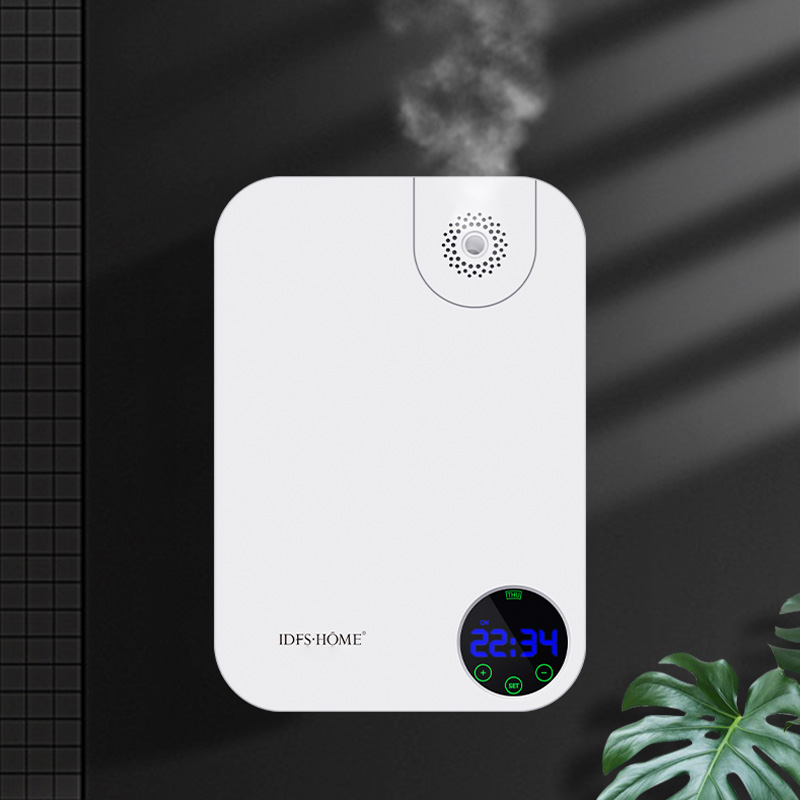
A professional Aroma Machine delivers massive benefits. These micro-particles are lighter than air. They achieve sustained hang-time, filling massive lobbies evenly. But hardware mechanics only tell half the story. The commercial sector is rapidly shifting toward smart integration. Modern machines feature IoT connectivity and AI-driven controls. Facility managers can adjust scent concentrations remotely. They can program machines to increase output during busy hours or reduce it based on local weather changes.
When selecting a vendor, manufacturing pedigree matters immensely. Look for factories operating under ISO9001 standards. Proprietary patents indicate serious research and development. Strong manufacturing ensures your hardware survives years of continuous daily operation.
You must assess your current facility strategy before upgrading your hardware. Scent marketing operates on a progressive framework. We guide buyers through this 5-level maturity model to identify their exact needs.
Level 1: Defensive Masking. This is the most basic stage. You focus purely on neutralizing malodors. Fitness centers, back-of-house areas, and public restrooms use this level to establish a clean, neutral baseline.
Level 2: Welcoming Baseline. You introduce universally pleasant notes into the space. Floral or powdery scents work well here. Lobbies and leasing offices use this tactic to signal safety, cleanliness, and quiet professionalism.
Level 3: Behavioral Stimulation. You deploy targeted scents to drive specific human actions. Workspaces often use citrus or peppermint to increase employee focus. Retail stores use stimulating scents to encourage longer dwell times.
Level 4: Signature Brand Identity. This level requires bespoke fragrance development. You create a globally consistent scent profile. It functions as an invisible logo. Luxury hospitality brands rely heavily on this tactic to build brand equity.
Level 5: Lifecycle Extension. You actively monetize your signature scent. Hotels and boutiques sell retail products containing their custom fragrance. Guests buy candles and room sprays. This maintains a strong consumer connection long after they leave your property.
Most businesses start at Level 1 or 2. Upgrading to a premium diffuser system allows you to easily push your brand into Level 4 and Level 5 territory.
Scent marketing represents a scientifically backed revenue driver. We must look at neuroscience to understand why it works so well. Human biology links the olfactory bulb directly to the brain's limbic system. This system houses the amygdala and hippocampus. These areas govern emotion and memory formation. Because of this direct pathway, scent serves as the strongest trigger for implicit memory.
Consider the data comparing human senses. We forget visual inputs relatively quickly, but scent memories linger for years.
Table 1: Memory Retention Accuracy Over Time | ||
Sensory Input | Time Elapsed | Accuracy of Recall |
|---|---|---|
Visual Memory | 3 Months | 50% |
Scent Memory | 1 Year | 65% |
This biological reality translates directly into hard metrics. Hospitality and retail sectors see incredible returns on their sensory investments. Strategic fragrance deployment changes how consumers spend their money. In the hotel industry, operators measure success through RevPAR (Revenue Per Available Room). Implementing a signature scent directly elevates this metric.
Chart 1: Measured Business Impact of Scent Marketing | ||
Industry Segment | Tracked Metric | Demonstrated Growth |
|---|---|---|
Luxury Hospitality | RevPAR (Revenue Per Available Room) | Up to +23.5% |
Retail Environments | Purchase Intent | Up to +84% |
Retail Environments | Price Premium Tolerance | +10% to +20% |
Retail legacy studies prove these numbers consistently. Shoppers browsing in scented environments show an 84% higher purchase intent. They also demonstrate a willingness to pay price premiums. A store smells premium, so the merchandise feels premium.
These benefits extend far beyond traditional hotels and retail stores. High-end apartment complexes now use custom fragrances in their leasing offices and hallways. This practice significantly boosts lease renewal rates. Tenants subconsciously associate the building with cleanliness and luxury. Event spaces use scent to curate exact atmospheric moods for weddings or corporate galas. Even specialized care facilities utilize calming lavender notes to soothe anxious patients.
Buying the right hardware dictates your success. You must evaluate your specific spatial limits and airflow dynamics. Facility managers generally choose between two main equipment categories.
Standalone units offer incredible flexibility. You can place them on floors, mount them on walls, or hide them discreetly on shelves. They require standard electrical outlets and basic programming.
Best for: Hotel lobbies, partitioned office spaces, and waiting rooms. They also excel in older buildings using decentralized air conditioning.
Capacity rules: These units typically handle spaces under 2,000 square feet. If you have a larger room broken up by walls, multiple standalone units often work best.
Enterprise applications rely on HVAC integration. These systems connect directly to your building's ductwork. The machine atomizes the essential oil and pushes the micro-particles into the supply air. Your existing fans distribute the fragrance seamlessly across massive zones.
Best for: Large-scale, open-concept environments. Casinos, mega-resorts, and convention centers use this method exclusively.
Capacity rules: These heavy-duty systems can easily cover up to 15,000+ square feet uniformly.
Enterprise buyers should also demand deep customization from their vendors. Seek out manufacturers offering comprehensive OEM and ODM flexibility. You might need your brand's logo stamped on hundreds of hardware units. You might need a completely custom fragrance formulated from scratch. A vertically integrated manufacturer can support your multi-location rollouts effortlessly.
Procuring commercial scent equipment requires strict diligence. You cannot simply plug a device in and forget about it. Enterprise buyers must navigate global compliance standards, address human health sensitivities, and enforce strict maintenance protocols.
Never purchase unverified hardware or mystery oils. Enterprise buyers must verify hardware certifications before signing a contract. Look for CE, FCC, and RoHS marks. These ensure the electronics operate safely and contain no hazardous materials. You must also demand rigorous testing reports for all essential oils. Vendors should provide MSDS (Material Safety Data Sheets), REACH compliance documents, and SGS testing reports. These documents prove the oils contain no harmful volatile organic compounds (VOCs).
You must address health concerns transparently. Customers often ask about allergies and sensitivities. True commercial scenting is remarkably safe when executed correctly. Professional machines allow exact safe dilution standards. You control the parts-per-million concentration in the air. Utilizing certified pure oils protects vulnerable populations. You can safely scent areas frequented by pets, children, and elderly individuals. The key lies in smart-dispensing technology. This prevents dangerous over-saturation in enclosed spaces.
Hardware longevity depends entirely on your operational routines. Even the best equipment fails if neglected.
Regular Wipe Downs: Perform a quick exterior wipe down every time you change the oil canister.
Weekly Deep Cleans: You must run rubbing alcohol through the system once a week. This flushes the internal atomization nozzle and prevents sticky resin clogs.
Common Mistake: Never use standard alcohol-based perfumes in professional machines. This is a crucial warning. Consumer perfumes contain synthetic fillers and high water content. These ingredients degrade the internal acrylic and plastic components. They will permanently clog the nozzle and cause irreversible hardware damage. Always use machine-grade pure essential oils.
The scent industry is preparing for a massive shift in 2026. Environmental sustainability now dictates product development. Eco-friendly plant extracts derived through cold-pressed or steam distilled methods lead the market. Vendors are abandoning single-use plastics. You should expect refillable aluminum cartridges and entirely plastic-free packaging moving forward. Aligning your procurement with these trends protects your brand's ESG (Environmental, Social, and Governance) goals.
Modern commercial environments demand more than basic odor control. Transitioning to a centralized, nebulizer-driven scent strategy profoundly improves customer perception. It drives tangible commercial metrics, from increased retail sales to higher hotel RevPAR.
You can execute this strategy flawlessly by following a few critical steps. First, audit your facility’s HVAC compatibility to determine your ideal hardware size. Next, use the maturity model to define your brand’s required scent level. Finally, request hardware specifications or customized oil samples from a verified, vertically integrated manufacturer. Equipping your space with premium technology ensures a memorable, safe, and highly profitable guest experience.
A: Ultrasonic diffusers use water and high-frequency vibrations. This dilutes the scent and adds unwanted humidity to the room. Nebulizers use pressurized air to atomize pure essential oil into micro-particles. This ensures a much stronger, pure, and completely dry scent distribution.
A: No. Alcohol and synthetic fillers will degrade the internal acrylic and plastic components. They will permanently clog the atomization nozzle. You should only use pure, machine-grade essential oils to protect your equipment.
A: While usage varies, best practices dictate a quick wipe-down after oil changes. You should also perform a dedicated deep clean once a week. Running rubbing alcohol through the system maintains peak atomization performance and prevents clogs.
A: Yes, provided the facility uses compliant oils backed by MSDS and REACH certifications. You must also adhere to strict concentration controls via smart-dispensing technology. This prevents over-saturation and ensures the air remains safe for everyone.


