
Views: 0 Author: Site Editor Publish Time: 2026-08-11 Origin: Site


Ambient scenting directly impacts environmental psychology metrics. Strategic scent deployment increases dwell time, elevates brand perception, and lowers employee baseline stress levels. Facility managers rely on data-driven sensory strategies to shape human behavior and spatial perception. However, operators face significant friction when implementing these systems. You must balance consistent scent dispersion across varying square footages without triggering allergies, damaging HVAC infrastructure, or creating unsustainable maintenance burdens. Poorly executed scenting programs result in sticky residue, uneven coverage, and occupant complaints. Facility teams need reliable, scalable hardware that integrates into daily workflows. This technical evaluation guide helps you shortlist the right delivery hardware and select the optimal commercial-grade setup. We evaluate spatial requirements, safety compliance, and operational bandwidth to ensure maximum effectiveness.
Evaluating commercial scenting requires strict performance metrics. You cannot rely on subjective smell tests alone. A successful deployment meets four distinct operational criteria. First, it requires even dispersion. The scent profile must remain identical in the main lobby and the distant corridors. Second, the system must produce zero residue. Sticky fallout ruins furniture and creates dangerous slip hazards on hard floors. Third, you need consistent intensity. The fragrance should not be overwhelming in the morning and barely noticeable by the afternoon. Finally, the system demands minimal operational intervention. Facility staff should not spend hours refilling reservoirs or adjusting settings.
You must also understand the difference between odor remediation and heavy masking. A premium scent solution works in synergy with existing HEPA air filtration systems. It does not simply cover up bad smells. Heavy masking agents layer artificial perfumes over foul odors. This creates a nauseating, dense environment that quickly leads to occupant complaints. True remediation utilizes specific chemical compounds designed to neutralize malodors at the molecular level. Once the air is neutralized, the system introduces a clean, subtle fragrance to elevate the space.
| Metric | Odor Remediation (Commercial Grade) | Odor Masking (Consumer Grade) |
|---|---|---|
| Chemical Action | Binds to and neutralizes malodor molecules | Layers heavy perfume over existing odors |
| Air Quality Impact | Improves perceived air freshness | Increases airborne particulate density |
| Occupant Reaction | Subtle, clean perception | High risk of headaches and complaints |
| HVAC Compatibility | Safe for continuous circulation | Leaves sticky residue on filters |
The delivery mechanism dictates the quality of the scent. Commercial spaces require cold-air nebulization. This technology uses pressurized air to force essential oils through a microscopic nozzle. The process leverages the Venturi effect to break the liquid down into sub-micron nanoparticles. These particles typically measure between 0.5 and 2.0 microns. They form a dry mist that behaves like a gas, traveling freely on ambient air currents without falling to the ground.
Traditional heat or aerosol methods fail in commercial environments. Heat fundamentally alters the chemical composition of fragrance oils. When you apply heat, the delicate top notes burn off rapidly. This leaves behind a degraded, often unpleasant scent profile. Heating synthetic oils can also release hazardous Volatile Organic Compounds (VOCs) into the air. Aerosol sprays use heavy propellants. The droplets are large and heavy, causing them to drop out of the air quickly. This results in localized puddles of oil and uneven scent distribution.
Occupant safety remains the highest priority in any facility management decision. You must utilize hypoallergenic and cruelty-free oils. Every formulation must be strictly IFRA-compliant. The International Fragrance Association sets rigorous safety standards for fragrance materials. Compliance ensures the oils do not contain known respiratory irritants or banned chemical compounds.
Adhering to these standards mitigates legal liability. It protects your organization from claims related to indoor air quality issues. Using compliant, high-grade oils also ensures a low-maintenance environment. Non-compliant oils often contain thickeners and synthetic carriers. These additives clog machine nozzles, ruin internal pumps, and force premature hardware failure. Investing in proper formulations protects both your occupants and your equipment.
Matching the hardware to the spatial footprint determines the success of the installation. Installing an undersized unit results in zero impact. Deploying an oversized unit in a small room creates an unbreathable environment. You must evaluate your space based on cubic volume, not just square footage. High ceilings drastically increase the amount of air you need to scent. A 2,000 square foot room with 10-foot ceilings requires significantly less output than the same room with 20-foot ceilings.
HVAC-integrated systems represent the standard for large-scale environments. These units are designed for spaces exceeding 5,000 square feet or areas with massive cubic volume. Entire office buildings, large retail floors, and expansive hotel lobbies utilize this technology.
The primary advantage is an entirely invisible footprint. The machines sit out of sight in mechanical rooms. They utilize your existing ductwork to distribute the scent uniformly across multiple zones. This allows for centralized maintenance, keeping facility staff off the public floor. However, these systems carry specific installation risks. They require professional installation by certified technicians. You must insert the delivery probe downstream from the fan and filters, typically into the supply plenum. You must never install the probe in the return duct, as the filters will strip the scent from the air before it reaches the room. Older HVAC systems may suffer from static pressure issues if modified incorrectly.
Mid-size spaces ranging from 1,000 to 4,000 square feet benefit most from standalone units. Open-plan offices, boutique retail shops, and busy waiting rooms are ideal use cases for a standalone fragrance oil diffuser. These machines offer robust output without the need for ductwork integration.
Standalone units offer plug-and-play deployment. You can easily relocate them if you redesign the floor plan. They require absolutely no HVAC modification. The main drawback is their physical presence. They take up floor or counter space. They also produce localized intensity. The scent will always be slightly stronger immediately next to the unit. You must place them strategically. Keep them away from return air vents, which will simply suck the fragrance out of the room. Position them near entryways where natural airflow can carry the mist into the main space.
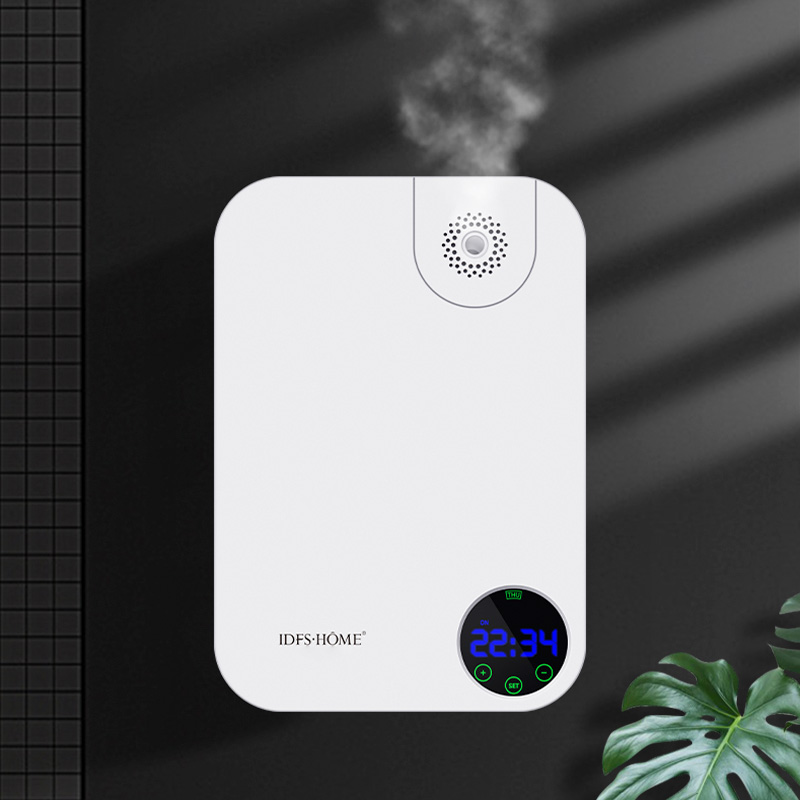
Small spaces between 400 and 1,000 square feet require targeted solutions. Restrooms, elevator cabs, and private executive offices fall into this category. Wall-mounted units provide the necessary control for these confined areas.
These devices deliver highly targeted odor remediation exactly where it is needed. Many operate on batteries, eliminating the need for nearby electrical outlets. They are easy to install using basic mounting hardware. However, their small size means they hold less oil. They require more frequent refills compared to larger commercial units. Their coverage area is strictly limited, making them ineffective for open corridors or lobbies.
Spaces under 400 square feet require micro-diffusion technology. Mobile businesses, trade show booths, and personal office pods utilize these compact devices. They offer an ultra-compact, travel-friendly design.
Portable units provide an entry point into ambient scenting. They allow you to test different fragrances before committing to a facility-wide rollout. The risk lies in misapplication. They are entirely insufficient for standard commercial spaces. Attempting to scent a lobby with a micro-unit will fail. They also feature very small reservoirs, requiring constant monitoring of oil levels to prevent the pump from running dry.
| Diffuser Category | Ideal Coverage Area | Installation Method | Maintenance Frequency |
|---|---|---|---|
| HVAC-Integrated | 5,000+ sq. ft. | Duct insertion via supply plenum | Monthly to Bi-monthly |
| Standalone Commercial | 1,000 - 4,000 sq. ft. | Floor or counter placement | Bi-weekly to Monthly |
| Wall-Mounted | 400 - 1,000 sq. ft. | Bracket mounting | Weekly to Bi-weekly |
| Micro-Space Portable | Under 400 sq. ft. | Desktop placement | Daily to Weekly |
Selecting a fragrance is a strategic operational decision. You must remove personal preference from the equation entirely. The chosen profile must align directly with the specific objective of the space. Different industries require vastly different olfactory approaches to influence occupant behavior successfully. The chemical breakdown of top, middle, and base notes dictates how the aroma for machine dispersion interacts with the environment.
The primary objective in a corporate workspace is enhancing focus and reducing stress. You want to create a perception of clean, purified air. Clinical aromatherapy principles guide these selections. Heavy, perfumed scents cause headaches and distract employees from their tasks.
Recommended profiles include lemon verbena, lavender, green tea, and peppermint. Lemon verbena sharpens cognitive attention and promotes alertness. Lavender actively reduces baseline anxiety during high-stress periods. Green tea offers a crisp, neutral background that feels professional and clean. Subtle vanilla promotes overall calmness without inducing sleepiness. You must address the need for extreme subtlety. The scent should be barely perceptible. Overpowering fragrances will trigger sensitivities and generate immediate complaints from human resources.
Retail stores and hospitality venues operate on different metrics. The objective here is establishing an upscale brand identity. You want to elevate the perceived value of the merchandise or the service. The ultimate goal is increasing customer dwell time. The longer a customer stays in a pleasant environment, the more likely they are to engage with the space.
Recommended profiles lean toward complex, luxurious notes. Almond blossom provides a sophisticated, welcoming aura. Sandalwood creates depth, warmth, and a sense of exclusivity. White tea offers a modern, crisp, and high-end feel. Many luxury brands invest in custom proprietary blends to ensure their scent cannot be replicated elsewhere. You must carefully manage the risk of olfactory disconnect. The scent must match the visual brand perfectly. A bright, modern tech store should not smell like heavy, traditional mahogany.
Clinical environments require the most delicate approach. The objective is strict anxiety reduction and conveying clinical cleanliness. Patients entering waiting rooms often experience high levels of stress. You must achieve this without using harsh chemical odors that smell like industrial bleach.
Recommended profiles include eucalyptus, light citrus, and chamomile. Eucalyptus opens airways and feels inherently medicinal yet natural. Light citrus cuts through the sterile smell of medical supplies. Chamomile acts as a powerful, natural relaxant. You must maintain strict adherence to hypoallergenic formulations. In healthcare, prioritize odor neutralization over heavy perfuming. The space should simply smell fresh and devoid of any clinical or biological malodors.
The long-term success of a scenting program relies entirely on operational sustainability. If the system requires constant babysitting, facility staff will eventually abandon it. You must evaluate the logistics of keeping the machines running smoothly across multiple locations. Maintenance protocols dictate the lifespan of the internal nebulizer pumps.
You must choose between proprietary closed-cartridge systems and open-pour bulk oil systems. Closed-cartridge systems offer unmatched convenience. Facility staff simply pull out the empty cartridge and snap in a new one. This prevents messy spills and ensures quick swaps. However, these systems lock you into a specific vendor ecosystem.
Open-pour bulk oil systems provide maximum flexibility. You procure oil in large jugs and manually pour it into the machine's reservoir. This approach allows you to source oils independently and adapt to supply chain changes. The trade-off is the labor involved. Pouring oil requires careful handling by facility staff. Spills can damage flooring and create intense, localized odor pockets that take days to dissipate. Staff must also clean the nozzle with rubbing alcohol during each refill to prevent clogs.
The size of the internal reservoir directly impacts the labor required by your team. A small 100ml bottle depletes rapidly in a large commercial space. This forces staff to check the machine weekly, increasing operational friction. A 500ml reservoir extends the maintenance cycle significantly, often lasting several weeks depending on the output settings.
Enterprise-grade machines often feature 1L or larger capacities. These massive reservoirs allow for monthly or even bi-monthly maintenance schedules. Larger reservoirs reduce the operational burden on your team. When planning a facility-wide rollout, always prioritize the largest reservoir size that fits within your chosen hardware footprint.
Modern scenting hardware features advanced connectivity. Bluetooth and Wi-Fi enabled machines offer significant operational returns. You can program precise, minute-by-minute scenting schedules via smartphone apps or desktop dashboards. This prevents the machine from running when the building is empty.
Operating the aroma refill system only during business hours conserves massive amounts of oil. It extends refill cycles and reduces wear on the internal pump. Smart technology also allows for remote intensity adjustments. If a manager reports the scent is too strong in the lobby, you can dial back the output from your phone without dispatching a technician. Centralized dashboards allow facility directors to monitor oil levels and machine status across multiple buildings simultaneously.
Deploying a scenting program introduces specific environmental and operational risks. Anticipating these challenges allows you to mitigate them before they escalate into facility-wide issues. Proper planning ensures a smooth rollout and high occupant acceptance.
Olfactory fatigue is a biological phenomenon. When occupants are exposed to a constant scent, their olfactory receptors adapt. Within a few hours, they stop noticing the fragrance entirely. This is commonly known as nose blindness. Facility managers often misinterpret this as a machine failure.
The worst reaction is simply increasing the machine's output. This creates an overwhelming wall of fragrance for new visitors entering the building. Instead, mitigate this biological response using variable intensity programming. Program the machine to run for three minutes and pause for two minutes. This constant cycling prevents receptor adaptation. The scent remains noticeable to long-term occupants without overpowering the space.
Integrating hardware into your core infrastructure carries inherent risk. Duct-mounted systems interact directly with your air handling units. Never install an HVAC scent machine without consulting your mechanical contractors first.
Detail the exact specifications of the cold-air diffusion system to your HVAC technicians. Ensure the installation will not void any existing equipment warranties. Verify that the sub-micron nanoparticles will not degrade specific high-efficiency filter types. In older buildings, monitor static pressure changes within the ductwork. The insertion probe must be placed correctly downstream to ensure the airflow pulls the mist into the environment rather than pushing it back into the fan motor.
Scent is deeply personal and highly subjective. You will inevitably face pushback from certain employees or customers. Some individuals have genuine chemical sensitivities, while others simply dislike specific notes. You need a structured framework for handling these complaints professionally.
Always start your program with simple, universally accepted single-note scents. Lemon, sweet orange, or light lavender are incredibly safe baselines. Set the initial machine intensity at a very low 10-15% output. Let the occupants acclimate to the new environment for a week before slowly increasing the strength. Utilize high-quality HEPA air purifiers alongside your scenting program. Communicating that you are actively purifying the air while scenting it helps reassure concerned occupants and maintains optimal indoor air quality.
Take the following actionable steps to begin your deployment:
A: Office environments benefit most from scents that promote productivity and reduce stress. Clinical aromatherapy principles suggest using clean, subtle profiles. Lemon verbena and sweet orange sharpen cognitive focus. Lavender and subtle vanilla help lower baseline anxiety. Green tea provides a neutral, fresh background. Always keep the intensity low to prevent distracting employees.
A: The lifespan of a refill depends entirely on three variables: the reservoir size, the daily operating hours, and the intensity settings. A standard 500ml bottle running eight hours a day at medium intensity typically lasts between 30 to 60 days. Utilizing smart scheduling to turn the machine off after hours significantly extends this duration.
A: Yes, provided they use cold-air nebulization technology. This method creates dry, sub-micron nanoparticles that leave zero sticky residue inside the metal ducts. However, safety depends heavily on proper installation. A certified technician must install the delivery probe downstream from fans and filters to prevent mechanical interference and ensure proper airflow distribution.
A: No. Standard retail essential oils are often too thick or contain heavy carrier oils like jojoba or coconut. These thick liquids will quickly clog the microscopic nozzles of a commercial nebulizer, leading to pump failure. You must use specifically formulated, machine-grade oils designed for cold-air diffusion to maintain hardware warranties.
A: Do not rely solely on square footage. You must calculate the cubic volume by multiplying the square footage by the ceiling height. High ceilings drastically increase the amount of air that requires scenting. You must also factor in the building's airflow dynamics, the power of the HVAC system, and the natural ventilation rates.
A: The key is combining mechanical filtration with chemical neutralization. First, utilize HEPA air purifiers to physically remove airborne particulates. Second, deploy scent profiles formulated with odor-neutralizing compounds that break down malodors at the molecular level. Avoid heavy masking agents, which simply layer thick perfumes over bad smells and create a nauseating environment.


