
Views: 0 Author: Site Editor Publish Time: 2026-08-04 Origin: Site


Bathrooms present a uniquely hostile environment for standard electronics. They experience rapid humidity spikes, fluctuating temperatures, and limited ventilation. Deploying a standard room fragrance diffuser in a bathroom often leads to premature device failure. It accelerates mold growth if you add water to an already damp space. You might also experience an overpowering scent concentration in a very small footprint. Identifying the optimal essential oil diffuser for bathroom applications requires moving beyond aesthetics. You must evaluate dispersion technology, moisture resistance, power flexibility, maintenance thresholds, and electrical safety. We see many homeowners make the mistake of placing standard units near showers, resulting in ruined circuit boards within weeks. A proper setup demands a strategic approach to hardware selection and placement. You have to account for the specific airflow dynamics of the room, the proximity to water sources, and the chemical properties of the oils you intend to use.
Analyze the baseline humidity of your space before selecting a device. A half-bath handles ambient moisture very differently than a full bath equipped with a shower. A typical hot shower pushes the relative humidity (RH) of a bathroom past 90% within minutes. Traditional ultrasonic units introduce additional water vapor directly into the air, often outputting between 30ml and 50ml of water per hour. This creates a significant risk in spaces already struggling with dampness. When the room reaches its dew point, that excess moisture condenses on mirrors, fixtures, and drywall. Over time, this constant condensation degrades paint and feeds mold colonies behind baseboards. You need to match the device mechanism to the room's specific moisture profile to prevent structural damage.
Calculate the exact dispersion requirements for your specific layout. Most residential bathrooms range from 40 to 100 square feet, creating a highly confined airspace. Exhaust fans and HVAC vents drastically alter scent distribution in these areas. A standard bathroom exhaust fan pulls between 50 and 110 cubic feet of air per minute (CFM). If you place a diffuser directly under or adjacent to the intake vent, the fan strips the fragrance out of the room before it can circulate. You must position the unit where natural airflow supports even distribution. Field experience shows that placing the device on a wall opposite the exhaust fan allows the scent to travel across the room's breathing zone before extraction.
Evaluate outlet proximity to water sources carefully. The National Electrical Code (NEC) mandates that all bathroom receptacles must be Ground Fault Circuit Interrupter (GFCI) protected. Even with this protection, cord management becomes a critical safety issue in tight quarters. A trailing power cord on a small vanity easily snags on hair dryers, curling irons, or hands, pulling the unit into the sink basin. The physical footprint of the device matters heavily. A bulky unit creates visual clutter and occupies valuable real estate needed for daily grooming routines. Compact designs minimize these physical hazards and keep the hardware safely away from active splash zones.
Architects often design older bathrooms with a single electrical outlet located directly above the sink. This common architectural flaw restricts where you can safely place powered devices. Evaluate the viability of rechargeable, battery-operated units to bypass this limitation entirely. Modern lithium-ion batteries, typically ranging from 2000mAh to 4000mAh, provide weeks of intermittent operation on a single charge. They eliminate cord hazards near water sources. Cordless models give you the freedom to mount the unit on high floating shelves, above medicine cabinets, or on window sills. This flexibility keeps the hardware far away from plumbing fixtures and frees up your limited counter space.
| Technology Type | Operating Mechanism | Ideal Bathroom Application | Maintenance Requirements |
|---|---|---|---|
| Nebulizing (Waterless) | Pressurized air atomizes pure oil via Bernoulli's principle | Full baths with high humidity and active showers | Low (Weekly alcohol wipe down of glass nozzles) |
| Ultrasonic (Water-Based) | Piezoelectric disc creates high-frequency cavitation | Dry, well-ventilated half-baths or powder rooms | High (Empty, wipe, and dry every 48 hours) |
| Direct Plug-In | Wall-mounted heating element or micro-misting | Extremely small spaces with accessible, safe outlets | Medium (Frequent manual oil refills required) |
| Passive (Reed/Stone) | Natural capillary action and ambient evaporation | Guest baths or rooms with zero electrical outlets | Very Low (Occasional reed flipping or stone replacement) |
This technology uses pressurized air to atomize pure essential oil. It relies on Bernoulli's principle, forcing a high-velocity air stream across a small tube to pull the oil upward and shatter it into micro-particles ranging from 1 to 5 microns. It requires absolutely no heat or water to function. Zero added humidity makes it excellent for full bathrooms with active showers. It delivers highly potent scents for rapid odor neutralization. However, nebulizers carry a higher upfront hardware expense. They consume pure oil much faster than diluted models. The internal air pump motor can also generate a noticeable humming vibration, which echoes loudly against hard tiled surfaces.
These units use a small piezoelectric transducer located at the bottom of a water reservoir. This disc vibrates at ultrasonic frequencies, typically around 2.4 million times per second, creating cavitation that breaks the water and oil into a fine, cool mist. They are highly cost-effective and widely available. They double as localized humidifiers. This function proves beneficial only in dry, well-ventilated half-baths. In a full bathroom, they exacerbate existing dampness. You face a high risk of internal mold development and bacterial aerosolization if you do not empty, wipe, and completely dry the reservoir on a strict daily basis.
These compact units plug directly into a wall receptacle. They require no trailing power cord and leave a zero footprint on your countertops. This design eliminates tripping and pulling hazards entirely, making them ideal for tight spaces. On the downside, they monopolize a valuable outlet that you might need for grooming tools. They typically feature smaller internal reservoirs, often holding only 10ml to 30ml of oil. This limited capacity demands more frequent manual refills to maintain consistent scent. You must also ensure the outlet is positioned high enough to prevent children or pets from tampering with the unit.
This category includes traditional reed diffusers, unglazed ceramic stones, and low-heat warmers. They present zero electrical hazards and operate silently. Reeds use capillary action to draw oil upward, allowing it to evaporate naturally into the ambient air. You get a continuous, low-level scent with zero mechanical failure risk. Unfortunately, you lack any intensity control or ability to turn the scent off. Heat-based models also require careful placement. You must keep them far away from flammable materials like hand towels, toilet paper rolls, or hanging bathrobes to prevent accidental fires.
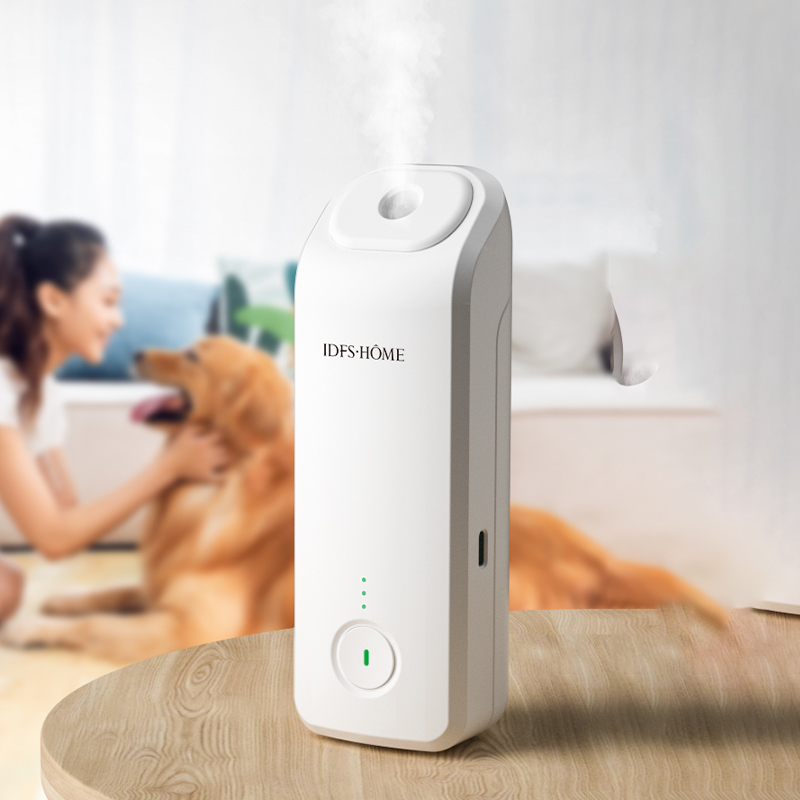
Continuous operation proves detrimental in small spaces. The human olfactory system experiences fatigue within 15 to 20 minutes of constant exposure to a single scent. If a device runs continuously in a 50-square-foot room, it quickly overwhelms the senses and wastes expensive consumables. You should evaluate devices with customizable duty cycles. A setting of two minutes on and ten minutes off works perfectly for confined areas. This intermittent pulsing maintains optimal room fragrance without overpowering the user. It keeps the scent fresh, noticeable, and economically efficient throughout the entire day.
Motion-activated models offer a massive operational advantage in high-traffic bathrooms. They utilize Passive Infrared (PIR) sensors to detect body heat and movement within a specific field of view, usually around 120 degrees. They trigger diffusion only upon entry. This conserves essential oils highly effectively, ensuring you do not spray fragrance into an empty room for hours. It also prevents olfactory blindness. A motion-sensing bathroom aroma diffuser ensures you only deploy fragrance when someone is actually occupying the space, maximizing the impact of every drop of oil.
Assess the build materials carefully before purchasing. Essential oils are highly concentrated volatile organic compounds. Citrus oils contain high levels of d-limonene, a natural solvent that aggressively degrades cheap polystyrene and standard ABS plastics. This chemical degradation accelerates rapidly in warm, humid environments, causing the plastic to cloud, crack, or melt. Medical-grade glass, glazed ceramic, and high-density Polypropylene (PP) outperform standard plastics. Investing in robust, chemically resistant materials prevents the reservoir from leaking onto your vanity or leaching unwanted plastic compounds into the aerosolized mist.
Examine the structural design of the internal tank. Warm, stagnant water in a bathroom creates the perfect breeding ground for biofilms and bacteria like Pseudomonas aeruginosa. Avoid models with narrow necks, sharp internal angles, or inaccessible corners where pink slime easily accumulates. Look closely at time-to-clean metrics. Some devices feature wide-mouth designs that require only a simple wipe with 70% isopropyl alcohol to maintain hygiene. Others demand deep descaling procedures with specialized brushes. Easy maintenance ensures you actually clean the unit regularly, preventing dangerous biological buildup.
Analyze the balance between hardware durability and consumable usage rates. Nebulizers cost more initially and consume pure oil rapidly, often burning through 1ml to 3ml per hour of active use. Ultrasonic models stretch your oil supply by mixing a few drops into a large volume of water, dropping consumption to roughly 0.1ml per hour. However, ultrasonic units frequently suffer from faster hardware failure due to moisture penetrating the internal circuitry. You must weigh the initial purchase price of a durable waterless unit against the ongoing monthly expense of replacing pure essential oils.
Consider the physical trade-off between compact designs and larger units. Minimalist models holding 50ml of liquid look great and fit easily on narrow medicine cabinet shelves, but they require daily refilling. Larger, bulkier units with 500ml tanks offer weeks of autonomous operation. However, they easily clutter small bathroom counters, create visual noise, and increase the risk of being knocked over. You have to decide if the convenience of infrequent refills outweighs the loss of valuable vanity space and the aesthetic disruption of a large plastic appliance.
Evaluate the actual necessity of Wi-Fi connectivity or Bluetooth app controls in a bathroom setting. Complex digital components fail significantly faster in high-humidity environments. Moisture easily penetrates digital display screens, capacitive touch panels, and unprotected circuit boards. Analog switches, physical tactile dials, or simple infrared motion sensors provide much better durability. Manufacturers who apply conformal coating to their internal Printed Circuit Boards (PCBs) offer better moisture resistance. A basic, mechanically sound essential oil machine usually outlasts a highly connected smart device in damp conditions.
Using standard tap water in ultrasonic models leads directly to calcium and magnesium deposits. If your home has a Total Dissolved Solids (TDS) count above 120ppm, these hard minerals quickly form a white crust over the internal oscillating piezoelectric disc. This scaling insulates the disc, reducing mist output until the unit fails completely. To mitigate this risk, strictly adhere to distilled water usage for all water-based units. Alternatively, pivot entirely to waterless nebulizing systems that bypass this specific mechanical vulnerability.
Stagnant water left sitting in a warm bathroom becomes a rapid breeding ground for pathogens, including Aspergillus and Stachybotrys mold spores. The device then aerosolizes these harmful particles directly into the air you breathe. Implement a strict 48-hour empty-and-dry rule for any water reservoir. Never leave water sitting in the tank over the weekend. Utilize naturally antimicrobial oils like tea tree, eucalyptus, or thyme as a secondary defense mechanism against airborne spores, though this does not replace the need for physical cleaning.
The viscosity of your chosen oil dictates how well the machine operates. Thick, resinous oils like vetiver, patchouli, or sandalwood have a high centipoise (cP) rating. They easily clog fine mist nozzles and nebulizer glass tubes. This clogging happens more frequently in colder bathrooms where the oil thickens further. Select highly volatile, thinner oils instead. Lemon, sweet orange, or peppermint excel at rapid odor neutralization. They vaporize cleanly, leave minimal residue, and keep the internal mechanical pathways clear.
Low bathroom counters present severe knock-over hazards for active households. Furthermore, certain aerosolized oils contain Volatile Organic Compounds (VOCs) that are highly toxic to pets. Cats, for example, lack the specific liver enzymes required to break down phenols found in eucalyptus and tea tree oil. Trapping a pet in a small bathroom with a running device causes rapid respiratory distress. Opt for wall-mounted solutions installed at least five feet high to keep devices completely out of reach. Select pet-safe oil profiles exclusively and ensure the bathroom door remains open for ventilation.
A: Yes, but you must choose the right technology. Avoid ultrasonic models that add water vapor to the air. Instead, select waterless nebulizers, plug-in units, or passive reed diffusers. Always plug electrical units into GFCI-protected outlets to prevent shock hazards in damp spaces.
A: A nebulizing machine is vastly superior for damp bathrooms. It uses pressurized air to disperse pure oil without adding any moisture. Ultrasonic models require water, which exacerbates existing humidity, promotes condensation on drywall, and increases the risk of mold growth.
A: You should wipe down waterless models weekly with rubbing alcohol to prevent sticky oil buildup. For water-based ultrasonic units, empty and dry the reservoir every 48 hours. Perform a deep clean with isopropyl alcohol twice a month to prevent dangerous bacterial biofilms.
A: No. A diffuser only masks unpleasant odors temporarily. While oils like tea tree possess mild antimicrobial properties, they cannot eradicate established mold colonies behind your walls. You must address the root cause of the moisture and improve mechanical ventilation to eliminate mildew permanently.
A: Thin, highly volatile citrus and mint oils work best. Lemon, sweet orange, grapefruit, and peppermint neutralize odors rapidly. They vaporize cleanly without clogging the device's internal components, unlike thick, resinous oils such as sandalwood, patchouli, or vetiver.
A: Yes. Plug-in wall diffusers eliminate trailing power cords, removing significant tripping and pulling hazards near sinks. They keep the device elevated away from active splash zones and free up valuable vanity counter space, making them ideal for tight, high-traffic areas.
A: Absolutely. Motion-activated units utilize infrared sensors to release fragrance only when someone enters the room. This prevents the device from running continuously in an empty space, drastically reducing pure oil consumption and extending the lifespan of your expensive refills.


