
Views: 0 Author: Site Editor Publish Time: 2026-08-10 Origin: Site


Scenting a compact space requires precision. Using an oversized diffuser in a small room often results in overpowering fragrances, wasted essential oils, and damaged surfaces. Most commercial diffusers are calibrated for open-concept living spaces exceeding 500 square feet. Deploying these high-capacity devices in bathrooms, home offices, or small bedrooms leads to olfactory fatigue and excessive localized humidity. The physics of scent dispersal dictate that smaller volumes of air reach saturation much faster, meaning standard diffusion rates quickly become overwhelming.
To identify a viable solution, buyers must evaluate diffusion technology, output control mechanisms, and physical footprint rather than simply defaulting to the highest tank capacity. A device built for a large living room forces you to constantly monitor and manually power down the unit to prevent headaches or condensation buildup. Finding the best essential oil diffuser for small room spaces requires a strategic approach to scent dispersal, focusing on intermittent timers, low-output settings, and space-saving designs.
A small room typically encompasses spaces between 50 and 150 square feet. This category includes standard bathrooms, walk-in closets, cubicles, and compact home offices. The atmospheric dynamics in these enclosed spaces differ drastically from open-concept areas. Large-capacity models, often designed to connect to HVAC systems or utilize high-output fans, disperse heavy volumes of micro-droplets. When placed in a 100-square-foot room, these oversized units over-saturate the air. This rapid saturation wastes pure essential oils and creates an unpleasantly dense olfactory environment.
Baseline requirements for mist output must be strictly calibrated for these enclosed areas. A standard small room diffuser should ideally output no more than 15 to 30 milliliters of water per hour. Devices exceeding 50 milliliters per hour will quickly overwhelm a confined space unless they feature highly customizable intermittent settings. The goal is to maintain a subtle, continuous background scent without crossing the threshold into sensory overload. You need a unit that matches the room's specific airflow and square footage.
To better understand how output scales with room size, consider the relationship between tank capacity, run time, and square footage. A 90ml tank running at 15ml per hour provides six hours of continuous diffusion. In a 100-square-foot room, this low output rate allows the ambient air currents to distribute the scent evenly before the concentration becomes too heavy. If you use a 300ml tank outputting 50ml per hour in that same room, the air reaches maximum saturation within forty-five minutes, leading to heavy scent pooling and discomfort.
Continuous ultrasonic diffusion introduces a specific physical challenge in tight quarters: localized humidity. Ultrasonic devices operate by breaking water and oil into a fine mist. While beneficial in dry climates, running a high-output ultrasonic unit continuously in an unventilated bathroom or small office rapidly increases the relative humidity of that specific room. Without proper airflow, this moisture has nowhere to dissipate, raising the dew point of the room.
Micro-droplets eventually settle on surrounding surfaces. In a tight home office, this settling poses a direct threat to wood furniture, sensitive electronics, and paper documents. A mist plume falling directly onto a laptop keyboard or untreated wood desk causes cumulative damage over time. Managing the condensation footprint is a primary success criterion. Users must ensure the device projects mist upwards with sufficient velocity to allow evaporation before the droplets hit the ground or surrounding surfaces.
You can test your room's tolerance for humidity by monitoring the windows and mirrors. If condensation forms on the glass after an hour of diffusion, the output is too high for the space. To mitigate this, you must utilize intermittent timer settings. Running the device on a cycle of thirty seconds on and thirty seconds off cuts the moisture output in half while maintaining a consistent scent profile in the room.
Surface area is a premium commodity in compact environments. A device occupying a massive footprint is impractical for crowded desks, tiny nightstands, or narrow bathroom shelves. Evaluating the physical dimensions requires looking for a narrow base and a stable center of gravity. Tall, top-heavy designs are prone to tipping when reaching for a bedside lamp or shuffling papers on a desk, which leads to water damage and oil spills.
Cord management and power source requirements also dictate placement viability. Standard AC adapters with bulky wall plugs often fail to fit behind desks or small tables. Devices utilizing USB power offer superior flexibility, allowing users to plug the unit directly into a computer monitor, a smart power strip, or a low-profile wall adapter. The physical design must seamlessly integrate into the existing spatial constraints without requiring furniture rearrangement.
When measuring for a compact diffuser, look for a base diameter of four inches or less. This footprint allows the unit to sit comfortably on the corner of a standard nightstand while leaving room for a lamp, a phone charger, and a book. The power cable should route cleanly out the back of the unit, sitting flush against the surface to prevent accidental snagging.
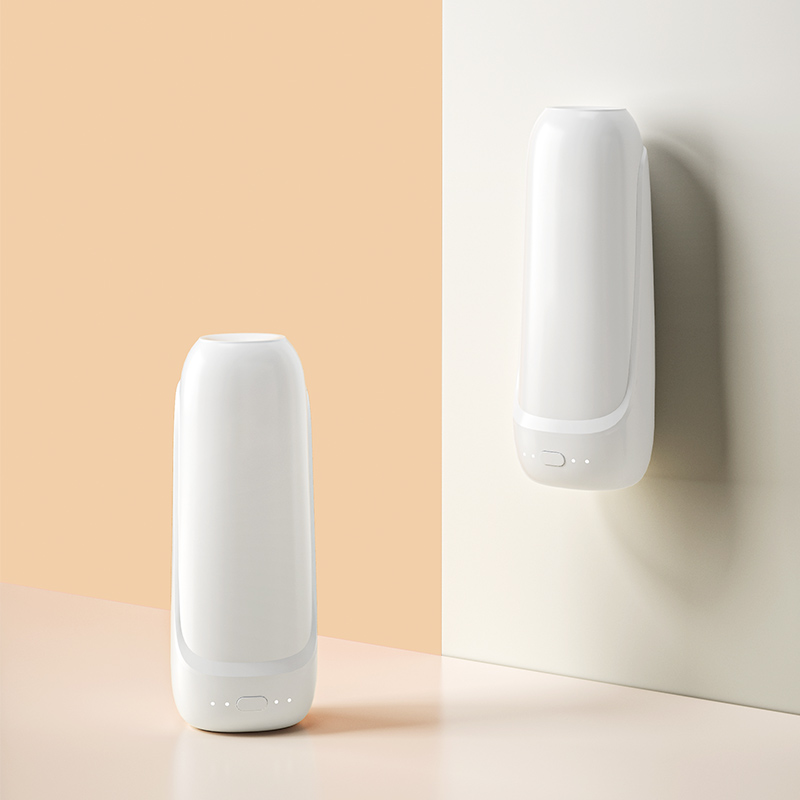
Ultrasonic technology remains the most prevalent mechanism for home scenting. These devices utilize a small ceramic disc located at the base of the water reservoir. When powered, this disc vibrates at ultrasonic frequencies, typically around 2.4 million times per second. These high-frequency vibrations agitate the water and essential oil mixture, breaking it down into microscopic droplets that are expelled into the air as a fine, cool mist. No heat is applied, preserving the chemical integrity of the essential oils.
For small rooms, ultrasonic models act as micro-humidifiers, adding a slight moisture boost that is beneficial in dry winter months or air-conditioned bedrooms. They generally operate under 30 decibels, making them virtually silent save for a faint water trickling sound. This acoustic profile makes them ideal for bedside tables. However, they require constant access to fresh water, and leaving them on a continuous high-output setting in a closed room risks moisture damage to nearby surfaces.
The effectiveness of an ultrasonic unit in a small space depends entirely on the quality of the piezoelectric transducer. Lower-quality transducers produce larger water droplets that fall quickly to the surface, creating puddles. High-quality transducers produce a much finer mist that stays suspended in the air longer, allowing the scent to travel further on ambient air currents without soaking the immediate area.
Nebulizing technology operates entirely without water or heat. These devices rely on Bernoulli's principle, using a pressurized air stream generated by an internal pump. The air is forced through a small tube, creating a vacuum that pulls the pure essential oil from the reservoir to the surface. A secondary stream of air atomizes the oil into billions of micro-particles, dispersing them directly into the environment. This results in an incredibly potent, undiluted fragrance.
The primary advantage for small rooms is the zero-humidity factor. Because no water is used, there is no risk of condensation settling on electronics or wood. Scent dispersal is immediate and highly concentrated. However, this potency is a double-edged sword. A nebulizer easily overwhelms a small room within minutes if not strictly controlled by a timer. Additionally, the internal air pump generates a distinct vibrating hum, which disrupts light sleepers if placed directly next to a bed.
If you choose a nebulizer for a compact space, you must commit to active management. You cannot turn it on and walk away. Most users find that running a nebulizer for just five to ten minutes is sufficient to scent a 100-square-foot room for several hours. The lingering effect of pure, undiluted essential oil particles suspended in the air provides a much longer-lasting fragrance profile than water-based mist.
Evaporative diffusers utilize ambient airflow, internal fans, or gentle wicking systems to disperse scent. Modern smart evaporative models often use pre-filled fragrance vials or saturated pads. A small fan blows air across the pad or wick, accelerating the evaporation of the essential oils into the room. Advanced models incorporate smart technology, allowing users to control fan speed and scheduling via mobile applications.
These systems offer absolute control over scent scheduling and carry zero spill risk, making them ideal for high-traffic bathrooms, closets, or homes with active pets and children. The lack of water eliminates mold risks and mineral dust accumulation. The main limitation is that many smart waterless systems lock users into proprietary scent pod ecosystems, limiting the ability to mix custom essential oil blends from third-party suppliers.
For users who want a set-it-and-forget-it solution in a small space, evaporative models are highly effective. You can program the fan to run at its lowest speed during working hours in a home office, providing a consistent, low-level background scent. Because there is no mist plume, you can place these units directly next to computer monitors or stacks of paperwork without fear of moisture damage.
| Technology Type | Moisture Added | Noise Level | Ideal Placement | Primary Risk in Small Spaces |
|---|---|---|---|---|
| Ultrasonic Cool Mist | Low to Moderate | Very Low (<30 dB) | Bedrooms, Desks | Condensation on surfaces |
| Nebulizing | Zero | Moderate (Pump hum) | Living areas, Kitchens | Olfactory overload |
| Evaporative / Waterless | Zero | Low (Fan noise) | Closets, Bathrooms | Limited customizability |
High-grade ceramic builds offer significant value for interior design integration. Devices utilizing a matte ceramic cover blend seamlessly into modern decor, avoiding the cheap plastic look common in entry-level models. The weight of the ceramic also lowers the center of gravity, increasing stability on small surfaces. This prevents accidental tipping when you reach across a crowded desk or nightstand.
In small spaces, the performance of these premium models relies on their restricted tank sizes. A 90ml to 100ml capacity is optimal. When paired with intermittent settings, these devices provide controlled scenting that lasts for several hours without overwhelming the room. The mist output is typically engineered to be fine and upward-directed, minimizing the risk of localized pooling on your furniture.
Smart ecosystems represent a shift toward app-controlled environmental scenting. These devices connect to home Wi-Fi networks, allowing users to adjust scent intensity, set schedules, and swap between different fragrances directly from a smartphone. This micro-adjustment capability is highly beneficial for small rooms, as users can dial the intensity down to the lowest possible setting to prevent sensory overload.
The anti-mold technology inherent in waterless designs makes them perfect for damp environments like small bathrooms. By relying on dry evaporation or smart wicking, they introduce no additional moisture. Users must weigh this convenience and safety against the closed nature of the ecosystem, as these devices typically require specific, pre-packaged fragrance vials rather than open-source essential oil drops.
Glass-and-wood nebulizers cater to users who prioritize therapeutic-grade oil purity. Because they do not dilute the oil with water, the chemical profile of the essential oil remains entirely intact. The aesthetic combination of hand-blown glass and carved wood offers a sophisticated visual footprint that elevates the look of a small home office or reading nook.
When deploying a high-potency nebulizer in a small room, strict operational discipline is required. Utilizing the lowest volume setting is mandatory. Furthermore, these units must be run on tight timer controls, often no more than 10 to 15 minutes at a time. Continuous operation in a 100-square-foot room rapidly leads to scent saturation, causing headaches and rapid depletion of the oil reservoir.
For highly constrained environments like office cubicles, tiny bathroom shelves, or RV interiors, ultra-minimalist designs are necessary. Spherical designs are specifically engineered for a small range. These units often feature a footprint of less than three inches in diameter and utilize USB power for maximum versatility, allowing you to plug them directly into a laptop or power bank.
A true mini aroma diffuser focuses on localized scenting. The mist plume is designed to disperse fragrance within a three-to-five-foot radius rather than filling an entire room. This localized performance ensures that the user experiences the aromatherapy benefits without imposing the scent on neighboring workspaces or overwhelming a tiny enclosed bathroom.
Commercial-grade compact diffusers are engineered for users prioritizing long-term durability. These models utilize heavy-duty internal components, superior atomization technology, and robust exterior builds, often machined aluminum or high-grade composites, that outlast standard consumer plastic models. They resist the corrosive nature of pure essential oils over years of daily use.
The atomization technology in BIFL models produces a much finer nanoparticle mist compared to entry-level units. This finer mist stays suspended in the air longer and travels further on ambient air currents, meaning the device needs to run for significantly less time to achieve the desired scent profile in a small room. The precision engineering prevents the motor burnout and button failure common in lower-tier devices.
Baseline 100ml ultrasonic models provide functional reliability for straightforward applications. These units utilize BPA-free plastic construction, ensuring that the essential oils do not degrade the internal reservoir over time. They represent reliable entry-level solutions for users testing aromatherapy in small spaces without committing to a high-end aesthetic piece.
Performance in these utility models hinges on their basic intermittent misting capabilities. While they lack smart app integration or premium ceramic covers, a standard utility model with a reliable auto-shutoff sensor and a functional 100ml tank effectively scents a bedroom without causing excessive condensation, provided the user selects the intermittent mode.
Waterless auto-shutoff is a non-negotiable safety feature for any compact unit. When a device runs dry, the internal ultrasonic transducer or air pump continues to draw power. Without a sensor to cut the circuit, this leads to rapid motor burnout, melting of internal plastic housings, and severe fire hazards. This is especially critical for units running unattended in bedrooms overnight.
Reliable models utilize either a float switch or a capacitive sensor to instantly terminate power the moment the water or oil level drops below the minimum threshold. Float switches rely on a physical buoyant ring that drops with the water level, triggering a mechanical switch. Capacitive sensors detect the electrical conductivity of the water itself, offering a solid-state solution with no moving parts to jam or fail.
Acoustic engineering plays a massive role in small-space viability. In a quiet 100-square-foot bedroom, every decibel is magnified. Ultrasonic models typically generate a soft white noise from the internal fan, accompanied by a gentle bubbling sound from the water agitation. Many users find this conducive to sleep, acting as a mild sound machine that masks outside disturbances.
Nebulizers, conversely, rely on pressurized air pumps that generate a distinct vibrational hum. If placed on a hollow wooden nightstand, this vibration amplifies, creating significant sleep disruption. Evaluating the decibel rating and the specific type of noise generated is crucial for bedroom deployment. Look for units rated under 30 decibels if you plan to use them while sleeping.
A common misconception is that a larger tank equals better performance. In compact spaces, a 100ml tank running intermittently for 8 hours is vastly superior to a 500ml tank running continuously. A 500ml unit pumps excessive moisture into the room, whereas a 100ml unit on a 30-second on/off cycle provides steady, controlled fragrance throughout the night without altering the room's humidity profile.
Efficiency and cycle control always trump raw capacity in tight quarters. A smaller tank also encourages you to change the water and oil mixture more frequently. This prevents the water from stagnating and ensures that you are always diffusing fresh essential oils, rather than oils that have oxidized after sitting in a large reservoir for three days.
Many diffusers feature integrated LED lighting, offering color-changing modes or simulated candlelight. While aesthetically pleasing in a living room, these lights become a nuisance in a bedroom. The necessity of a true dark mode, the ability to completely disable all LED lights, including tiny power indicator LEDs, is paramount for units placed on bedside tables.
Even a small green power light disrupts circadian rhythms in a pitch-black room. When evaluating a unit for a small bedroom, verify that the light controls operate independently of the mist controls. You must be able to run the misting function while keeping the device completely dark. If the unit lacks this feature, you will find yourself covering the LEDs with electrical tape.
Different diffusion technologies consume essential oils at vastly different rates. Ultrasonic models are highly efficient with oil usage because they rely on water as a carrier. Adding five to ten drops of essential oil to a 100ml water reservoir provides several hours of scent. This makes ultrasonic units highly practical for daily use, as a standard 15ml bottle of essential oil lasts for months.
Nebulizers, however, atomize pure essential oil directly from the bottle. Running a nebulizer continuously burns through a 15ml bottle in a matter of days. To manage this consumable burn rate in a small room, you must utilize strict timer settings. Running the nebulizer for just ten minutes at a time provides ample scent for a compact space while preserving your oil supply. Understanding this flow rate prevents you from wasting high-quality oils.
The longevity of any diffusion device relies heavily on strict maintenance protocols. Ultrasonic models require frequent attention to the ceramic ultrasonic plate located at the bottom of the water tank. Essential oils leave behind a sticky resin, and tap water leaves behind mineral scale. If this residue builds up on the ceramic plate, the ultrasonic vibrations are muffled, resulting in weak mist output and eventual device failure.
Wiping the tank with a soft cloth after every use and running a cycle with water and white vinegar weekly dissolves this buildup. Nebulizing devices demand a different cleaning reality. Because they use pure essential oils, the microscopic glass tubes inside the atomizing chamber easily become clogged by thick, viscous oils like vetiver or sandalwood. Deep-cleaning protocols for nebulizers involve emptying the reservoir, adding high-proof rubbing alcohol, and running the unit for 15 minutes to dissolve the thick oil resins.
Diffusing essential oils in small, unventilated rooms poses severe risks to household pets, particularly cats and dogs. Pets possess highly sensitive olfactory systems and metabolize compounds differently than humans. Cats lack a specific liver enzyme required to break down phenols and monoterpenes found in many essential oils. Diffusing oils like eucalyptus, tea tree, citrus, peppermint, and ylang-ylang in a closed bedroom leads to respiratory distress or neurological issues in pets.
Mitigation strategies must be strictly enforced. Never trap a pet in a room where a device is operating. Always ensure doors remain open to allow the pet to leave the area if the scent becomes overwhelming. Utilize only pet-safe oils after consulting a veterinarian, and limit diffusion time to short 15-minute intervals rather than continuous hours. Monitor your pets for any signs of squinting, drooling, or lethargy when introducing a new scent.
Poorly maintained water reservoirs in ultrasonic units become breeding grounds for mold and bacteria. If water is left sitting in the tank for days, airborne spores settle in the stagnant water and multiply. When the unit is turned back on, it aerosolizes these mold spores and bacteria directly into the breathable air, severely degrading indoor air quality and triggering respiratory issues.
Furthermore, using standard tap water in ultrasonic models leads to the aerosolization of dissolved minerals. This manifests as a fine white mineral dust that settles on furniture and electronics. To mitigate both the mold risk and the mineral dust accumulation, users must empty the tank daily, allow it to air dry completely, and strictly use distilled water for diffusion. Keeping the internal components bone-dry between uses is the most effective way to prevent microbial growth.
The ideal device for a compact space depends entirely on the specific environmental constraints of the room. Ultrasonic cool mist devices excel in dry bedrooms where a slight humidity boost is welcome, provided they feature intermittent settings. Waterless and evaporative systems are the superior choice for damp bathrooms or closets where adding moisture is detrimental. Nebulizers offer unparalleled potency but demand strict timer management to prevent overwhelming a compact area.
When navigating the market, filter your choices methodically. First, evaluate the physical footprint to ensure it fits the intended surface without risking spills. Second, prioritize intermittent output capabilities over total tank volume to maintain control over scent saturation. Third, verify the presence of auto-shutoff safety sensors. Finally, honestly assess your tolerance for maintenance, choosing between the daily wipe-downs of an ultrasonic unit or the alcohol flushes required by a nebulizer.
A: For a 100-square-foot room, a 50ml to 100ml ultrasonic unit is ideal. Alternatively, use a waterless diffuser with adjustable intensity. Devices larger than 150ml will likely over-saturate the air and create excessive condensation unless run strictly on short, intermittent timers.
A: Yes. Oversized diffusers cause olfactory fatigue, waste expensive oils, and create damaging condensation on nearby surfaces. High-output units designed for large living spaces quickly overwhelm a small bedroom or office, making the environment uncomfortable.
A: Place the unit on a stable, flat surface at least two feet above the floor, such as a nightstand or dresser. Ensure the mist plume has a clear upward path and is directed away from electronics, unsealed wood furniture, and your immediate breathing zone.
A: Waterless diffusers are excellent for compact home offices. They disperse scent without adding humidity, eliminating the risk of micro-droplets settling on sensitive computer equipment, keyboards, or important paper documents.
A: You should empty and wipe down the water tank after every use to prevent bacterial growth. A deep clean using water and white vinegar for ultrasonic models, or rubbing alcohol for nebulizers, should be performed once a week to remove oil resin and mineral scale.
A: It is only safe if the unit has an automatic shutoff sensor and an intermittent misting mode. Running a continuous mist all night in a small, closed room leads to excessive humidity and potential respiratory irritation from over-saturating the air with essential oils.


