
Views: 0 Author: Site Editor Publish Time: 2026-08-07 Origin: Site


Importing defective electronic hardware in bulk carries severe financial risks. Poorly manufactured ultrasonic diffusers often suffer from exceptionally high failure rates on the retail shelf. You must balance unit economics with strict product reliability. A low initial quote often masks hidden supply chain costs. These hidden costs include high defect rates, poor customer reviews, and non-compliant electrical components that fail customs inspections. Sourcing inferior products damages your brand reputation permanently and leads to massive return logistics. To secure a profitable and reliable supply chain, buyers must move beyond basic sourcing storefronts. Rigorously evaluating the technical capabilities, quality control frameworks, and logistical competence of a prospective portable aroma essential oil diffuser factory dictates long-term success. You need a partner capable of consistent execution across thousands of units.
Establishing clear success criteria prevents costly procurement mistakes. You must define your quality expectations clearly before transferring any funds. Relying on verbal assurances leads to inconsistent production batches. Document every technical requirement in your initial vendor communication and formal purchase orders.
You must establish baseline expectations for defect rates immediately. Define Acceptable Quality Limits using standard inspection frameworks like MIL-STD-105E before signing a Purchase Order. Industry standards typically use AQL 1.5 for major defects and AQL 4.0 for minor defects. Major defects include electrical failures, severe water leaks, or malfunctioning buttons. Minor defects involve slight cosmetic scratches on the plastic housing or minor packaging dents. Enforcing these limits ensures the factory understands your quality threshold. Reject any batch that exceeds these documented defect percentages during pre-shipment inspection. Specify the exact sample size your third-party inspectors will pull from the production run.
Calculate the true cost of procurement accurately. You must factor in ocean freight, import tariffs, customs bonds, and third-party inspection fees. Include projected warranty replacements and reverse logistics in your financial models. Evaluate the feasibility of abnormally low wholesale quotes carefully. Ultra-cheap units almost always indicate compromised internal components. Factories achieve rock-bottom prices by using uncertified lithium batteries, recycled plastics, and unshielded wiring. These cost-cutting measures result in massive return rates and potential safety liabilities later. Focus on the total landed cost rather than the initial factory quote to protect your profit margins.
Assess the manufacturer's ability to scale production efficiently. They should handle a 500-unit pilot run smoothly while maintaining the capacity to manage a 10,000-unit peak-season order without extending lead times. Ask about their maximum monthly production capacity and machine tonnage. Verify how many assembly lines they dedicate specifically to ultrasonic devices. Delays during peak holiday seasons destroy retail sales projections. Ensure they have reliable raw material supply chains and maintain buffer stock for critical components like microcontrollers and ceramic discs to prevent sudden bottlenecks.
Evaluating facility standards separates real manufacturers from middlemen. You need direct access to the production floor data. This visibility guarantees better quality control, faster troubleshooting, and reliable production schedules.
Verify the factory operates under standardized quality management systems. Avoid suppliers using ad-hoc assembly lines with no document control. Request their current ISO 9001 certificate and check its validity with the issuing registrar. Evaluate whether the aroma factory controls the entire assembly process in-house. Subcontracting PCB surface mount technology (SMT) adds massive quality risks. Outsourcing plastic injection molding often leads to inconsistent housing dimensions and poor seam alignment. Dust-free assembly zones are absolutely necessary for this product category. They prevent particulate contamination in ultrasonic transducers. Dust inside the water tank or on the ceramic disc causes premature misting failures.
Compare the cost and time trade-offs of different manufacturing approaches. Applying private labels to existing molds saves months of development time and eliminates tooling costs. Investing in custom injection molds creates highly proprietary designs but requires significant upfront capital for P20 or H13 steel molds. Evaluate the factory's custom programming capabilities. A true OEM diffuser partner programs custom LED lighting sequences directly onto the microcontroller. They configure intermittent timer settings, pulse width modulation for mist control, and auto-shutoff safety protocols easily. Check their access to high-grade materials. Demand BPA-free polypropylene (PP) for all internal water tanks, as essential oils will melt standard ABS plastic. Premium exterior materials like bamboo, ceramic, or hand-blown glass must resist discoloration and structural degradation.
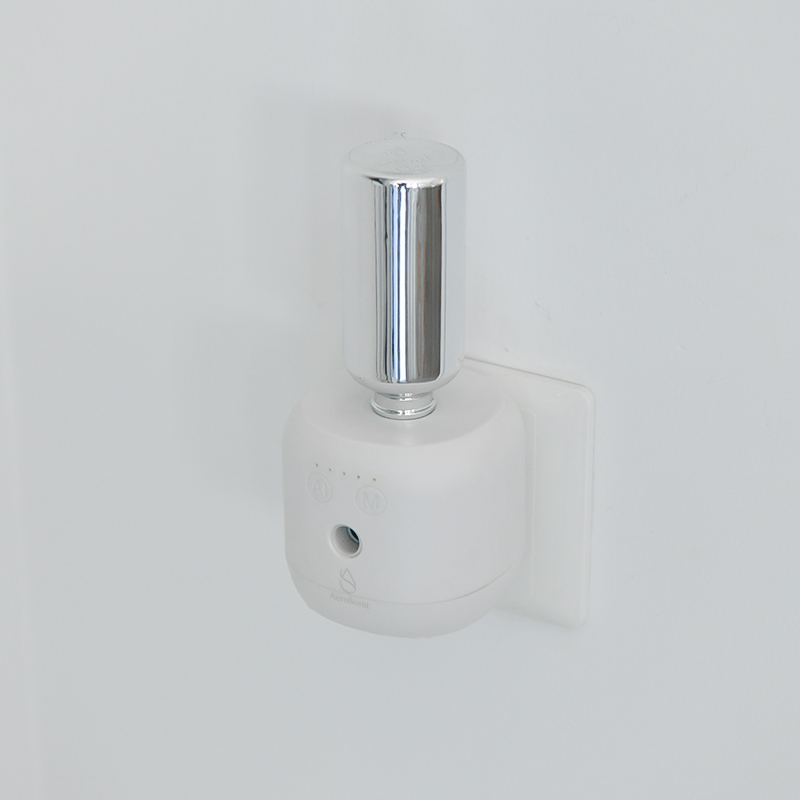
Hardware evaluation requires strict technical scrutiny. You cannot judge a diffuser solely by its exterior design. The internal architecture determines the product's lifespan, misting performance, and electrical safety profile.
Cordless and travel models require specialized engineering. Verify the diffuser manufacturer uses UN38.3 certified lithium-ion batteries. Uncertified batteries pose severe fire hazards during transit and consumer use. Implement strict overcharge, over-discharge, and thermal protection on the battery management system (BMS). Evaluate the spill-proof silicone sealing mechanisms thoroughly. The shore hardness of the silicone gaskets must withstand repeated compression without tearing. Dimensions must fit standard car cup holders or travel bags perfectly without top-heavy instability. Incorporate standard USB-C charging ports with proper power delivery controllers. Avoid outdated micro-USB ports or proprietary barrel jacks entirely, as consumers demand universal charging compatibility.
Piezoelectric ceramic discs form the core engine of the device. Evaluate the frequency rating, which is typically 2.4 MHz or 3.0 MHz for fine mist generation. Check the expected lifespan of the discs in operational hours. High-quality glass-glazed discs last over 3,000 hours of continuous use without pitting. Verify the factory's claims for mist dispersion rates in ml/hr using controlled humidity chambers. Ensure the device effectively fills the intended room size. It must disperse mist upward with sufficient velocity to prevent pooling water on surrounding furniture. Ensure the transducer ring and surrounding plastics resist corrosion. Pure essential oils, especially citrus variants containing limonene, cause heavy staining and structural failure in cheap plastics. Synthetic bulk fragrance oils also degrade inferior materials rapidly.
Analyze the internal housing design meticulously. The PCB must remain hermetically sealed off from the water reservoir. Keep the misting channel entirely separate from the electronics compartment. Water vapor destroys exposed circuit boards within weeks through galvanic corrosion. Require conformal coating on all exposed PCBs to repel accidental moisture ingress. Test the reliability of the water-level sensors thoroughly. Capacitive sensors or mechanical floats must trigger the automatic power-off function instantly. This prevents severe overheating hazards when the tank runs dry. Failures in auto-shutoff mechanisms melt the plastic housing and create immediate fire risks.
Mandatory verification of electrical safety listings protects your business from liability. Require UL or ETL listings for all external power adapters. This is a strict requirement for legally selling in the US market. CE marks are mandatory for European distribution. Ensure RoHS compliance restricts hazardous heavy metals in the electronics and solder joints. Require BPA-free certifications for all plastics touching water and oil. Request unredacted test reports directly from the issuing laboratories. Never accept generic, self-issued compliance declarations from the supplier without independent verification.
Manufacturing defects destroy profit margins through high return rates and negative reviews. Identifying these risks early saves thousands of dollars in freight and replacements. Implement aggressive testing protocols before accepting any shipment from the facility.
Identify poor ultrasonic welding on the water tank seams early. Incorrect welding amplitude or pressure leaves micro-gaps. Degraded silicone O-rings lead to immediate base leaks. This is especially problematic for portable units carried in bags or vehicles. Diagnose issues with weak fan motors during sample testing. Misaligned internal mist baffles cause condensation pooling around the device base instead of projecting the mist into the air. Evaluate the decibel level of the operating unit carefully in a soundproof chamber. Poorly assembled units suffer from vibrating plastic housings and loose internal screws. Loud fan whines or water dripping noises ruin the user experience entirely.
| Defect Type | Common Root Cause | Required Factory QC Solution |
|---|---|---|
| Base Water Leakage | Degraded silicone O-rings or poor ultrasonic tank welding parameters. | Implement vacuum leak testing on 100% of water tanks post-welding. |
| Inconsistent Mist Output | Weak DC fan motors or misaligned internal mist baffles. | Conduct airflow velocity tests and fan RPM verification on the line. |
| Acoustic Resonance (Noise) | Loose internal screws or vibrating plastic exterior housings. | Enforce strict decibel limits (under 30dB) during final assembly testing. |
| Premature PCB Failure | Inadequate water isolation or lack of conformal coating. | Apply waterproof acrylic or silicone conformal coating to all boards. |
| Button Malfunction | Low-cycle tactile switches or poor housing alignment. | Perform mechanical actuation testing for 100,000 cycles on samples. |
Hire third-party inspection agencies like SGS, QIMA, or V-Trust. Conduct randomized testing before the final balance is paid to the factory. Never skip Pre-Shipment Inspections (PSI) for electronic goods. Verify that the factory conducts continuous operational aging tests on specialized burn-in racks. They must run 24-to-48-hour tests at elevated temperatures on a percentage of the batch. This catches early PCB component failures before they leave the facility. Include mechanical button-actuation testing to ensure tactile longevity. Buttons should withstand thousands of presses without sticking, failing, or losing their tactile click.
Proper packaging ensures your products survive international transit and warehouse handling. Broken glass domes and cracked housings render the entire shipment worthless. Optimize your logistics to protect your margins and reduce shipping overhead.
Require ISTA 1A drop-test compliance for all retail packaging. Internal glass domes and ceramic covers must survive rough transit handling, including multiple drops from specific heights onto concrete. Delicate plastic housings need robust protection against impact and vibration. Evaluate the use of internal dunnage carefully. Use molded pulp, high-density EPE foam, or custom corrugated cardboard inserts. These materials prevent component shifting during container shipping and last-mile delivery. Avoid cheap blister packs that offer zero shock absorption. Drop test the packaged samples yourself upon receiving them to verify the factory's packaging claims.
Decide between Free On Board (FOB) and Ex Works (EXW) based on your supply chain setup. FOB means the factory handles transport to the local export port and clears outbound customs. EXW requires you to handle all logistics directly from the factory floor. Choose based on your freight forwarder's specific capabilities in the origin country. Work with the manufacturer to design efficient retail boxes. Minimize dead space inside the packaging by optimizing the layout of the power adapter and manual. This reduces expensive volumetric shipping charges significantly. Efficient box dimensions allow you to fit more units per master carton and more cartons per pallet, maximizing container space.
A: Standard Minimum Order Quantities typically range from 500 units for basic, off-the-shelf models. If you require custom colors, bespoke tooling, or proprietary firmware, expect the MOQ to increase to 3,000 units or more. This ensures the factory can cover the setup costs for custom production runs and raw material minimums.
A: Always request the full, unredacted test reports from the supplier. Locate the certificate number and the name of the issuing laboratory. Contact the laboratory directly or use their official online verification portal to confirm the document is authentic and currently valid for that specific product model.
A: Leaks generally stem from degraded silicone O-rings, poor ultrasonic welding on the tank seams, or cracked ultrasonic disc rings. Additionally, using highly corrosive pure citrus essential oils in units made with low-grade, non-resistant plastics will quickly degrade the water reservoir and cause structural failure.
A: No. Abnormally cheap units carry severe hidden costs. They typically lack isolated PCBs, use uncertified batteries, and feature low-grade transducers. This leads to massive return rates, permanent brand damage, and serious electrical or fire hazards. Always prioritize component integrity over the lowest possible unit cost.
A: A direct manufacturer owns the production equipment, manages the assembly lines, and controls the quality assurance process in-house. A trading company acts as a middleman, sourcing products from various factories. You can spot trading companies by their vast, unrelated product catalogs and lack of specific ISO manufacturing certifications.


