
Views: 0 Author: Site Editor Publish Time: 2026-08-23 Origin: Site


High-end interior architecture requires cohesive sensory elements. Placing a mass-market, plastic scenting device inside a carefully curated space creates an immediate visual and functional disconnect. Standard devices disrupt the aesthetic and consistently underperform in large, open areas. Achieving consistent, residue-free fragrance in expansive environments requires overcoming the severe limitations of standard ultrasonic technology. These basic units struggle with weak scent throw, poor longevity, constant water dependency, and rapid material degradation when exposed to pure oils. Evaluating scent delivery systems for upscale environments demands a strict technical framework. We will examine diffusion technology, material integrity, spatial scalability, smart features, and long-term maintenance requirements. This approach ensures the selected hardware matches the architectural scale and aesthetic standards of the environment.
Scenting hardware must function as an architectural or decorative element rather than a mere appliance. In upscale environments, devices often serve as sculptural pieces. A plastic chassis visually detracts from marble countertops, custom millwork, or minimalist glass surfaces. Hardware must blend into the background or stand out as an intentional design choice. For industrial lofts, brushed aluminum cylinders match exposed ductwork. For traditional estates, high-fired stoneware complements classic masonry and woodwork.
Material selection dictates operational lifespan. Pure essential oils contain volatile organic compounds that act as natural solvents. Over time, these compounds degrade standard ABS plastics and polycarbonates. You will see cracking, discoloration, and structural failure within months. Premium materials such as high-fired stoneware, hand-blown glass, anodized aluminum, and treated bamboo resist this corrosive nature. Anodized aluminum, specifically 6061 grade, provides a hardened surface that withstands continuous exposure to concentrated citrus or conifer oils. These materials maintain their structural integrity and finish after years of heavy use.
Scent throw refers to the maximum distance a fragrance travels while maintaining a recognizable profile. High ceilings, expansive square footage, and open floor plans cause standard diffusers to fail rapidly. The mist generated by basic units is too heavy. It falls to the floor within a few feet of the device, leaving the upper volume of the room completely unfragranced.
Upscale environments require consistent parts-per-million (PPM) fragrance distribution. The goal is to achieve a uniform ambient scent without localized overpowering near the device. Advanced systems atomize oils into particles smaller than a micron. These nanoparticles remain suspended in the ambient air currents. The HVAC system's natural circulation carries the scent evenly across large open-concept spaces. You need to measure the cubic footage of the room, not just the square footage, to determine the required output capacity. A room with 12-foot ceilings requires 50% more output than a room with standard 8-foot ceilings. Furthermore, the CFM (Cubic Feet per Minute) rating of your room's air handler will dictate how fast the scent disperses. High CFM environments require diffusers with higher milliliter-per-hour consumption rates to maintain the target PPM.
Mechanical noise ruins the ambiance of a carefully designed room. Acceptable decibel (dB) levels vary by room type, but luxury environments demand near-silent operation. Bedrooms, private spas, and executive offices require devices that operate below 30 dB. Any noticeable humming, gurgling, or vibration breaks the sensory immersion.
Engineers face a distinct challenge when designing high-output cold-air units. These devices rely on internal air pumps to generate the pressure needed for nebulization. Premium manufacturers utilize advanced acoustic dampening materials, isolated motor mounts, and precision-engineered airflow channels. This silences the vibration and slight hum of the internal pump.
| Environment Type | Maximum Acceptable Noise Level (dB) | Recommended Hardware Type |
|---|---|---|
| Private Bedroom / Spa | Under 25 dB | Premium Ultrasonic or Low-Output Nebulizer |
| Executive Office / Study | 25 - 30 dB | Standalone Cold-Air Nebulizer |
| Large Foyer / Great Room | 30 - 40 dB | High-Output Standalone Nebulizer |
| Whole Estate | N/A (Hardware in Mechanical Room) | HVAC Integrated System |
Cold-air diffusion represents the standard for atmospheric scenting. This technology relies on Bernoulli’s principle of fluid dynamics and the Venturi effect. A high-velocity stream of pressurized air passes over a small micro-tube submerged in essential oil. The pressure differential creates a vacuum that draws the oil up the tube. The air stream then shears the liquid into a dry nano-mist, typically between 0.5 and 2.5 microns in diameter. This mechanical process requires zero heat and zero water.
The benefits of cold-air nebulization are absolute. Because no heat is applied, the complex chemical profile and therapeutic properties of the essential oil remain perfectly intact. Heat destroys the delicate top notes of citrus and floral oils, leaving behind a flat, burnt odor. Because no water is used, the device adds zero humidity to the room. This prevents mold growth and protects fine art, hardwood floors, or rare books. The resulting fragrance delivery is exceptionally pure, highly concentrated, and capable of lingering in the air for hours after the machine powers down.
While cold-air systems dominate large areas, a premium essential oil diffuser utilizing ultrasonic technology still holds value in specific, smaller luxury spaces. Bedside tables, private meditation rooms, and individual office desks benefit from the whisper-quiet operation and gentle humidification these devices provide. High-end ultrasonic models feature upgraded ceramic oscillating plates that produce a finer mist than their mass-market counterparts.
Ultrasonic technology has strict physical limitations. The dependency on a water tank introduces the risk of microbial growth if not cleaned meticulously. As the device runs, the ratio of oil to water changes. This results in a dilution of scent intensity over time. The water-bound mist particles are relatively heavy. They will inevitably settle on nearby surfaces, restricting the effective scent throw to a localized radius.
For invisible coverage across thousands of square feet, standalone units are insufficient. Whole-home scenting via HVAC integration serves as the ultimate solution. A specialized scent machine connects directly to the supply plenum of the property's heating and cooling system.
These systems utilize the existing ductwork and blower fans to distribute the dry nano-mist uniformly throughout the estate. Because the hardware is installed in a mechanical room or basement, it remains completely out of sight and out of earshot. This approach guarantees that every room on a specific HVAC zone receives the exact same level of ambient fragrance.
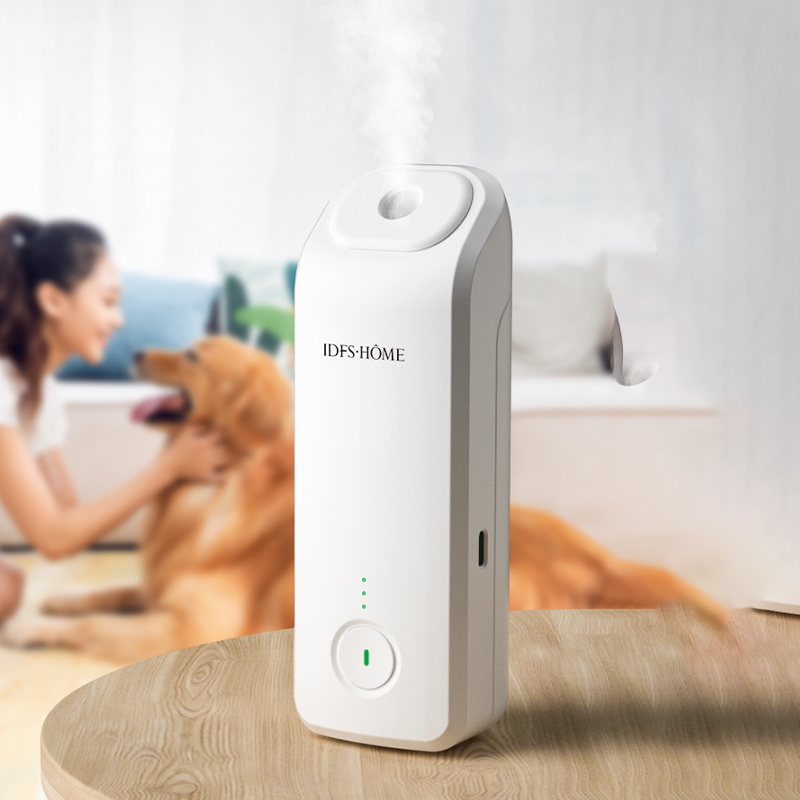
Selecting the right hardware requires matching device output capacity directly to the target square footage. A device rated for 500 square feet will run continuously and fail to scent a 2,000-square-foot great room. It will burn out its motor in the process. Conversely, placing an industrial-grade unit in a small study will overwhelm the occupants, even on the lowest setting.
Airflow patterns, HVAC zoning, and room layout heavily impact the effective range of any scenting device. A room with vaulted ceilings contains a significantly higher volume of air than a room with standard ceilings, even if the square footage is identical. Drafts from large windows or active return vents pull scent away from the intended area.
To properly scale your hardware, follow these steps:
Manual operation is obsolete in high-end environments. Precise control over scent intensity and scheduling is mandatory. Bluetooth and Wi-Fi connectivity allow users to manage the atmosphere directly from a smartphone application. You can program the device to activate 30 minutes before you arrive home and power down automatically at night.
Top-tier models feature advanced capabilities such as dual-scent switching. This allows the hardware to hold two distinct fragrance cartridges simultaneously. Users can schedule an energizing citrus blend for the morning and transition to a relaxing lavender profile in the evening without manually swapping bottles. Integration with smart home ecosystems enables voice-activated ambiance control. Precise scheduling prevents olfactory fatigue and conserves expensive cosmetic-grade oils by ensuring the machine only runs when the space is occupied.
Protecting high-value assets is a primary concern when introducing airborne particulates into a luxury space. Standard diffusers often cause oil fallout. This leaves a damp, slippery residue on expensive hardwood floors, custom furniture, or delicate artwork. Over time, this moisture warps wood and degrades finishes.
Premium nano-mist technology mitigates this damage risk entirely. Because the particles are broken down to a sub-micron level, they lack the mass to fall out of the air. They remain suspended until they naturally dissipate or are filtered out by the HVAC system. Ensuring a safe environment for children and pets requires strict adherence to safety compliance. Operating a high end diffuser demands the use of non-flammable, chemical-free formulations that meet rigorous cosmetic-grade standards.
There is a direct correlation between the engineering quality of the atomization nozzle and the volume of oil consumed. Cheaper devices rely on inefficient pumps that spit larger droplets into the air. These larger droplets fall to the ground quickly. This requires the machine to run constantly and burn through oil rapidly just to maintain a baseline scent level.
Premium hardware utilizes precision-milled nozzles that atomize oil with maximum efficiency. By creating a microscopic dry mist, the device uses a fraction of the liquid to achieve a significantly wider and longer-lasting scent throw. Programmable intensity settings further optimize this process. By utilizing interval timers—such as running for two minutes and resting for five—the hardware maintains a perfect ambient scent profile while drastically reducing the consumption rate of premium, cosmetic-grade essential oils.
Visual design often dictates the maintenance workflow. Sculptural glass and high-fired stoneware look magnificent on a console table, but they introduce fragility. Handling heavy, wet ceramic covers during daily water changes increases the risk of dropping and shattering the piece. Water-based systems demand frequent scrubbing to prevent pink mold and mineral scale buildup from hard water.
Waterless cold-air systems present a different maintenance paradigm. Because they do not use water, there is no risk of mold or calcification. The exterior chassis rarely needs opening, aside from swapping the oil bottle every few months. The trade-off is the necessity of periodic nozzle cleaning. To prevent thick essential oils from clogging the micro-tubes, users must run a small amount of rubbing alcohol through the system every 30 to 60 days. This brief flush dissolves any residual lipids and keeps the pump operating at peak efficiency.
| System Type | Daily Maintenance | Monthly Maintenance | Annual Maintenance |
|---|---|---|---|
| Water-Based Ultrasonic | Empty and refill water tank, wipe down basin. | Deep clean with white vinegar to remove mineral scale. | Replace ceramic oscillating disc if mist output drops. |
| Standalone Cold-Air | None. | Run 10ml of rubbing alcohol through the nozzle for 15 minutes. | Inspect internal tubing for hardening or discoloration. |
| HVAC Integrated | None. | Check oil levels via smartphone app. | Replace the atomization core and check the HVAC injection tube for blockages. |
Integrating a scenting system into residential or commercial ductwork is not a simple plug-and-play operation. It requires a fundamental understanding of HVAC mechanics. The injection tube must be tapped directly into the supply plenum, downstream from the air handler and furnace. This ensures the scent is pushed out into the rooms rather than sucked into the system's air filter or burned off by the heat exchanger.
Static pressure considerations are critical. If the HVAC system operates at a higher static pressure than the scent machine's internal pump, the air will push back into the scent device. This prevents the mist from entering the ductwork and can flood the scent machine's internal circuitry with oil. Professional installation is highly recommended. Technicians use a manometer to measure the static pressure inside the plenum before drilling. Improperly drilling into the sheet metal can void HVAC warranties, damage cooling coils, or cause duct condensation if the scent machine is not properly calibrated to the blower fan's schedule. The scent machine must be wired to a relay switch so it only operates when the HVAC blower fan is actively running.
Olfactory fatigue, commonly known as nose-blindness, is a biological phenomenon where the brain's olfactory receptors stop registering a constant stimulus. If a diffuser runs continuously at maximum output, occupants will cease to smell the fragrance within 30 minutes. They will falsely assume the machine is broken or empty.
Mitigating this biological response requires strategic programming. Never run a device continuously. Utilize interval timers to create a pulsing effect in the ambient air. A cycle of two minutes on and five minutes off allows the scent to disperse and gives the olfactory receptors time to reset. Alternatively, utilizing a dual-scent system to switch fragrance profiles halfway through the day completely bypasses olfactory fatigue by introducing a novel stimulus to the brain.
The operational lifespan of a luxury aroma diffuser depends entirely on the quality of the liquids processed through its internal pump. Using substandard oils will quickly destroy high-end hardware. You must strictly avoid using carrier oils like jojoba, almond, or coconut oil. These heavy lipids cannot be nebulized and will instantly clog the microscopic air channels.
Thick, highly viscous resins such as Vetiver, Patchouli, or pure Sandalwood require careful handling. If used in a cold-air system, they must be properly blended with lighter top notes to ensure they flow through the nozzle. You must also consider the flash point and specific gravity of the oil blend. Oils with a very low flash point evaporate too quickly, wasting product. Establish strict criteria for selecting pure, cosmetic-grade essential oils and perfumes. Ensure the formulations are free from harmful synthetic fillers, phthalates, and heavy solvents that can degrade the machine's internal tubing and pose respiratory risks to occupants.
A: Standard units rely on water and ultrasonic vibrations, which dilute the scent and limit coverage. Premium models utilize cold-air nebulization technology to disperse waterless, heatless nano-mist. They also feature smart app controls, programmable interval timers, and are constructed from chemically resistant materials like stoneware or aluminum rather than degradable plastics.
A: Coverage depends entirely on the specific hardware and technology. Standalone cold-air units typically cover between 500 and 2,000 square feet. For expansive estates, HVAC-integrated scent machines can easily distribute fragrance across 2,000 to 10,000+ square feet by utilizing the property's existing ductwork.
A: Yes, for large spaces. Cold-air machines use high-velocity air to break pure oil into a dry nano-mist. This waterless, heatless process preserves the oil's therapeutic properties, leaves zero damp residue on furniture, and provides a significantly stronger, longer-lasting scent throw than water-heavy ultrasonic mist.
A: No. True nebulizing technology breaks the essential oil down into sub-micron particles. These microscopic particles lack the mass to fall out of the air quickly. They remain suspended in the ambient air currents, completely preventing the damp, oily fallout common with cheap ultrasonic units.
A: Yes, provided you source correctly. It is imperative to use non-flammable, cosmetic-grade oils that are free from harmful synthetic chemicals, phthalates, and toxic solvents. Always verify the safety data sheets of the oil blends to ensure they meet strict environmental and respiratory safety standards.
A: Yes. HVAC scenting involves installing a specialized unit near your air handler and running a small injection tube directly into the supply plenum. This allows the system's blower fan to push the dry nano-mist evenly through the ductwork. Professional installation is recommended to manage static pressure.
A: Waterless cold-air systems require minimal daily maintenance compared to ultrasonic units. However, to prevent thick oils from clogging the micro-nozzle, you must perform a basic cleaning every 30 to 60 days. This involves running a small amount of rubbing alcohol through the system for 15 minutes to dissolve residual lipids.


