
Views: 0 Author: Site Editor Publish Time: 2026-08-27 Origin: Site


You want to use aromatherapy to improve your sleep, but you often end up introducing mechanical humming, water trickling, or bright LED lights into your bedroom. Many devices marketed for overnight use fail in practical application. They produce high decibel outputs, feature un-dimmable indicator lights, or emit loud relay clicks during intermittent modes. These auditory and visual disruptions actively interrupt your sleep cycle rather than helping you relax. To identify a truly noise free diffuser, you must look beyond marketing claims. You need to evaluate the underlying diffusion technology, acoustic dampening materials, room-size adaptability, and specific operational features designed for overnight use. Selecting the best quiet essential oil diffuser requires a strict assessment of internal mechanics and long-term maintenance requirements. We will break down exactly what makes a unit suitable for your nightstand.
The core technology driving an aromatherapy device dictates its baseline acoustic profile. Ultrasonic models utilize high-frequency electronic vibrations to agitate a small ceramic or metal disk located at the bottom of the water reservoir. This rapid vibration breaks down the essential oil and water mixture into micro-particles, releasing them into the air as a fine, cool mist. Because this process relies on ultrasonic frequencies rather than mechanical air compression, the operation is virtually inaudible. This lack of mechanical grinding makes the ultrasonic model the standard choice for a bedroom diffuser.
Understanding the exact sequence of ultrasonic diffusion helps clarify why it remains the quietest option available for residential use:
Conversely, nebulizing diffusers operate using pressurized air to atomize pure essential oils without the addition of water. They rely on the Bernoulli principle, forcing air through a small tube to create a vacuum that pulls the oil upward. While this method delivers a highly concentrated aroma, the internal air pump creates a distinct, unavoidable motor hum and physical vibration. The physics of compressing air require moving parts that generate noise, rendering nebulizing units largely unsuitable for light sleepers. Evaporative and heat-based models operate silently, but they come with significant drawbacks. Heat alters the delicate chemical composition of essential oils, degrading their therapeutic properties, while evaporative fans offer poor room coverage and still introduce a low-level whirring sound.
Even within the ultrasonic category, users often report hearing a distinct splashing or trickling sound, similar to a miniature indoor fountain. This phenomenon occurs due to the fluid dynamics inside the reservoir. As the ultrasonic transducer pushes the mist upward, heavier water droplets inevitably fall back into the remaining pool of water. If the internal baffle design is poorly engineered, these falling droplets create an audible splash.
Premium models mitigate this by utilizing an angled internal spout or a specialized splash guard. This physical barrier catches heavy condensation and guides it smoothly back down the sides of the reservoir rather than allowing it to drop directly into the center of the water pool. Additionally, the shape of the water reservoir and the fill level directly impact acoustic dampening. A wider, shallower tank generally produces less water agitation noise than a narrow, deep tank where the ultrasonic energy is highly concentrated. Keeping the water level slightly below the maximum fill line also reduces the intensity of the splashing sound during the first hour of operation.
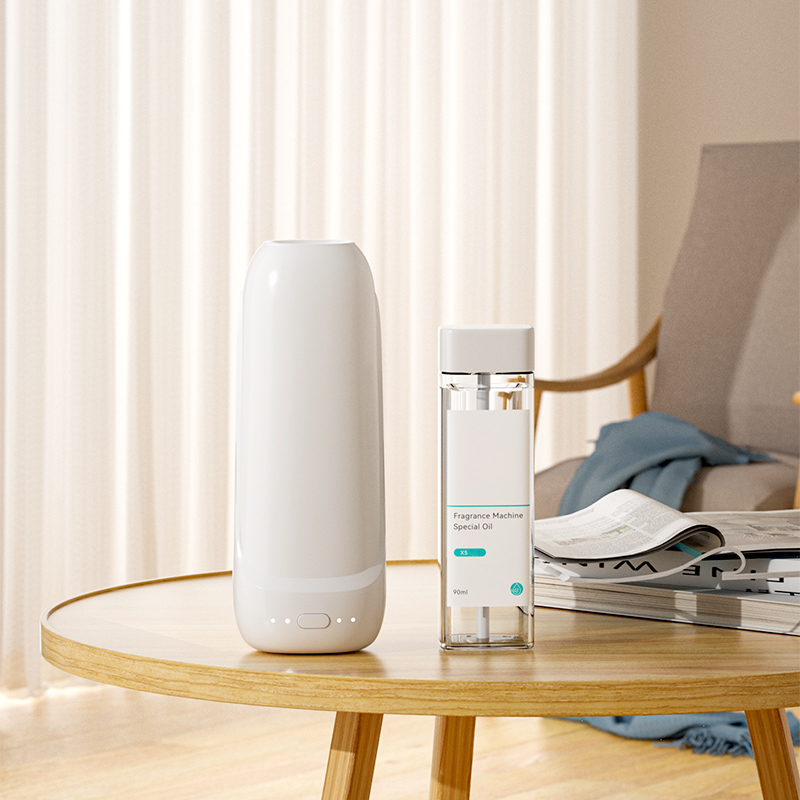
Defining the standard for silent operation requires objective acoustic measurements. You should look for a unit rated at or below 30 decibels (dB). To provide context, 10dB represents normal breathing, 20dB is equivalent to rustling leaves, and 30dB matches the ambient noise of a quiet rural area at night. A standard refrigerator hums at around 40dB. Operating below this 30dB threshold ensures that the ambient noise of the device blends seamlessly into the background, failing to register as a disruption to the human ear during the critical stages of deep sleep.
The manufacturer's decibel rating is only part of the equation. Surface placement drastically affects perceived noise. Placing a diffuser directly on a hollow wooden nightstand can amplify the micro-vibrations of the ultrasonic plate, turning the furniture piece into an acoustic resonator. To achieve true silence, place a dense silicone mat or a thick fabric coaster beneath the unit. This simple addition absorbs the kinetic energy, decoupling the device from the nightstand and maintaining the intended whisper-quiet baseline.
| Decibel Level (dB) | Real-World Equivalent | Impact on Sleep Architecture |
|---|---|---|
| 10 - 20 dB | Normal breathing, rustling leaves | Undetectable; no disruption to sleep cycles. |
| 20 - 30 dB | Whisper, quiet rural night | Ideal baseline for bedroom diffusers; acts as white noise. |
| 30 - 40 dB | Library, quiet computer fan | May disrupt light sleepers during the N1 and N2 sleep stages. |
| 40 - 50+ dB | Refrigerator hum, moderate rainfall | Unsuitable for bedrooms; will cause frequent awakenings. |
Acoustic silence is irrelevant if the device illuminates the room. Light pollution is a primary disruptor of melatonin production, the hormone responsible for regulating sleep-wake cycles. A dedicated sleep mode is a non-negotiable feature for any bedroom unit. This mode must disable all LED lights, including the primary ambient glow and the small power indicator lights.
You must evaluate the difference between dimmable lights and complete blackout capabilities. Many budget models allow you to dim the main light but leave a bright green or blue LED power indicator active on the base. In a pitch-black room, even a tiny indicator light casts shadows and disrupts the sleep environment. A true silent diffuser designed for overnight use features a single-button blackout function that extinguishes every light source on the device while maintaining continuous mist output.
Balancing reservoir size against the physical footprint on a nightstand requires careful consideration. A 100ml tank offers a compact, unobtrusive profile but may struggle to run through the entire night on a continuous high setting. A 300ml to 500ml tank guarantees all-night operation but consumes significant space and can look bulky next to a bedside lamp. Calculating runtime is straightforward: the capacity must support 7 to 9 hours of continuous misting to cover a full night's sleep without requiring a 3:00 AM refill.
Mandatory safety features must accompany these runtimes. A waterless auto-shutoff mechanism is the most critical safety failsafe. When the reservoir empties, the ultrasonic transducer can overheat if it continues to vibrate without water to dissipate the energy. The auto-shutoff feature utilizes a capacitive sensor or a mechanical float switch to instantly cut power to the motor when water levels drop too low. This prevents burnout, melting plastic, and potential fire hazards, allowing you to fall asleep without worrying about monitoring the water level.
The ability to control mist output is vital for adapting the device to different room sizes. A high mist setting effectively scents a large master bedroom, but that same setting will quickly overwhelm a small guest room, leading to a heavy, cloying atmosphere and potential respiratory irritation. Adjustable mist settings allow you to tailor the diffusion rate to the square footage of the space. Running the device on a low mist setting prevents olfactory fatigue and extends the runtime of smaller 100ml reservoirs, ensuring they last until morning.
Overnight diffusers are typically operated in low-light conditions when you are already fatigued. Nightstand ergonomics play a major role in the overall user experience. Top-fill designs are vastly superior to bottom-fill tanks. A top-fill unit allows you to simply remove the lid and pour water directly into the reservoir using a cup, minimizing the risk of accidental spills on wooden furniture or nearby electronics.
Bottom-fill models require you to detach the tank, flip it upside down, unscrew a cap, fill it at a sink, and carefully carry it back to the base. This process is prone to dripping and dropping. Easy-to-remove lids that lift off smoothly are preferable to locking lids that require forceful, noisy twisting, which can easily wake a sleeping partner.
The exterior housing of a diffuser does more than dictate its visual appeal; it actively influences acoustic performance. Heavy, dense cover materials such as sleek ceramic, natural stone, or thick resin naturally insulate and dampen internal motor noise far better than thin, lightweight plastic covers. The specific gravity and density of a ceramic shell absorb the high-frequency vibrations emitted by the ultrasonic plate, preventing them from radiating into the room.
Budget-friendly ABS plastic models are highly accessible, but their thin walls offer almost no sound insulation. This often results in a hollow, echoing hum. You must weigh the price premium associated with stylish, acoustic-dampening materials against the desire for absolute silence. Investing in a stone or ceramic unit is not merely an aesthetic choice; it is a functional upgrade for noise reduction.
Intermittent settings are highly effective for extending runtime and preventing olfactory fatigue, which occurs when the nose becomes blind to a constant scent. These modes are typically programmed to run for 30 seconds on and 30 seconds off. However, this feature introduces a significant trade-off for light sleepers.
Intermittent modes often rely on a mechanical relay switch to cycle the power to the transducer. A mechanical relay uses an electromagnet to close a circuit, creating a sharp, audible "click" sound every time it engages. This repetitive clicking, occurring every 30 seconds, can be far more disruptive to the sleep cycle than a continuous, steady low hum. The human brain is wired to notice sudden changes in the auditory environment. A sudden click followed by the initiation of misting will frequently pull a sensitive individual out of light sleep. For highly sensitive sleepers, utilizing a continuous mode with a lower mist output is vastly preferable to an intermittent setting.
The market frequently promotes combination units, such as salt lamp diffusers or large-capacity humidifier-diffuser hybrids, appealing to consumers looking to maximize nightstand space. Assessing these multi-functional devices requires understanding their inherent compromises. A Himalayan salt lamp hybrid provides a warm, ambient glow, but it often lacks a complete light blackout feature, as the heating of the salt relies on the bulb remaining illuminated.
Large-capacity humidifier hybrids holding 1 liter or more of water introduce significantly louder bubbling and gurgling noises due to the sheer volume of water being agitated. While offering dual benefits, these units routinely compromise on the strict acoustic and visual requirements necessary for an optimal sleep environment.
A diffuser that operates silently on day one can become noticeably loud after three months of use if improperly maintained. The primary culprit is hard water. Tap water contains dissolved minerals, primarily calcium and magnesium. As the water is atomized, these minerals are left behind, forming a hard, white scale deposit directly on the ultrasonic plate.
This scale buildup acts as a rigid barrier, forcing the transducer to work harder to agitate the water. The increased motor strain directly correlates to an increase in operational noise, turning a quiet hum into a loud, grating vibration. The mitigation strategy is twofold: utilizing distilled or purified water to prevent mineral introduction, and implementing a strict weekly cleaning protocol.
Follow these steps to maintain silent operation:
Introducing an ultrasonic device into a bedroom alters the local microclimate. Because ultrasonic models do not use heat, they add cool moisture to the air. In small, poorly ventilated bedrooms, running a high-output unit all night can lead to humidity overload. Excess moisture manifests as condensation on cold windows and can promote localized mold growth on drywall or fabrics over time. You must monitor the ambient humidity and utilize low mist settings in confined spaces.
Pet toxicity is another critical safety factor. Diffusing concentrated essential oils in an enclosed bedroom where cats or dogs sleep poses severe health risks. Cats lack specific liver enzymes required to metabolize certain compounds found in oils like eucalyptus, tea tree, and citrus. The enclosed nature of a bedroom amplifies this exposure. You must research pet-safe botanical profiles and keep the bedroom door open to allow pets to leave if they become uncomfortable.
Pairing a mechanically silent device with the incorrect botanical profile negates the entire purpose of a sleep-focused setup. The oils chosen must support the down-regulation of the central nervous system. Botanical profiles such as Lavender, Roman Chamomile, Cedarwood, and Vetiver contain high levels of linalool and cedrol. These compounds are scientifically proven to lower heart rate and induce relaxation.
You must strictly avoid stimulating oils like Peppermint, Rosemary, or bright Citrus blends in the evening. These oils stimulate the trigeminal nerve, promoting alertness and cognitive focus. Diffusing peppermint, regardless of how quiet the device is, will actively counteract the calming environment of the bedroom and disrupt sleep architecture.
A: Ultrasonic diffusers are the quietest type available. They use high-frequency electronic vibrations to create a mist, eliminating the need for noisy mechanical air pumps or fans. When housed in dense materials like ceramic or stone, their operational noise is virtually undetectable.
A: Yes, they produce a very faint humming noise due to the rapid vibration of the internal ceramic disk. High-quality models keep this noise below 30 decibels, which is equivalent to a soft whisper and generally unnoticeable in a bedroom environment.
A: Trickling sounds occur when atomized water droplets fall back into the reservoir. This is common in units with deep, narrow water tanks or poor internal baffle designs. Choosing a wider tank or a model with a specialized splash guard minimizes this water agitation noise.
A: Yes, provided the device is equipped with a waterless auto-shutoff feature. This safety mechanism automatically cuts power to the transducer when the reservoir is empty, preventing overheating, motor burnout, and potential fire hazards while you sleep.
A: The clicking sound is caused by a mechanical relay switch turning the power to the ultrasonic plate on and off. While intermittent modes save oil, this repetitive clicking can easily wake light sleepers. Using a continuous low-mist setting avoids this disruption.
A: For optimal sleep architecture, use oils that down-regulate the nervous system, such as Lavender, Roman Chamomile, Cedarwood, and Vetiver. Avoid stimulating oils like Peppermint, Eucalyptus, or Citrus blends, as they promote alertness and counteract relaxation.


