
Views: 0 Author: Site Editor Publish Time: 2026-08-17 Origin: Site


Scenting a compact area under 150 square feet presents a unique mechanical challenge. You want a pleasant environment without causing olfactory fatigue, surface damage, or excessive humidity. Standard units often fail in these micro-spaces because they overpower the room with intense fragrance concentration and clutter limited desk space. Oversized ultrasonic models also create localized condensation that threatens electronics and paper documents.
Manufacturer claims frequently complicate the selection process. Many brands label their products as compact while boasting coverage areas exceeding 500 square feet. These over-specified units are entirely unsuitable for true micro-spaces like home offices, small bathrooms, or vehicle interiors. Using them at close range guarantees poor output regulation.
Finding the best small essential oil diffuser requires a strict evaluation framework. You must look beyond aesthetic appeal. Output control, physical footprint, diffusion technology, and build quality dictate actual performance. We will examine how to match the right technology to your specific spatial constraints.
Compact spaces demand precise environmental control. We define these areas as rooms under 150 square feet. Common examples include home offices, dorm rooms, half-bathrooms, and car interiors. These environments share a distinct physical trait. They have low baseline CFM (cubic feet per minute) airflow. Limited ventilation means airborne particles linger longer. A standard room clears out stagnant air quickly through HVAC returns or open windows. Compact spaces trap humidity and volatile organic compounds. You must account for this low airflow when introducing any scent mechanism. If you push 30ml of fluid per hour into a 10x10 room with the door closed, the relative humidity spikes rapidly. The air becomes heavy, and the suspended oil droplets have nowhere to dissipate.
Navigating product specifications requires healthy skepticism. A small diffuser claiming to cover 500 square feet is a major red flag for a 100-square-foot office. High-coverage units utilize powerful internal fans and large ultrasonic transducers to push heavy mist across large distances. Placing one on a small desk leads to immediate problems. The device cannot regulate its output down to a micro-level. It will dump too much moisture and oil into a confined radius. You need a device engineered specifically for close-range operation, not a downgraded living room model. Look at the minimum output settings rather than the maximum coverage area. A unit that cannot drop below 15ml per hour is too aggressive for a desktop.
Human physiology reacts poorly to over-scenting. When you operate a high-output device in a low-ventilation area, the air becomes saturated. This triggers olfactory adaptation, commonly known as noseblindness. Your brain stops registering the scent within minutes. Worse, high concentrations of vaporized oils can cause headaches, nausea, and respiratory irritation. A proper micro-space setup maintains a subtle background aroma. It should never assault your senses upon entering the room. The goal is a steady, low-level diffusion that keeps the olfactory receptors engaged without overwhelming the nervous system.
Oversized units alter the micro-climate of your immediate workspace. Ultrasonic models emit water vapor constantly. In a low-airflow corner, this mist falls rapidly instead of dispersing. This creates localized condensation. Wood veneers warp under constant moisture. Edge banding on MDF desks will peel away when exposed to daily dampness. Keyboards, laptops, and monitors suffer internal corrosion from microscopic water droplets entering the cooling vents. Paper documents become damp and ruined. Managing this localized fallout is critical when selecting your equipment. You must control the mist trajectory and volume to protect your workspace assets.
Ultrasonic technology dominates the market for good reason. These devices use a vibrating ceramic disc to agitate water and oil into a fine mist. The transducer vibrates at frequencies around 2.4 MHz, creating capillary waves that break the surface tension of the water.
Nebulizers represent the professional tier of scent delivery. They do not use water or heat. Instead, they rely on Bernoulli's principle to draw oil up a micro-tube and atomize it against a glass or plastic baffle.
Passive systems offer the simplest approach to micro-space scenting. They rely on natural physics rather than mechanical parts. These include porous ceramic stones, wood blocks, or traditional reed sticks.
| Technology Type | Humidity Added | Noise Level | Maintenance Frequency | Best Use Case |
|---|---|---|---|---|
| Ultrasonic | Yes (Low to Medium) | Very Low (Trickle) | Daily water changes | Dry offices, bedside tables |
| Nebulizing | None | Medium (Pump Hum) | Weekly alcohol flush | Humid areas, high-impact scenting |
| Passive | None | Silent | Monthly reed replacement | Zero-maintenance desk setups |
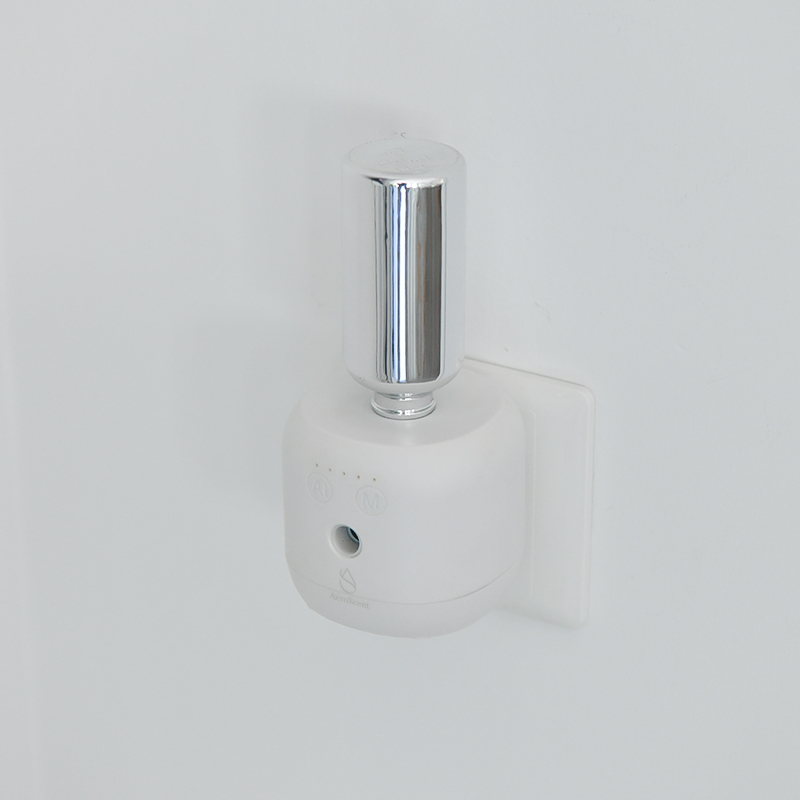
Physical dimensions dictate usability in tight quarters. A desktop diffuser must sit comfortably alongside dual monitors, keyboards, and coffee mugs. You cannot sacrifice prime desk real estate for a bulky unit. Evaluate the base width versus the total height. Tall, narrow units save space but tip over easily. A spilled water reservoir ruins electronics instantly. Look for a low center of gravity. A wider, rubberized base prevents accidental tipping in high-traffic compact zones. Measure the exact diameter of the space you intend to use. Anything wider than four inches often becomes an obstruction on a standard 24-inch deep desk.
Continuous output ruins small spaces. You need granular control over the mist volume. Intermittent timers are non-negotiable. A unit that runs for 30 seconds and pauses for 30 seconds maintains a consistent aroma. It prevents the room from feeling heavy or damp. Compare variable mist controls across models. The ability to dial down the output specifically for micro-spaces prevents olfactory fatigue. If a device only has a simple on/off switch, it will inevitably overwhelm a 100-square-foot room. Advanced units use pulse-width modulation to control the fan speed, allowing you to reduce the mist plume height to just a few inches above the device.
Acoustics matter in confined areas. Every motor type produces a distinct sound profile. Evaluate the decibel (dB) output before purchasing. Ultrasonic models emit a faint water trickling sound, usually around 20 to 25 dB. Many find this white noise relaxing in a bedroom. Nebulizing units use internal air pumps. These pumps generate a low-frequency hum, often pushing 35 to 40 dB. In a dead-silent office, this hum can break your concentration. The vibration also transfers through hard desk surfaces, amplifying the sound. Consider your tolerance for background noise when selecting the technology. Placing a small neoprene mat under a nebulizer can isolate the vibration and reduce the noise profile.
Power flexibility defines a modern mini aroma diffuser. Traditional wall plugs limit placement options and add to cable clutter. USB-C powered models plug directly into your laptop, monitor hub, or a standard phone charger. This eliminates bulky AC adapters under your desk. Rechargeable battery-operated units offer maximum freedom. You can move them from a car cup holder to a hotel room seamlessly. However, battery units face trade-offs. You sacrifice motor strength for battery life. Lithium-ion batteries also degrade over time. Ensure the battery capacity aligns with your daily usage habits. A 2000mAh battery typically provides enough power for a standard eight-hour workday on an intermittent setting.
Mini units house highly compressed internal components. They run hotter and work harder than larger models. Material integrity determines lifespan. Essential oils, particularly citrus oils, contain corrosive compounds like d-limonene. These compounds eat through cheap ABS plastics in weeks, causing the reservoir to crack and leak. Prioritize medical-grade plastics like PP (Polypropylene) or PET. These materials resist chemical degradation. Budget models boast low prices but suffer high failure rates. The ultrasonic ceramic disc also degrades if left sitting in hard water. Investing in a proven motor and chemical-resistant housing saves money over time. Check the manufacturer specifications to confirm the internal reservoir uses BPA-free, oil-resistant polymers.
Visual design often conflicts with practical engineering. Heavily stylized materials like ceramic, glass, or faux wood look great on a shelf. However, they increase the physical footprint. They also add unnecessary weight and fragility. A glass dome shatters easily if knocked off a cramped desk. High-grade, BPA-free plastics offer a superior balance. They remain lightweight, durable, and highly compact. Choose functionality over fragile aesthetics for high-use work areas. A simple, matte-finish cylindrical design blends into an office environment without drawing unnecessary attention or risking breakage during daily operations.
Tank capacity dictates your maintenance schedule. A 50ml to 150ml tank represents the sweet spot for small rooms. It provides enough mist for a workday without dominating your desk. The trade-off is daily refilling. Larger tanks exceeding 300ml reduce your refill frequency. Yet, they drastically increase the device's footprint. Large tanks also encourage stagnant water. Leaving water in a reservoir for days promotes mold growth and bacterial buildup. You end up aerosolizing these pathogens into your breathing space. Stick to smaller reservoirs that force you to use fresh water every day.
Different technologies consume resources at different rates. Nebulizers demand a higher upfront investment due to the precision air pumps required. They also consume pure essential oil rapidly. You will spend more on high-quality oils over the year. Ultrasonic models cost less initially. They dilute a few drops of oil into a large volume of water. This drastically extends the lifespan of your consumable oils. Weigh your hardware budget against your long-term consumable budget. If you plan to run the unit eight hours a day, the oil consumption of a nebulizer will quickly eclipse the purchase price of the machine.
Your intended use case dictates your hardware setup. Desktop units in workspaces benefit from lighter, energizing oils. Peppermint, lemon, and sweet orange vaporize cleanly. They boost focus and leave minimal residue inside the machine. Relaxing oils like vetiver, patchouli, or sandalwood present mechanical challenges. These are thick, viscous resins. They easily clog the micro-tubes and atomizers of compact units. Match your oil viscosity to the mechanical capabilities of your device. If you must use thick resins, you will need to increase your cleaning frequency to prevent the transducer from gumming up.
Improper positioning guarantees property damage. You must manage the mist plume actively. Never point an ultrasonic output nozzle directly at a computer screen or keyboard. Maintain a minimum clearance of 24 inches from all sensitive electronics. Keep paper documents out of the immediate fallout zone. If you notice a thin film of oil or moisture on your desk, your output is too high. Dial back the mist volume or switch to an intermittent timer immediately. Monitor the ambient humidity in the room. If the windows start fogging, the unit is pushing too much moisture into the confined space.
Small components require precise, frequent cleaning. Neglect leads to permanent clogs and motor failure. Follow a strict maintenance schedule to keep the unit operational.
Confined spaces amplify toxicity risks. Essential oils are highly concentrated plant extracts. Many common oils are toxic to pets. Cats lack specific liver enzymes to process phenols found in tea tree, eucalyptus, and citrus oils. Birds possess highly sensitive respiratory systems that fail quickly when exposed to airborne particulates. Diffusing in a closed 100-square-foot room forces pets to inhale concentrated vapors. Always ensure adequate ventilation. Leave doors cracked open. Never trap an animal in a room with an active scenting device. Monitor pets for signs of distress, such as drooling, lethargy, or squinting, and discontinue use immediately if symptoms appear.
The ideal unit for a compact space is not just a shrunken version of a living room model. It is a purpose-built device. It prioritizes intermittent output control, durable materials, and a stable, minimal footprint. Understanding the physics of your room prevents over-saturation and surface damage. You must balance the airflow limitations of a small office or bedroom with the mechanical output of the machine.
Your shortlisting logic should follow your environmental constraints. Choose an ultrasonic model for dry spaces where a quiet background trickle is acceptable and water is easily accessible. Opt for a waterless nebulizer for high-impact, short-duration scenting where humidity is a concern and maximum portability is desired. Select a passive system for ultra-compact, zero-maintenance desk setups.
Take the following steps to finalize your setup:
A: A true compact unit effectively covers between 50 and 150 square feet. This range is ideal for home offices, bathrooms, and car interiors. Devices claiming higher coverage in a mini form factor often lack the ability to regulate output for close-range use, leading to over-saturation.
A: Manufacturers often use high-speed motors in small housings to inflate specification sheets. While they can push mist far, they cannot dial down the output for small rooms. This leads to heavy condensation and overwhelming scents when used in compact areas.
A: It depends on your environment. Waterless nebulizers are better if you want zero added humidity and immediate scent throw. Ultrasonic models are better if you prefer a quieter device and want to add a slight amount of moisture to dry office air.
A: Yes, if placed incorrectly. Ultrasonic models emit water vapor that can condense on cool surfaces and enter cooling vents. Always maintain at least 24 inches of clearance between the mist output nozzle and any laptops, monitors, or keyboards.
A: You should empty and wipe down the reservoir daily to prevent bacterial growth. Perform a deep clean with isopropyl alcohol or white vinegar once a week. Small units have narrow tubes and tiny atomizers that clog much faster than large room models.
A: Lighter, thinner oils like peppermint, lemon, sweet orange, and rosemary are excellent for focus. They vaporize easily, leave minimal residue in small machines, and provide an energizing atmosphere without overwhelming a confined space.
A: Battery options are highly reliable for intermittent use, such as in cars or short work sessions. However, they require frequent recharging. If you plan to run the device for a full eight-hour workday, a USB-C or AC-powered unit is much more practical.


