
Views: 0 Author: Site Editor Publish Time: 2026-09-04 Origin: Site


The market is flooded with entry-level aromatherapy kits, but the gap between a premium unboxing experience and a low-quality, synthetic kit is vast. Buyers often purchase starter kits that lack critical hardware, contain synthetic fragrances disguised as natural oils, or fail to provide the necessary safety, setup, and maintenance guidelines for beginners. To ensure a high-quality gifting experience and long-term usability, buyers must evaluate an Aroma Gift Set based on hardware durability, botanical purity, out-of-the-box usability, and the comprehensive inclusion of necessary accessories. A poorly assembled box frustrates the recipient and often ends up in the trash after a few uses. We need to look past the packaging and examine the actual components. You want a kit that works immediately, lasts for years, and uses real plant extracts.
A complete starter kit must balance active diffusion hardware with a versatile, beginner-friendly scent library.
Hardware quality dictates longevity; prioritize materials like a ceramic essential oil diffuser over standard BPA-heavy plastics, backed by reliable warranties.
Botanical purity is non-negotiable; verify that included oils are 100% pure essential oils, not synthetic "fragrance oils."
Comprehensive kits mitigate beginner friction by including maintenance tools, carrier oils for topical use, and clear dilution and multi-use guidelines.
A functional starter kit requires a reliable primary delivery system. Active diffusion provides immediate room coverage. You must evaluate the two main active systems available on the market. Ultrasonic diffusers use water and high-frequency vibrations, typically operating at 2.4 MHz. They create a fine, cool mist that carries the oil particles into the air. This adds light humidity to the room, making it ideal for dry climates or winter months. Nebulizing diffusers are entirely waterless. They use pressurized air and Bernoulli's principle to atomize pure oil directly from the bottle. Nebulizers deliver a much stronger scent profile and cover larger square footage. However, they consume oil much faster than ultrasonic models and produce a slight humming noise from the air pump.
Material selection directly impacts device lifespan. Standard plastic models degrade over time. Citrus oils contain compounds like d-limonene. This natural solvent eats through cheap polymers, causing the water reservoir to crack or leak. A ceramic essential oil diffuser offers superior durability. It resists chemical breakdown entirely. Ceramic housings also provide superior aesthetic integration. They look like high-end home decor rather than medical appliances. The weight of the ceramic also dampens the internal motor noise, resulting in a quieter operation.
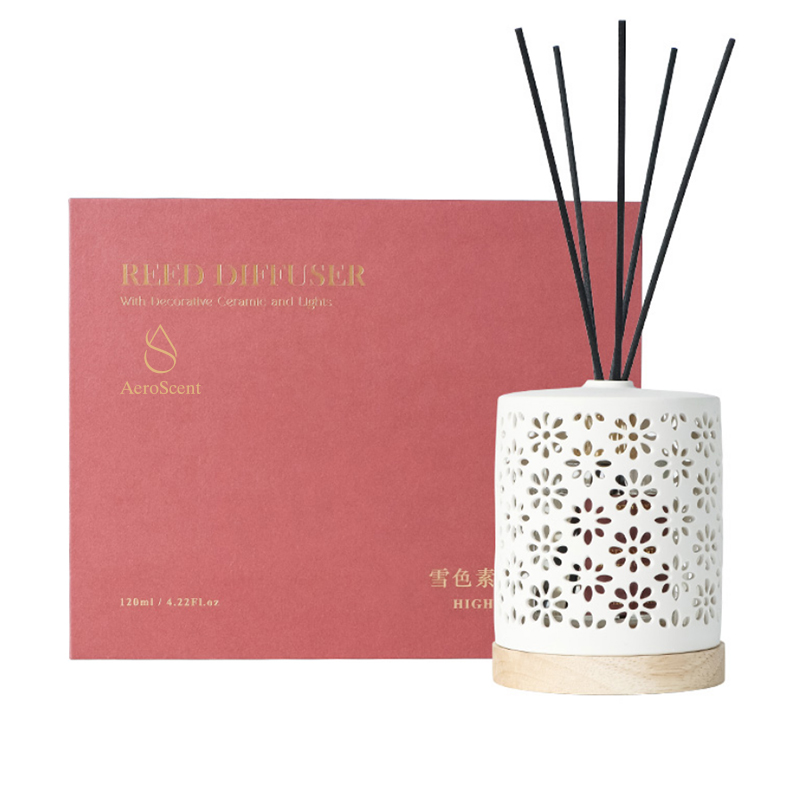
Passive scenting inclusions round out a complete kit. Reed diffusers offer continuous, low-level scenting without requiring electricity. They utilize rattan reeds to wick fragrance oil upward and disperse it naturally. Soy-based candles provide ambient lighting and immediate fragrance throw. Including these creates a multi-modal experience. It allows the recipient to practice scent layering throughout different rooms, matching the delivery method to the specific environment.
Check the reservoir material for high-density, chemical-resistant polymers or solid ceramic housings.
Verify the mist output settings to ensure the device offers both continuous and intermittent modes for oil conservation.
Inspect the power supply for standard safety certifications like UL or CE to prevent electrical hazards.
Confirm the presence of an automatic shut-off sensor that triggers when the water level drops too low.
Beginners need a curated baseline scent library. A minimum viable selection includes three to six distinct profiles. Overwhelming a beginner with twenty obscure oils causes decision fatigue and leads to unused products. The foundational trio is essential for any starter kit. Lavender promotes relaxation and improves sleep quality. Lemon or Sweet Orange provides an uplifting, cleansing aroma. Peppermint or Eucalyptus sharpens focus and supports respiratory clarity.
Seasonal and occasion-based inclusions add immense value. Situational profiles elevate the gifting experience. Frankincense and Myrrh work perfectly for holiday gifting. Evergreen blends create a festive winter atmosphere. These specific profiles make the kit feel personalized and timely. You should also look for kits that balance top, middle, and base notes. Citrus oils act as volatile top notes that hit the nose immediately. Florals serve as middle notes that round out the blend. Woods and resins act as heavy base notes that linger in the room for hours.
You must evaluate pre-mixed blends versus single-origin oils. Pre-mixed blends offer immediate gratification. A focus blend requires no mixing knowledge; the user simply drops it into the water. Single-origin oils allow the user to learn basic mixology. A premium kit usually offers a hybrid approach. It provides foundational single notes alongside one or two signature blends, giving the user both convenience and creative freedom.
Essential Oil | Extraction Method | Primary Olfactory Profile | Best Beginner Application |
|---|---|---|---|
Lavender | Steam Distillation | Floral, herbaceous, sweet | Bedtime diffusion, bath additions |
Sweet Orange | Cold Pressed | Bright, citrus, sweet | Morning diffusion, surface cleaning |
Peppermint | Steam Distillation | Minty, sharp, cooling | Mid-day focus, topical muscle rub (diluted) |
Eucalyptus | Steam Distillation | Camphoraceous, airy | Shower diffusion, respiratory support |
Frankincense | Resin Distillation | Earthy, woody, spicy | Meditation, evening relaxation |
Tea Tree | Steam Distillation | Medicinal, sharp, green | Air purification, targeted skin application (diluted) |
Cedarwood | Steam Distillation | Warm, woody, balsamic | Grounding blends, closet freshening |
Secondary components separate a basic box from a comprehensive starter kit. Carrier oils are an absolute necessity. You cannot apply pure essential oils directly to the skin. Fractionated coconut oil absorbs quickly without leaving a greasy residue. Jojoba oil closely mimics natural human sebum, making it ideal for facial applications. Including a carrier oil unlocks topical applications like massage or pulse-point rolling.
Storage solutions dictate oil shelf life. Essential oils degrade when exposed to ultraviolet light and oxygen. Photo-oxidation alters their chemical structure. It destroys their therapeutic benefits and flattens their scent profile. A proper kit requires amber or cobalt UV-protective glass bottles. Clear glass bottles indicate a low-quality product. The bottles should also feature European dropper caps or orifice reducers to control the flow of oil drop by drop.
Educational materials prevent user error. Multi-use guides are critical for beginners. The kit must include clear dilution charts showing the exact ratio of essential oil to carrier oil for different age groups. Pet safety warnings are mandatory. Many common oils are highly toxic to cats and dogs. Basic blending recipes encourage experimentation. Guides on alternative applications expand the kit's utility. Users can learn to make room sprays, bath additions, or natural cleaning solutions.
Out-of-the-box readiness defines the initial user experience. A true starter set offers plug-and-play simplicity. The recipient should not need immediate supplementary purchases to make the device work. The power adapter must be included in the box. A dedicated measuring cup helps prevent overfilling the reservoir. The initial oil library must be ready to drop into the water immediately.
Instruction manual clarity prevents early frustration. First-time users often struggle with water-to-oil ratios. The manual must explicitly state how many drops to use based on the tank size. Usually, three to five drops per 100ml is the standard baseline. Power settings must be clearly explained. Users need to understand how to toggle between continuous and intermittent misting, and how to operate any integrated LED lighting features independently of the mist function.
Remove the diffuser base and plug in the power adapter before adding any liquids to avoid spilling water on the electrical port.
Fill the reservoir with room-temperature tap water up to the clearly marked maximum fill line. Avoid using distilled water in ultrasonic models, as the sensors rely on minerals in tap water to function properly.
Add the recommended number of essential oil drops directly into the water.
Secure the outer shell or ceramic cover and press the power button to initiate the mist.
Water reservoir capacity dictates the practical application of the device. You must map the capacity to expected run times. You must also match it to room square footage. A small 100ml diffuser works well for a desk or a small bathroom. It fails completely in a large open-concept living room, as the scent disperses too thinly. Intermittent mist settings conserve oil and extend the run time. They also prevent olfactory fatigue, a phenomenon where your nose becomes blind to a scent after continuous exposure. Continuous mist provides a strong initial burst but empties the tank quickly.
Reservoir Capacity | Ideal Room Size | Estimated Run Time | Best Use Case |
|---|---|---|---|
100ml - 150ml | Up to 150 sq ft | 3 - 5 hours | Office desks, bathrooms, small bedrooms |
200ml - 300ml | 150 - 300 sq ft | 6 - 8 hours | Standard living rooms, kitchens, master bedrooms |
400ml - 500ml+ | 300+ sq ft | 10 - 14 hours | Open floor plans, large basements, commercial spaces |
Hardware cleaning requirements determine long-term usability. Hard water leaves mineral deposits inside the tank. These calcify on the ultrasonic plate at the bottom of the reservoir. This buildup reduces mist output significantly and eventually burns out the motor. Look for kits that include small cleaning brushes. Descaling instructions using white vinegar should be clearly printed in the manual. Some premium kits even include extra ultrasonic plates for future replacement.
Cheap diffuser motors have high failure rates. Identifying high-quality internal components is a priority. Listen for excessive motor whine during operation. A quality fan operates at a whisper-quiet decibel level, usually under 30dB. The ultrasonic disc should be made of medical-grade titanium or high-fired ceramic to resist corrosion.
Quality assurance protects your investment. Select kits with UL-certified power adapters. Uncertified electronics pose a serious fire risk, especially when dealing with water and electricity in close proximity. Manufacturer warranties are essential. They protect against early motor burnout or sensor failure. A standard warranty should cover at least one year of regular use.
Empty any remaining water and wipe the reservoir with a dry microfiber cloth after every single use.
Perform a deep clean weekly by running a cycle with water and a teaspoon of white vinegar to break down mineral scale.
Gently scrub the ultrasonic plate with a cotton swab dipped in rubbing alcohol to remove stubborn oil residue.
Air dry all components completely before storing the device in a cabinet to prevent mold growth.
The difference between therapeutic-grade essential oils and synthetic fragrance oils is massive. Essential oils are extracted directly from plants. They use steam distillation for leaves and woods, or cold pressing for citrus rinds. Fragrance oils are engineered in a laboratory. They use petrochemicals to mimic natural scents. They offer zero therapeutic benefits and exist solely to smell good.
Risk mitigation requires brand transparency. Look for GC/MS testing reports. Gas Chromatography and Mass Spectrometry verify chemical purity. These tests break down the exact molecular composition of the oil, proving it contains no synthetic additives or cheap carrier oil diluents. Reputable brands publish these reports for every batch. If a brand hides this data, assume the oils are synthetic or adulterated.
Vaporizing synthetic lipids carries health risks. Artificial fragrances often contain diethyl phthalate (DEP). These act as fixatives to make the scent last longer in the air. Inhaling these compounds causes headaches. It leads to severe respiratory irritation. It can trigger asthma attacks in sensitive individuals. Always prioritize absolute botanical purity when selecting a kit.
Cartridge-based diffusers create long-term cost implications. Proprietary pods force the user into a closed ecosystem. You can only buy refills from the original manufacturer. These refills are often heavily marked up compared to standard bottled oils. They also generate significant plastic waste, as the cartridges are rarely recyclable. If the company goes out of business or discontinues the product line, the hardware becomes useless.
Select open-system diffusers instead. Open systems allow the recipient to source oils from anywhere. They can buy from local botanical vendors. They can experiment with different brands and price points. This freedom ensures the gift remains useful for years. It respects the recipient's long-term budget and encourages them to explore the wider world of aromatherapy without restrictions.
Undiluted topical application is dangerous. Essential oils are highly concentrated plant compounds. Applying them neat causes severe skin sensitization. Chemical burns can occur, especially with hot oils like oregano, cinnamon, or clove. Phototoxicity is another major risk. Cold-pressed citrus oils, particularly bergamot and lemon, react violently to sunlight. Applying lemon oil to your skin and going outside causes severe blistering and hyperpigmentation. The kit must explicitly warn against this.
Lack of pet-safe guidelines is a major red flag. Generic gift sets often ignore animal safety entirely. Cats lack a specific liver enzyme called glucuronyl transferase. They cannot metabolize certain phenols and ketones. Diffusing tea tree, eucalyptus, or peppermint around cats is highly toxic and can lead to liver failure. Dogs are also sensitive to many oils. A premium kit includes a dedicated section on veterinary safety protocols, advising users to keep doors open and observe animal behavior during diffusion.
You must match the kit type to the recipient's primary goal. A clinical aromatherapy kit focuses strictly on therapeutic benefits. It includes single-note pure oils. It utilizes powerful nebulizing diffusers that deliver heavy concentrations of plant compounds. The aesthetic is usually minimalist and functional. This suits the purist who wants respiratory support, deep meditation, or natural remedies for minor ailments.
A lifestyle user has different priorities. They want ambient home scenting. They care about interior design and creating a specific mood. A curated home fragrance gift set fits this profile perfectly. It might include a mix of soy candles. It features aesthetic reed diffusers. It includes linen sprays and room mists. The focus is on creating a welcoming atmosphere rather than clinical therapy. The hardware in these kits often prioritizes visual appeal, using materials like frosted glass, brushed brass, or textured ceramic.
Buying a broad-spectrum kit offers versatility. It includes one floral, one citrus, one woody, and one mint profile. This allows a true beginner to discover their personal olfactory preferences. They can test different families without commitment. Default to broad-spectrum if you do not know their exact tastes. It guarantees that at least one or two oils will resonate with them.
Highly curated niche sets require personality matching. You must align scent profiles with the recipient's decor and lifestyle. An aromatic citrus set suits those who prefer bright, refreshing environments and clean spaces. A modern florals set appeals to traditionalists who enjoy romantic, soft atmospheres. Earthy woods fits perfectly in a minimalist, industrial loft or a cozy winter cabin.
Kits providing multiple mediums for the same fragrance offer superior value. A matching candle and reed diffuser combo is highly effective. You can place the reed diffuser in a small bathroom for continuous background scent. You can light the candle in the adjacent bedroom for a stronger, immediate throw. This builds a cohesive scent profile across the home without clashing fragrances.
Scent layering creates a more consistent olfactory experience. Relying on a single active diffuser limits the scent to one room. Layering passive and active methods pushes the fragrance further. It ensures a long-lasting experience in larger homes. It prevents the scent from becoming overwhelming in just one localized spot, distributing the aroma evenly throughout the living space.
Verify the brand provides public GC/MS testing reports for all included essential oils to guarantee botanical purity and absence of synthetic diluents.
Select a kit featuring a ceramic or high-density polymer diffuser to prevent chemical degradation from citrus oils over time.
Confirm the package includes a detailed instruction manual covering water-to-oil ratios, cleaning procedures, and pet safety warnings.
Match the reservoir capacity to the recipient's primary living space, opting for at least 300ml for standard living rooms.
Ensure the kit includes a carrier oil if the recipient intends to explore topical applications like massage or skincare.
A: Essential oils are naturally extracted from plants via steam distillation or cold pressing. They offer actual therapeutic benefits. Fragrance oils are synthetically engineered in laboratories using petrochemicals. They provide scent but carry zero health benefits and often cause respiratory irritation.
A: Yes, if the recipient intends to use the oils topically. Essential oils are highly concentrated and cause chemical burns if applied directly to the skin. A carrier oil, like jojoba or fractionated coconut oil, safely dilutes them for massage or pulse-point application.
A: Yes. Ceramic diffusers are highly durable and completely resistant to the corrosive compounds found in citrus oils. Cheap plastic models warp, degrade, and leach chemicals over time. Ceramic also offers a superior, high-end aesthetic that blends seamlessly into home decor.
A: If you are unsure of their preference, choose a broad-spectrum kit containing basic floral, citrus, and woody notes. If you know their style, match it directly. Choose bright citrus for energetic spaces, heavy woods for cozy environments, and lavender for stress relief.
A: Many common essential oils, such as tea tree, eucalyptus, and peppermint, are highly toxic to cats and dogs. Animals lack specific liver enzymes to metabolize these compounds. A high-quality starter kit always includes explicit veterinary safety warnings and clear usage guidelines.

