
Views: 0 Author: Site Editor Publish Time: 2026-05-06 Origin: Site


When you want a powerful scent throughout your home, the right scent diffuser machine makes all the difference. The Aroma360 Mini Pro Diffuser stands out for its ability to fill up to 600 square feet with a strong, luxury fragrance. This best essential oil diffuser operates silently and uses a water-less, heat-less system for consistent results. If you seek intense fragrance and reliable coverage, this diffuser delivers both performance and style.
Choose a nebulizing diffuser for the strongest scent. It uses pure oils and delivers intense fragrance without dilution.
Match your diffuser to your room size. Large spaces need high-output models, while smaller areas can use portable options.
Regular maintenance is crucial. Clean your diffuser weekly to prevent clogs and ensure consistent performance.
Consider safety around pets and children. Some essential oils can be toxic, so always check oil safety and use caution.
Utilize timer settings to avoid scent fatigue. Intermittent diffusion helps maintain fragrance without overwhelming your senses.
A powerful scent diffuser machine transforms your space by delivering consistent, long-lasting fragrance. You need to consider several factors to choose the best essential oil diffuser for your home or workplace. These include the type of diffusion technology, scent output, coverage area, oil compatibility, and longevity.
The technology inside your aromatherapy essential oil diffuser determines how effectively it disperses fragrance. Here’s a comparison of the main types:
A nebulizing essential oil diffuser uses pressurized air to atomize oils, producing a strong mist and intense aromatherapy experience. An ultrasonic diffuser creates a fine mist by mixing water and oil, which can dilute the scent but adds humidity. Heat and evaporative models offer less consistent results and may change the fragrance profile.
You want your aromatherapy essential oil diffuser to match the size of your space. High-output models like the Magic Scent Diffuser and Bicedo Waterless Diffusers can cover up to 2,000 and 1,500 square feet, respectively. See the chart below for a visual comparison:
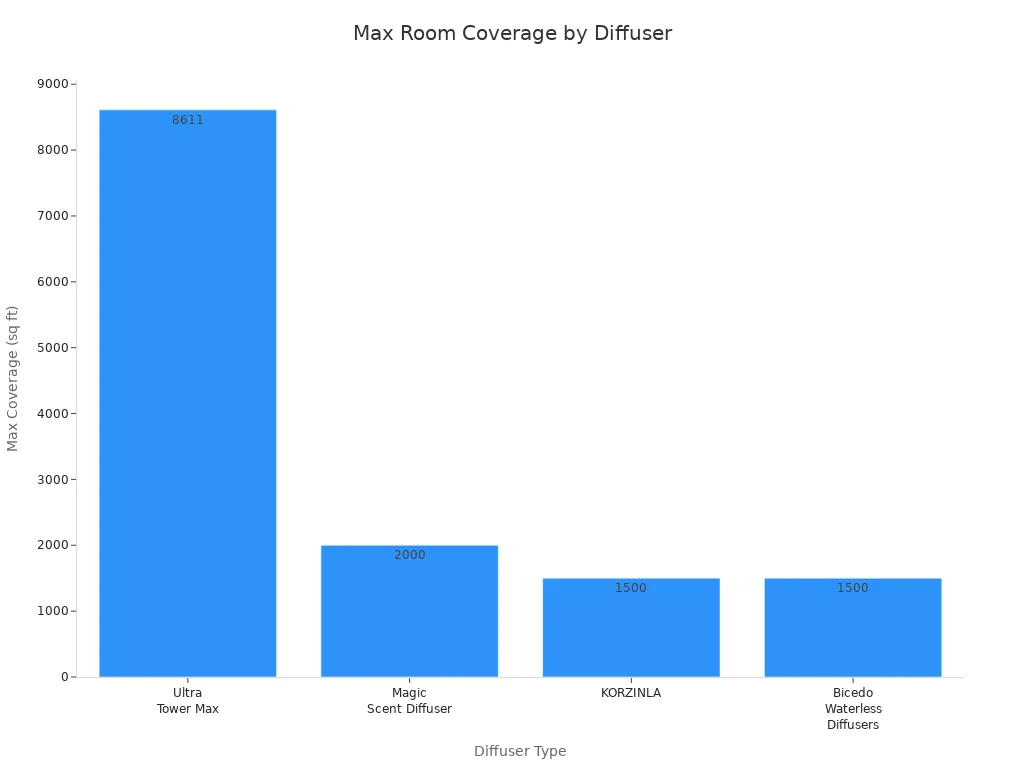
Room size, reservoir capacity, and diffusion modes all affect performance. A strong mist ensures even distribution, while adjustable settings let you control intensity for different environments.
The oils you use in your aromatherapy essential oil diffuser impact both the strength and duration of the fragrance. Base notes in essential oils provide depth and help the scent linger, reducing the need for frequent refills. When you choose oils with fixatives, your diffuser maintains a stable, pleasant atmosphere. Oil compatibility also prevents overwhelming scents and supports a consistent aromatherapy experience with every use. A nebulizing essential oil diffuser works best with pure oils, maximizing both intensity and longevity.
When you want a powerful scent diffuser machine for your home or workplace, you need to compare the leading essential oil diffuser models. Each type of diffuser offers unique benefits for aromatherapy, fragrance strength, and ease of use. Below, you will find a detailed breakdown of the best options in nebulizing, ultrasonic, heat, and evaporative categories.
A nebulizing essential oil diffuser delivers the strongest scent output. This type of aromatherapy essential oil diffuser uses pure oils and pressurized air to create a strong mist, filling large spaces quickly. You will appreciate the rich, undiluted fragrance and fast performance. Many users choose these models for therapeutic aromatherapy and intense room coverage.
Popular models like the Aroma360 Mini Pro and Magic Scent Diffuser offer adjustable intensity and cover up to 2,000 square feet. These diffusers suit open living areas, offices, or any space where you want a strong mist and lasting fragrance.
Tip: Nebulizing diffusers require weekly cleaning with rubbing alcohol to maintain performance. This keeps your aromatherapy essential oil diffuser easy to clean and prevents oil buildup.
You may notice moderate noise from the atomizing process, but most users find it unobtrusive. Design options range from sleek glass to modern minimalist, so you can match your decor.
An ultrasonic diffuser combines water and essential oils to produce a fine mist. This essential oil diffuser type offers moderate scent strength and adds humidity to the air. You will find these models especially popular for bedrooms, small living rooms, and workspaces.
Top-rated models include the ASAKUKI Smart Wi-Fi Essential Oil Diffuser and Pura 4 Smart Home Fragrance Diffuser. The ASAKUKI model features a 500ml capacity and adjustable mist output, making it a best essential oil diffuser for daily use. The Pura 4 offers a dual vial system for continuous fragrance and smart controls.
Maintenance: Clean your ultrasonic diffuser every few days or at least once a week. This prevents mold and ensures consistent aromatherapy.
Timer Settings: Most ultrasonic models include built-in timers (1, 3, or 6 hours) and automatic shut-off for safety.
Quiet Operation: These diffusers run whisper-quiet, so you can enjoy aromatherapy without distraction.
Design Compatibility: You can choose from a wide range of shapes, colors, and materials to fit your home style.
Heat and evaporative diffusers offer a simple way to enjoy essential oils, but they deliver less scent strength compared to nebulizing or ultrasonic types. These models use heat or airflow to disperse fragrance, making them suitable for small rooms or personal spaces.
You may prefer these diffusers if you want a low-cost, easy-to-use option for light aromatherapy. They require minimal upkeep—just replace the pad or wipe the surface as needed. However, you will notice that the fragrance fades faster and does not cover large areas.
Note: Heat diffusers may alter the chemical structure of essential oils, reducing their therapeutic benefits. Always use caution around children and pets.
You should consider maintenance and timer features when choosing your essential oil diffuser. Nebulizing and ultrasonic models need regular cleaning to stay easy to clean and safe. Heat and evaporative types require less upkeep but offer weaker aromatherapy effects.
Quiet operation and design compatibility also matter. Many top-rated diffusers are engineered for whisper-quiet performance and come in customizable styles to match your home.
If you want a scent diffuser machine that delivers a strong mist, long-lasting fragrance, and fits your decor, compare the features above to find the right essential oil diffuser for your needs.
You need to match your essential oil diffuser to the size of your space for optimal aromatherapy and fragrance coverage. Large rooms require a nebulizing essential oil diffuser or an ultrasonic diffuser with a 500ml tank. Medium-sized rooms benefit from ultrasonic diffusers with 200ml to 400ml capacity. Small spaces work best with portable diffusers that have 100ml-200ml reservoirs. This approach ensures you achieve a strong mist and consistent scent without wasting oils.
Large rooms: Nebulizing or ultrasonic diffuser (500ml tank)
Medium rooms: Ultrasonic diffuser (200ml-400ml capacity)
Small spaces: Portable diffuser (100ml-200ml reservoir)
Proper placement and timer settings maximize the effectiveness of your aromatherapy essential oil diffuser. Place your diffuser in high-airflow areas, such as central hallways or near HVAC returns, to distribute fragrance evenly. Avoid running your diffuser at maximum intensity continuously. Use scheduling features to create peaks and valleys in scent intensity.
Run your diffuser in 30 to 90-minute blocks.
Incorporate breaks to allow your senses to reset.
Use intermittent settings to prolong diffusion and reduce overexposure.
Tip: Intermittent diffusion helps avoid scent fatigue and uses less oil, extending the life of your essential oil diffuser.
Maintenance and long-term costs vary among diffuser types. You should consider how easy to clean your diffuser is and how often you need to refill or replace parts. The table below compares maintenance needs and costs:
Continuous diffusion may lead to overexposure and higher oil consumption. Intermittent diffusion prolongs the scent experience and reduces oil use. Choose a diffuser that fits your maintenance preferences and budget, ensuring your home stays fresh and inviting.
You should always consider air quality when using a diffuser with a strong mist. Essential oils can release volatile organic compounds (VOCs) into the air. These compounds may cause problems for people with respiratory conditions. Some individuals experience asthma symptoms, coughing, or shortness of breath when exposed to certain oils. People with COPD may notice worsened symptoms if the scent is too strong. Other possible reactions include headaches, dizziness, or skin rashes. To protect your health, use your diffuser in a well-ventilated area and avoid overuse, especially if you or your family members have lung conditions.
Use caution if you have asthma or allergies.
Limit use around those with sensitive respiratory systems.
Choose oils with clear ingredient lists.
Monitor for any signs of discomfort.
You must take extra care when using a nebulizing essential oil diffuser in homes with pets or children. Some essential oils are toxic to animals, and strong scents can overwhelm small children. Follow these safety tips:
Place your diffuser on a high shelf, out of reach.
Avoid diffusing in bedrooms where babies or pets sleep.
Run your diffuser for only a few minutes at a time.
Ensure good ventilation in the room.
Select oils that are safe for pets and children.
Watch for signs of distress, such as sneezing or hiding in pets.
Never allow pets to lick the diffuser or come into direct contact with oils.
Tip: Always check with your veterinarian before using new oils around pets.
Keeping your diffuser easy to clean ensures top performance and prevents health risks. Regular cleaning stops mold, residue, and clogs from forming, especially in high-output models.
For nebulizing and high-output diffusers:
Unscrew the oil bottle and pour any leftover oil back into its container.
Add 5-10 ml of rubbing alcohol to the empty bottle.
Attach the bottle and run the diffuser for 10 minutes to clean the atomizer.
Turn off the device, pour out the alcohol, and let it air dry.
Refill with your favorite oil and enjoy aromatherapy.
For ultrasonic diffusers:
Empty water after each use and wipe the inside dry.
Clean at least once a week with a vinegar-water mix.
Use distilled water to prevent mineral buildup.
Avoid overfilling to prevent leaks and automatic shut-off issues.
Never use harsh chemicals or abrasive cleaners, as they can damage your diffuser and affect oil purity.
Clean between oil changes and before storing your diffuser to prevent mold and residue.
Regular upkeep helps your diffuser deliver a strong mist and keeps your home safe and fresh.
When you want a diffuser that delivers a strong, long-lasting fragrance, focus on models with powerful performance, whisper-quiet operation, and extended run time. Look for features such as:
Adjustable mist settings for a customized experience
Coverage suitable for your room size
Eye-catching design that matches your decor
You should also consider safety, usability, and maintenance. Choose a diffuser with controllable output, easy-to-use timers, and simple cleaning routines. Select a machine that fits your lifestyle for powerful scent, easy upkeep, and safe operation.
You get the strongest scent from a nebulizing diffuser. This model uses pure essential oils and does not dilute the fragrance with water. It works best for large spaces and delivers intense, long-lasting aroma.
You should clean your diffuser at least once a week. Regular cleaning prevents oil buildup, mold, and clogs. For nebulizing diffusers, use rubbing alcohol. For ultrasonic models, use a vinegar-water mix.
You must use caution with strong diffusers around pets and children. Some essential oils can be toxic. Always check oil safety, use low settings, and keep the device out of reach.
You should only use pure, high-quality essential oils in high-output diffusers. Avoid synthetic oils or blends with additives. These can clog the machine or cause unwanted reactions.
You can avoid scent fatigue by using intermittent timer settings. Run your diffuser in short bursts and allow breaks. This keeps the fragrance noticeable and prevents your senses from becoming overwhelmed.


