
Views: 0 Author: Site Editor Publish Time: 2026-07-20 Origin: Site


The market for aromatherapy devices is saturated with cheap, white-label products, making it difficult to separate durable, high-performing units from disposable plastics with exaggerated performance claims. Consumers and businesses struggle to find a device that effectively disperses scent across specific square footages without degrading oil quality, causing moisture damage, or requiring tedious, daily maintenance. Finding the right balance between output capacity, material safety, and mechanical reliability requires looking past basic aesthetic appeal. This guide provides an objective, technical framework for evaluating diffuser mechanisms, material safety, and output capacities to help you identify the best essential oil diffuser for your specific spatial, therapeutic, and longevity requirements.
Defining your primary use case establishes the foundation for selecting the correct device. Clinical or therapeutic aromatherapy requires unaltered oil dispersion to maintain the integrity of complex botanical compounds. When you need targeted respiratory support or specific physiological responses, the delivery method must preserve the exact chemical profile of the plant extract. General home fragrancing prioritizes pleasant ambient scenting over strict chemical preservation. Heat or water dilution fundamentally impacts the chemical volatility and olfactory therapeutic efficacy of essential oils. Water-based dispersion dilutes the concentration, while heat can actively destroy delicate therapeutic constituents. You must decide if you are treating a space for health benefits or simply masking odors.
Output capacity must align directly with the physical dimensions of your environment. A standard baseline metric requires higher output volumes for every additional hundred square feet of space. Open-concept downstairs layouts, particularly kitchen and living room combinations, present specific architectural challenges. HVAC return vents, high ceilings, and shifting airflow patterns actively pull scent away from the target area. A single small-capacity unit will fail to scent these spaces effectively. Achieving consistent coverage in open floor plans requires strategic multi-unit zoning or deploying industrial-grade atomizing systems designed for large-volume air displacement. If you place a standard 100ml unit in a 600-square-foot room with vaulted ceilings, the scent will dissipate before reaching the opposite wall.
The mechanics behind an ultrasonic essential oil diffuser rely on high-frequency vibration rather than heat. A ceramic piezoelectric transducer located at the base of the water reservoir vibrates at ultrasonic frequencies. This rapid oscillation breaks both the water and the floating essential oil into a fine, cool mist that disperses into the air. Industry benchmarks often point to the 300ml reservoir as a standard sweet spot, balancing physical footprint with adequate run time.
These devices remain highly cost-effective and double as mild cool-mist humidifiers. They consume less oil per hour compared to waterless alternatives and operate with a whisper-quiet profile suitable for sleeping environments. However, the technology inherently dilutes the essential oil. It also introduces continuous moisture into the environment, rendering it unsuitable for naturally damp climates or unventilated spaces. Users must also manage frequent manual water refills and monitor the ambient humidity levels to prevent condensation on nearby furniture or electronics.
Nebulizing systems operate entirely without water or heat. They utilize a pressurized air pump and the Bernoulli principle to atomize pure, unadulterated essential oil into ultra-fine micro-particles. High-velocity air passes across a small capillary tube containing the oil, creating a vacuum that pulls the liquid upward and shatters it into a microscopic vapor. This process requires precise engineering and high-quality glass components to function correctly.
This mechanism delivers maximum therapeutic benefit. It requires zero water, enables rapid scenting of large areas, and provides a highly concentrated olfactory throw. The trade-offs include a higher upfront cost and rapid oil consumption. Additionally, the pressurized air pump generates a noticeable operational hum or vibration noise, which may disrupt quiet environments. You will go through a 15ml bottle of oil significantly faster with a nebulizer than with an ultrasonic unit.
Passive diffusers encompass reed sticks, unglazed ceramic stones, and candle-warmed receptacles. These rely on natural air circulation or applied thermal energy to evaporate the oil. The technical trade-off here remains significant. Heat fundamentally alters the molecular structure of essential oils. This thermal degradation reduces therapeutic efficacy and risks burning the oil entirely. Overheated oils frequently leave behind sticky, toxic residues that permanently damage the receptacle and emit unpleasant, scorched odors. We generally advise against heat-based models for anything beyond basic, localized scenting in small bathrooms.
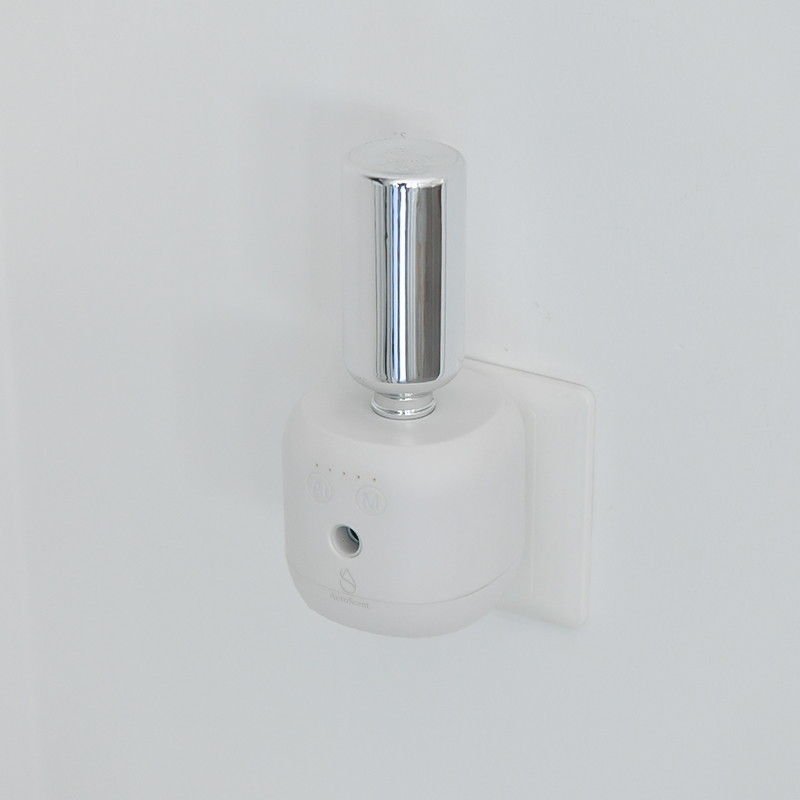
Essential oils act as powerful natural solvents. Device construction must utilize essential oil-safe materials to prevent chemical leaching. Medical-grade glass, high-quality ceramics, hand-blown glass, and specially treated wood provide the highest safety margins. Citrus oils and high-phenol extracts rapidly degrade cheap plastics, causing them to crack, cloud, or melt. If a device utilizes synthetic components, it necessitates BPA-free, corrosion-resistant polymers like high-grade PP (polypropylene) plastic to maintain structural integrity over time. Avoid ABS plastics, as they are highly susceptible to solvent degradation from pure citrus oils.
Sanitary engineering dictates the long-term viability of any water-based unit. The cleanest experience design paradigm prioritizes wide-mouth reservoirs that allow direct hand-scrubbing access to all interior corners. Poor design bottlenecks actively breed pink mold and harmful bacteria. Narrow necks, unsealed inner chambers, and permanently attached power cords complicate sink rinsing and trap stagnant moisture, creating hazardous biological environments. If you cannot fit your hand inside the reservoir to wipe it down, you will eventually face mold issues.
Operational flexibility depends on customizable output settings. Alternating between continuous and intermittent mist settings helps prevent olfactory fatigue, commonly known as nose blindness. Reservoir size directly correlates with realistic operational hours and mist volume outputs. A 100ml tank suits brief, targeted sessions, while 300ml to 500ml capacities support overnight operation or extended daytime ambient scenting without requiring constant attention. Look for units that offer variable mist output controls (high/low) to further customize the dispersion rate based on the room's current needs.
Acoustic profiles vary drastically across different technologies. Evaluating decibel levels ensures the device matches the intended environment. Ultrasonic units produce a faint electronic hum accompanied by gentle dripping water sounds, making them ideal for bedrooms and relaxation spaces. Conversely, the mechanical motor vibration of nebulizers generates a distinct buzzing noise. This operational intrusiveness makes nebulizing systems better suited for open workspaces, large living rooms, or active commercial environments where background noise masks the motor.
Digital interfaces often fail prematurely in aromatherapy environments. Capacitive touch panels and smart app integrations exhibit high failure rates when repeatedly exposed to airborne oily residues. Micro-layers of atomized lipids coat the sensors, rendering touch controls unresponsive. Simple mechanical buttons and physical switches consistently yield a longer device lifespan, bypassing the vulnerabilities of complex circuitry exposed to continuous moisture and volatile organic compounds. A physical toggle switch will outlast a Wi-Fi-enabled touch screen in a humid, oil-rich environment every time.
| Technology Type | Mechanism | Water Required | Therapeutic Potency | Maintenance Level |
|---|---|---|---|---|
| Ultrasonic | Piezoelectric vibration | Yes | Moderate (Diluted) | High (Daily wiping, weekly descaling) |
| Nebulizing | Pressurized air pump | No | Maximum (Undiluted) | Medium (Routine alcohol flushes) |
| Evaporative/Heat | Thermal or passive airflow | No | Low (Alters chemistry) | Low (Wiping residue) |
Procuring a reliable device requires vetting the source. Key criteria for evaluating an essential oil diffuser manufacturer include a minimum 12-month warranty, guaranteed availability of replacement parts, and a responsive customer support infrastructure. Glass nebulizing stems and proprietary AC adapters frequently require replacement. An original equipment manufacturer enforces strict quality control protocols, whereas generic, drop-shipped variants found on secondary marketplaces offer zero accountability post-purchase. Always verify the manufacturer's track record for honoring warranty claims on failed transducers.
Identifying disposable units prevents wasted investment. Warning signs include a complete lack of material transparency regarding plastic grades. Unverified safety certifications, missing standard UL, CE, or RoHS marks, indicate compromised electrical components. Ultra-low price points almost universally point to cheap internal motors and inferior transducers prone to burning out within the first few months of regular operation. If the packaging does not explicitly state the type of plastic used for the reservoir, assume it is not rated for pure essential oils.
Water-based units demand strict hygiene protocols. Failing to maintain the reservoir risks aerosolizing stagnant water bacteria directly into the lungs. Users must implement a rigid routine for descaling and sanitizing. Emptying residual water daily, wiping the interior dry, and performing a weekly deep clean with diluted white vinegar dissolves mineral buildup and neutralizes microbial growth. Never leave water sitting in the tank for more than 24 hours.
Nebulizing systems face unique mechanical vulnerabilities. Heavy, viscous oils like vetiver, patchouli, and sandalwood easily clog the delicate micro-glass capillary tubes. Preventing these blockages requires a standard mitigation strategy. Users must perform routine isopropyl alcohol flushes, running the device with pure alcohol to dissolve hardened lipid blockages and maintain clear airflow channels. If you notice a drop in vapor output, an alcohol flush is the immediate first step.
The liquid you put into the machine dictates its survival. Using cheap, synthetic fragrance oils or carrier-oil blends containing jojoba or almond oil leaves heavy lipid residues. These thick deposits permanently damage delicate ultrasonic transducers and jam pneumatic pumps. Furthermore, poor oil quality inevitably leads to weak scent throw, regardless of how powerful or expensive the dispersion hardware might be. Always use 100% pure, unadulterated essential oils to ensure optimal performance and protect the internal mechanics of your Essential Oil Diffuser.
A: Nebulizing diffusers serve as the most effective option for large open spaces. They atomize pure oil without water, delivering a highly concentrated scent profile capable of penetrating expansive floor plans and overcoming HVAC airflow disruption.
A: Ultrasonic units do not ruin the chemical structure of the oil, as they operate without heat. However, they do significantly dilute the concentration by mixing a few drops of oil with hundreds of milliliters of water before dispersion.
A: You should empty and wipe dry the water reservoir after every single use. Perform a deep clean using diluted white vinegar or rubbing alcohol at least once a week to dissolve mineral scale and eliminate bacterial growth.
A: Humidifiers are engineered to output large volumes of water vapor to alter room humidity, using plastics not designed to withstand volatile oils. Diffusers utilize specialized, corrosion-resistant polymers specifically designed to safely disperse botanical extracts alongside smaller amounts of water.
A: They are better for clinical aromatherapy and large spaces because they deliver undiluted therapeutic compounds. However, they consume oil much faster, cost more upfront, and generate more operational noise than ultrasonic models.
A: Yes, provided the device features an automatic shut-off mechanism that triggers when the reservoir empties. Using an intermittent mist setting is recommended for overnight use to prevent olfactory fatigue and conserve oil.


