
Views: 0 Author: Site Editor Publish Time: 2026-09-06 Origin: Site


Scent marketing investments frequently fail not because of the fragrance quality, but due to poor spatial planning and incorrect hardware placement. Mounting a diffuser in the wrong location leads to uneven scent distribution, wasted fragrance oil, localized olfactory fatigue for employees, and potential residue damage to inventory or flooring. You cannot simply bolt a machine to the wall and expect uniform coverage. To maximize the return on ambient scenting, facility managers must evaluate airflow dynamics, hardware connectivity, aesthetic integration, and maintenance accessibility before drilling a single hole. We see contractors make the same mistakes repeatedly: fighting building drafts, ignoring return vents, and trapping units in inaccessible ceiling voids. This guide details the exact technical requirements for mounting and positioning scenting equipment in commercial spaces. We will cover draft mapping, duct integration, and clearance rules to ensure your installation works flawlessly from day one.
Airflow Dictates Efficacy: Placement must align with existing HVAC supply lines and natural drafts; fighting building airflow guarantees inconsistent coverage.
Height and Proximity Matter: Wall-mounted units should be positioned above eye level (typically 6 to 8 feet) to allow atomized particles to disperse before settling, preventing direct exposure to guests.
Technology Requires Specific Environments: A smart aroma diffuser requires stable Wi-Fi/Bluetooth access, while a light sensor fragrance sprayer must be mounted in areas with consistent ambient lighting shifts to trigger correctly.
Accessibility and Security are Non-Negotiable: Mounting locations must balance discreet aesthetics and tamper-proof heights with safe, low-ladder access and adequate vertical clearance for monthly oil cartridge replacements.
Airflow dictates where atomized scent particles travel. You must map the natural drafts and mechanical ventilation patterns in your facility before selecting a mounting location. We always conduct a basic draft test before finalizing a spot. You can do this using a simple smoke pen or a piece of tissue paper. Stand in the proposed mounting area and observe which way the air pulls. If the air pulls aggressively toward an exit door, any scent released there will immediately leave the building.
Commercial entryways often feature positive or negative air pressure zones. Positive pressure pushes indoor air outward when doors open. Negative pressure pulls outdoor air inside. You want your scent to ride positive pressure waves inward into the main lobby or retail floor. Never mount a unit where negative pressure will suck the fragrance directly outside. Align your placement with the dominant indoor air currents. Let the building's natural ventilation do the heavy lifting for scent distribution.
Here are the steps we follow for a site airflow audit:
Turn on all HVAC air handlers to their standard daytime operating speed.
Open the main entry doors to simulate peak foot traffic conditions.
Activate a smoke pen at the proposed mounting height.
Track the smoke drift for 30 seconds to confirm it moves toward the target scent zone.
Relocate the mounting point if the smoke immediately drafts into a return vent or out a door.
Floor space measurements deceive many facility managers. Scent dispersion relies entirely on cubic volume. You must factor in ceiling height. A 2,000-square-foot lobby with a standard 10-foot ceiling contains 20,000 cubic feet of air. That same lobby with a 20-foot vaulted ceiling contains 40,000 cubic feet. The latter requires double the scenting capacity.
Calculate your total cubic footage by multiplying length by width by height. Compare this number against the maximum output capacity of your chosen equipment. High-capacity units handle large, open volumes easily. Sprawling layouts with multiple partitioned rooms often benefit from zoned scenting. Installing several smaller units creates overlapping coverage areas. This prevents dead zones and ensures consistent fragrance intensity across complex floor plans.
Use the table below to understand how ceiling height drastically alters hardware requirements for a standard 1,500 square foot room:
Room Size (Sq. Ft.) | Ceiling Height (Ft.) | Total Volume (Cubic Ft.) | Hardware Recommendation |
|---|---|---|---|
1,500 | 8 | 12,000 | Single standard wall-mounted unit |
1,500 | 12 | 18,000 | Single high-capacity wall unit |
1,500 | 20 | 30,000 | Two standard units or HVAC integration |
1,500 | 30 (Atrium) | 45,000 | HVAC integration required |
Strategic placement requires avoiding mechanical traps. Return air vents act as vacuums. They pull ambient air back into the HVAC system for reconditioning. If you mount a unit too close to a return vent, the system strips the atomized scent from the room before anyone smells it. Keep diffusers at least 15 to 20 feet away from any return air grilles.
Exhaust fans and open windows present similar risks. Restroom exhaust fans quickly remove volatile organic compounds from the air. Placing a unit directly beneath an exhaust fan guarantees wasted fragrance oil. Identify all extraction points in your ceiling plan. Position your equipment in neutral or supply-heavy zones where the scent can linger and disperse naturally. We frequently see units mounted directly over revolving doors; the constant mechanical rotation acts like an exhaust fan, pulling the scent outside. Move the unit ten feet deeper into the room to avoid this mechanical trap.
Public spaces invite curiosity and tampering. You must protect your scenting equipment from unauthorized access. High-traffic areas require tamper-resistant mounting strategies. Position units out of direct reach. A mounting height of 7 to 8 feet deters casual tampering while maintaining optimal dispersion mechanics.
Evaluate the physical security of the hardware itself. Many commercial units feature lockable enclosures. These prevent unauthorized personnel from adjusting intensity settings or stealing fragrance cartridges. If you must mount a unit at eye level due to spatial constraints, ensure it features a heavy-duty metal casing and a keyed lock. Protect your investment by treating the hardware as a secure facility asset. Use heavy-duty toggle bolts or mount directly into wall studs. A fully loaded diffuser carries significant weight; standard plastic drywall anchors will pull out of the wall if someone yanks on the machine.
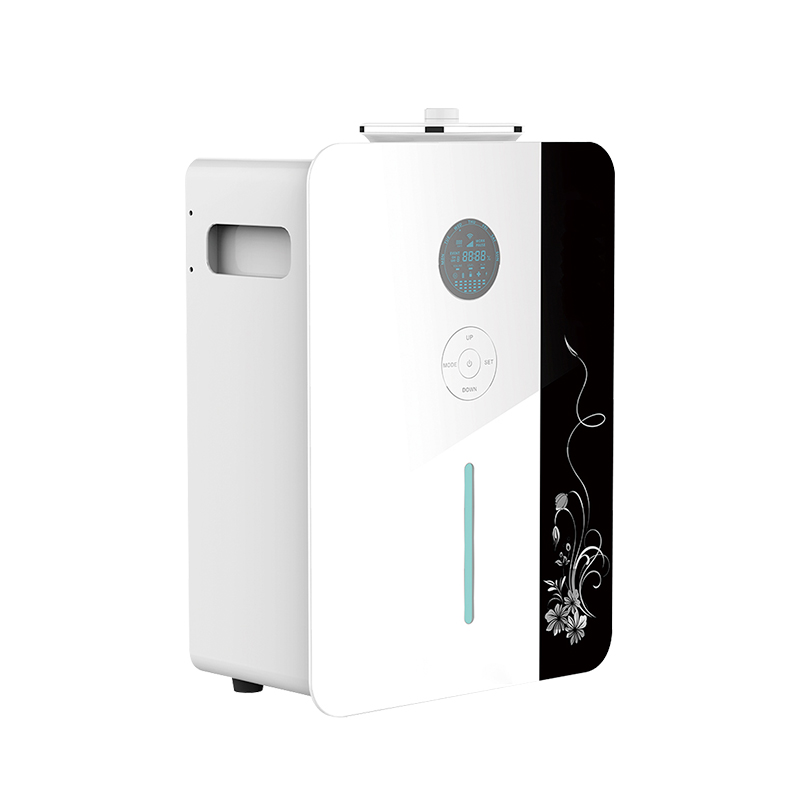
HVAC integration represents the gold standard for whole-building coverage. This method injects atomized fragrance directly into the central airflow. It suits hotel lobbies, large retail environments, and sprawling casino floors perfectly. The hardware remains completely hidden in the mechanical room. This eliminates aesthetic concerns and public tampering risks entirely.
Technical execution requires precision. You must mount the injection nozzle into the supply ductwork. Position it post-fan and post-filter. Injecting scent before the air filter causes the filter media to trap the oil particles. You must also verify the static pressure inside the duct. High static pressure pushes air back into the diffuser, ruining the internal pump. Install a pitot tube to measure pressure before drilling. Use a step bit to drill the exact hole size required for the injection tube, and seal the penetration with foil tape or mastic to prevent air leaks.
Configure the HVAC thermostat so the fan runs continuously. If the fan stops while the diffuser runs, heavy oil particles condense and pool inside your ductwork. This creates a massive fire hazard and destroys the sheet metal. While HVAC integration offers unmatched coverage, it removes localized control. You cannot create distinct scent zones within the same air handler system. The entire zone receives the same fragrance at the same intensity.
Wall mounting provides excellent targeted coverage. It works beautifully for corridors, elevator banks, and medium-sized retail floors. You can create specific olfactory experiences in different areas of your building. A well-placed Commercial Aroma Diffuser transforms a sterile hallway into a welcoming transition zone.
Height specifications dictate success here. Mount these units 6 to 8 feet off the ground. Cold-air diffusion technology creates sub-micron oil particles. These micro-particles need vertical space to catch ambient air currents. Gravity eventually pulls them down. If you mount the unit at 4 feet, the particles hit the floor too quickly. This reduces coverage area and creates slip hazards.
Position units on walls adjacent to entryways. Do not point them directly at the door. You want the scent to travel inward alongside the customer. Address cord management immediately. Exposed power cables destroy premium commercial aesthetics. Route cables inside the wall cavity whenever possible. If in-wall routing fails, use paintable, low-profile raceways to conceal the wiring. We always specify recessed outlets directly behind the mounting bracket for a completely flush, wire-free installation.
Some spaces lack usable wall real estate. Glass-walled boutiques and open-concept showrooms face this challenge frequently. Track lighting integration solves this problem. You can utilize track-adapted diffusers that draw power directly from existing overhead lighting rails.
This approach eliminates visible power cords entirely. It also removes reliance on battery-powered units, which require constant maintenance. Track mounting keeps the hardware high above the floor. This maximizes the vertical drop for scent particles, ensuring excellent dispersion. Verify the voltage of your lighting track before purchasing adapters. Most commercial tracks run on 120V, but low-voltage systems require specific step-down transformers. Always confirm the weight rating of the lighting track; a diffuser full of oil weighs significantly more than a standard LED fixture. You must also identify whether you have H-type, J-type, or L-type tracks, as the mounting adapters are not interchangeable.
Luxury retail and high-end hospitality demand invisible technology. Hardware cannot disrupt carefully curated interior designs. Recessed mounting hides the equipment within custom cabinetry, behind architectural grilles, or inside decorative columns. The unit operates silently out of sight.
Airflow clearance becomes the primary challenge here. The atomizing nozzle must have an unobstructed pathway to ambient air. If you trap the nozzle behind a dense wooden louver, the oil particles strike the wood. They condense, stain the millwork, and fail to scent the room. Use wide-slotted grilles. Ensure the nozzle sits flush with the opening. Install a small ventilation fan inside the cabinet if necessary to push the atomized mist out into the room. We recommend lining the inside of the concealment cavity with a non-porous material like aluminum or plastic laminate to make wiping down accidental oil spills easier.
Modern scenting relies heavily on automation. A smart aroma diffuser allows facility managers to adjust intensity, set operating schedules, and monitor oil levels remotely via smartphone apps or desktop dashboards. This technology requires robust network connectivity.
You must mount these units within your facility's Wi-Fi or Bluetooth range. Dead zones render smart features useless. Test the signal strength at the exact mounting height before installation. Metal structural beams, thick concrete walls, and elevator shafts severely degrade wireless signals. If the signal drops, the unit fails to sync with your Building Management System. Use a Wi-Fi analyzer app on your phone to check the RSSI at the exact spot you plan to drill. You want a signal stronger than -65 dBm for stable performance. Keep in mind that most commercial scenting hardware operates exclusively on 2.4GHz networks; ensure your facility routers broadcast this band, as 5GHz-only networks will not connect.
Smart features consume more power. Constant network polling drains batteries rapidly. Prioritize hardwired power solutions for smart units. Mount them near standard 110V/220V outlets. If you must use batteries, establish a strict replacement schedule to prevent unexpected downtime.
Light-activated technology offers excellent efficiency for intermittent spaces. A light sensor fragrance sprayer triggers only when it detects ambient illumination. This saves expensive fragrance oil during overnight hours or when rooms sit empty.
Sensor line-of-sight dictates placement success. The photocell must detect accurate lighting shifts. Do not place these units in perpetually shadowed corners. Avoid mounting them behind heavy structural pillars. If the sensor sits in darkness, the unit will not activate, even if the room is occupied.
These units excel in localized, traffic-dependent areas. Commercial restrooms, employee breakrooms, and vestibules serve as ideal locations. The lights turn on when someone enters. The scent activates immediately. The lights turn off when they leave. The scent stops. This creates a highly efficient, low-maintenance scenting ecosystem. You must simply enforce strict placement discipline to ensure the sensor reads the room accurately. Test the sensor by turning off the lights and verifying the unit powers down within sixty seconds.
Never mount a unit directly at face level near a main entrance. This creates the dreaded doorway blast. Entering guests receive a concentrated face-full of volatile organic compounds. This causes immediate olfactory overload. It creates a hostile, overwhelming first impression rather than a subtle, welcoming one. Furthermore, pointing a unit at an opening door guarantees that a massive percentage of your atomized scent simply blows outside into the parking lot. Move the unit at least ten to fifteen feet inside the entryway, angled toward the interior of the building.
Consider the occupational health of your staff. Placing a unit directly over a reception desk or a retail cash wrap creates a localized hazard. Employees standing in that zone experience severe olfactory fatigue within hours. They stop smelling the fragrance entirely. Worse, continuous exposure to concentrated VOCs triggers headaches, nausea, and respiratory irritation.
OSHA guidelines suggest minimizing continuous exposure to concentrated airborne particulates. Keep scenting equipment at least 10 to 15 feet away from stationary workstations. Allow the scent to disperse and dilute into the ambient air before it reaches your employees. Ambient scenting should remain a background experience, not a localized assault.
Cold-air diffusion produces incredibly fine mist, but it still consists of oil. Over time, heavy particles fall out of the air. This creates a microscopic layer of residue on surfaces directly beneath the unit. You must manage this risk proactively.
Never mount units directly above polished marble floors, smooth tile, or sealed concrete. The oil fallout creates a severe slip-and-fall hazard. Avoid placing units above glass display cases, as the residue smears the glass and requires constant cleaning. Keep them away from sensitive electronic equipment, server racks, and open food prep areas. Mount units over carpeted areas or entry mats whenever possible to absorb any potential fallout safely. If you must mount over hard floors, establish a daily cleaning protocol using a heavy-duty degreaser directly beneath the unit.
Maintenance accessibility often becomes an afterthought during installation. Facility teams frequently mount units flush against a ceiling, tight beneath a decorative shelf, or jammed into a tight corner. This traps the unit.
Routine maintenance requires opening the front casing and lifting the fragrance bottle up and out of the machine. If you leave zero vertical clearance, your staff cannot remove the bottle. They have to completely unmount the entire machine from the wall just to refill the oil. Always leave at least 10 to 12 inches of vertical clearance above the unit. Test the bottle removal process before finalizing the mounting screws. Make routine maintenance fast and painless for your operations team.
Use this troubleshooting table to correct common mounting failures:
Mounting Mistake | Symptom | Correction Strategy |
|---|---|---|
Mounted too low (under 5 feet) | Oil residue on floor, weak room coverage | Relocate unit to 6-8 feet above finished floor |
Mounted near return vent | High oil consumption, no scent in room | Move unit 15+ feet away from return grilles |
Trapped under shelving | Cannot remove oil bottle for refills | Lower unit to provide 12 inches of top clearance |
Facing exterior doors | Scent blows outside, doorway blast effect | Angle unit inward, move 10 feet deep into room |
Dead Wi-Fi zone | Cannot update schedules remotely | Relocate unit or install a Wi-Fi repeater nearby |
Conduct a draft test using a smoke pen at all proposed mounting locations to verify positive airflow direction.
Measure the exact cubic footage of the target zone, factoring in vaulted ceilings, to confirm hardware capacity.
Install a pitot tube in the HVAC supply duct to verify static pressure before tapping the sheet metal for injection nozzles.
Test Wi-Fi signal strength at the exact mounting height to ensure uninterrupted connectivity for automated scheduling.
Verify a minimum of 12 inches of vertical clearance above the proposed mounting bracket to allow for unobstructed oil cartridge replacements.
A: Mount wall units between 6 and 8 feet above the floor. This height allows the atomized micro-particles enough vertical drop to catch ambient air currents and disperse widely before gravity pulls them down. It also keeps the hardware safely out of reach from tampering.
A: Yes. HVAC integration provides excellent whole-building coverage. You must install the injection nozzle into the supply ductwork, post-fan and post-filter. Ensure your HVAC fan is set to run continuously to prevent oil from condensing and pooling inside the metal ducts.
A: Place light sensor units in intermittently used spaces with clear lighting shifts, such as commercial restrooms or employee breakrooms. Ensure the photocell has a direct line-of-sight to the main light source. Avoid dark corners or areas blocked by heavy structural pillars.
A: Always leave at least 10 to 12 inches of vertical clearance above the unit. This space is necessary to open the access panel and lift the oil cartridge out for monthly refills. Mounting flush against a ceiling makes routine maintenance impossible without removing the entire machine.
A: Mount units high enough to allow proper dispersion. Avoid placing them directly over polished stone, tile, or glass cases. Ensure the unit is calibrated correctly; running a machine at maximum intensity in a small space forces excess oil out of the air, causing residue buildup.
A: Coverage depends on the unit's internal pump capacity and the room's cubic footage. A standard commercial wall unit typically covers between 1,000 and 3,000 square feet with standard 10-foot ceilings. Always calculate cubic volume to determine true coverage potential.
A: Mount the equipment above eye level to deter casual physical contact. Always purchase commercial-grade units featuring heavy-duty metal enclosures and keyed locks. Hide power cords inside wall cavities or paintable raceways to prevent unplugging.


