
Views: 0 Author: Site Editor Publish Time: 2026-09-02 Origin: Site


Scenting a small room presents a specific spatial challenge. You must navigate the fine line between an undetectable fragrance and an overwhelming concentration of essential oils. Improper placement of a Home Aroma Diffuser in compact rooms leads to wasted product, moisture damage to furniture, and uneven scent distribution. Finding the optimal spot requires more than setting the unit on the nearest available surface. You need a systematic approach to evaluate small room layouts, airflow dynamics, and hardware types. This determines the exact optimal placement for your device. We will detail the physics of scent distribution in constrained spaces, providing precise measurements and location strategies. You will learn how to map your room's airflow, match diffuser technology to specific micro-zones, and safeguard your environment from condensation.
Elevation is Critical: The optimal height for active diffusers is between 4 and 6 feet (chest to nose level) to align with natural breathing zones and allow mist to disperse before hitting the floor.
Airflow Dictates Efficiency: Active diffusers (ultrasonic/nebulizing) should avoid direct drafts from open windows or HVAC returns, whereas passive diffusers (reeds) require ambient airflow and human traffic to carry the scent.
Surface Integrity Matters: Diffusers must be placed on stable, water-resistant surfaces with at least 12 to 18 inches of overhead clearance to prevent condensation damage to wood or electronics.
Hardware Matching: A mini tabletop diffuser or wall-mounted unit is generally more effective for localized scenting (desks, nightstands) in small rooms than high-output machines designed for open-concept spaces.
What defines successful diffusion in a room measuring under 150 square feet? Success relies on three primary criteria: even fragrance distribution, safe particulate concentration, and zero moisture accumulation. In compact areas, essential oil particles saturate the available air volume rapidly. A standard 10-by-10-foot room with an 8-foot ceiling contains only 800 cubic feet of air. If the output of your device exceeds the room's capacity to absorb and circulate the mist, the particles fall out of suspension. This fallout creates localized puddles of water and oil on your surfaces. Achieving the correct balance means the scent reaches all corners of the room without forming a dense, unbreathable cloud near the source. You want a subtle background note, not a heavy fog that irritates the respiratory tract.
When you operate a high-output device in a small footprint, the mist collides with walls and furniture before it can evaporate. This leads to oil slicks on laminate flooring and warped wood on nearby tables. Success means you can run the unit for an hour without finding a single drop of condensation on the surrounding surfaces. It also means you can walk from one side of the room to the other and experience a consistent scent profile, rather than walking through heavy pockets of fragrance and dead zones with no scent at all.
Aerosolized particles and volatile organic compounds (VOCs) rely entirely on ambient air currents to travel. In small rooms, thermal currents play a significant role in this movement. Warm air rises, carrying lighter VOCs toward the ceiling, while cooler air sinks. Placing a unit in a stagnant corner traps the mist, causing it to condense before it can circulate. You must identify the natural pathways air takes as it moves from doors to windows or follows the thermal gradients generated by sunlight hitting a specific wall. Leveraging these micro-currents ensures the fragrance disperses evenly rather than pooling in one specific zone.
You can map these currents using a simple field test. Hold a single sheet of tissue paper or observe the smoke from an extinguished match in various parts of the room. Watch where the draft pulls the material. If the smoke pulls sharply toward a specific corner, that area likely houses a return vent or a drafty window frame. If the smoke hovers and dissipates slowly, you have found a stagnant zone. You want to place your device in an area where the air moves gently and consistently, allowing the mist to catch the draft and travel across the room.
Heating, ventilation, and air conditioning (HVAC) systems drastically alter the trajectory of diffused oils. Supply registers push conditioned air into the room, creating high-pressure zones that aggressively scatter mist and force it against nearby walls. Return vents pull air out, acting as vacuums that suck up the fragrance before you can smell it. Exhaust fans, particularly those in small bathrooms or adjacent kitchens, strip VOCs from the air almost instantly. You must map these ventilation points before choosing a location.
Position your device so the mist enters the natural circulation path without being immediately drawn into a return duct. A good rule of thumb is to keep the unit at least 4 feet away from any return vent. Similarly, do not place the unit directly in the path of a supply register. If the AC kicks on, the forced air will blow the mist straight down to the floor or directly into a nearby wall, causing immediate condensation. Instead, place the unit perpendicular to the airflow, allowing the scent to mix with the conditioned air gently.
Elevation dictates efficiency. Placing your unit between 4 and 6 feet off the ground aligns the mist output with the natural human breathing zone. At this height, the aerosolized particles have sufficient time and vertical space to catch ambient air currents and disperse laterally across the room. When you place a unit on the floor, the mist hits the ground almost immediately. The physics of mist fallout dictate that heavier water droplets will sink. Floor placement wastes the essential oils, drastically reduces the perceived fragrance, and creates slip hazards on hard flooring like wood or tile.
Counteracting the urge to hide the device is critical. Many users attempt to conceal their equipment behind heavy furniture, bookshelves, or low to the ground for aesthetic reasons. Hiding the unit traps the VOCs in confined pockets. The mist accumulates against the back of the furniture, ruining the scent throw and causing localized moisture damage to varnished wood or drywall. The device requires open airspace to function correctly and project the scent into the room. If you place it on a 2-foot-high coffee table, the mist simply does not have the vertical clearance to evaporate properly before settling on your rug.
Clearance metrics prevent structural damage. Ultrasonic models emit a continuous stream of water vapor alongside the essential oils. If positioned too close to vertical or horizontal surfaces, this vapor condenses back into a liquid state. You must maintain a minimum clearance of 24 inches from surrounding walls. Overhead clearance is equally vital. Ensure at least 18 inches of open space between the output nozzle and any overhead cabinets, shelving, or ceilings.
Failing to maintain these distances allows moisture to saturate the drywall. Over time, this continuous exposure leads to peeling latex paint, warped MDF shelving, and localized mold growth in poorly ventilated corners. If you place a unit directly under a kitchen cabinet, the steam will eventually degrade the particleboard core of the cabinet, causing it to swell and crumble. Always measure the vertical trajectory of the mist plume on the highest setting to ensure it clears all overhead obstacles.
Proximity to entry points requires a strict trade-off analysis. Placing active, mist-producing diffusers near open windows wastes the scent. Exterior drafts either blow the mist back against the wall or carry the VOCs directly outside, neutralizing the device's purpose. Open windows create negative pressure zones that actively pull the air out of the room. If your device sits on the windowsill, you are essentially scenting your backyard.
Conversely, positioning passive devices, such as reed diffusers, near interior doorways or high-traffic walkways proves highly effective. Natural pressure differentials between rooms, combined with the physical movement of people walking past, create micro-currents. These currents pull the fragrance from the passive reeds and distribute it into adjacent spaces naturally without requiring mechanical fans. Placing a reed diffuser on the hinge side of an interior door ensures that every time the door swings open, it pushes a wave of scented air into the room.
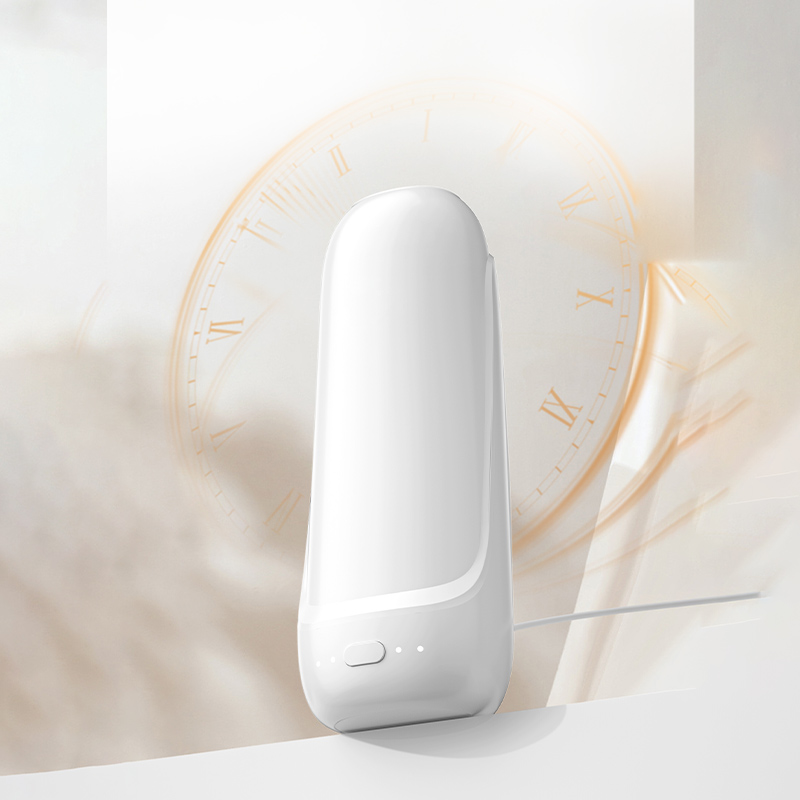
Active diffusers actively propel particles into the air. Ultrasonic models use water and high-frequency vibrations, while nebulizing models use pressurized air to atomize pure essential oils into ultra-fine particles. These units require central placement to utilize their 360-degree mist output effectively. Because they aggressively alter the local air composition, you must keep them away from direct drafts.
Placing an active home aroma diffuser directly under a ceiling fan or next to an open window causes the mist to disperse too rapidly. This dilutes the scent profile before it can establish a baseline concentration in the room. For ultrasonic models, you also need to account for the water weight. The mist is heavier than pure atomized oil. Therefore, ultrasonic units need slightly more vertical clearance to prevent the water droplets from falling out of suspension and dampening the floor.
Targeted micro-zones benefit heavily from scaled-down hardware. A mini tabletop diffuser operates with a lower output volume, making it ideal for close-proximity placement. You can position these units within 3 feet of the user, such as on a desk or a side table. The logic here relies on localized scenting rather than attempting to fill the entire room.
When placing these smaller units, ensure the output nozzle angles away from your face to prevent overwhelming your senses. You must also angle the mist trajectory away from nearby laptops or monitors. Micro-condensation can settle on screens, seep into keyboard switches, and cause internal corrosion in electronic devices. Keep the unit on the periphery of your workspace, pointing toward the open center of the room.
Ultra-compact rooms often lack viable surface area for freestanding devices. Wall-mounted scent machines solve this spatial deficit. These units attach directly to the drywall, freeing up valuable desk or counter space. Mount these devices at waist-to-head height, strictly adhering to the 4 to 6-foot rule. Use proper drywall anchors to ensure the unit remains stable during operation.
Ensure the wall chosen is open and unobstructed by large furniture. The placement logic dictates that the mist trajectory must not fall directly onto seating areas, electronics, or pet beds located below the unit. Concentrated oils can cause skin irritation or damage fabrics over time. Choose a blank section of wall where the mist can fall freely toward the floor without hitting any obstacles.
Passive systems rely entirely on ambient evaporation and environmental movement. They do not plug into an outlet or project a mist. Therefore, their placement logic differs entirely from active units. Reed diffusers require placement in high-traffic transitional zones. Hallways, the edges of interior doors, and entryway consoles serve as optimal locations.
The physical movement of people walking past the reeds creates the necessary kinetic energy in the air to lift the evaporated oils and push them through the small space. Keep them away from direct sunlight or heat sources, such as radiators or heating vents. Excessive heat causes the carrier oils to evaporate too quickly, wasting the product and creating an overpowering scent for a short period before drying out completely.
Diffuser Technology | Optimal Height | Best Location in Small Rooms | Clearance Requirements |
|---|---|---|---|
Ultrasonic / Nebulizing | 4 to 6 feet | Centralized, away from direct drafts | 24 inches from walls, 18 inches overhead |
Mini Tabletop | Desk or table height (approx. 3 feet) | Targeted micro-zones (desks, nightstands) | Angled strictly away from electronics |
Wall-Mounted | 4 to 6 feet | Open walls without furniture below | Clear vertical trajectory to the floor |
Passive (Reeds) | 3 to 5 feet | High-traffic transitional zones | Keep away from direct heat sources |
Balancing sleep benefits with respiratory safety dictates bedroom placement. While placing a unit directly on the nightstand next to your head seems logical for sleep-inducing oils, this proximity often overpowers the senses in a small bedroom. High concentrations of VOCs so close to the respiratory tract can cause irritation, dry throat, or morning headaches. You do not want to breathe in heavy water vapor and concentrated phenols for eight hours straight.
Instead, position the unit on a dresser across the room. This distance allows the fragrance to dilute safely into the ambient air before reaching your bed. Furthermore, keeping the device away from the nightstand protects sensitive bedside equipment. CPAP machines, smartphones, and reading lamps are highly susceptible to continuous moisture exposure. If a CPAP machine draws in atomized essential oils, it can degrade the internal silicone seals and void the medical equipment's warranty.
Home offices require a strict focus on hardware protection. Paper documents, expensive laptops, and external hard drives are highly susceptible to moisture and oil damage. Utilizing a localized device is the safest approach here. Place your aromatherapy diffuser on a raised monitor stand or an adjacent peripheral shelf.
Ensure the mist path points directly into the open center of the room. Never allow the vapor trail to cross over your keyboard or stack of papers. The elevated placement ensures you receive the aromatic benefits to maintain focus without compromising your workspace infrastructure. If you have a dual-monitor setup, place the unit on the far edge of the desk, at least 3 feet away from the monitor vents, to prevent the internal cooling fans from sucking in the moisture.
Bathrooms present a unique environment characterized by high baseline humidity and rapid, forced ventilation. Adding an ultrasonic device to a small bathroom introduces unnecessary water vapor into a space already prone to dampness, peeling paint, and mold. Avoid water-based units here entirely. You do not need to add more water to a wet room.
Opt for nebulizing models or passive reed systems. Place these units on floating shelves or vanity corners. Keep them as far away from the ceiling exhaust fan as possible. If placed too close to the fan, the mechanical ventilation will strip the fragrance from the room before it can neutralize odors. A small shelf above the toilet or next to the sink, away from the shower's direct steam path, works best.
Entryways and studio apartments benefit from maximizing first impressions and utilizing natural foot traffic. In these spaces, you want the scent to greet individuals as they enter without clinging heavily to the immediate doorway. Place the device on a console table near the entrance, but slightly offset from the door swing.
As the door opens and closes, and as people move through the entryway, the physical movement pulls the fragrance and distributes it throughout the open studio area. This strategic placement leverages human kinetic energy to do the work of a fan, ensuring the scent travels deep into the living space. Keep the unit away from the direct blast of the front door to prevent the wind from blowing the mist directly onto the floor.
Water and essential oils degrade interior finishes rapidly. Essential oil solvents possess chemical properties capable of stripping polyurethane from varnished wood, melting specific types of plastics, and permanently staining porous stone countertops. Citrus oils, in particular, are highly corrosive to synthetic finishes. You must use a protective barrier.
Place a ceramic or high-grade silicone tray beneath your active units. This tray catches accidental oil spills during the refilling process and collects any micro-condensation that falls out of the mist plume. Keep all units a minimum of 3 feet away from televisions, computer towers, and audio equipment. Micro-condensation drawn into the cooling fans of electronics causes internal corrosion, shorts out motherboards, and leads to eventual hardware failure.
Household demographics dictate hardware placement. Pets, particularly cats and birds, possess highly sensitive respiratory systems and lack the liver enzymes required to process certain airborne compounds. Specific VOCs, such as tea tree, eucalyptus, and citrus oils, are toxic to felines. Toddlers are prone to pulling hanging cords and tipping over water-filled containers.
In households with animals or young children, low-level placement is a severe liability. Secure your devices on high shelves, out of reach and out of direct jumping paths. Ensure the power cords are tightly managed, zip-tied, and hidden behind heavy furniture to prevent accidental tipping. Never leave a unit running unattended in a closed room with a pet.
Noseblindness occurs rapidly in enclosed spaces. Olfactory fatigue is a biological mechanism where your scent receptors become desensitized to a continuous stimulus to prevent sensory overload. In a room under 150 square feet, running a device continuously guarantees you will stop smelling the fragrance within 20 to 30 minutes. This often prompts users to add more oil unnecessarily, which only worsens the air quality.
Mitigate this by utilizing intermittent timer settings. Program the unit to run for 30 minutes on, followed by 30 minutes off. This pulsing strategy maintains a consistent, noticeable fragrance profile in the small room without overwhelming your receptors or wasting expensive oils. It allows the room to clear slightly before reintroducing the scent, keeping your olfactory system engaged.
The optimal placement for your scenting hardware in a small room relies on a strict combination of elevation, airflow management, and surface protection. You must position the unit on a water-resistant surface, 4 to 6 feet off the ground, keeping it away from direct drafts and sensitive electronics. Choose the specific spot based on the hardware type: use the center of the room for ultrasonic models, high-traffic edges for passive reeds, open walls for mounted units, and localized zones for targeted tabletop devices.
To finalize your setup and protect your space, follow these actionable steps:
Map the airflow in your room by identifying supply vents, return ducts, and drafty windows using the tissue test.
Select a stable, elevated location that provides at least 24 inches of lateral clearance and 18 inches of overhead space.
Place a silicone or ceramic protective tray beneath the unit to prevent oil solvents from stripping wood finishes.
Run a 15-minute test cycle on the lowest output setting to gauge the scent concentration before committing to the location permanently.
Set the device's timer to an intermittent schedule to prevent olfactory fatigue and conserve your essential oils.
A: Placing the unit on the floor is highly ineffective. Floor placement traps the fragrance low to the ground, preventing the mist from catching ambient air currents for proper dispersion. Furthermore, the falling mist will immediately settle on the floor, creating slip hazards on hardwoods and promoting mold growth or dampness in carpets.
A: No, it is not safe. Active units emit water vapor and atomized oils. If placed too close to electronics, the internal cooling fans of TVs and computers will draw this moisture inside. This micro-condensation leads to internal corrosion and hardware failure. Always maintain a minimum clearance of 3 feet from any electronic devices.
A: Leaving the door partially open is highly recommended in small rooms. It regulates the scent concentration by allowing excess VOCs to escape, leverages hallway airflow to distribute the fragrance naturally, and prevents excessive humidity buildup. This practice also helps delay olfactory fatigue by keeping the air dynamic.
A: The optimal location is on a peripheral shelf or the opposite corner of your desk, elevated to chest level. Ensure the output nozzle points directly into the open room and angles strictly away from your face, laptop, and any paper documents to prevent moisture damage and sensory overload.
A: Standard manufacturer guidelines recommend maintaining a distance of 18 to 24 inches from any wall. Placing the unit closer traps the mist against the vertical surface. Over time, the continuous exposure to moisture and essential oil solvents will leave oily residues, peel paint, and damage wallpaper or drywall.


