
Views: 0 Author: Site Editor Publish Time: 2026-09-20 Origin: Site


The family room acts as the highest-traffic, most unpredictable space in a house. This environment destroys delicate scent devices. Standard glass units shatter when bumped by energetic dogs. Small water tanks demand daily refilling from parents who lack free time. Weak misting units fail to cover open-concept living areas. Traditional scented candles present an unacceptable fire hazard around toddlers and pets. Selecting a Home Aroma Diffuser for this space requires moving beyond aesthetics. You must evaluate hardware durability, safety mechanisms, output capacity, power flexibility, and long-term maintenance requirements. We will break down exactly how to choose a device capable of surviving a chaotic household while effectively masking everyday odors.
Durability Trumps Aesthetics: In high-traffic areas, shatter-resistant materials (high-grade plastics, resins, or metal) are mandatory to mitigate tip-over risks and ensure a "Buy-It-For-Life" lifespan.
Capacity Dictates Convenience: Family rooms (typically 300–500+ sq. ft.) require either high-capacity water tanks (300ml+) or waterless nebulizing technology to avoid constant refilling.
Safety is Non-Negotiable: Auto-shutoff features, heatless operation, and careful essential oil selection are critical when children and pets are present.
Power Flexibility Matters: Cordless, rechargeable models eliminate tripping hazards and allow for optimal, centralized placement away from wall outlets.
Technology Type Determines Output: Ultrasonic models offer affordability and slight humidification, while cold-air nebulizers provide stronger, waterless scent dispersion for larger square footage.
Manufacturers frequently overstate coverage areas on their packaging. A device claiming to cover an entire house usually struggles past a single closed bedroom. Open-concept family rooms demand robust dispersion power. You need a baseline output rated for a minimum of 400 square feet. Anything less leaves dead zones where the scent drops off completely. You must also calculate ceiling height into your expectations. Vaulted ceilings drastically increase the total cubic volume of air in the room. An 8-foot ceiling requires far less output than a 12-foot ceiling covering the same floor space. More air volume requires a significantly higher scent output to achieve a noticeable aroma. Airflow from HVAC vents and ceiling fans further dilutes weak mist. Always size up your hardware capacity when dealing with open living spaces to ensure consistent coverage.
Mechanical design dictates survival in a busy home. Tall, narrow units tip over instantly when a child bumps the table. You need a device built with a low center of gravity. Look for wide, heavy bases equipped with non-slip rubberized feet. Non-breakable construction is absolutely mandatory. A chaotic household tests the physical limits of any device you plug in. You must evaluate the mechanical lifespan of the hardware. Focus on robust motor ratings and solid warranty coverage. Avoid cheap, disposable units that burn out after three months of continuous use. Spending slightly more on a durable unit prevents a cycle of constant replacements. High-grade internal components, like sealed bearings in nebulizer pumps, ensure the unit survives years of daily operation.
Daily maintenance drains your limited free time. You should not have to refill a water tank twice a day. Establish a baseline requirement of at least 7 to 10 hours of continuous run time. This aligns perfectly with a busy household schedule. You can turn it on in the morning and forget about it until evening. You must also calculate the ongoing oil consumption rates. Different technologies burn through oils at vastly different speeds. Plan your budget for bulk home fragrance refills accordingly. Understanding your monthly consumable usage prevents surprises. High-output devices consume more oil, but they require less run time to scent a room. Balancing output intensity with oil viscosity helps optimize your refill schedule.
This technology uses water and rapid ultrasonic vibrations to create a fine mist. A small ceramic piezoelectric disc sits at the bottom of the water tank. When powered, this disc vibrates at high frequencies, typically around 2.4 MHz. These rapid vibrations create a standing wave that breaks down water and oil molecules into microscopic droplets. A small internal fan then blows this mist out of the top nozzle. These units are highly accessible and double as mild humidifiers during dry winter months. You can easily find shatterproof plastic models boasting 300ml to 500ml capacities. However, they require daily water refills. If knocked over, they spill water across your furniture or floors. You must clean them frequently to prevent dangerous mold growth inside the dark, damp tank. Hard water also causes calcium scale buildup on the ceramic disc, which severely reduces mist output over time.
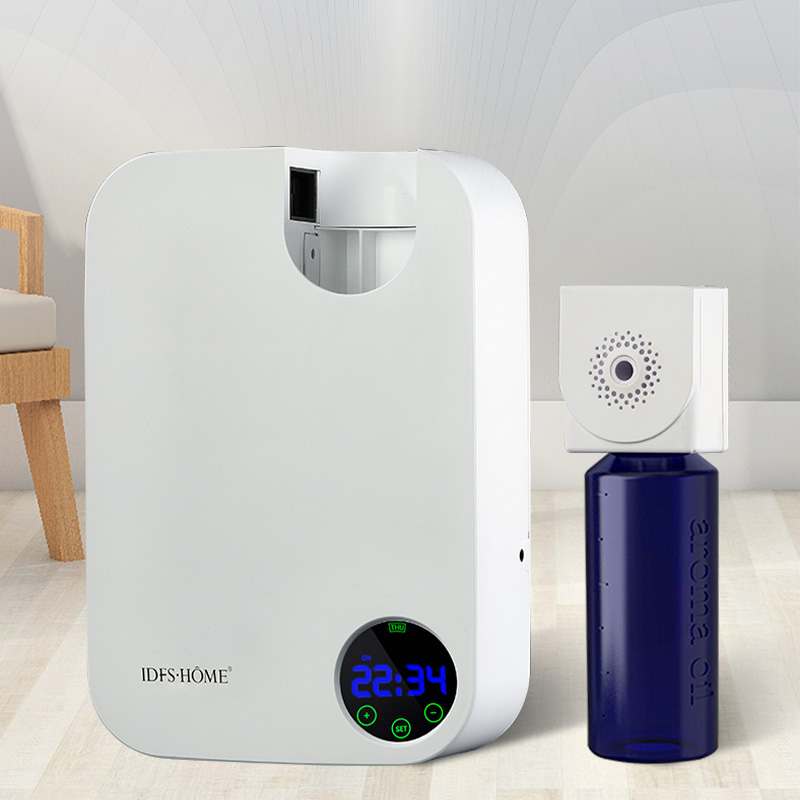
These devices use pressurized air to atomize pure oils. They rely on Bernoulli's principle to function. An internal air pump forces high-velocity air across a small tube connected to the oil reservoir. This creates a low-pressure zone that pulls the oil up the tube. The air blasts the oil against a baffle, breaking it into a micro-fine vapor. They require zero water and zero heat. You face zero water spill risks with this technology. They produce a highly concentrated scent capable of filling large spaces rapidly. Many feature programmable settings for true automated operation. The trade-offs include a higher upfront hardware cost. They also consume fragrance oils much faster than water-based units. Some models emit a noticeable humming noise from the internal air pump during operation, which can be distracting in a quiet room.
Passive systems rely entirely on natural evaporation without any electricity. Reeds wick scented liquid upward through capillary action, releasing it into the surrounding air. The cellular structure of rattan wood makes it highly effective at pulling heavy oils out of the bottle. They offer a flame-free alternative to candles. There are no cords to trip over. They operate completely silently and have zero mechanical failure points. Unfortunately, they provide the weakest scent throw available. They rarely produce enough aroma to cover a large family room. Furthermore, a liquid reed vessel poses a massive spill hazard. If knocked off a coffee table, the concentrated oil permanently ruins wood finishes and stains carpets. Solid-state gels offer a spill-proof passive option, but their scent throw is even weaker than liquid reeds.
Technology Type | Ideal Room Size | Maintenance Level | Spill Risk | Best Application |
|---|---|---|---|---|
Ultrasonic | Small to Medium (up to 300 sq. ft.) | High (Daily refills, weekly cleaning) | High (Water and oil) | Dry climates, moderate budgets |
Cold-Air Nebulizing | Large (400 - 1000+ sq. ft.) | Low (Monthly oil bottle swaps) | Low (Enclosed oil bottles) | Open-concept spaces, automated schedules |
Passive (Reeds) | Micro (Bathrooms, entryways) | Very Low (Flip reeds weekly) | High (Open liquid vessel) | Small, isolated, low-traffic corners |
Glass and ceramic enclosures look beautiful on a styled shelf. However, they carry a massive shatter risk in a real home. A single bump from a golden retriever destroys them instantly. Instead, prioritize BPA-free polypropylene (PP), heavy-duty Acrylonitrile Butadiene Styrene (ABS), or brushed metal. Polypropylene is particularly important for the internal reservoir. Pure essential oils contain terpenes, which act as natural chemical solvents. These terpenes melt or degrade cheaper plastics over time, causing leaks. Durable materials might offer slightly lower aesthetic value, but their survival rate is exceptionally high. Households with toddlers or large dogs must strictly choose impact-resistant material grades to prevent dangerous accidents and ruined flooring.
Automatic waterless shut-off switches are absolutely vital for ultrasonic models. When a tank runs dry, the internal motor quickly burns out if it keeps running. Manufacturers use either mechanical float switches or capacitive sensors to monitor water levels. A built-in sensor detects low water and cuts the power immediately. This switch prevents catastrophic hardware failure and potential fire hazards. Heat-free operation is equally critical across all device types. Eliminating heating elements removes burn risks entirely. This makes the device safe to touch even if a curious child grabs it off a low table. Always check for UL or CE certifications on the power adapter to ensure the electrical components meet basic safety standards.
Power cords create dangerous tripping hazards in busy rooms. Toddlers and pets easily snag dangling wires, pulling the entire unit down to the floor. Battery-operated units eliminate this risk entirely. A cordless essential oil diffuser offers incredible placement flexibility. You can position it on a central coffee table or an isolated floating shelf. You are no longer tethered to a distant wall outlet. Look for units equipped with high-capacity 18650 lithium-ion battery cells. These batteries handle hundreds of charge cycles and can run a nebulizer for several days on a single charge. Keep battery-operated units away from direct sunlight or heating vents to prevent battery degradation.
Intermittent misting modes drastically extend your daily run time. Setting a unit to run on a duty cycle, such as 2 minutes on and 8 minutes off, prevents olfactory fatigue. Your nose naturally stops registering a scent if it sprays constantly into the room. This receptor adaptation is a biological response to constant stimuli. Intermittent bursts keep the aroma noticeable all day while conserving oil. Smart-home integrations via Wi-Fi or Bluetooth add massive convenience. Busy parents can adjust intensity levels or set custom schedules directly from their smartphones. You can program the printed circuit board (PCB) to turn the unit on right before you get home from work.
You must acknowledge the biological realities of airborne scents. Certain oils are highly toxic to dogs and cats. Cats lack specific liver enzymes, like glucuronyl transferase, making them completely unable to metabolize phenols found in many oils. Eucalyptus, tea tree, pennyroyal, wintergreen, and specific citrus blends cause severe respiratory distress or neurological issues in pets. Always verify oil safety with a veterinarian before diffusing anything in a shared space. Stick to generally safer options like lavender or chamomile. Ensure your family room has adequate ventilation. Never lock a pet in a room where a scent device is actively running. They must always have the ability to leave the area if the smell becomes overwhelming.
If you do not use a cordless model, you must route power cords carefully. Pin them securely along baseboards or hide them behind heavy furniture to prevent tripping. Identify optimal placement zones within the room to maximize scent dispersion.
Place the unit on elevated shelving out of direct reach of small children.
Keep units away from direct HVAC return grilles, as these vents suck the scent right out of the room.
Position the device near supply registers to let the natural air current carry the scent across the room.
Avoid placing misting units directly next to sensitive electronics or unsealed wood furniture to prevent moisture damage.
Leverage ceiling fans running on low speed to push the home fragrance diffuser output into every corner of an open-concept space.
Ultrasonic models harbor a hidden, serious risk. Standing water quickly breeds bacteria and mold inside the dark tank. Pumping mold spores into your family room is a severe health hazard. Biofilms form on the plastic walls within days if left uncleaned. You need a realistic, low-effort cleaning schedule to prevent this.
Unplug the unit and empty the water tank completely into a sink.
Add a splash of white vinegar (acetic acid) and fresh water to the tank.
Let the mixture sit for ten minutes to break down sticky oil residue and hard water scale.
Wipe the inside clean with a soft microfiber cloth.
Use a cotton swab dipped in isopropyl alcohol to gently clean the delicate ultrasonic vibrating plate at the bottom.
Rinse thoroughly with clean water and let it air dry completely before the next use.
Measure your family room's exact square footage to determine the minimum output capacity required before shopping.
Inventory your current essential oils and discard any varieties known to be toxic to your specific pets.
Identify a safe, elevated location near an outlet, or commit to purchasing a cordless rechargeable model.
Establish a recurring weekly calendar reminder on your phone for routine cleaning and maintenance.
A: Place it on a high, stable surface out of reach of children and pets. Ensure it sits at least three feet away from unsealed wood furniture, sensitive electronics, and direct HVAC return vents to prevent moisture damage and scent loss.
A: You must clean ultrasonic models at least once a week. Empty any standing water daily. A weekly wipe-down with white vinegar prevents mold growth and removes sticky oil residue that can clog the ultrasonic plate.
A: Yes, provided the device features an automatic waterless shut-off switch. This safety mechanism instantly cuts power when the tank empties, preventing the internal motor from overheating or causing a fire hazard while you sleep.
A: You are experiencing olfactory fatigue, commonly known as nose blindness. Your brain stops registering a constant scent to focus on new environmental changes. Use an intermittent timer setting to keep the aroma noticeable.
A: Yes. Nebulizers use an internal air pump to pressurize and atomize the oil. This mechanical process creates a low, audible humming noise. Ultrasonic models are nearly silent, producing only a faint water trickling sound.
A: BPA-free polypropylene plastic or brushed metal. These materials are highly impact-resistant and will not shatter if a dog knocks the unit off a table. Avoid glass and ceramic entirely in high-traffic homes.


