
Views: 0 Author: Site Editor Publish Time: 2026-08-12 Origin: Site


The sustained growth of the wellness industry and ambient scent marketing has transitioned aromatherapy from a niche consumer interest to a standard commercial requirement. As a low-barrier entry point into the booming self-care market, diffusion hardware drives significant enterprise demand. Businesses—ranging from retail brands and dropshippers to hospitality groups and wellness clinics—face a strict operational challenge. They must source reliable, high-quality diffusion hardware at scale without eroding profit margins or exposing the brand to product failure risks. Shifting from ad-hoc retail purchasing to strategic essential oil diffuser bulk orders allows organizations to control unit economics, customize branding, and ensure consistent hardware quality across their operations or product lines. Understanding the technical specifications, material compatibilities, and logistical frameworks of high-volume purchasing forms the foundation of a profitable aromatherapy deployment.
Defining the primary objectives for high-volume buyers requires a clear understanding of success criteria. Enterprises must maximize return on investment, ensure consistent inventory availability, and maintain brand reputation through highly reliable hardware. When you source diffusion technology at scale, you move away from the vulnerabilities of retail arbitrage and gain direct control over your supply chain. This control translates directly into operational stability. You can forecast inventory accurately, manage seasonal demand spikes, and maintain a consistent product offering year-round without relying on third-party domestic wholesalers who may suddenly discontinue a specific model.
The mathematical advantage of bulk purchasing becomes evident when analyzing economies of scale and unit economics. Buying directly from manufacturers dramatically reduces the per-unit cost. This volume discount absorbs the inevitable impacts of international shipping, freight forwarding, and import tariffs. Diffusers inherently possess a high perceived retail value due to their aesthetic appeal and wellness associations, yet their manufacturing costs remain relatively low. This disparity creates substantial gross margins for retailers. For commercial operators, it allows the deployment of hundreds of units across a facility without exhausting operational budgets.
Market demand for diffusion hardware spans several distinct business models and target demographics. Each segment generates unique revenue streams and dictates specific hardware requirements. Understanding these segments helps you select the exact specifications needed for your order.
Selecting the correct hardware requires matching the diffusion technology to the specific commercial application. Not all diffusers operate on the same physical principles. Deploying the wrong technology in a commercial space leads to poor performance, high maintenance overhead, and user frustration. When evaluating a wholesale diffuser order, you must categorize the solutions based on their internal mechanical mechanisms.
Ultrasonic technology remains the most widely manufactured and distributed category globally. These units utilize a small ceramic disc located at the base of a water reservoir. When powered, this transducer vibrates at ultrasonic frequencies—typically around 2.4 million times per second (2.4 MHz). This rapid vibration creates a standing wave that agitates the water and essential oil mixture until it breaks down into a fine, cool mist. A small internal fan then expels this mist into the air. Because they require water, they also act as mild humidifiers.
From a commercial standpoint, ultrasonic units are ideal for retail, dropshipping, and entry-level consumer markets. Their internal printed circuit board assemblies (PCBAs) and transducers are cost-effective to manufacture, resulting in lower wholesale costs. They offer high visual appeal, often featuring LED lighting and visible mist plumes. They operate quietly, making them perfect for bedroom or office use. However, they require regular maintenance. Users must wipe out the water tank weekly with citric acid or white vinegar to prevent mineral scale buildup on the ceramic disc, which will eventually cause the unit to fail if ignored.
Nebulizing technology operates entirely differently, relying on Bernoulli's principle. These units use a motorized pump to force pressurized air through a small tube. The high-velocity air pulls pure essential oil from a glass reservoir and shatters it against a glass baffle, atomizing the oil into microscopic particles. This process requires absolutely no water and no heat. It ensures that the complex chemical composition of the essential oil remains entirely unaltered during diffusion.
The business application for nebulizers is highly specialized. They are best suited for therapeutic settings, integrative medicine clinics, and high-end retail environments. Because they diffuse pure oil, the scent profile is exceptionally strong and clinically efficacious. A nebulizer can scent a large room in minutes. However, they consume essential oils at a much faster rate than ultrasonic units. They also typically generate a slight humming noise from the internal air pump. Maintenance involves periodically flushing the glass components with rubbing alcohol to clear sticky resin buildup from heavier oils like vetiver or patchouli.
For large-scale enterprise use, standalone tabletop units are insufficient. HVAC diffusers integrate directly into a building's heating, ventilation, and cooling ductwork, usually installed just after the air handling unit (AHU). Alternatively, they operate as high-capacity standalone towers on the floor. They utilize cold-air diffusion technology to break down large volumes of pure oil into a dry nano-mist. This mist travels seamlessly through air ducts without leaving oily residue on the metalwork.
These systems are necessary for hotel lobbies, large retail spaces, casinos, and fitness centers requiring consistent, automated scenting over thousands of square feet. Sourcing these units in bulk involves evaluating programmable timers, Bluetooth or Wi-Fi connectivity for remote management, fluid capacity (often holding 500ml to several liters of oil), and integration compatibility with existing commercial air systems. They require very little daily maintenance, usually only needing an oil refill once a month depending on the programming schedule.
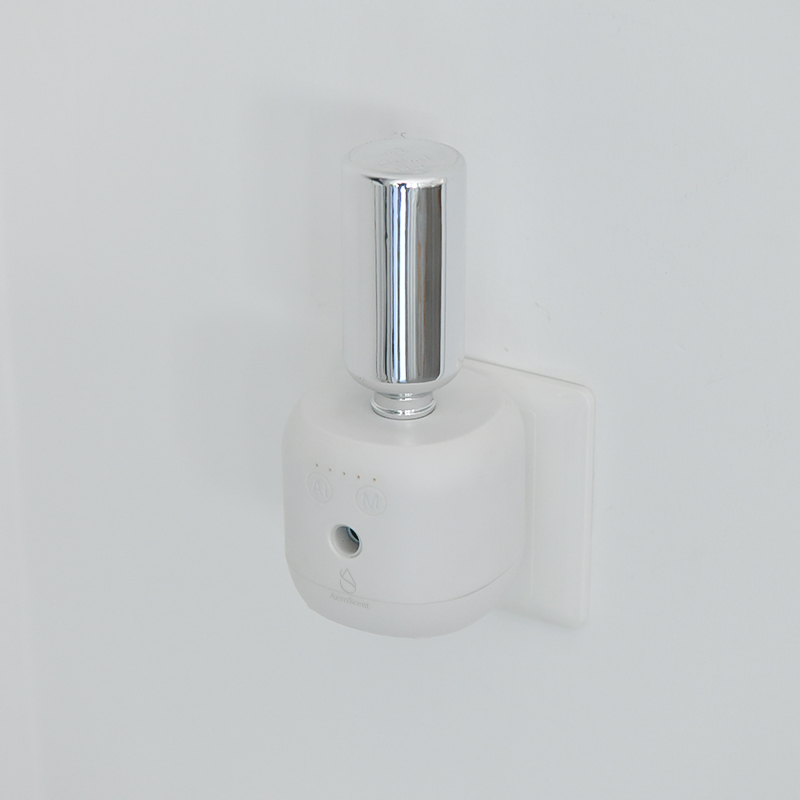
Evaluating hardware specifications against your business needs and target audience expectations is a mandatory step in the sourcing process. A successful bulk aroma diffuser order relies on strict quality control and a deep understanding of how physical materials interact with volatile plant compounds.
Material integrity and oil compatibility represent the highest risk factors in hardware sourcing. Essential oils are highly concentrated, volatile organic compounds. Citrus oils, for example, contain high levels of limonene. Limonene acts as a natural solvent that will rapidly degrade, melt, or crack standard polystyrene or ABS plastics. If a manufacturer uses cheap ABS plastic for the internal water tank to cut costs, the unit will inevitably leak. The water and oil mixture will seep into the base, destroying the internal circuitry and creating a fire hazard. You must explicitly specify the use of Polypropylene (PP) plastic, medical-grade glass, ceramic, or metal for any components that come into direct contact with the oils.
Coverage area and output capacity must align with the intended environment. Tank sizes for ultrasonic units typically range from 100ml to 500ml. A 100ml unit outputting 20ml per hour is sufficient for a standard bedroom or small massage room. A 500ml unit outputting 50ml per hour is required for open-concept living spaces or yoga studios. Over-specifying coverage leads to wasted resources and higher unit costs. Under-specifying results in weak scent dispersion and customer dissatisfaction. You must map the output rate to the square footage of the target room.
Acoustic performance is another non-negotiable specification. In spas, therapeutic settings, and bedroom retail markets, the hardware must operate almost silently. Evaluate the decibel (dB) ratings provided by the manufacturer. Ultra-quiet operation generally falls under 30dB, which is roughly equivalent to a soft whisper. Any mechanical humming from a cheap fan or loud water-trickling sounds will immediately result in product returns or negative reviews in a retail setting. When testing samples, always measure the noise output in a completely silent room.
You must verify certifications and compliance. Importing and selling electronics requires adherence to strict regulatory standards. Verify that the manufacturer holds valid CE certificates for European markets, RoHS documentation proving the restriction of hazardous substances in the soldering and components, FCC certificates for US electromagnetic interference standards, and UL or ETL safety certifications for the power supply. Failing to secure these documents can result in customs seizures at the port of entry or catastrophic safety failures during consumer use.
| Diffuser Technology | Primary Mechanism | Ideal Commercial Application | Maintenance Requirement |
|---|---|---|---|
| Ultrasonic | Vibrating ceramic transducer with water | Retail, Dropshipping, Home Consumer | Moderate (Requires weekly water changes and tank wiping with citric acid) |
| Nebulizing | Pressurized air atomization (Waterless) | Clinics, Spas, High-End Retail | Low (Requires occasional flushing of glass components with rubbing alcohol) |
| HVAC / Tower | Cold-air nano-mist diffusion | Hotels, Casinos, Large Retail Spaces | Very Low (Automated operation, infrequent bulk oil refills) |
Navigating the financial balancing act of high-volume sourcing requires understanding the hidden costs and logistical realities of international manufacturing. The initial unit price quoted by a factory is only one piece of a much larger financial puzzle. You must calculate the true landed cost to understand your actual profit margins.
The first major trade-off involves Minimum Order Quantities (MOQs) versus customization. Buying off-the-shelf units in standard factory colors allows for lower MOQs and significantly faster shipping times. This approach is ideal for businesses testing a new market or requiring rapid inventory replenishment. Conversely, private-labeling or commissioning custom-tooled units—such as unique ceramic covers, specific wood-grain water transfer prints, or custom LED configurations—requires much higher MOQs. Factories must retool their injection molding machines and set up new print runs. This results in longer lead times for production and higher upfront capital. You must balance the desire for brand differentiation against the realities of your cash flow and warehouse storage capacity.
Logistics, tariffs, and warehousing dictate your final landed cost. The landed cost includes the factory unit price, freight forwarding fees, import duties on electronics, and marine insurance. Shipping diffusers involves calculating volumetric weight. Because diffusers are relatively light but take up space, you pay for the volume of the box rather than the physical weight. Shrinking the retail packaging by just a few millimeters can allow you to fit hundreds of additional units into a 40HQ shipping container, drastically reducing the shipping cost per unit. Choosing between air freight, which is fast but highly expensive, and sea freight, which takes weeks but is cost-effective, will heavily impact your margins.
Warranty terms and defect allowances must be negotiated directly into the bulk contract before you wire any deposits. In mass electronics manufacturing, a standard defect rate of 1% to 3% is expected. Instead of shipping defective units back overseas—which is financially unviable due to shipping costs—savvy buyers negotiate a defect allowance. The manufacturer will include an extra 2% of complete units in the shipment free of charge. Alternatively, they will provide spare parts, such as extra PCBA boards, power adapters, or ceramic transducers, to handle local repairs and replacements. Clarifying these terms upfront prevents margin erosion from inevitable hardware failures.
Executing large hardware orders overseas or domestically involves inherent implementation realities and risks. Moving from a digital catalog to physical deployment requires a strict framework for quality assurance and supply chain management. You cannot rely on factory photographs to guarantee product quality.
Implementing a rigorous sample testing protocol is your primary defense against substandard hardware. Never commit to a high-volume order based solely on a single successful test run. Order multiple samples and subject them to a 72-hour continuous burn-in test. Run the units non-stop to check for overheating power supplies, transducer degradation, or fan failures. Test the auto-shutoff sensor by running the unit dry. If the sensor fails, the ceramic disc will overheat and pose a fire hazard. Test the tanks using highly corrosive essential oils, like pure lemon, cinnamon, or clove, to verify the integrity of the PP plastics. Open the casing with a screwdriver to inspect the internal circuitry. Look for clean soldering and ensure the PCBA has a conformal coating to protect it from internal moisture.
Supplier vetting and factory audits separate reliable manufacturing partners from trading companies acting as middlemen. Trading companies mark up the price and have no control over the actual production line. Request factory audit reports, such as ISO 9001 certification, which demonstrates a standardized quality management system. Ask for live video tours of the production line, injection molding machines, and aging testing rooms. Verify their historical export data to ensure they have experience shipping compliant electronics to your target country.
Supply chain volatility remains a constant threat to continuous operations. Mitigating stockouts requires proactive forecasting, especially around seasonal demand spikes like the Q4 holiday shopping period. Factories often reach maximum capacity in September and October. Diversify your supplier base so you are not entirely reliant on a single factory. Maintain a strategic buffer inventory domestically to absorb unexpected shipping delays, port strikes, or raw material shortages. By treating your commercial diffuser sourcing as a dynamic operational process rather than a one-time transaction, you protect your brand's ability to deliver consistent value to your end-users.
High-volume hardware orders require upfront capital and rigorous due diligence. They remain the only sustainable path for organizations looking to scale operations, control profit margins, and implement professional ambient scenting. Relying on retail channels for commercial deployment simply cannot provide the unit economics or quality control necessary for long-term success. By understanding the underlying technologies, material requirements, and logistical frameworks, buyers can confidently navigate the global manufacturing landscape.
When shortlisting potential manufacturing partners, prioritize transparency and compliance over the absolute lowest unit price. A factory that provides clear certification documentation, uses essential-oil-safe PP plastics, offers accurate acoustic ratings, and stands behind clear warranty terms will save you thousands of dollars in returns and brand damage down the line.
To move forward with your sourcing strategy, take the following actionable steps:
A: Standard MOQs typically range from 100 to 500 units for off-the-shelf designs in factory-standard colors. If you require custom branding, bespoke colors, or unique packaging, manufacturers generally increase the MOQ to 1,000 units or more to cover the costs of custom tooling and print setups.
A: Yes, reputable manufacturers provide a standard 12-month warranty on internal electronic components. Because shipping defective units back overseas is cost-prohibitive, manufacturers typically handle claims by issuing credit for future orders or shipping replacement parts with your next container.
A: Polypropylene (PP) and PET plastics are the industry standards for essential oil safety. Standard plastics like ABS or polystyrene will rapidly degrade, melt, and leak when exposed to the natural solvents found in pure essential oils, particularly citrus varieties.
A: Most high-volume manufacturers offer extensive private-labeling services. You can white-label an existing design by adding your logo, or fully private-label a unit by customizing the exterior materials, colors, and retail packaging, though this requires committing to higher minimum order quantities.
A: You must verify that the hardware carries essential electrical and safety certifications for your target region. Look for UL or ETL for North American safety, CE for European compliance, FCC for electromagnetic interference, and RoHS verifying the restriction of hazardous substances.
A: Ultrasonic units use water and vibrations to create a visible mist, making them cost-effective and visually appealing for retail. Nebulizing units use pressurized air to atomize pure oil without water or heat, preserving the oil's chemical integrity, making them ideal for therapeutic clinics.


