
Views: 0 Author: Site Editor Publish Time: 2026-08-08 Origin: Site


Traditional scent management systems rely heavily on wall outlets. This physical tether renders them useless in transient or off-grid environments. Establishing a peaceful atmosphere is often most needed when you are away from home. Travelers and outdoor enthusiasts constantly struggle to maintain environmental consistency. You want odor control and aromatherapy routines in hotels, vehicles, and campsites. Relying on traditional methods introduces severe risks. Packing glass water tanks invites spills inside your luggage. Lighting candles creates immediate fire hazards in confined spaces. Settling for passive air fresheners usually results in ineffective, rapidly fading scents.
A purpose-built battery operated essential oil diffuser solves this problem directly. By evaluating battery autonomy, atomization technology, and form factor, you can select a device tailored to your movement. These portable units deliver consistent scent dispersion regardless of your location. You gain complete control over your immediate environment without compromising safety or convenience.
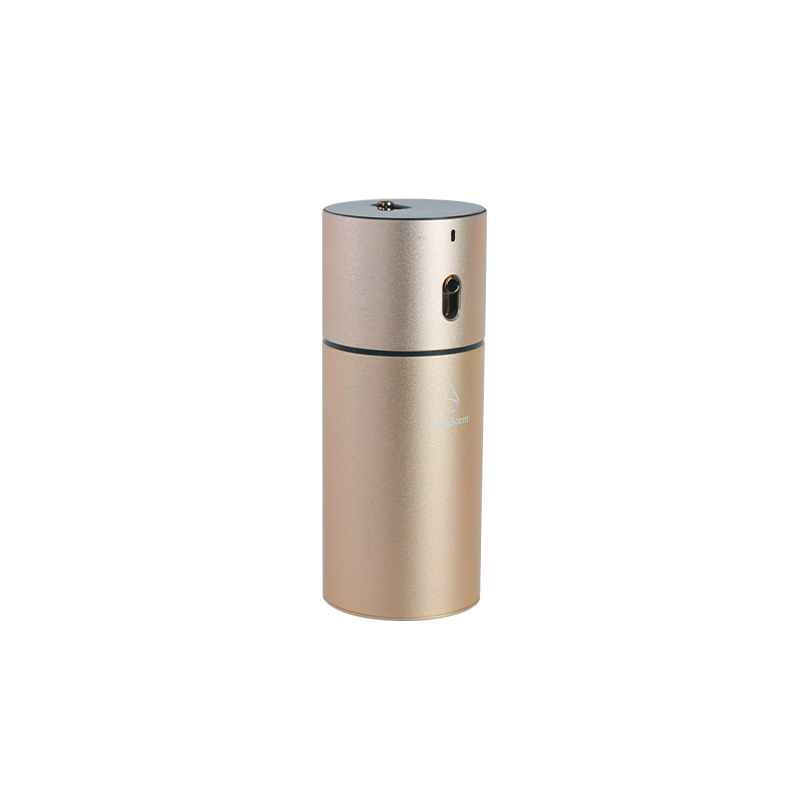
Mobile scent dispersion requires specific baseline success criteria. You need portability, spill resistance, and completely independent power. Traditional plug-in diffusers fail across all these metrics when removed from a stationary home environment. They rely entirely on continuous AC power. They feature bulky, unsealed water tanks designed to sit flat on a stable table. Their construction often utilizes fragile plastics or decorative glass. When you pack a standard unit into a suitcase or place it in a moving vehicle, failure is almost guaranteed. Water spills damage luggage interiors. Lack of power renders the device useless in a tent or a car without an inverter.
International travel exposes another critical flaw in tethered units. Different countries use different voltage standards. If you plug a 110V US diffuser into a 220V European outlet without a heavy step-down transformer, the internal motor will fry instantly. Battery units bypass this entirely. You charge them via USB, which universally adapts to local voltage through standard charging blocks. You never have to worry about blowing a fuse in a foreign hotel room.
Safety considerations multiply when you operate in confined spaces. Hotel rooms, campervans, and tents present unique hazards. Traditional travel candles introduce open flames. Heat-based evaporators create burn risks and require constant monitoring. A modern battery diffuser provides a drastically different safety profile. These devices utilize heatless operation. They atomize oils using pressurized air or ultrasonic vibrations rather than thermal evaporation. This fire-safe design allows you to leave the device running unattended. You can safely neutralize stale hotel room odors while you are out for dinner. You can leave the unit running while sleeping in a confined tent without worrying about oxygen depletion or fire risk.
Scent versatility on the go represents another major operational shift. Passive air fresheners, like cardboard cutouts or gel canisters, lock you into a single synthetic fragrance. They degrade quickly and offer no control over intensity. A portable electronic unit allows you to instantly vary the scent profile. You simply swap the essential oil bottle. You might use peppermint to stay alert during a long drive. Later, you can switch to lavender to promote sleep in an unfamiliar hotel bed. This dynamic adaptability makes active diffusion far superior to static air fresheners.
Understanding the internal mechanics of portable units helps you match the technology to your travel style. Manufacturers primarily utilize three different atomization methods for mobile devices. Each method carries distinct advantages and inherent limitations.
Nebulizing technology represents the gold standard for travel. These units utilize cold-air diffusion mechanics. An internal pump generates pressurized air. This air forces pure essential oil through a microscopic tube. The pressure atomizes the oil into an ultra-fine mist without using any heat or water. The internal pump utilizes Bernoulli's principle. High-velocity air creates a low-pressure zone, pulling the heavy oil up the intake tube. Once it hits the air stream, it shatters into micro-particles. These particles are lighter than air. They float for hours rather than dropping immediately to the floor like heavy water vapor.
The primary travel benefit is absolute spill prevention. Because these units do not use water, there is zero risk of a reservoir leaking inside your luggage. You attach the essential oil bottle directly to the internal nozzle. The system remains sealed. You can toss the unit into a backpack or lay it sideways in a suitcase without ruining your clothes or electronics. Furthermore, nebulizers deliver a much more potent, undiluted fragrance, which works effectively to mask strong odors in unfamiliar environments.
Ultrasonic models dominate the stationary home market, and manufacturers have adapted them for portable use. These devices require you to mix a few drops of essential oil into a small water reservoir. A ceramic disc at the base of the tank vibrates at ultrasonic frequencies. These rapid vibrations agitate the water and oil mixture, breaking it down into a cool, visible mist.
While effective, ultrasonic mechanics present distinct limitations for travel. First, they require access to clean water. If you use hard tap water, calcium and magnesium deposits will quickly calcify on the vibrating ceramic disc. This mineral scale insulates the disc, drastically reducing mist output. You must source distilled water while traveling to maintain peak performance, adding another logistical hurdle to your trip. Second, you must keep the device perfectly upright during operation. If a vehicle takes a sharp turn, the water can slosh, potentially leaking out of the top vent or damaging the internal circuitry. Third, they require higher maintenance. You must empty and dry the water tank before packing the unit away to prevent mold growth during transit.
Evaporative models offer the simplest approach to mobile scenting. These devices use a small, battery-operated fan. You place a few drops of essential oil onto a reusable absorbent pad. The fan blows ambient air across the pad, accelerating the natural evaporation process and pushing the scent into the room.
This category presents a clear trade-off. A fan-based wireless diffuser is extremely lightweight. It contains no pumps, no water tanks, and no delicate glass nozzles. It is highly durable and survives drops easily. However, it offers the weakest scent throw of all three categories. The fragrance dissipates quickly, and the pads require frequent replacement or re-saturation. They work well for personal desk space but fail to fill a standard hotel room.
| Technology Type | Atomization Method | Spill Risk | Scent Intensity | Best Travel Use Case |
|---|---|---|---|---|
| Waterless Nebulizing | Pressurized cold air | Zero (Sealed oil bottle) | Very High | Luggage transit, vehicles, hotel rooms |
| Ultrasonic | High-frequency vibration | High (Open water tank) | Medium | Stationary RVs, tents, temporary offices |
| Evaporative Fan | Airflow over saturated pad | Zero (Absorbed oil) | Low | Personal space, briefcases, backpacks |
Selecting the right device requires looking past aesthetic design. You must evaluate the internal hardware and software features that dictate real-world performance. A unit that looks great but dies after two hours provides no practical value on a camping trip.
Battery capacity dictates operational freedom. Manufacturers measure internal lithium-ion battery capacity in milliampere-hours (mAh). A higher mAh rating generally translates to longer run times. However, you must distinguish between continuous use and intermittent use. A 2000mAh battery might run continuously for 4 hours. If programmed to an intermittent cycle, that same battery might last 40 hours before requiring a recharge.
| Battery Capacity (mAh) | Estimated Continuous Runtime | Estimated Intermittent Runtime | Ideal Application |
|---|---|---|---|
| 1000mAh - 1500mAh | 1 to 2 hours | 10 to 15 hours | Short commutes, daily desk use |
| 2000mAh - 3000mAh | 3 to 4 hours | 25 to 30 hours | Hotel stays, weekend camping trips |
| 4000mAh+ | 6 to 8 hours | 50+ hours | Long road trips, off-grid living |
Charging versatility is equally critical. The most effective travel units utilize universal charging standards, specifically USB-C. This standard maximizes convenience. You do not need to pack a proprietary power brick. You can charge the unit using the same cables you use for your smartphone or laptop. USB-C compatibility ensures you can recharge the device via portable power banks, 12V car chargers, or solar generators while off-grid.
You must match the device's output capacity to your intended environment. A compact car interior requires minimal output. A large hotel suite requires aggressive dispersion. Look for devices offering multiple intensity levels. This scalability prevents overwhelming a small space while ensuring adequate coverage in larger rooms.
Programmable intermittent timers are non-negotiable for waterless units. Pure essential oil is potent. Continuous dispersion quickly leads to olfactory fatigue, where your nose becomes blind to the scent. It also wastes expensive oil. A robust unit allows you to set specific duty cycles, such as running for 10 seconds and pausing for 50 seconds. Emerging smart features, including Bluetooth app controls, allow you to adjust these cycles precisely from your phone. This granular control conserves both battery life and essential oil inventory.
Travel gear takes abuse. Evaluate the construction materials carefully. Cheap ABS plastic absorbs essential oils over time. If oil drips onto a plastic housing, it can melt or warp the finish. Anodized aluminum alloy offers superior impact resistance and ignores chemical degradation. It wipes clean instantly and provides a rigid skeleton that protects the delicate internal pump from crushing forces inside a tightly packed duffel bag.
Form factor determines how easily the unit integrates into your travel routine. If you plan to use the device in a vehicle, look for a cylindrical design that fits securely into standard cup holders. If you plan to pack it in checked luggage, verify that the unit features leak-proof locking mechanisms. The oil bottle must screw in tightly, and the outer shell should protect the internal nozzle from lateral pressure during transit.
Different environments demand different performance profiles. Understanding exactly where you plan to use the device helps narrow down the required feature set.
Hotel rooms often harbor unfamiliar, stale, or chemical cleaning odors. Your primary outcome here is neutralizing these smells quickly and safely. You want to establish a comforting, familiar baseline scent to reduce travel stress.
Temporary workspaces and wellness environments require subtlety. The outcome is establishing a focused or peaceful atmosphere without disturbing colleagues or neighboring practitioners. You need a portable fragrance machine that blends into the background.
Outdoor use shifts the focus from ambiance to utility. You might use citronella, peppermint, or lemongrass to create a localized scent zone that deters insects. The outcome is maintaining this zone without draining your limited power resources. Cold weather severely impacts lithium-ion performance. If you leave the unit on a picnic table overnight in freezing temperatures, the battery will drain rapidly, even if turned off. You must keep the device inside your tent, ideally elevated off the cold ground, to preserve the chemical reaction inside the battery cells.
Vehicle interiors present strict spatial and safety constraints. The outcome is consistent fragrance that does not obstruct driving operations, distract the driver, or spill during sharp turns. Placement matters immensely here. If you position the unit directly under the windshield in the summer sun, the battery will overheat. If you place an ultrasonic model near the AC intake, the heavy water vapor can get sucked into the cabin filter, promoting mildew growth inside your dashboard. Always place waterless units in the center console cup holder, utilizing the vehicle's natural air circulation to distribute the scent evenly into the back seats.
No technology is perfect. Adopting mobile scent systems introduces specific risks and maintenance realities. Acknowledging these trade-offs ensures you manage expectations and maintain the hardware correctly.
The industry generally agrees that waterless nebulizers are safer and more convenient for travel. However, this convenience comes with a financial trade-off. Waterless units consume pure essential oils at a significantly faster rate than ultrasonic models. Ultrasonic devices dilute a few drops of oil into 100ml of water. Nebulizers pull directly from the undiluted bottle. While you get a stronger scent and zero spill risk, your ongoing cost of operation increases due to higher oil consumption.
Not all essential oils perform equally in portable units. Viscosity plays a massive role in reliability. Thin oils, like sweet orange, lemon, or eucalyptus, atomize easily. They flow smoothly through microscopic nebulizer tubes and require very little pump pressure. Thick, resinous oils, like vetiver, patchouli, or sandalwood, create severe operational drag. These heavy oils force the internal battery-powered pump to work harder, draining your battery faster. More importantly, thick oils clog travel diffusers rapidly. If you plan to use heavy resins on the road, you must dilute them with a thinner carrier oil or commit to cleaning the nozzle every single day.
Nebulizing nozzles handle thick, viscous oils. Over time, resin builds up inside the microscopic tubing. This leads to clogs and reduced mist output. Maintaining these units on the road requires discipline. You cannot simply rinse them with tap water. You must run a small amount of high-proof rubbing alcohol through the system to dissolve the resin. Performing this field-expedient cleaning in a hotel bathroom or a campsite can be inconvenient, but it remains necessary to keep the device functional.
Wireless diffusers rely on internal lithium-ion batteries. These batteries have a finite lifespan, typically measured in charge cycles. Furthermore, lithium-ion chemistry is highly sensitive to extreme temperatures. Leaving your device in a parked car during peak summer heat will permanently degrade the battery capacity. The cells can swell, rendering the unit unsafe or entirely dead. You must treat the device like a smartphone, keeping it out of direct sunlight and extreme thermal conditions to preserve battery health.
A: Battery life depends entirely on the capacity and your usage settings. Continuous run-time usually drains the battery in 2 to 6 hours. However, using intermittent run-time settings extends the battery life significantly, often ranging from 20 to 50 hours before requiring a recharge.
A: No. You should never leave devices with lithium-ion batteries in a hot car. Extreme interior temperatures permanently degrade battery capacity and can cause the cells to swell or fail. Additionally, extreme heat degrades the chemical composition of pure essential oils.
A: It depends on the technology. Ultrasonic battery models require water to create a mist. Waterless nebulizing models do not use any water; they use pressurized air to atomize pure essential oil directly from the bottle. Waterless models are highly recommended for travel.
A: Yes. Modern portable units are exceptionally safe for sleeping and confined spaces. They utilize heatless, flame-free operation, eliminating the fire risks associated with traditional candles. Most units also feature automatic shut-off timers, ensuring the device powers down safely while you sleep.
A: Yes, but you must follow TSA guidelines. Devices containing built-in lithium-ion batteries must be packed in your carry-on luggage, not in checked bags. Additionally, any essential oil bottles you bring must comply with the standard liquid limit for carry-on items.
A: For waterless nebulizers, fill an empty oil bottle with a small amount of rubbing alcohol and run the device for 5 to 10 minutes to clear resin clogs. For ultrasonic models, simply wipe out the empty water tank with a paper towel and alcohol.


