
Views: 0 Author: Site Editor Publish Time: 2026-08-20 Origin: Site


Traditional scenting solutions force you to design around wall outlets. This reliance dictates placement, creates aesthetic clutter, and severely limits scent dispersion in central spaces. Short-term rental hosts, educators, and office managers face a distinct challenge. They require consistent, high-quality ambient scenting but cannot commit to permanent HVAC integration. Corded units introduce tripping hazards in high-traffic areas. Candles and incense bring unacceptable fire risks. The shift toward untethered scenting technology solves these spatial limitations. Adopting a wireless essential oil diffuser is a strategic choice. It requires a technical evaluation of battery efficiency, atomization methods, and long-term durability to ensure reliable performance. We will examine the mechanics of battery-powered scenting, evaluate waterless versus ultrasonic technologies, and outline maintenance protocols to maximize device lifespan.
Corded units force perimeter placement. You must position them against walls near power sources. This often results in uneven scent distribution. It creates dead zones in the center of a room where the fragrance never reaches. Older buildings, classrooms, and commercial spaces present severe architectural constraints. Accessible outlets are scarce. When available, they are heavily utilized for essential equipment like computers, monitors, or projectors. You cannot sacrifice a vital power source for ambient scenting.
Tethered designs restrict optimal airflow integration. When you place a unit against a wall, the HVAC return vents often pull the scent right out of the room before it circulates. Central placement allows the fragrance to catch natural room drafts. Without cords, you can position the unit on a central table or island. This utilizes the room's natural air currents to distribute the scent evenly. Relying on wall outlets means you are fighting the room's airflow rather than working with it. The physical limitation of a three-foot power cable dictates the entire atmospheric experience of the space.
Power cords create visual disruption in high-end residential or hospitality environments. A trailing wire ruins the clean look of kitchen islands, dining centerpieces, and minimalist reception desks. You spend significant resources designing a space, only to have a black power cable draped across a countertop. Beyond aesthetics, cords introduce serious liability and safety risks. Trailing wires in high-traffic areas become immediate tripping hazards. This is particularly dangerous in classrooms, event spaces, or public-facing businesses where foot traffic is constant and unpredictable.
Traditional untethered alternatives fail to provide a safe solution. Scented candles or incense introduce open flames, soot, and significant fire hazards. Fire codes in commercial buildings strictly prohibit open flames. A wireless essential oil diffuser serves as a superior, liability-free alternative. It delivers the desired ambient scent without violating safety regulations or endangering occupants. You eliminate the risk of knocked-over candles and the physical danger of tripping over extension cords. The transition to battery power removes these liabilities entirely while maintaining the atmospheric quality of the environment.
You must evaluate the primary technical trade-off: continuous runtime versus scent intensity. High atomization power consumes more energy. Nebulizing pumps require significant torque to pressurize air and break down thick essential oils. You need a framework for evaluating battery specifications against the device's output capacity. Look at the milliampere-hour (mAh) ratings. A 4000mAh battery supports longer operation than a 2000mAh unit, but powerful motors drain both quickly if run continuously.
Set realistic expectations for battery life. Running the unit on maximum output settings depletes the battery in hours. Using intermittent scheduling extends the runtime significantly. For example, programming the unit to run for 60 seconds and pause for 120 seconds reduces battery consumption by two-thirds. This intermittent approach often allows the device to last several days on a single charge. You must match the battery capacity to your operational workflow. If your staff can only recharge devices weekly, you need a high-capacity battery paired with a conservative intermittent schedule.
Waterless nebulizing technology operates differently than traditional water-based ultrasonic diffusion. Nebulizers use Bernoulli's principle. They force pressurized air across a small tube, creating a vacuum that pulls the pure essential oil upward and atomizes it into a micro-fine mist. Ultrasonic models use water and high-frequency vibrations to disperse a diluted mist. Waterless systems are often preferred in a portable diffuser. They eliminate sloshing water during transit and remove water damage risks to surrounding furniture.
Waterless units deliver a pure oil concentration. This provides enhanced aromatherapy and stress-relief benefits. The system delivers undiluted essential oil particles directly into the air, maintaining the therapeutic integrity of the botanical extracts. However, you must address the higher consumable cost. Waterless models use oil faster than ultrasonic alternatives because they do not dilute the fragrance with water. You are trading higher oil consumption for superior scent density, zero spill risk, and true portability.
| Technical Specification | Waterless (Nebulizing) Systems | Traditional Ultrasonic Systems |
|---|---|---|
| Atomization Method | Pressurized air vacuum (Bernoulli's principle) | High-frequency water vibrations |
| Spill Risk During Transit | Zero (sealed oil bottle, no water tank) | High (open water reservoir) |
| Scent Concentration | Pure, undiluted micro-mist | Highly diluted water vapor |
| Consumable Burn Rate | Higher (consumes pure oil directly) | Lower (consumes mostly tap water) |
| Humidity Impact | None (does not add moisture to the air) | Adds localized humidity |
Evaluate the necessity of app connectivity via Bluetooth or Wi-Fi. A smart aroma diffuser offers advanced scheduling features. These tools optimize battery life and oil consumption. Commercial users and Airbnb hosts rely on this set-and-forget functionality. You can program the device to operate only during peak hours, conserving battery and oil when the space is empty. Assess the reliability of smart features when the device moves out of primary Wi-Fi range.
Onboard memory is a mandatory feature for portable units. The device must retain its scheduling data locally. If the Wi-Fi router reboots or the unit is moved to a dead zone, it must continue executing its programmed cycles. Manual overrides remain essential. Ensure the device is simple to set up and operate with or without the app. Cleaning staff or substitute teachers must easily manage the unit, adjust intensity, or power it down without downloading software or pairing a smartphone. Hardware buttons for power and intensity provide necessary operational redundancy.
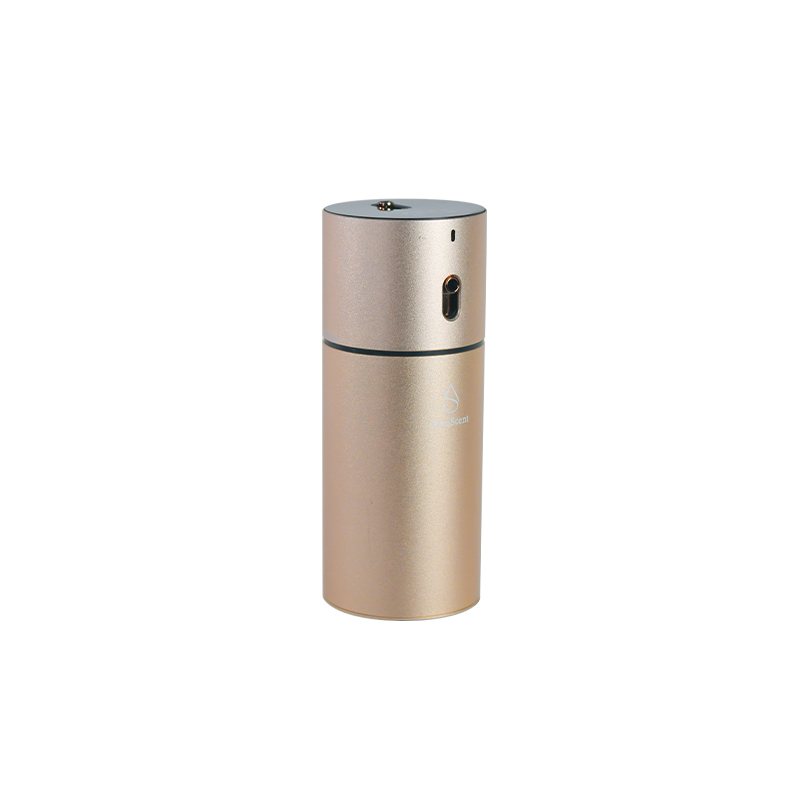
A cordless diffuser elevates the guest experience. You provide premium ambient scenting without requiring guests to interact with plugs, refill water tanks, or troubleshoot hardware. Guest perception and satisfaction improve dramatically when a space smells clean and inviting upon entry. Utilize adjustable intensity settings to ensure visitors enjoy a welcoming aroma. This prevents scent fatigue and keeps them from feeling overwhelmed by a heavy fragrance cloud.
Operational advantages also emerge for cleaning staff. They can easily grip, move, and swap out fragrances during turnovers. Navigating cords or finding available outlets is no longer an issue. Staff can pick up the unit, wipe down the table beneath it, check the oil level, and replace it in seconds. This efficiency scales across multiple properties. You can standardize the scent profile and the hardware across your entire portfolio, ensuring a consistent brand experience without modifying the electrical layout of each individual rental unit.
Educators and office managers have specific environmental needs. They require portability across different rooms, the elimination of tripping hazards, and immediate setup. A teacher can move the unit from a reading corner to the main desk without searching for an extension cord. You must evaluate durability requirements carefully. Warn against purchasing cheap, novelty consumer models. These units often suffer motor burnout or battery failure within months of daily commercial use.
Select robust, commercial-grade units designed for continuous operation. Look for solid aluminum alloy casings, reliable internal pumps, and high-capacity lithium-ion batteries. The physical housing must withstand the rigors of a public environment. Plastic shells crack easily if knocked off a desk. Metal enclosures protect the internal pump and the glass oil bottle from impact damage. Investing in commercial-grade hardware prevents frequent replacement cycles and ensures the scenting strategy remains uninterrupted throughout the school year or fiscal quarter.
Compact footprints offer distinct design advantages. The device blends seamlessly into decor on coffee tables, reception desks, and floating shelves. It eliminates visual clutter entirely. You can place the unit exactly where it looks and performs best. The absence of wires maintains the aesthetic purity of high-visibility areas. Interior designers prefer battery-operated units because they do not compromise the visual integrity of the space.
Central placement also maximizes the efficiency of the scent dispersion. When positioned in the middle of a room, the fragrance radiates evenly in 360 degrees. It catches the natural cross-breezes between windows and doors. This spatial flexibility allows you to experiment with placement until you find the optimal location for scent distribution. You are no longer tethered to the perimeter walls, giving you complete control over the atmospheric dynamics of the room.
True portability depends on specific design elements. Consider the weight, center of gravity, and leak-proof design. A low center of gravity prevents tipping on busy desks or crowded event tables. Evaluate the ease of swapping essential oil bottles. Look for standardized threading that fits common bottle sizes, such as 10ml, 15ml, or 50ml capacities. Proprietary cartridges lock you into expensive refill contracts.
Accessible compartments that do not require tools make maintenance efficient. You should be able to push a button to release the atomizing head and unscrew the bottle. The physical housing must withstand occasional bumps during transport. If the unit is designed to be moved frequently, it needs internal shock absorption for the pump mechanism. A leak-proof seal around the atomizing nozzle ensures that residual oil does not seep into the battery compartment when the unit is tilted during transit.
Battery-operated units have realistic square footage coverage limits compared to plug-in or HVAC-integrated systems. They excel in localized zones. A standard battery-powered nebulizer effectively covers 300 to 800 square feet, depending on the ceiling height and airflow. For large, open-concept spaces, you need a different strategy. A single portable unit will not saturate a 3,000-square-foot hotel lobby.
Use multiple synchronized wireless units to cover expansive areas. This provides comprehensive scenting without the expense of permanent installation or ductwork modification. Space the units strategically to create overlapping scent zones. Place one near the entrance, one in the seating area, and one near the reception desk. Synchronize their schedules so they pulse simultaneously. This modular approach allows you to scale the scent coverage up or down based on the specific dimensions of the room.
Internal pumps in waterless wireless models produce sound. The pressurization process creates a distinct humming or vibrating noise. Analyze the decibel output before deployment. Establish criteria for acceptable noise levels based on the environment. Quiet environments like bedrooms, spas, and classrooms require whisper-quiet operation, typically under 30 decibels. You do not want the pump noise to interrupt a massage session or a quiet reading period.
Active commercial spaces, such as retail stores or busy lobbies, can tolerate slightly higher noise levels without causing operational disruption. The ambient background noise masks the sound of the pump. Always test the unit on its highest setting to gauge maximum noise output. Look for models that feature internal pump isolation mounts. These rubber dampeners absorb the vibration of the motor, preventing the sound from transferring to the table or desk surface and amplifying the noise.
Lithium-ion battery fatigue is a real risk. Constant depletion and recharging degrade the cell capacity over time. Most lithium-ion batteries retain optimal capacity for 300 to 500 full charge cycles. Implement specific mitigation strategies to extend this lifespan. Utilize pass-through charging when the unit is placed near an outlet temporarily. This allows the device to run on wall power without cycling the battery.
Avoid complete battery drains. Recharging the unit when it drops to 20 percent capacity puts less stress on the cells than letting it die completely. Selecting models with replaceable batteries ensures the device outlasts its initial power source. If the battery degrades after two years, you can swap the cell rather than discarding the entire aluminum housing and pump mechanism. Monitor charging cycles and establish a routine charging schedule to prevent deep discharges.
Waterless systems face a specific maintenance reality. Pure essential oils can solidify and clog micro-nozzles. Thicker oils, like vetiver or sandalwood, leave sticky residues that harden over time. You must outline a strict, verifiable cleaning protocol. Run isopropyl alcohol through the system monthly. This dissolves the hardened residue, clears the micro-tubes, and ensures the pump does not overwork itself trying to push air through a blocked nozzle.
Deploying highly portable, valuable devices in semi-public areas carries inherent risks. Rentals, lobbies, and conference rooms expose the equipment to potential theft. A compact, battery-powered device is easy to slip into a bag. Apply mitigation tactics to protect your hardware investment. Use discrete placement to keep the unit out of direct sightlines while still allowing airflow to distribute the scent.
Utilize Kensington lock slots if the hardware supports them. You can tether the unit to a heavy table or desk. Choosing heavier, less pocketable form factors deters casual theft in commercial settings. A solid metal unit weighing three pounds is much less likely to walk away than a lightweight plastic model. Some commercial units offer mounting plates that secure the base to a surface while allowing the top to be removed for oil refills.
A wireless essential oil diffuser provides unmatched spatial flexibility, aesthetic purity, and safety. It is the optimal choice when you need to scent a dynamic environment without the constraints of power cords or the hazards of open flames. Filter your hardware choices by atomization type, evaluate the battery capacity against your operational workflow, and prioritize onboard memory for reliable scheduling.
A: Battery life varies significantly between continuous use and intermittent smart scheduling. On continuous maximum output, batteries may deplete in a few hours. Utilizing intermittent scheduling extends the runtime dramatically, typically ranging from 10 to 50 hours depending on the milliampere-hour rating and motor efficiency. Matching the battery capacity to your operational workflow ensures you only need to recharge the unit once or twice a week.
A: Waterless models offer distinct advantages for portable use. They provide a no-mess benefit by eliminating water tanks, removing the risk of spills during transport. They also deliver a stronger scent concentration for aromatherapy, dispersing undiluted essential oils directly into the environment. This makes them ideal for high-end commercial spaces and rentals where water damage is a concern.
A: Yes, if the device features onboard memory. While cloud dependency requires Wi-Fi for initial setup, onboard memory stores the scheduling data locally. This allows the unit to execute its programmed cycles even when moved out of network range. Manual controls remain critical for offline adjustments, ensuring staff can operate the unit without a smartphone.
A: Portable units excel in localized zones but have coverage limitations in expansive areas. A single battery-operated device may struggle to saturate a large open-concept room exceeding 1,000 square feet. For vast spaces, you will need to deploy multiple synchronized units to create overlapping scent zones or invest in a permanent HVAC-integrated solution.
A: Absolutely. It eliminates open flames, soot, and fire hazards entirely. This makes it the preferred choice for liability-conscious hosts who want to provide a premium olfactory experience without compromising the safety of the property or the guests. It also ensures compliance with strict commercial fire codes.
A: The most effective method is the alcohol-flush technique. Remove the oil bottle, attach a bottle filled with high-percentage isopropyl alcohol, and run the device on high for 15 minutes. This dissolves solidified oil residue and prevents micro-nozzle clogging. Perform this maintenance monthly for optimal longevity and consistent scent output.
A: They are highly safe because they eliminate cord-tripping hazards and electrical tethering. However, you must carefully select pet-safe and child-safe essential oils. Avoid toxic botanical extracts and ensure the device is placed securely on a stable surface to prevent accidental tampering or drops.


