
Views: 0 Author: Site Editor Publish Time: 2026-08-06 Origin: Site


Traditional home fragrance systems force a hard compromise between aesthetics and functionality. Corded diffusers remain restricted to wall outlets, creating visible cable clutter across countertops and nightstands. Meanwhile, open-flame scented candles and smoky incense introduce significant safety hazards. Consumers frequently struggle to optimize scent distribution in central living spaces, bathrooms, or vehicles because power outlets dictate device placement rather than actual airflow dynamics. To solve this, many are shifting toward battery-operated and rechargeable devices. An essential oil diffuser cordless provides the freedom to position fragrance exactly where it works best. This guide evaluates how to select the right unit based on room size coverage, diffusion technology, and daily maintenance requirements, ensuring you achieve optimal aromatherapy without the tether.
Standard corded diffusers impose strict placement limitations. You must position them within three to six feet of a wall outlet. This physical constraint often forces users to place devices in sub-optimal locations, such as hidden corners, floor-level baseboards, or crowded side tables. Visible power cables disrupt interior design aesthetics and create cluttered surfaces on kitchen islands or minimalist desks. Traditional alternatives carry their own distinct drawbacks. Wall plug-ins rely heavily on synthetic fragrances that can trigger respiratory sensitivities. Scented candles introduce open flames, creating severe fire risks and releasing indoor soot that stains walls and ceilings. These tethered and traditional methods fail to provide a flexible, clean, and safe aromatic environment for modern living spaces.
Scent travels primarily via ambient airflow. When you place a diffuser against a wall to reach an outlet, the mist often hits the vertical surface and falls immediately to the floor, severely limiting its reach. Central room placement yields vastly superior olfactory coverage. Positioning a unit on a kitchen island, a living room coffee table, or a dining centerpiece allows the fragrance to catch natural cross-breezes from windows or HVAC vents. The mist disperses evenly in a 360-degree radius. A wireless aroma diffuser enables this central placement. You can align the device with your home's actual airflow patterns rather than its electrical grid, maximizing the impact of every drop of essential oil.
| Room Type | Optimal Cordless Placement | Airflow Benefit |
|---|---|---|
| Living Room | Central coffee table | Catches 360-degree cross breezes from seating area movement. |
| Kitchen | Freestanding island | Intercepts cooking odors before they reach adjacent rooms. |
| Bedroom | Floating shelf or nightstand | Directs mist over the bed without cord tripping hazards in the dark. |
| Bathroom | Vanity counter away from sink | Safely diffuses in a damp environment without outlet proximity risks. |
Removing power cables instantly eliminates dangerous tripping hazards. This proves especially valuable in households with active children or pets who might snag a dangling cord and pull a water-filled device onto the floor, risking both electrical shock and property damage. Furthermore, cordless functionality unlocks safe usage in damp environments. Bathrooms benefit immensely from aromatherapy, but placing corded electronics near sinks or bathtubs violates basic safety protocols. A battery-operated unit allows you to enjoy eucalyptus or lavender vapors during a shower without risking electrical shorts. You simply carry the unit in, run it during your routine, and carry it out.
Daily routines shift from room to room, and your fragrance strategy should adapt accordingly. A portable device moves effortlessly alongside you throughout the day. You can start the morning by eliminating cooking odors in the kitchen using sharp citrus oils like lemon or sweet orange. By midday, you can carry the exact same unit to your home office, diffusing peppermint or rosemary to maintain focus during work hours. At night, the device transitions to your bedroom nightstand to diffuse chamomile or cedarwood for sleep support. This dynamic utility eliminates the need to unplug, untangle, and re-route cables multiple times a day, streamlining your environmental control.
Ultrasonic technology dominates the consumer market due to its versatility and approachability. These devices utilize a small ceramic disc located at the base of a water reservoir. When powered on, the disc vibrates at ultrasonic electronic frequencies—typically millions of times per second. This rapid vibration breaks down the mixture of tap water and essential oils into microscopic particles, releasing them into the air as a cool, fine mist.
Nebulizing diffusers represent the premium tier of portable aromatherapy. Instead of using water and ultrasonic vibrations, these devices employ the Bernoulli principle. A built-in air pump generates pressurized air, which forces pure essential oil through a microscopic glass or plastic tube. The pressurized air atomizes the oil directly from the bottle into an ultra-fine, highly concentrated vapor that disperses instantly into the environment.
| Feature | Ultrasonic Rechargeable | Waterless Nebulizing |
|---|---|---|
| Mechanism | Vibrating ceramic disc | Pressurized air pump |
| Water Required | Yes (Tap or distilled) | No (Pure oil only) |
| Scent Potency | Mild to Moderate | High to Very High |
| Spill Risk | High during transport | Zero |
| Best Use Case | Bedrooms, dry climates | Cars, travel, large open spaces |
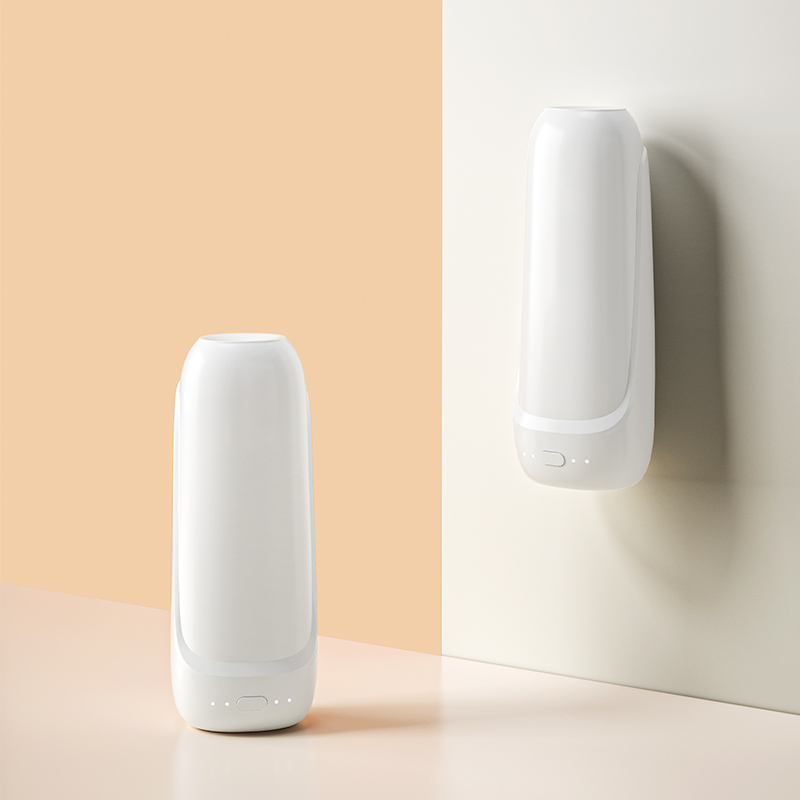
When evaluating a rechargeable diffuser, you must scrutinize manufacturer claims regarding room size limits. Most portable units effectively cover between 100 and 300 square feet. You must compare the dispersion rate of a battery-powered motor against a standard wall-powered unit. In enclosed rooms like bedrooms, bathrooms, or home offices, a battery-operated device performs exceptionally well, filling the space quickly. However, in large, open-concept living spaces with vaulted ceilings, a single portable unit may struggle to saturate the air. You must align the device's output capacity with the specific square footage of your target environment. If you have a massive living room, you might need to place the unit directly next to your seating area rather than expecting it to scent the entire floor plan.
Battery capacity directly dictates the usability of a cordless device. Manufacturers measure lithium-ion battery capacity in milliampere-hours (mAh). A standard portable unit typically features a battery ranging from 2000mAh to 4000mAh. You must evaluate what this rating translates to in real-world hours based on your preferred mist intensity. Analyze the charging interfaces carefully. USB-C has become the universal standard, offering faster charge times and broader compatibility than proprietary charging docks. Additionally, check if the device supports pass-through charging. This feature allows you to operate the unit while it remains plugged into a power source, providing continuous use when the battery runs low.
| Battery Capacity (mAh) | Estimated Continuous Runtime | Estimated Intermittent Runtime |
|---|---|---|
| 1500 - 2000 mAh | 2 - 3 hours | 6 - 8 hours |
| 2500 - 3000 mAh | 4 - 5 hours | 10 - 12 hours |
| 4000+ mAh | 6 - 8 hours | 15 - 20 hours |
Continuous misting rapidly depletes both battery life and essential oil reserves. Programmability stands as a primary evaluation dimension. Examine the availability of timer settings, such as one, two, or four-hour automatic shutoffs. More importantly, look for intermittent misting capabilities. A device that can operate for 10 seconds and then pause for 50 seconds conserves significant energy and oil. Adjustable intervals ensure you are not stuck with a rigid output level. This flexibility prevents olfactory fatigue—a biological phenomenon where your nose becomes blind to a scent due to constant overexposure. Intermittent misting proves especially vital in small, enclosed spaces like car cabins or private office cubicles where continuous output would quickly become overwhelming.
Consumers face a distinct hardware decision when building a home fragrance strategy. You can invest in one premium, high-capacity rechargeable device that travels with you throughout the day. This approach ensures you always have access to your preferred scent profile right next to you. Alternatively, you could purchase multiple corded units to station permanently in every bedroom and living space. The single portable unit offers superior flexibility and reduces total hardware clutter on your counters. However, it requires you to actively remember to move and charge the device. If you forget to plug it in overnight, you lose your morning aromatherapy routine.
Device design inherently impacts functional capacity. There is a direct, inverse relationship between a sleek, unobtrusive design and the volume of water or oil the unit can hold. Minimalist, compact diffusers blend seamlessly into modern decor and fit easily into car cup holders. However, their small footprint dictates a smaller internal reservoir. A 90ml or 120ml capacity means you will need to refill the unit much more frequently than a bulky 500ml corded model. You must balance your desire for aesthetic integration with your tolerance for daily maintenance. If refilling a water tank every evening annoys you, a larger unit or a waterless system might serve you better.
The financial impact of aromatherapy extends far beyond the initial hardware purchase. A premium waterless portable diffuser often requires a higher initial investment. Because it atomizes pure oil without water dilution, your ongoing operational expense for essential oils will increase. You will empty a 15ml bottle of lavender much faster in a nebulizer than in an ultrasonic unit. Conversely, ultrasonic models utilize water to stretch a few drops of oil over several hours. While the ultrasonic device is cheaper to operate daily, it sacrifices scent potency and true portability. You must weigh the initial hardware investment against your long-term budget for high-quality essential oils.
A device designed for frequent movement must possess robust structural integrity. If you plan to carry an ultrasonic unit from the kitchen to the bedroom, it must feature spill-proof locking mechanisms. A simple slip-on plastic cover will inevitably lead to water spills during transit, potentially damaging floors or electronics. Evaluate the build materials carefully. Aluminum alloy or high-grade ABS plastic withstands the bumps and drops associated with mobile use far better than fragile glass or thin ceramic shells. If you intend to use the device in a vehicle, ensure it fits securely in a standard cup holder and won't rattle during transit.
All lithium-ion batteries degrade over time. A device that provides ten hours of runtime out of the box may only provide seven hours after a year of heavy daily use. You must manage this degradation actively to protect your investment. Avoid letting the battery deplete completely to zero percent before recharging, as deep discharges stress the internal battery cells. Try to keep the charge between 20% and 80% when possible. Store the device at room temperature. Leaving a battery-operated unit in a freezing car overnight or in direct summer sunlight on a dashboard will severely accelerate battery capacity loss and can pose a safety hazard.
Cordless units demand strict adherence to cleaning protocols. Waterless nebulizers are particularly prone to clogging. Highly viscous essential oils, such as vetiver, sandalwood, or patchouli, leave thick, sticky residues inside the microscopic atomizing nozzles. If left uncleaned, this residue hardens and destroys the motor's efficiency. You must run a small amount of high-proof rubbing alcohol through a nebulizer weekly to dissolve these blockages. For ultrasonic models, you must wipe the ceramic vibrating plate with a cotton swab dipped in white vinegar to remove mineral scale buildup left behind by tap water.
| Diffuser Type | Primary Maintenance Issue | Cleaning Solution | Recommended Frequency |
|---|---|---|---|
| Waterless Nebulizer | Thick oil clogs in the nozzle | 90%+ Isopropyl Alcohol | Every 1-2 weeks |
| Ultrasonic Rechargeable | Mineral scale on ceramic disc | White Vinegar & Cotton Swab | Every 3-5 days |
| Both Types | Dust in air intake vents | Dry microfiber cloth | Monthly |
Because portable units contain batteries, motors, and liquid reservoirs in a highly compact space, hardware failures can occur. Evaluate the manufacturer's standard warranty period carefully before purchasing. A one-year warranty covering battery failure and motor burnout is the minimum acceptable standard. Furthermore, investigate the availability of replacement parts. The ability to purchase a replacement atomizing nozzle or internal oil tube extends the lifespan of your investment significantly. This prevents the entire unit from becoming electronic waste simply due to a single clogged or lost component.
A: Battery life varies significantly based on the operating mode and battery capacity. On continuous high-output settings, most units last between 2 to 4 hours. When utilizing intermittent misting modes, a fully charged device can last anywhere from 10 to 15 hours before requiring a recharge.
A: Yes. Diffusers offer a completely flame-free and smoke-free method to scent your home. They eliminate severe fire hazards, prevent indoor soot accumulation, and remove the risks associated with open flames, making them vastly safer for households with active children and curious pets.
A: Most modern USB-C units support pass-through charging, allowing you to operate the device while it remains plugged into a power source. However, utilizing this feature constantly can generate excess heat within the unit, which may slowly degrade the lithium-ion battery's overall lifespan over time.
A: It depends on your specific needs. Waterless nebulizers provide a much stronger scent profile and eliminate the mess of water spills, making them perfect for cars and travel. Ultrasonic models consume less essential oil and provide mild humidification, but require water access and carry a higher risk of spilling.
A: Most battery-operated units are engineered for small to medium spaces, typically covering up to 300 square feet effectively. For a large, open-concept living room with high ceilings, a single portable unit may struggle. You will likely require multiple units or a high-output, wall-powered nebulizer to achieve full coverage.
A: For waterless nebulizers, run a few milliliters of high-proof rubbing alcohol through the device to dissolve thick oil clogs in the nozzle. For ultrasonic models, gently wipe the ceramic plate with a cotton swab and white vinegar. Always keep moisture strictly away from the external USB charging port.


