
Views: 0 Author: Site Editor Publish Time: 2026-08-15 Origin: Site


Setting up a relaxation space requires more than just picking a pleasant scent. You have to manage lighting, acoustics, and air quality simultaneously. Buyers often struggle to balance functional aromatherapy needs with aesthetic requirements. You risk buying devices that hum loudly, project glaring lights, or demand constant maintenance. A poorly chosen unit introduces mechanical noise or visual clutter that actively ruins the calming effect you want to achieve.
To make a smart purchase, you must evaluate technical specifications against your specific room layout and lifestyle habits. You need to check acoustic performance, mist output capabilities, daily usability, and precise lighting control. Analyzing these hardware metrics helps you select a device that seamlessly enhances your environment. You want a unit that works quietly in the background without adding maintenance burdens or sensory distractions to your daily routine.
Modern relaxation spaces demand hardware that performs multiple roles efficiently. A dual-function device integrates ultrasonic misting mechanisms with built-in LED arrays to alter both the scent and the visual tone of a room. Inside the unit, a small ceramic disc vibrates at ultrasonic frequencies—typically around 2.4 million times per second. This rapid vibration breaks down water and essential oils into a fine, breathable mist without using heat. Surrounding this internal reservoir, LED diodes project light through the exterior casing.
This integration requires careful engineering. The moisture from the mist cannot interfere with the electrical components of the lighting. When evaluating an LED scent diffuser, the primary success metric is how well these two systems operate in tandem. The mist must remain consistent, and the light must remain flicker-free and evenly distributed across the casing. Poorly sealed units will eventually allow moisture to corrode the LED contacts, leading to hardware failure.
Lighting profoundly impacts human physiology, influencing circadian rhythms and stress levels. Soft, ambient lighting in relaxation spaces helps signal the brain to wind down. Adjustable color temperatures are a baseline requirement for these devices. Warm light, typically in the 2700K to 3000K range, mimics a sunset or candlelight. This promotes melatonin production and prepares the body for rest. Cool light, ranging from 4000K to 5000K, mimics daylight and enhances alertness.
Chromatherapy leverages specific hues to influence mood. Blue and green tones provide calming, restorative properties. Soft reds and oranges provide a grounding, cozy atmosphere. A high-quality unit allows you to cycle through these colors or lock onto a specific shade that matches your current psychological needs. This effectively turns the device into a customizable mood lamp.
| LED Color Setting | Recommended Room Application | Physiological Effect | Ideal Essential Oil Pairing |
|---|---|---|---|
| Warm Amber / Orange | Bedrooms, Reading Nooks | Promotes melatonin, signals sleep | Lavender, Cedarwood, Chamomile |
| Soft Blue / Cyan | Home Offices, Study Areas | Reduces mental strain, calms nerves | Peppermint, Eucalyptus, Rosemary |
| Pale Green | Yoga Studios, Bathrooms | Restorative, balances energy | Lemongrass, Tea Tree, Bergamot |
| Bright White (4000K+) | Kitchens, Active Living Spaces | Enhances alertness and focus | Sweet Orange, Lemon, Grapefruit |
You maximize the potential of your hardware by pairing specific essential oil blends with complementary lighting profiles. This creates a cohesive sensory experience that guides the room's atmosphere. Preparing a bedroom for sleep involves pairing a dim, warm amber light with heavy, sedative oils. The warm light prevents optical overstimulation while the oils lower your heart rate.
If you set up a home office or a morning workout space, you pair bright, cool white or pale blue lighting with invigorating citrus oils. The crisp light signals wakefulness, and the sharp scent profile enhances focus and mental clarity. Aligning the visual and olfactory inputs prevents sensory dissonance. You do not want a bright, flashing neon light running while trying to relax with a lavender blend.
You must have the ability to decouple the device functions. You need the option to run the misting mechanism without any light, or operate the LED array without generating mist. In a bedroom setting, light-sensitive sleepers require total darkness. If a device forces the light to remain on while misting, it becomes completely unusable overnight.
There are times when a room already smells pleasant, but you want to utilize the device as a standalone light diffuser to maintain a soft ambient glow. Independent controls usually manifest as separate physical buttons on the unit's base. One button controls mist intensity and timers. The other cycles through light colors and brightness levels. This decoupling ensures the hardware adapts to your schedule.
The spectrum of lighting options dictates how seamlessly the device integrates into your daily routine. Basic models offer a simple rotating color gradient. This often feels distracting or overly kinetic for a relaxation space. Advanced models provide fixed color selection, allowing you to pause the rotation on a specific hue. Brightness dimming capabilities are equally important. You need to transition the light from a functional reading glow down to a subtle nightlight.
The most important lighting feature for an essential oil diffuser with led lights is a true dark mode. This function must disable all illumination, including the tiny LED indicator lights that show which timer setting is active. Even a small green or red indicator light disrupts sleep in a pitch-black room. Always verify that the device operates in complete darkness before you buy it.
Ultrasonic operation is never entirely silent. The technology relies on a small internal fan to blow the mist up and out of the chimney. The ultrasonic disc also creates a gentle water bubbling sound. In active living spaces, this noise blends into the background. In a quiet bedroom or a focused study area, mechanical hums become highly irritating.
When evaluating acoustic performance, look closely at the decibel (dB) ratings. A unit designed for sleep or focus environments must operate under 30dB. For context, 20dB sounds like rustling leaves, while 30dB is equivalent to a quiet whisper. If a unit hits 40dB, it sounds like a humming refrigerator and will actively keep you awake. Some users enjoy the faint trickling sound of water, finding it similar to a white noise machine. However, the fan motor itself must remain whisper-quiet to prevent auditory fatigue.
Mist output dictates how quickly and intensely a scent fills a room. Continuous misting modes push maximum output, rapidly saturating the air. Continuous exposure to a strong scent leads to olfactory fatigue. Your nose becomes blind to the smell after 15 to 30 minutes. Intermittent misting modes solve this problem. A setting that runs for 30 seconds and then pauses for 30 seconds gives your olfactory receptors a break. This makes the scent noticeable for hours while conserving your water and oil supply.
You should also understand the difference between standard ultrasonic units and nebulizing units. Nebulizers use pressurized air to atomize pure essential oil without water. This results in a much stronger scent profile. Nebulizers are generally louder, consume oil rapidly, and rarely feature integrated LED lighting due to their mechanical design. For a balanced, multi-sensory relaxation space, ultrasonic technology remains the practical standard.
A device that is difficult to fill, clean, or operate quickly ends up unused in a closet. Assess the user interface carefully. Intuitive physical button layouts are more reliable than touch-sensitive panels. Touch panels become unresponsive if your fingers are slightly damp from handling water. Some modern units offer smart home app integrations. This allows you to set schedules and control lighting via your smartphone, which is ideal if you want the room pre-scented before you arrive home.
Daily refilling must be a frictionless process. Look for designs where the top cover lifts off easily without requiring twisting or unlatching. Essential oil residue makes plastic threads sticky over time, causing twist-off lids to jam. The water reservoir needs a clear maximum fill line to prevent overfilling. Overfilling chokes the ultrasonic disc and stops mist production entirely. Consider the risk of water spills on surrounding furniture. A wider base provides better stability against accidental bumps.
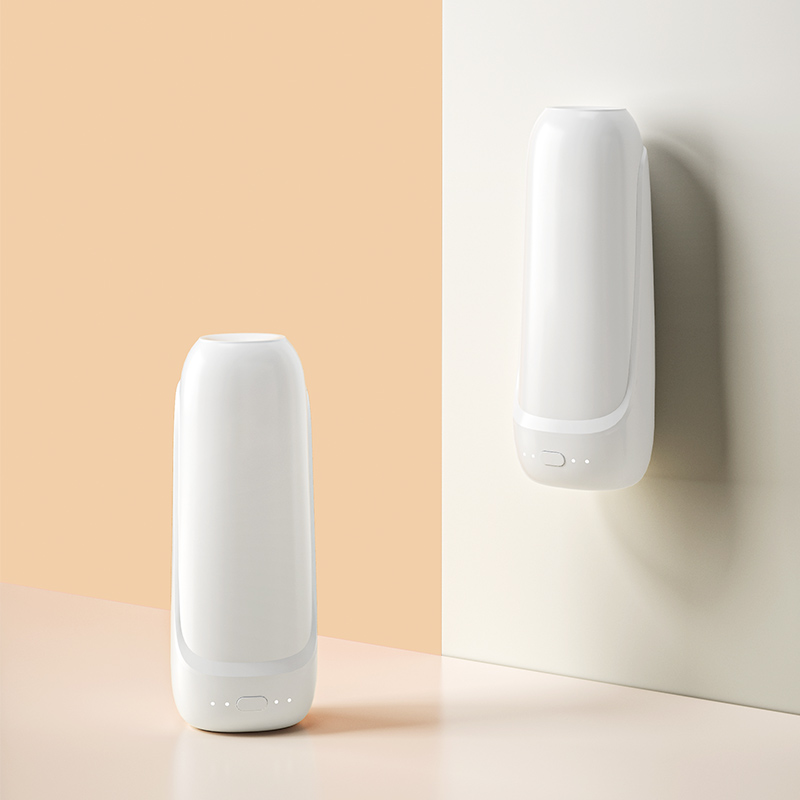
The size of the internal water reservoir directly dictates how long the unit operates before requiring a manual refill. Standard tank capacities range from compact 100ml units to large 500ml models. A 100ml tank typically runs for 3 to 4 hours on continuous mode. This makes it suitable for brief evening relaxation sessions or short bursts of focus at a desk. A 500ml tank runs for 10 to 14 hours, easily lasting through the night or an entire workday.
Selecting the right capacity involves a physical trade-off. Larger tanks provide longer run times and require less frequent maintenance. However, they significantly increase the physical footprint of the device. A bulky 500ml unit looks out of place on a small bedside table or a minimalist floating shelf. A sleek 100ml unit blends easily into the decor but demands daily refilling if you use it regularly.
| Tank Capacity (ml) | Average Run Time (Continuous) | Ideal Room Type | Physical Footprint |
|---|---|---|---|
| 100ml - 150ml | 3 - 5 Hours | Small Bedrooms, Bathrooms, Desks | Compact / Minimalist |
| 200ml - 300ml | 6 - 8 Hours | Standard Bedrooms, Home Offices | Medium / Standard |
| 400ml - 500ml+ | 10 - 14+ Hours | Living Rooms, Open Concept Areas | Large / Prominent |
Manufacturers provide square footage coverage estimates based on the device's mist output rate. This is measured in milliliters per hour (ml/hr). A standard 200ml unit pushing 30ml/hour comfortably scents a 200 to 250 square foot room with closed doors. Larger units pushing 50ml/hour cover up to 400 square feet.
Exercise caution regarding manufacturer exaggerations, particularly concerning open-concept living spaces. Airflow, HVAC systems, and vaulted ceilings drastically dilute the mist and scent. A unit rated for 300 square feet performs exceptionally well in a closed-door bedroom. That same unit struggles to make a noticeable impact in a sprawling, open-plan living room and kitchen area. For large open spaces, position the device directly next to your seating area rather than relying on it to scent the entire floor plan.
Because these devices aerosolize liquids that you breathe, the internal construction materials matter. Pure essential oils, particularly citrus oils containing limonene, are highly corrosive to cheap plastics. The internal water reservoir must be constructed from high-grade, BPA-free polypropylene (PP). This medical-grade plastic resists chemical degradation. It ensures that toxic plastic compounds do not leach into the water and become part of the mist you inhale.
Exterior materials offer more flexibility and dictate the aesthetic value of the unit. Recycled plastics offer durability and lower costs. However, many users prefer a premium decorative diffuser crafted from sustainable materials. Bamboo, ceramic, carved wood, and frosted glass exteriors elevate the device from a simple appliance to a piece of functional home decor. These natural materials blend seamlessly into organic or minimalist interior design schemes.
You must set realistic expectations regarding air quality improvements. These devices effectively cleanse the room of stale odors. They replace cooking smells or pet dander scents with natural plant extracts. They freshen the atmosphere and add a very slight amount of humidity to the immediate vicinity.
They are not air purifiers. They do not contain HEPA filters. They do not pull particulate matter, dust, or allergens out of the air. Certain essential oils have mild antimicrobial properties, but diffusing them does not sanitize the air in a medically significant way. Evaluate these units strictly as mood-enhancing, odor-neutralizing tools rather than mechanical air filtration systems.
Preserving the therapeutic properties of essential oils requires heatless diffusion. Outdated aromatherapy methods relied on heat to evaporate the oils. People used candles under ceramic bowls or heated metal plates. Heat alters the delicate chemical structure of the plant extracts. It destroys their beneficial properties and often produces a burnt, unpleasant odor.
Ultrasonic technology is the modern standard because it operates entirely without heat. The high-frequency vibrations physically shatter the water and oil molecules into a vapor while keeping the liquid at room temperature. This ensures that the scent profile remains true to the original oil and that the therapeutic benefits are delivered intact.
Safety features are non-negotiable for devices designed to be left unattended or used during sleep. A waterless auto-shutoff mechanism is the most critical safety requirement. When the ultrasonic sensor detects that the water level has dropped below the minimum threshold, it must instantly cut power to the vibrating disc and the internal fan.
Without this feature, the device continues attempting to run dry. This causes the internal motor to overheat. It leads to permanent hardware damage, melting plastics, and potential fire hazards. Always verify that the auto-shutoff function is explicitly listed in the product specifications before purchasing.
Owning a water-based device introduces mandatory maintenance routines. Stagnant water and organic plant oils create an ideal breeding ground for mold, mildew, and bacterial growth. Tap water contains minerals that eventually calcify on the ultrasonic disc. This mineral buildup reduces mist output and eventually breaks the machine.
To mitigate these risks, implement a strict weekly cleaning protocol. When evaluating device designs, prioritize reservoir accessibility. Wide-mouth tanks that allow you to easily fit your hand inside for wiping are vastly superior to narrow openings that require specialized brushes.
Introducing a new appliance feels counterproductive if you recently decluttered your space. You justify the device's footprint by highlighting its multi-functional return on investment. A single well-designed unit replaces the need for aerosol room sprays, standalone nightlights, and minor desktop humidifiers. This ultimately reduces overall surface clutter.
Cord management is a practical consideration. Most units require a standard wall outlet. The power supply placement dictates where the device sits on a nightstand or desk. To avoid unsightly cables trailing across furniture, plan your placement near accessible outlets or use cable management clips. Cordless or rechargeable models offer the ultimate convenience of unplugged operation and clean aesthetics. However, they come with inherent battery life limitations, usually requiring a recharge every 3 to 5 hours of use.
Highly stylized exterior shells force a compromise between visual appeal and practical functionality. A heavy ceramic dome or a punched metal casing looks beautiful on a shelf. These dense materials make the unit top-heavy. A top-heavy device is prone to tipping over if bumped, spilling water and oil onto wooden furniture or electronics.
Intricate exterior designs sometimes impede the mist trajectory. If the chimney is recessed too deeply within a decorative shell, the mist hits the sides of the casing. It condenses back into water rather than dispersing into the air. This leads to puddling around the base of the unit. Prioritize designs where the mist nozzle sits flush with or slightly above the exterior shell.
The choice of exterior material drastically impacts how the LED light diffuses into the room. Opaque materials like thick ceramic, wood, or metal block light transmission entirely. On these models, the LED lighting is restricted to a thin glowing ring around the base or a small beam shooting up through the mist chimney. This provides a subtle, understated glow.
If your goal is to use the device as a prominent ambient lamp, choose a unit with a frosted plastic or frosted glass casing. These materials allow for full-body illumination. They turn the entire upper half of the device into a glowing orb. You cannot have both the solid, heavy feel of opaque ceramic and the bright, room-filling glow of frosted plastic. You have to decide which visual effect matters more for your specific room setup.
A: Yes. Most high-quality models feature independent controls. You can leave the water tank empty and turn on the lights. This allows the device to function as a standalone ambient lamp or nightlight without generating any mist.
A: No. Modern LED technology is inherently low-heat and highly energy-efficient. The diodes do not generate enough thermal energy to impact the temperature of the water reservoir or alter the chemical integrity of the essential oils.
A: Standard ultrasonic models operate between 20 and 35 decibels. The noise stems from a small internal fan pushing the mist upward and the gentle bubbling of agitated water. For bedrooms, look for models rated under 30dB to ensure undisturbed sleep.
A: You should use distilled or filtered water. Standard tap water contains minerals like calcium and magnesium. These minerals calcify on the internal ultrasonic disc over time, reducing mist output and requiring frequent deep cleaning.
A: Reduced mist output is almost always caused by mineral buildup or essential oil residue clogging the ceramic ultrasonic disc at the bottom of the tank. Cleaning the disc gently with a cotton swab and rubbing alcohol restores full functionality.
A: Yes, provided the unit is equipped with a waterless auto-shutoff feature. This safety mechanism instantly cuts power to the motor once the water level drops too low. It prevents overheating and eliminates fire hazards while you sleep.


