
Views: 0 Author: Site Editor Publish Time: 2026-08-25 Origin: Site


Many people assume a continuous, heavy fragrance output creates the best aromatherapy experience. This common misconception ignores the biological reality of olfactory fatigue. Nose blindness happens quickly. When exposed to a constant scent, your receptors stop registering it. Maintaining a consistent therapeutic atmosphere becomes impossible. Continuous diffusion carries distinct drawbacks. It rapidly depletes expensive essential oils. It risks respiratory irritation from volatile organic compound (VOC) saturation. Ultimately, it delivers diminishing returns on scent perception. The evidence-backed solution is an intermittent essential oil diffuser. This device balances indoor air quality, safety, and economic efficiency. It achieves this through automated cycle management, providing controlled fragrance release exactly when you need it.
Effective environmental scenting requires consistent perception, safety, and minimal waste. Sheer volume of output does not equal success. A room saturated with heavy mist often becomes overwhelming. You want a balanced atmosphere. The fragrance should remain noticeable without causing discomfort. Proper scenting integrates seamlessly into the environment. It enhances the space rather than dominating it. Achieving this balance demands precise control over how and when the fragrance enters the air. Unregulated output leads to rapid saturation. This creates an environment where the scent becomes a nuisance rather than a benefit. Facility managers and homeowners alike often make the mistake of running units at maximum capacity. They assume more output equals better results. Field experience proves otherwise. High output without resting periods coats surfaces in oil residue. It strains HVAC filters. It wastes product. Success means achieving the target scent density and holding it there through calculated dispersion.
The human olfactory system naturally filters out continuous stimuli. This evolutionary trait prevents sensory overload. Constant diffusion becomes completely ineffective after 30 to 45 minutes. Your brain simply ignores the scent. You might think the machine stopped working. In reality, your nose just adapted to the environment. Olfactory receptors require a resting period to reset. Without this break, they cannot process the aromatic molecules. Continuous exposure wastes the therapeutic properties of the oils. You breathe in the compounds, but you no longer perceive their benefits. Controlled resting phases solve this biological limitation. By pausing the output, you allow the olfactory bulb to clear. When the machine cycles back on, the scent registers as a new stimulus. This biological reality dictates the need for automated cycling to maintain a noticeable fragrance profile.
Continuous active diffusion poses real risks to indoor air quality. Pumping essential oils into a room non-stop can trigger headaches. It causes respiratory stress for sensitive individuals. Particulate matter accumulates rapidly in poorly ventilated spaces. High concentrations of VOCs degrade the air you breathe. Natural essential oils still emit volatile compounds. When these compounds interact with indoor ozone, they can create secondary pollutants like formaldehyde and ultrafine particles. Proper cycling prevents this dangerous saturation. It allows the HVAC system or natural ventilation to clear the air. This maintains a safe baseline of air quality while still providing aromatic benefits. Monitoring indoor air quality meters during continuous diffusion reveals sharp spikes in PM2.5 levels. Intermittent cycling keeps these levels within safe, acceptable ranges, protecting the respiratory health of occupants.
Passive diffusers include reed sticks and ceramic stones. They offer a safe, subtle aroma. However, they lack strong, immediate fragrance impact. You cannot scale them for larger or dynamic environments. They release scent continuously but weakly. Capillary action in reed diffusers depends entirely on ambient airflow and temperature. You have zero control over the intensity. Active intermittent methods provide the necessary control. They deliver potent bursts followed by essential resting periods. This active management ensures the scent reaches all corners of the room effectively. It overcomes the physical limitations inherent in passive evaporation methods. If you need to scent a 500-square-foot living room, a reed diffuser will fail. You need mechanical dispersion to move the molecules through the air volume efficiently.
This mechanism uses water and ultrasonic vibrations. A small piezoelectric ceramic disc vibrates at high frequencies. This creates a fine, cool mist of water and essential oil. These units work best for localized scenting. They also add slight humidity to residential spaces. A typical intermittent scent diffuser in this category features pre-set timers. You might see settings like 30 seconds on and 30 seconds off. Others offer one hour on followed by one hour off. The water dilutes the oil, making the output less intense. This suits smaller rooms where a heavy concentration might become overwhelming quickly. You must clean the water reservoir frequently. Stagnant water breeds mold and bacteria, which the ultrasonic disc will then aerosolize into your breathing space.
Nebulizers use pressurized air based on Bernoulli’s principle. They force air through a small tube, creating a vacuum. This pulls the pure essential oil to the surface. The air then atomizes the oil into micro-particles. They operate without water or heat. This makes them ideal for large spaces and HVAC integration. They deliver a potent therapeutic-grade atmosphere. As an advanced aroma machine, they are highly programmable. You get precise control over the duration of the active burst and the resting phase. You can set them to run for exactly 45 seconds and rest for 3 minutes. This granular control makes them the standard for professional scenting applications where precise atmospheric management is required.
These devices use internal fans to accelerate oil evaporation. You place the oil on a dedicated pad or filter. The fan blows air across the pad, dispersing the scent. They work well for personal spaces, desks, or vehicles. An automatic diffuser of this type offers basic intermittent timing. It achieves this simply by cycling the internal fan on and off. The scent profile can change over time. Lighter top notes evaporate first. Heavier base notes linger on the pad. This limits their effectiveness for complex therapeutic blends. You also have to replace the absorbent pads regularly, adding a maintenance step that other mechanisms do not require.
Heat diffusers use low temperatures to warm the oil. This accelerates evaporation and releases the aroma into the surrounding air. Clinical aromatherapy generally avoids this method. Heat can chemically alter the delicate profile of the oil. It destroys certain therapeutic compounds and can lower the flash point of the liquid. However, some modern electric models do offer basic automated cycling. They turn the heating element on and off to prevent overheating. They remain a niche option for specific applications. They are mostly used for thick, resinous oils that struggle to atomize in cold-air systems. Even with cycling, the risk of thermal degradation makes them less desirable for high-end botanical extracts.
| Mechanism | Primary Dispersion Method | Intermittent Capability | Best Application Environment |
|---|---|---|---|
| Ultrasonic | Water mist via high-frequency vibration | Pre-set intervals (e.g., 30s on/off) | Bedrooms, small residential spaces |
| Nebulizing | Pressurized cold air atomization | Highly customizable (seconds/minutes) | Large open areas, HVAC integration |
| Evaporative | Fan-assisted airflow over a pad | Basic fan cycling | Vehicles, personal desk spaces |
| Heat | Low-temperature warming | Thermostat-controlled cycling | Thick resinous oils, niche uses |
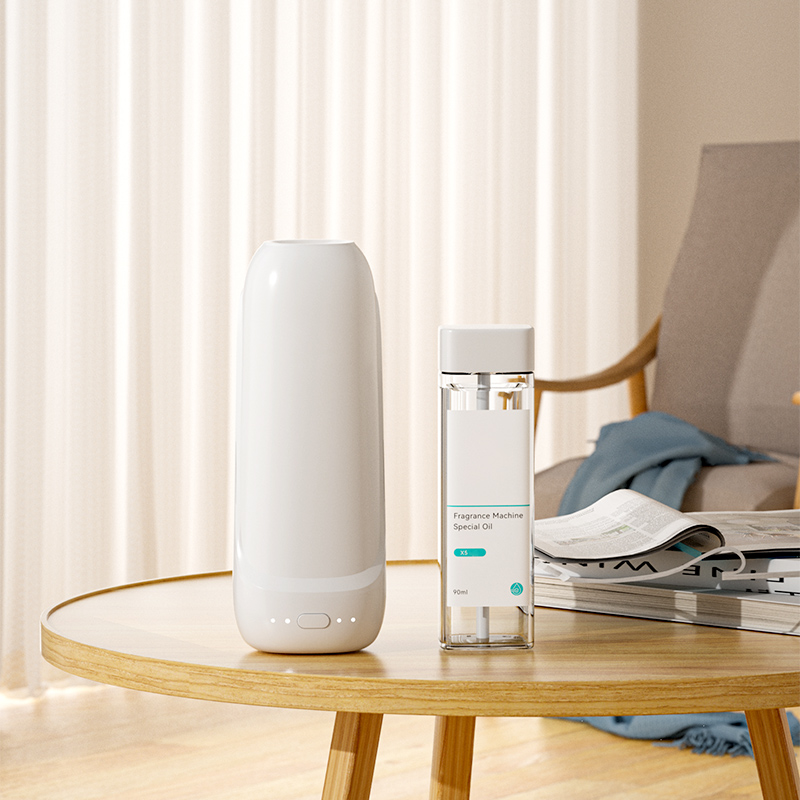
Buyers often face a frustrating pain point. They struggle to distinguish between basic timers and true cycling. A standard diffuser simply turns off permanently after 1, 3, or 6 hours. You must manually restart it. A true intermittent device continuously alternates between active and resting phases. It might run 30 minutes on and 30 minutes off until the reservoir empties. This continuous loop defines real controlled release. It maintains the atmospheric balance without requiring constant human intervention. Always verify the exact programming capabilities before purchasing. Do not confuse a safety shutoff feature with active cycle management. Look for specific duty cycle programming in the technical specifications.
Basic models usually rely on fixed 30-minute cycles. Advanced commercial-grade units allow customization down to the second. Granular control matters. It allows you to adjust output based on oil viscosity and intensity. You can dial back strong oils like peppermint. You can increase the output for lighter citrus blends. Customization also adapts to the specific airflow of the room. A drafty hallway requires longer active bursts. A sealed office needs longer resting phases. Fixed presets force you to adapt your environment to the machine. Customizable intervals adapt the machine to your environment, allowing you to fine-tune the dispersion rate to match the air exchange rate of the HVAC system.
Intermittent cycles directly impact square footage coverage. You must match the output capacity (measured in ml/hour) with room size. Residential needs focus on bedrooms and living rooms. These require lower output to maintain comfort. A small ultrasonic unit handles 200 square feet easily. Commercial applications benefit from higher capacity. Appealing to people in lobbies and retail spaces demands robust distribution. A nebulizing unit can cover 1,000 to 5,000 square feet. If you put a commercial unit in a bedroom, even on an intermittent setting, it will overwhelm the space. Match the hardware capacity to the physical dimensions.
To properly evaluate a space for coverage, follow these field-tested steps:
Pure essential oils act as powerful solvents. They contain highly reactive terpenes. These compounds will degrade inferior materials over time. This degradation accelerates during extended resting phases when the oil sits stagnant inside the machine. You must prioritize medical-grade glass or aluminum components for the internal pathways. High-density, BPA-free plastics like PET or HDPE are acceptable for the reservoir. Cheap ABS plastics will melt or crack under exposure to citrus or pine oils. This leads to leaks and potential damage to your furniture. Material integrity ensures safety and device longevity. It prevents microplastics from leaching into the oil and being dispersed into your breathing air.
A premium device carries a higher upfront hardware cost. However, it drastically reduces your monthly expenditure on essential oils. Continuous ultrasonic models burn through inventory rapidly. You end up refilling them constantly. Controlled cycling extends the life of every bottle. The long-term consumable savings quickly justify the initial investment. You stop wasting premium botanicals on an adapted olfactory system. High-quality oils represent a significant ongoing expense. Preserving them through intelligent cycle management is the most effective way to optimize your budget. The hardware pays for itself through reduced consumable waste, allowing you to stretch a single bottle of oil over several weeks instead of a few days.
Compact, visually appealing designs look great on a shelf. Unfortunately, they often have smaller reservoirs and limited timer functions. They prioritize form over function. Larger, industrial-style units offer superior interval control. They hold more oil and run longer between refills. You must balance how the unit looks against how it performs. A beautiful ceramic diffuser might require daily refilling. A utilitarian metal box might run for a month untouched. Determine your tolerance for maintenance. Choose a design that fits your lifestyle while meeting your technical requirements for reservoir capacity and programming flexibility.
Acoustic realities play a major role in your choice. Nebulizing units utilize internal air pumps. These pumps generate a noticeable hum, usually around 35 to 50 decibels. This noise may disrupt quiet environments like bedrooms or spas. The vibration can also resonate through furniture if not properly isolated. Ultrasonic models operate almost silently. You trade absolute quiet for the raw output power of a nebulizer. If you need to scent a large, noisy retail space, the pump hum does not matter. If you are scenting a massage therapy room, silence is critical. Evaluate the ambient noise floor of your target environment before selecting a mechanism.
| Oil Type | Viscosity Level | Recommended "On" Cycle | Recommended "Off" Cycle |
|---|---|---|---|
| Citrus (Orange, Lemon) | Thin / Light | 3 - 5 Minutes | 10 - 15 Minutes |
| Floral (Lavender, Rose) | Medium | 2 - 3 Minutes | 15 - 20 Minutes |
| Resinous (Vetiver, Myrrh) | Thick / Heavy | 1 - 2 Minutes | 20 - 30 Minutes |
| Mint (Peppermint, Spearmint) | Thin / High Intensity | 1 Minute | 20 - 30 Minutes |
Heavy, viscous oils like vetiver, myrrh, or patchouli present challenges. They can dry and clog atomizers during the "off" cycles. Extended downtime exacerbates this issue. The oil oxidizes and forms a sticky resin inside the micro-tubes. Implement strict, scheduled maintenance protocols to prevent failure. Flush the system weekly using isopropyl rubbing alcohol. Run the machine for ten minutes with just the alcohol in the reservoir. This breaks down residue and keeps the internal components clear. Never use water to clean a nebulizer. Water will not dissolve the essential oil resins and will only push the clogs deeper into the capillary tubes.
Setting the "on" cycle too long negates the benefits. A small, unventilated room quickly becomes saturated. This ruins the safety and effectiveness of the intermittent feature. You risk triggering headaches and respiratory irritation. Adopt a baseline testing framework. Start with the minimum active time. Try 1 minute on and 10 minutes off for nebulizers. Use the industry-standard 30 minutes on and 30 minutes off for ultrasonics. Scale up only based on olfactory feedback and room size. It is always easier to increase the scent intensity later than to ventilate an oversaturated room. Monitor the space for an hour before making any upward adjustments to the duty cycle.
Intermittent cycling does not eliminate toxicity risks. Certain oils remain dangerous to pets. Eucalyptus and tea tree are highly toxic to cats, lacking the liver enzymes to process the compounds. Strong scents can easily overwhelm the developing respiratory systems of infants. Cross-reference your oil selections with veterinary and pediatric safety guidelines. Place the device out of reach. Ensure the area is well-ventilated. Dependents must have the ability to leave the room if the scent becomes uncomfortable. Never trap an animal in a room with an active diffuser, regardless of the cycle settings. Always prioritize ambient safety over fragrance intensity.
A: Industry guidelines recommend 30 to 60 minutes on, followed by 30 to 60 minutes off. This schedule prevents olfactory fatigue and maximizes therapeutic effectiveness. It ensures the scent remains noticeable while maintaining safe indoor air quality. Adjust these times based on room size and oil intensity.
A: Read the specifications carefully. A true intermittent mode continuously alternates between active diffusion and a resting phase until the tank is empty. Basic models only feature an auto-shutoff timer that turns the device off permanently after a set number of hours.
A: Yes, but they require caution. Viscous oils like vetiver or sandalwood can dry and clog the atomizer during the resting phases. You must perform regular maintenance. Flush the unit weekly with isopropyl alcohol to prevent residue buildup and keep the micro-tubes clear.
A: Absolutely. By pausing the output, the device stops wasting oil while your nose is adapted to the scent. This controlled release drastically extends the lifespan of your inventory. It maximizes the return on premium botanicals by only diffusing when you can actually perceive the aroma.
A: They are safer than continuous diffusion because they lower the overall concentration of volatile organic compounds in the air. However, you must still avoid oils that are toxic to specific animals. Always consult veterinary guidelines, keep the device out of reach, and ensure the room is well-ventilated.
A: This is olfactory fatigue, also known as nose blindness. Your brain stops registering continuous scents to prevent sensory overload. The diffuser is still working, but your receptors have adapted. Using an intermittent cycle gives your nose the necessary resting period to reset and perceive the scent again.
A: Choose ultrasonic for small, quiet spaces like bedrooms where you want slight humidity and a subtle scent. Choose a nebulizer for large areas, HVAC integration, or when you need a potent, waterless therapeutic aroma. Nebulizers offer more precise cycle control but generate slight pump noise.


