
Views: 0 Author: Site Editor Publish Time: 2026-08-20 Origin: Site


Modern desk environments require localized, low-impact solutions for aromatherapy. Open flames like scented candles and incense are strictly prohibited in professional offices due to fire codes and shared ventilation systems. Standard room diffusers overwhelm small spaces, lack power flexibility, and risk damaging nearby electronics with excessive moisture output. Professionals need to balance the cognitive, stress-reduction, and air-cleansing benefits of essential oils with strict workspace constraints. These constraints include limited wall outlets, shared airspace, and the safety of expensive computing equipment.
Selecting a reliable unit requires moving beyond aesthetic appeal. You must evaluate technical specifications, form-factor trade-offs, and operational risks. Finding the best usb essential oil diffuser depends on understanding how mist behaves in a micro-environment. This guide breaks down the hardware requirements, spatial limitations, and safety protocols necessary to integrate aromatherapy into your specific desk setup successfully.
Routing a standard 24V AC power adapter across a busy desk creates unnecessary clutter and tripping hazards. Most modern workstations utilize cable management trays that are already at maximum capacity with monitor power cables, laptop chargers, and peripheral wiring. Adding another bulky wall wart to a power strip under the desk is highly inefficient. Modern workspaces rely heavily on USB-A or USB-C hubs, docking stations, or monitor downstream ports for auxiliary power. Standard 5V USB power necessitates cool mist ultrasonic or nebulizing technology. Warm steam diffusion requires higher wattage that standard USB ports simply cannot provide without tripping internal motherboard safety breakers.
Output volume presents another major physical constraint. Standard 300ml to 500ml room diffusers are engineered to saturate up to 500 square feet of open space. They pump out 30ml to 50ml of water per hour. Pumping that volume of mist directly onto a desk creates immediate environmental problems. It rapidly raises the relative humidity in a localized area, causing condensation to form on cold surfaces like aluminum laptop chassis, external hard drives, and mechanical keyboards. A dedicated desktop diffuser solves this by engineering a targeted, low-throw output. These units typically output 10ml to 15ml per hour. This restricts the mist plume to a manageable 3-foot radius, keeping the therapeutic benefits localized to your immediate seating area without altering the humidity of the entire room.
Many office workers initially turn to passive reed diffusers or unheated ceramic stones to avoid power cables entirely. However, passive diffusion creates a distinct operational dilemma. You cannot control the output. Reed diffusers rely on capillary action, constantly pulling oil up the rattan sticks and emitting fragrance into the air. This constant emission easily overwhelms a small cubicle over an eight-hour shift. If you leave the reeds on your desk over the weekend, the scent builds up in the stagnant office air, creating an overpowering environment by Monday morning. Active USB units allow users to turn off the scent during meetings, phone calls, or when leaving the desk for lunch.
You must also distinguish between air cleansing and odor masking. Ambient office odors exist, ranging from lingering microwave lunches to stale HVAC air. While essential oils help purify the immediate air and uplift your mood, you should never use a diffuser merely to mask strong environmental smells. If the office smells poorly, adding heavy ylang-ylang or patchouli oil creates a worse, highly cloying combination. Pair your diffusion with proper ventilation. Overloading a small space with heavy oils to cover up bad odors only leads to headaches and severe olfactory fatigue.
Desk real estate is highly valuable. You cannot sacrifice space meant for documents, mice, and reference materials for an oversized water tank. Establish a strict footprint-to-output ratio before selecting a device. Acceptable desk devices typically measure under four inches in diameter at the base. Despite this small footprint, the device must still deliver a full workday's intermittent run time without requiring constant trips to the breakroom sink. A well-engineered unit balances a compact base with vertical water storage to maximize run time.
Acoustic disruption serves as the second metric for success. Deep work requires intense concentration, and video calls demand quiet backgrounds. Define your acceptable decibel threshold strictly under 30dB. For context, a quiet library registers at about 40dB. Anything louder than 30dB will interfere with your focus and potentially annoy colleagues sitting in adjacent workstations. You must account for both the sound of the internal fan and the trickling sound of the water inside the reservoir.
Ultrasonic technology dominates the compact diffuser market due to its reliability and low manufacturing cost. These devices use a small piezoelectric ceramic disc located at the base of the water tank. When powered by the 5V USB connection, the disc vibrates at extremely high frequencies, typically around 2.4 million times per second (2.4 MHz). This rapid vibration creates a standing wave in the water, breaking the water and essential oils into microscopic particles. A small internal DC fan then propels this fine mist up and out of the nozzle without utilizing any heat.
This mechanism offers whisper-quiet operation, making it highly suitable for intense study or work sessions. It also provides dual-functionality. The device acts as a localized humidifier, which helps combat the notoriously dry air pumped out by commercial office HVAC systems. However, ultrasonic models require regular water access. You also face the risk of micro-condensation settling on your desk surface if you run the device continuously on its highest setting. Furthermore, ultrasonic units require distilled or filtered water. Using hard tap water aerosolizes the calcium and magnesium minerals, leaving a fine white dust on your monitors and black plastic peripherals.
Nebulizing technology takes a completely different approach based on fluid dynamics. These units do not use water. Instead, they rely on Bernoulli's principle. A pressurized air pump forces air through a small tube, creating a vacuum that pulls pure essential oil from the attached glass bottle. The high-velocity air atomizes the oil into a highly concentrated, microscopic vapor that drifts directly into the workspace.
The primary benefit here is the absolute zero risk of water spillage. You never have to worry about knocking over a tank of water onto your mechanical keyboard or important paperwork. Nebulizers deliver potent, immediate aroma without altering the local humidity. The drawbacks include significantly higher essential oil consumption, as the oil is not diluted. The internal air pump also introduces a noticeable motor hum and physical vibration. You often need to place a silicone mat under a nebulizer to prevent it from rattling against a wooden desk. If you do not strictly control a nebulizer with a built-in timer, it will rapidly overpower a small workspace.
Evaporative models use a small internal 5V fan to blow air across a cotton or synthetic pad soaked in essential oils. Heat-based models use low-voltage warming plates to accelerate the evaporation of the oil from a small metal dish. Both variations represent ultra-compact, low-maintenance alternatives for highly restricted spaces where misting is entirely prohibited by facility management.
Position these as secondary options. They require no water and carry zero condensation risk. However, they suffer from uneven scent distribution due to fractional evaporation. Essential oils are complex chemical mixtures. The lighter top notes of the oil (like lemon or sweet orange) evaporate quickly, leaving the heavier base notes (like cedarwood or vetiver) behind. The scent profile changes drastically over a few hours. Furthermore, applying heat can alter the delicate therapeutic chemistry of the essential oils, diminishing their cognitive benefits.
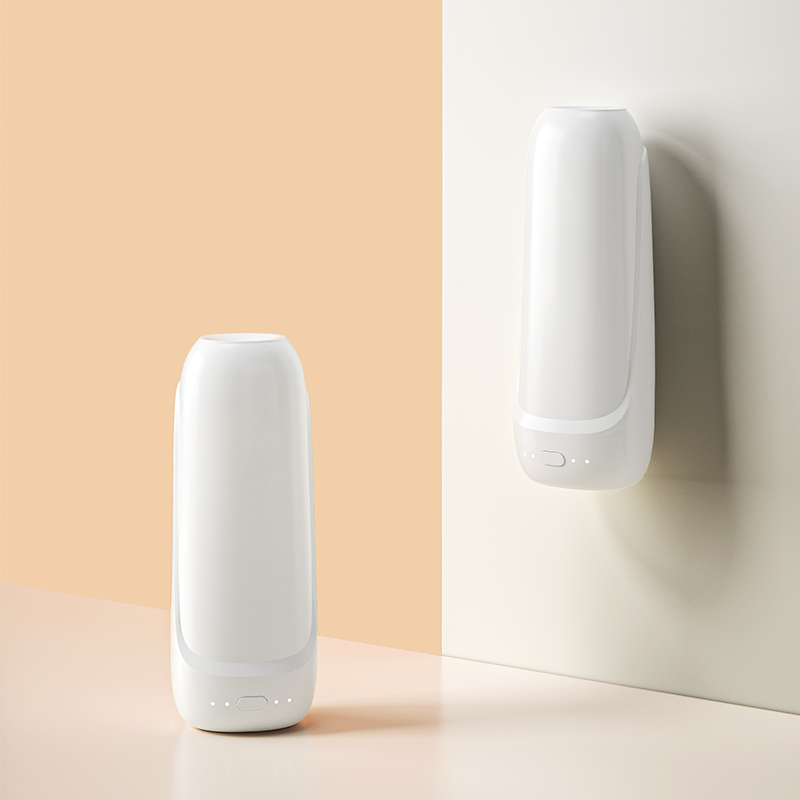
The shift toward USB-C power delivery has vastly improved desktop peripherals. Evaluate devices based on their connectivity standards. USB-C offers more stable power delivery, a reversible connector, and seamless compatibility with modern laptops, docking stations, and minimalist desk setups. You no longer need to keep track of proprietary barrel-jack cables or outdated micro-USB cords that easily bend and break.
Standard 5V requirements mean these devices draw very little power, typically between 4W and 5W. A standard USB 2.0 port provides up to 2.5W, while a USB 3.0 port provides up to 4.5W. Ensure you plug the device into a port capable of delivering the required amperage, such as a dedicated charging port on a monitor hub. Safety remains the top priority. You must verify that any USB diffuser includes a physical automatic shutoff feature. Power fluctuations happen. Water tanks deplete. The device must instantly kill power to the ultrasonic transducer or nebulizing pump the moment the reservoir runs dry to prevent the ceramic disc from overheating, cracking, and causing an electrical short.
You must analyze the operational reality of small tank capacities, which generally range from 50ml to 150ml. A 50ml tank saves maximum space but requires midday refills, interrupting your workflow. A 150ml tank easily lasts an entire 8-hour shift on an intermittent setting, but it consumes more desk area. Choose based on your proximity to a water source and your tolerance for desktop clutter.
Form factor stability matters just as much as capacity. A tall, narrow cylindrical unit easily tips over when you reach across your desk for a pen or a file folder. Emphasize a low center of gravity. Look for wide bases, non-slip rubberized feet, and spill-proof locking lids. These physical design elements are your first line of defense in protecting nearby electronics from accidental bumps and spills.
| Diffuser Technology | Water Required | Acoustic Level | Scent Potency | Condensation Risk |
|---|---|---|---|---|
| Ultrasonic | Yes | Very Low (<30dB) | Moderate | Moderate |
| Nebulizing | No | Moderate (Motor Hum) | Very High | Zero |
| Evaporative | No | Low (Fan Noise) | Low to Moderate | Zero |
Essential oils are highly concentrated, volatile organic compounds. Citrus oils, in particular, contain d-limonene, a compound that acts as a powerful natural solvent. If you place high-phenol or citrus oils into cheap, standard ABS or polystyrene plastics, the oil will literally melt and degrade the material over a few weeks. The plastic clouds, cracks, and eventually leaks water directly onto your desk. This ruins the device and potentially releases toxic plastic compounds into the air you breathe.
Set a strict standard for material integrity. Any plastic components touching the oil and water mixture must be medical-grade, BPA-free polypropylene (PP). Polypropylene is highly chemically resistant and will not break down when exposed to pure essential oils. Beyond plastics, the market now offers excellent sustainable alternatives. Look for units featuring recycled glass reservoirs, ceramic outer shells, or sustainably sourced wood bases. These materials resist chemical degradation perfectly, add weight to the base for stability, and align with eco-conscious workspace designs.
Strategic oil selection transforms a basic mini diffuser into a powerful productivity tool. Pair your device with specific oils to create a comfortable, distraction-free environment tailored to your daily tasks. Peppermint stimulates alertness and helps fight through afternoon energy slumps. Rosemary enhances memory retention and focus during deep work or complex spreadsheet analysis. Sweet orange or bergamot provides immediate stress reduction before difficult client calls without causing drowsiness.
You must actively prevent olfactory fatigue. If you run a scent continuously, your brain's olfactory receptors stop registering the smell after about 15 to 20 minutes. This biological adaptation prompts users to add more oil to the tank, creating an overwhelming environment. Utilize intermittent timer settings. A cycle of 30 seconds on and 30 seconds off maintains mental clarity without desensitizing your nose to the aroma. This also extends the life of your water tank and your expensive essential oils.
Working in a shared office requires strict etiquette regarding artificial or strong fragrances. Address the reality of colleague allergies, asthma, and chemical sensitivities. Many human resources departments enforce strict policies regarding ambient scents and indoor air quality. You must ensure your aromatherapy practice does not cross into someone else's workspace or violate facility rules.
Implement strict control strategies. Select low-throw output modes. Utilize directional nozzles to angle the mist directly toward your own face or chest, rather than letting it drift across the room or over the cubicle partition. Keep the scent strictly within your own desk footprint. If a colleague complains about the smell, switch to a milder oil, reduce the diffusion time immediately, or switch to a personal inhaler.
Water vapor and expensive printed circuit boards do not mix. Strategic positioning prevents hardware disaster. Provide a clear framework for placing the device safely on your desk. Keep the unit at least 24 inches away from laptop intake fans. Laptops pull in ambient air to cool the CPU. If they pull in concentrated water vapor, it condenses directly on the motherboard, causing corrosion and short circuits. Never place the unit directly beneath external monitors or near paper trays where moisture can warp important documents.
Directional control remains a necessity. Adjustable or angled mist nozzles allow you to control the moisture trajectory. Point the mist plume away from your keyboard and mouse. Monitor the desk surface during the first few days of use. If you notice a damp film forming on the wood, laminate, or mousepad, move the unit further away or decrease the output setting to a lower mist mode.
Small, stagnant water tanks left on desks over the weekend breed bacteria and mold rapidly. Pink mold, known as Serratia marcescens, thrives in warm, damp environments like a diffuser reservoir. When you turn the unit on Monday morning, you risk aerosolizing those microbes directly into your breathing zone, which can cause respiratory infections. You must manage the microbial risks associated with poor hygiene.
Execute a realistic, low-friction cleaning schedule suitable for an office environment. Empty any remaining water at the end of every workday. Wipe the inside of the tank with a dry paper towel or tissue. Once a week, run a brief cleaning cycle using a mixture of clean water and a few drops of white vinegar. Let it run for five minutes, empty it, and use a cotton swab to gently clean the ceramic ultrasonic disc at the bottom of the tank. This removes oil residue and mineral scale. This simple protocol ensures the device continues to output clean, non-toxic air.
A: Yes, if placed improperly. Ultrasonic models emit a fine water mist that can cause condensation on cold surfaces. Keep the unit at least 24 inches away from laptop intake fans and monitors. Always use directional nozzles to point the mist plume away from your hardware and mechanical keyboards to prevent internal motherboard corrosion.
A: No. Reed diffusers emit fragrance constantly through capillary action and cannot be turned off. This often overwhelms shared office spaces over a weekend. A USB unit provides on-demand control and intermittent timers, allowing you to regulate the scent throw and prevent severe olfactory fatigue.
A: Run times depend entirely on tank capacity and mist settings. A 50ml tank typically runs for 2 to 3 hours continuously or up to 6 hours intermittently. A 150ml tank can run for 5 to 8 hours continuously, easily lasting a full workday on an intermittent 30-second on/off setting.
A: Peppermint is excellent for boosting alertness and fighting afternoon energy slumps. Rosemary helps improve focus and memory retention during complex analytical tasks. Sweet orange or bergamot are ideal for reducing stress and anxiety before meetings without causing the drowsiness associated with lavender.
A: Empty the water tank daily and wipe it dry to prevent water stagnation. Once a week, wipe the interior with a mixture of water and white vinegar. Use a soft cotton swab to gently clean the ultrasonic disc to remove sticky oil residue and prevent pink mold buildup.
A: Yes. Nebulizers use pressurized air to atomize pure essential oil directly from the bottle without diluting it in water. While they provide a much stronger scent profile and carry zero condensation risk for electronics, they consume expensive oil significantly faster than standard ultrasonic models.


