
Views: 0 Author: Site Editor Publish Time: 2026-08-24 Origin: Site


The aromatherapy market is flooded with diffusion hardware. Users often struggle to choose between heat, evaporative, nebulizing, and ultrasonic models. The main operational challenge is dispersing plant extracts effectively without altering their chemical structure, drawing excess power, or creating mechanical noise. You need equipment that delivers consistent vapor while maintaining the integrity of the raw materials. High-frequency vibration solves this problem. An ultrasonic essential oil diffuser operates as the industry standard by balancing spatial coverage with operational efficiency. Instead of relying on thermal degradation, this hardware uses rapid mechanical agitation to atomize water and oil. This preserves the volatile organic compounds. We will evaluate the internal mechanics, functional trade-offs, and maintenance protocols of ultrasonic diffusion to help you optimize your space.
Establishing a baseline for effective aromatherapy requires looking at three distinct factors. You need a consistent scent throw, strict chemical preservation of the oil, and controlled saturation of the airspace. If a device fails in any of these areas, the therapeutic value of the plant extract diminishes. Understanding how high-frequency vibrations achieve these goals helps clarify why this method dominates the market.
At the base of the water reservoir sits a piezoelectric transducer, commonly referred to as a ceramic disc. When powered on, this component receives an electrical charge that causes it to rapidly change shape. This rapid expansion and contraction create vibrations at ultrasonic frequencies, typically between 1.7 to 2.4 million times per second (MHz). These ultrasonic waves travel through the water, creating alternating high and low-pressure zones. During the low-pressure phase, microscopic vacuum bubbles form in the liquid. When these bubbles collapse during the high-pressure phase, they generate intense localized shockwaves. This process, known as cavitation, breaks the surface tension of the water and the essential oil, shattering them into microscopic droplets usually measuring between 1 and 5 microns in diameter. A small internal fan then forces this fine, inhalable vapor up through the directional nozzle and into the surrounding room.
Thermal degradation destroys clinical aromatherapy. Heat alters the chemical profile of volatile organic compounds (VOCs) found in plant extracts. Every essential oil has a specific flash point and oxidation rate. When you apply heat to an essential oil, the lighter molecules (top notes like citrus or peppermint) evaporate rapidly, while the heavier molecules (base notes like vetiver or sandalwood) burn or become sluggish. This ruins the scent profile and destroys the therapeutic properties. Ultrasonic technology entirely avoids thermal degradation. The cavitation process remains at room temperature, ensuring the oil dispersed into your room is chemically identical to the oil in the bottle.
Diffusion methods fall into two categories: active and passive. Passive methods, like reed diffusers or porous clay stones, rely on natural air currents and ambient evaporation. They offer very weak scent throw and cannot saturate a room effectively because they depend on the room's existing vapor pressure. The ultrasonic method is an active diffusion system. It uses mechanical force to push microscopic particles into the air. This active propulsion ensures rapid, even distribution of the scent profile across the entire designated square footage, overcoming stagnant air pockets.
The ultrasonic agitation of water naturally generates negative ions. Waterfalls and crashing ocean waves produce a similar effect in nature through the Lenard effect. These negative ions attach to positively charged particles in the air, such as dust or pollen, causing them to become heavy and drop to the floor. This process can subtly improve perceived indoor air quality. However, you must distinguish this subtle effect from medical-grade HEPA air purification. The ion generation provides a fresh feeling in the room, but it does not replace dedicated mechanical air filtration systems.
Selecting the right equipment requires understanding how different technologies solve the same problem. Each diffusion method carries specific operational trade-offs regarding noise, oil consumption, and scent intensity. Field experience shows that matching the technology to the specific environment prevents hardware failure and user frustration.
Nebulizing diffusers operate without water. They use pressurized air and a specialized glass capillary tube to atomize pure essential oil directly from the bottle using Bernoulli's principle. This creates a highly concentrated scent profile suitable for massive spaces. However, nebulizers consume essential oils at a rapid pace. A nebulizer might use 10ml of oil in a few days, whereas an ultrasonic model uses only 10 to 15 drops per tank. Furthermore, the air pump inside a nebulizer generates noticeable motor noise and vibration. The glass components are also highly fragile and prone to clogging if thick oils like myrrh or patchouli are used. The water-based ultrasonic method provides a softer, more ambient scent throw while operating in near silence, and handles viscous oils much better when properly diluted in the water reservoir.
Clinical aromatherapy has largely abandoned heat diffusers. As previously mentioned, heat causes oil fractioning and oxidation. Evaporative fan diffusers blow air across a cellulose pad soaked in essential oil. While they do not use heat, they still suffer from fractioning. The fan blows the lighter top notes into the room first. Hours later, only the heavy base notes remain on the pad, creating an unbalanced and often unpleasant residual odor. An ultrasonic aroma diffuser solves this by mixing the oil into water. It disperses the entire aromatic profile simultaneously, ensuring a balanced scent from the first minute to the last.
Whole-home HVAC scenting systems connect directly to your ductwork. They use high-powered nebulizers to push scent through massive, multi-room layouts. These systems require professional installation, tapping into the plenum of the furnace, and carry significant ongoing maintenance costs. Ultrasonic models are not designed for massive, multi-room coverage. Instead, they excel at localized, room-specific diffusion. They allow you to run lavender in the bedroom for sleep while simultaneously running peppermint in the home office for focus. This targeted zone diffusion offers far more flexibility than centralized HVAC dispersion, which forces the entire building to share a single scent profile.
| Diffusion Technology | Scent Intensity | Oil Consumption Rate | Acoustic Output | Risk of Chemical Alteration |
|---|---|---|---|---|
| Ultrasonic | Moderate / Ambient | Low (10-15 drops per cycle) | Very Low (<30dB) | None (Room temperature process) |
| Nebulizing | Very High | High (Atomizes pure oil) | Moderate (Air pump vibration) | None (Room temperature process) |
| Evaporative Fan | Low to Moderate | Moderate | Low (Fan blade noise) | High (Fractioning of notes) |
| Heat / Candle | Low | Low | Silent | Very High (Thermal degradation) |
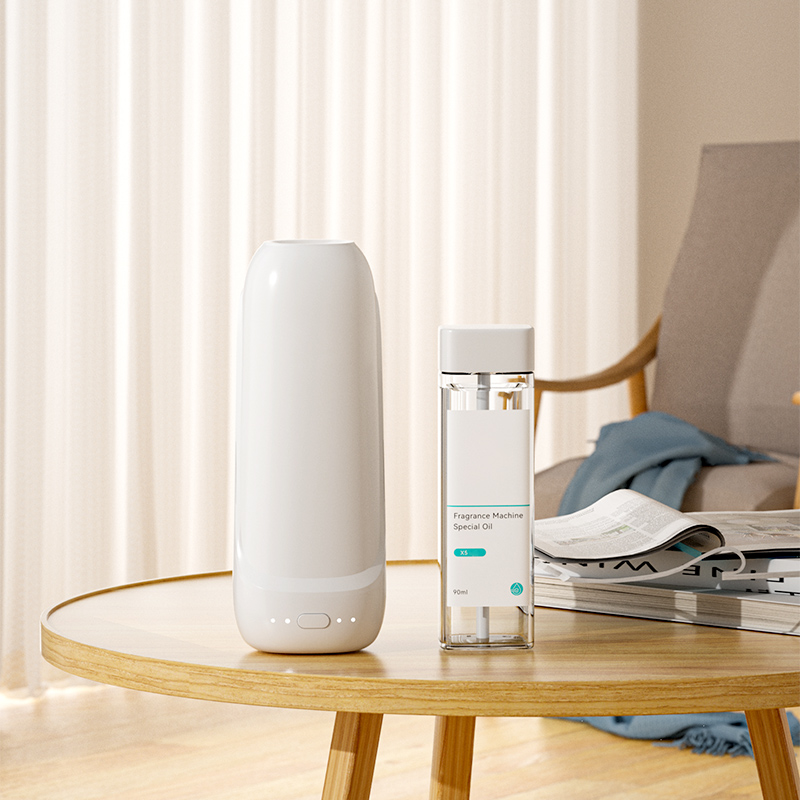
Not all devices perform equally. Evaluating a unit requires looking past the exterior design and analyzing its functional capacity. You must match the machine's specifications to the physical realities of your room, taking into account airflow, square footage, and ambient humidity.
Water tank capacity directly correlates with run-time and square footage coverage. The fluid dynamics of the mist dictate how far the vapor can travel before dissipating. A compact 100ml tank typically runs for 3 to 4 hours and covers approximately 150 to 200 square feet. This makes it ideal for a bedside table or a small bathroom. A larger 500ml tank can run for up to 10 hours and push scent across 300 to 500 square feet. You must recognize the limitations of these devices. An ultrasonic model will struggle to scent a massive, open-concept commercial space with vaulted ceilings. The mist simply disperses too thinly, and HVAC return vents will pull the vapor out of the room before it can saturate the breathing zone. Targeted zone diffusion remains the most effective strategy.
| Tank Capacity | Average Run Time (Continuous) | Optimal Room Size | Best Application |
|---|---|---|---|
| 100ml - 150ml | 3 - 5 Hours | 100 - 200 sq. ft. | Bathrooms, Office Desks, Nightstands |
| 200ml - 300ml | 6 - 8 Hours | 200 - 300 sq. ft. | Standard Bedrooms, Small Kitchens |
| 400ml - 500ml+ | 10 - 14 Hours | 300 - 500 sq. ft. | Living Rooms, Yoga Studios, Lobbies |
Because these devices disperse a water-oil mixture, they provide a secondary benefit. They act as a light essential oil humidifier. The machine adds micro-droplets of moisture to the air. This added humidity provides significant relief for dry sinuses during harsh winter months or in heavily air-conditioned environments where the HVAC system strips moisture from the air. You can achieve synergistic antimicrobial effects by dispersing specific oils alongside this moisture. Oils like tea tree, eucalyptus, and ravintsara carry natural antibacterial properties. Dispersing them in a humidified mist helps cleanse the immediate airspace. However, you must distinguish this output from heavy-duty, medical-grade humidifiers. An ultrasonic device will not raise the humidity of an entire house, but it will comfortably condition the air in a localized zone.
Acoustic performance is critical for therapeutic environments. A standard cool mist diffuser operates at decibel levels usually under 30dB. This is equivalent to a quiet whisper. The only sound you typically hear is the gentle trickle of water and the faint hum of the internal DC fan. This near-silent operation is vital for sleep hygiene, massage therapy rooms, and meditation spaces where mechanical noise would disrupt the environment. Furthermore, these devices boast excellent energy efficiency. They require very low wattage (usually between 10W and 15W) to operate. Built-in auto-shutoff safety features utilize a small sensor pin at the bottom of the tank. When the water level drops below this pin, the circuit breaks, instantly cutting power to the ceramic disc. This allows for completely unattended operation without fire risks or transducer burnout.
Construction materials dictate the lifespan of your device. Essential oils are highly concentrated plant extracts. Citrus oils, in particular, contain high levels of limonene, a compound that acts as a natural solvent. Limonene will quickly eat through cheap, standard ABS plastics, causing the reservoir to crack, warp, and leak water onto your furniture. You must ensure the internal water tank utilizes BPA-free, medical-grade plastics like Polypropylene (PP) or Polyethylene Terephthalate (PET). These materials resist chemical corrosion and maintain their structural integrity over years of daily use. For exterior aesthetics, you can upgrade from standard plastic housings to premium glass, ceramic, or resin covers. These materials offer superior durability and elevate the visual appeal of the space without compromising the internal mechanics.
Long-term reliability depends entirely on user maintenance. Neglecting your equipment leads to poor scent throw, mechanical failure, and potential health risks from microbial dispersion. The internal environment of the water tank is highly susceptible to contamination if left unmanaged.
The type of water you use impacts the machine's performance and the surrounding environment. Using standard tap water is convenient, but it carries a risk. Tap water contains dissolved minerals like calcium and magnesium. The ultrasonic disc atomizes these minerals alongside the water, dispersing them into the air. This often settles on nearby furniture, electronics, and flooring as a fine white mineral dust. Over time, mineral scale also builds up on the ceramic disc. This calcification restricts the transducer's ability to vibrate, severely reducing mist output. Using distilled water solves this problem entirely. Distilled water contains no minerals, ensuring cleaner operation, zero white dust, and a longer lifespan for the ceramic disc. However, purchasing distilled water represents a higher ongoing operational cost. You must weigh convenience against hardware maintenance.
Any device holding standing water presents a biological risk. If you leave water sitting in the reservoir for days without use, mold, mildew, and bacterial growth (such as Pseudomonas) will occur. When you turn the machine back on, it will disperse those harmful microbes directly into your breathing zone. Mitigating this risk requires a strict, non-negotiable cleaning protocol.
While the humidifying effect is beneficial, you must manage it carefully. Running a water-based device continuously in an already damp climate or a poorly ventilated room creates a risk of over-humidification. Excessive ambient humidity encourages mold growth on walls, window sills, and soft furnishings. You should monitor ambient humidity using a simple digital hygrometer. Keep indoor humidity levels between 40% and 60%. If you notice condensation forming on the windows or on the furniture immediately surrounding the device, turn the unit off or switch it to an intermittent timer setting. Proper placement also matters; keep the unit at least two feet off the ground and away from direct sunlight or HVAC return vents.
Choosing the right model requires matching the device's output capacity to the specific demands of the environment. A unit designed for a bedside table will fail in a busy yoga studio, and a high-capacity unit will overwhelm a small office.
For residential bedrooms, prioritize low-capacity models designed for aesthetic integration. A 100ml to 200ml tank is sufficient. Look for devices featuring intermittent timer settings (e.g., 30 seconds on, 30 seconds off). This prevents olfactory fatigue, a biological response where your olfactory receptors become desensitized to the scent after continuous exposure. Sleep optimization also requires dimmable or completely disableable LED lights. You do not want a bright, glowing plastic dome disrupting your circadian rhythm. For living rooms, scale up to a 300ml or 400ml tank to ensure the scent reaches across couches and seating areas. Position the unit centrally, allowing natural room airflow to carry the vapor.
Commercial environments demand robust hardware. Massage therapy rooms, yoga studios, and clinical waiting areas require high-capacity models. Look for tanks exceeding 500ml. These larger units provide continuous run-times of 10 to 12 hours, eliminating the need for staff to constantly refill the water during business hours. Durability is paramount. Select models with heavy bases to prevent accidental tipping by clients. The exterior materials should withstand frequent handling and wiping with commercial sanitizers. In these settings, consistent, passive background diffusion creates a welcoming atmosphere without overwhelming sensitive clients. Ensure the units are placed away from direct drafts or open doors to prevent the vapor from being immediately extracted from the room.
A: No. Ultrasonic hardware relies entirely on rapid mechanical vibration to atomize water and oil. Because the process generates zero heat, it prevents thermal degradation. This ensures the volatile organic compounds remain chemically intact, preserving the exact therapeutic properties of the original plant extract.
A: Yes, it functions as a light humidifier. Because it disperses a microscopic water vapor, it adds moisture to localized areas. This helps relieve dry sinuses in small rooms. However, it lacks the output capacity to replace a heavy-duty, whole-room humidifier designed for severe winter dryness.
A: The primary difference lies in material construction and output volume. Diffusers use specialized, corrosion-resistant plastics designed to withstand highly acidic essential oils. Standard humidifiers use cheaper plastics that oils will melt or crack. Additionally, humidifiers have massive tanks for heavy moisture output, while diffusers use smaller tanks focused on scent dispersion.
A: You should empty the water and wipe the reservoir dry after every single use to prevent bacterial growth. Perform a deep clean once a week by running a mixture of water and white vinegar through the machine for five minutes. This removes residual oil buildup and hard water mineral scale.
A: Caution is required. While the diffusion method itself is safe, many essential oils are highly toxic to cats and dogs. Their livers cannot process certain VOCs. Always consult a veterinarian before diffusing oils around pets, and ensure the room has excellent ventilation with an open door so the animal can leave.
A: No, they are not air purifiers. While the agitation of water generates a small number of negative ions that can drop dust to the floor, this effect is minimal. Any true air-cleansing benefit comes from the antimicrobial properties of specific oils being dispersed, not from the machine filtering the air.


