
Views: 0 Author: Site Editor Publish Time: 2026-07-14 Origin: Site


The intersection of home fragrance trends and feline health has sparked intense debate, driven by a sharp increase in veterinary emergency visits related to airborne toxins. Consumers frequently encounter conflicting information across forums and blogs regarding whether any true pet safe essential oil diffuser actually exists. This confusion leads to decision paralysis for pet owners and serious product liability concerns for retail brands trying to navigate the market safely.
This guide provides an objective, veterinary-aligned framework for evaluating physiological risks and assessing hardware safety. By understanding the mechanics of active, passive, and automated diffusion, you can establish strict safety protocols to protect feline health while making informed choices about home fragrance systems and mitigating long-term exposure risks.
The feline liver operates fundamentally differently from that of humans or dogs. Cats lack the ability to produce glucuronyl transferase, a specific liver enzyme necessary for processing various chemicals. This enzymatic pathway gap prevents them from breaking down specific botanical compounds, particularly phenols, ketones, and d-limonene found in many popular essential oils. Without this metabolic capability, these compounds circulate in the bloodstream rather than being processed and excreted safely through the kidneys.
This deficit creates a severe hazard regarding chronic bioaccumulation. Low-dose, daily exposure to an aroma diffuser can quietly build up in a cat's system over time. What appears to be a harmless daily routine can culminate in sudden liver stress or acute organ failure weeks or months later. The liver simply cannot keep up with the constant influx of airborne particulates, leading to a toxic threshold being crossed without any immediate prior warning signs.
| Metabolic Feature | Human/Canine Liver | Feline Liver |
|---|---|---|
| Glucuronyl Transferase Production | High | Deficient/Absent |
| Phenol Processing Speed | Rapid excretion | Bioaccumulation in bloodstream |
| Toxicity Threshold | High tolerance for ambient VOCs | Extremely low tolerance |
Inhalation presents an immediate risk of respiratory distress. Volatile organic compounds (VOCs) emitted by diffusers irritate the sensitive feline airway. This irritation can potentially trigger acute asthma attacks, coughing, or lipid pneumonia, especially in poorly ventilated spaces where the concentration of aerosolized oils remains high for extended periods.
Dermal absorption and grooming ingestion form another critical exposure pathway. Micro-droplets emitted by an active Essential Oil Diffuser settle on surfaces like floors, furniture, and the cat's coat. Cats walk through these residues, absorbing toxins directly through their paw pads. Subsequently, they ingest concentrated oils during their meticulous self-grooming routines, delivering the toxins directly into their digestive tract.
Certain felines face exponentially higher risks due to pre-existing vulnerabilities. Kittens, senior cats, and felines with pre-existing upper respiratory infections (URI) or feline asthma have compromised immune or respiratory systems. For these animals, even brief exposure to aerosolized oils can trigger severe medical emergencies requiring immediate oxygen therapy and veterinary intervention.
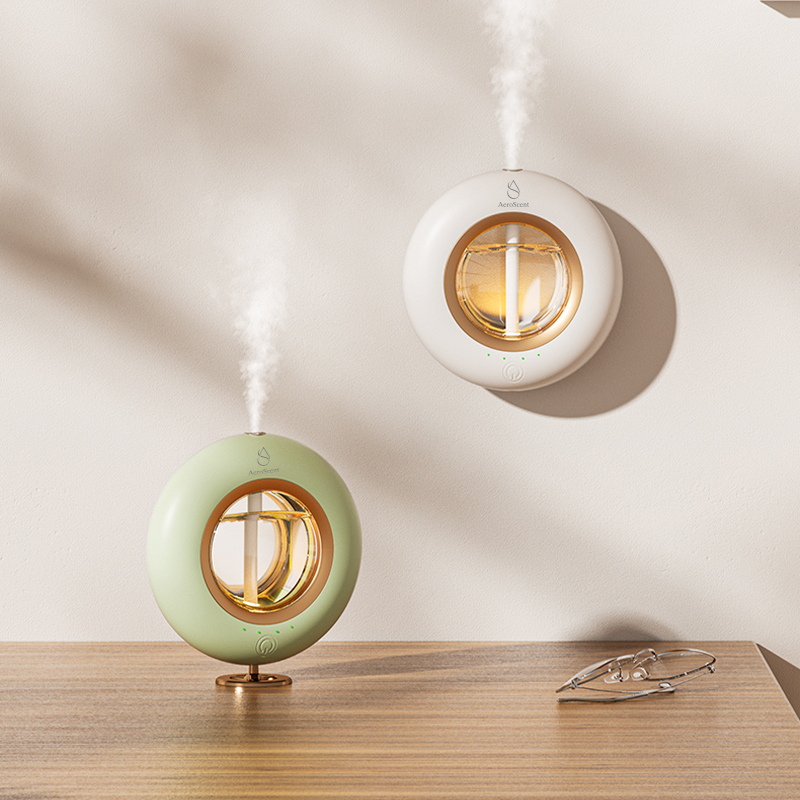
Ultrasonic diffusers utilize high-frequency vibration, while nebulizing diffusers use high-pressure airflow to break concentrated oils into ultra-fine micro-particles. These mechanics propel a significant volume of oil directly into the air, creating a visible mist that carries the botanical compounds throughout the room.
These devices carry a high safety risk for households with cats. The high saturation rates and rapid airborne dispersal significantly increase the risk of respiratory inhalation. Furthermore, the sheer volume of micro-particles guarantees heavy coat contamination and surface residue, maximizing dermal and ingestion risks as the mist settles onto the floor and furniture.
Automated diffusers include wall plug-ins or standalone devices programmed to automatically spray fragrance at set intervals, such as every 1, 2, or 3 hours. They operate continuously without requiring manual activation, often running 24/7 in living spaces or bathrooms.
The primary danger here is automated accumulation. Unmonitored, repetitive bursts can quickly saturate enclosed rooms. This continuous cycle prevents the feline's respiratory system or liver from having adequate time to clear previous exposures, leading to rapid toxic buildup. The lack of manual oversight means the device continues to pump toxins into the air even if the cat is showing signs of distress.
Heat and reed diffusers rely on the passive evaporation of oil mixtures without mechanical projection. They do not force micro-particles into the air, relying instead on natural airflow and ambient room temperature for scent distribution. This method results in a much lower concentration of airborne VOCs.
While airborne particle concentrations are lower, reducing respiratory risk, reed diffusers present a severe physical hazard. Cats are notorious for knocking over objects on shelves and tables. Spilling the base can result in direct dermal saturation of concentrated oils or immediate ingestion of toxic carrier solvents, requiring emergency veterinary care to prevent chemical burns or systemic poisoning.
Veterinary data clearly categorizes several highly toxic botanical compounds that must be avoided entirely in feline households. The veterinary toxicity blacklist includes Tea Tree (Melaleuca), Eucalyptus, Citrus (d-limonene), Peppermint, Pine, Wintergreen, Ylang Ylang, Cinnamon, and Clove. Exposure to these oils can cause severe neurological and hepatic damage, often presenting as tremors, ataxia, or acute liver failure.
Retail consumers must also avoid undisclosed proprietary blends. Multi-oil blends often omit the exact percentages of individual botanical chemicals on their labels. Without knowing the precise composition, it is impossible to determine the toxicity level, making these blends inherently unsafe for feline environments. A blend marketed as "calming" might contain hidden traces of eucalyptus or citrus.
| Essential Oil | Primary Toxic Compound | Common Feline Symptoms |
|---|---|---|
| Tea Tree (Melaleuca) | Terpenes | Hypothermia, ataxia, tremors, coma |
| Citrus Oils | d-limonene | Vomiting, drooling, skin irritation |
| Peppermint | Menthol | Respiratory distress, liver damage |
| Eucalyptus | Eucalyptol | Excessive salivation, seizures |
The distinction between "safe" and "tolerated" is a critical concept that is often misunderstood. Claims surrounding "100% pet safe" oils, such as Lavender, Frankincense, or Roman Chamomile, are often misleading marketing tactics. Under improper ventilation or high concentrations, even these tolerated oils pose significant respiratory and metabolic hazards to cats. There is no universally safe oil when aerosolized in a confined space.
Concentration dictates toxicity. The dilution ratio of carrier oils to pure essential oils determines whether a compound acts as a mild sensory stimulant or crosses the threshold into a systemic toxin. High concentrations of any oil, regardless of its perceived safety profile, are dangerous to felines. A heavily concentrated lavender mist can cause just as much respiratory irritation as a toxic pine oil.
Diffusing oils in a bedroom at night is a common practice that poses severe risks if a cat is present. Strict rules for spatial quarantine must be enforced. Never operate a diffuser in a closed bedroom where a cat is sleeping or confined. The concentration of VOCs in an enclosed space overnight guarantees dangerous exposure levels, as the air is not being replaced and the cat cannot escape the environment.
Implementing proper air turnover and ventilation standards is mandatory for any household using fragrance. Utilize cross-ventilation by opening windows and running air purifiers equipped with true HEPA and activated carbon filters. Establish mandatory "settling" times, waiting several hours before allowing cats back into a previously diffused room to ensure airborne particles have fully dissipated and settled onto cleanable surfaces.
Pet owners must be vigilant for early warning signs of essential oil toxicity. These initial symptoms often present as mild irritation but can escalate quickly. Look for squinting, watery eyes, excessive drooling, sneezing, and respiratory distress, which may manifest as rapid breathing, open-mouthed panting, wheezing, or a persistent dry cough.
Severe neurological and systemic symptoms demand immediate, aggressive medical attention. Watch for uncoordinated movement or wobbliness (ataxia), muscle tremors, vomiting, low body temperature (hypothermia), and extreme lethargy. These signs indicate acute poisoning and systemic organ stress, requiring urgent veterinary intervention to stabilize the animal.
Product developers must prioritize sourcing from an essential oil diffuser supplier that integrates crucial hardware controls. Customizable safety features like low-output misting, intermittent run timers (e.g., 30 seconds on, 30 seconds off), and auto-shutoff functions are essential to mitigate exposure risks. These features prevent the continuous saturation of a room, offering a layer of mechanical safety.
Co-developing transparent consumer-facing packaging is equally important for brand integrity and consumer safety. Suppliers and retailers must ensure sufficient warnings and clear labeling that explicitly details pet safety guidelines, cautions against toxic oils, and advises on proper ventilation protocols. Clear instructions on spatial isolation should be printed directly on the box.
The internal reservoirs of diffusers must be manufactured using medical-grade materials. High-quality, corrosion-resistant polymers (like medical-grade PP) or solid glass prevent chemical degradation caused by concentrated oils. This stops the off-gassing of secondary microplastics into the air, which would otherwise add another layer of respiratory hazard for both pets and humans.
Verifying supplier compliance standards guarantees electrical, mechanical, and material safety. Ensure the manufacturer holds recognized safety certifications, such as CE, RoHS, FCC, and UL. These certifications confirm the device meets stringent international safety and environmental regulations, ensuring the hardware itself will not malfunction, overheat, or leach dangerous chemicals during operation.
A: Yes, provided the door to that room remains completely closed, the space is well-ventilated, and the cat is not allowed entry until airborne particles have fully dissipated and settled.
A: Immediately prevent the cat from licking its paws or fur. Wash any oil off the cat's skin using a mild, non-toxic dish soap and warm water, then monitor closely for symptoms like drooling or ataxia. Seek immediate veterinary assistance.
A: No. Automated interval diffusers that release mist every 1, 2, or 3 hours present a high risk of chronic exposure. The consistent, unmonitored release prevents the room's air from clearing, leading to rapid toxic accumulation in cats.
A: The most dangerous oils include Tea Tree (Melaleuca), Eucalyptus, Citrus (d-limonene), Peppermint, Pine, Wintergreen, Pennyroyal, Clove, and Cinnamon.
A: Active diffusers propel micro-droplets of oil into the air. These droplets eventually settle onto countertops, floors, and furniture. If a cat walks across these surfaces, the oils transfer to their paws and are absorbed dermally or ingested during normal grooming.
A: Prioritize suppliers offering diffusers with built-in intermittent timing intervals, low-volume output settings, premium BPA-free or glass reservoirs, and clear regulatory safety certifications (CE, RoHS).


