
Views: 0 Author: Site Editor Publish Time: 2026-09-01 Origin: Site


Traditional diffusers rely on water dilution and heat. This setup compromises essential oil integrity, creates a weak scent throw in large areas, and introduces unwanted humidity that can trigger mold growth. Property owners and facility managers are shifting away from these ultrasonic humidification methods toward pure-scent delivery systems. Waterless technology, specifically nebulization and cold-air diffusion, provides the engineering solution for pure oil dispersion. This technical evaluation guide breaks down the mechanics of pure oil delivery. We will examine how these systems operate, assess the operational trade-offs, and help you select the right hardware for your specific square footage and use case. You will learn exactly how to bypass the limitations of water-based units and achieve consistent, residue-free scenting across any environment.
Understanding how a device projects scent across thousands of square feet without a water reservoir requires a look at fluid dynamics and precision engineering. High-quality Aroma Diffusers rely entirely on air pressure rather than water evaporation. This mechanical shift allows for a much higher concentration of scent delivery. It alters the physical properties of the dispersed oil, allowing the particles to travel further on ambient air currents without falling to the floor.
The core mechanism inside a waterless unit operates on the Bernoulli principle. An internal diaphragm pump generates pressurized cold air. This air travels through a narrow internal tube at high velocity. As the air accelerates through this restriction, it creates a localized drop in pressure. This pressure drop forms a vacuum directly above the essential oil reservoir.
This vacuum physically pulls the pure essential oil up through a secondary micro-tube, which often measures less than a millimeter in diameter. Once the liquid oil reaches the top of the tube, it collides with the high-velocity air stream. The oil shatters against an internal baffle mechanism. This high-speed collision breaks the liquid down into an ultra-fine mist. The heavier oil droplets fall back into the bottle to be reused. Only the lightest, microscopic particles escape the atomizer head and enter the room.
This mechanical process requires exact calibration. The diameter of the micro-tubes, the PSI of the air pump, and the angle of the baffle must align perfectly. If the air pressure drops, the oil fails to atomize. If the micro-tube is too wide, the vacuum cannot draw the liquid upward. Manufacturers build professional-grade equipment with tight tolerances to ensure consistent atomization over thousands of hours of operation.
Particle size dictates how a scent behaves in a room. Ultrasonic diffusers use a vibrating ceramic disc to agitate water and oil together. This action creates relatively large, heavy water-oil droplets, typically measuring 50 microns or larger. Because water molecules weigh these droplets down, gravity acts on them immediately. They fall to the floor or nearby furniture within a few feet of the device. This limited travel distance causes a weak scent throw and leaves a damp, oily residue on surfaces.
Nebulizing atomizers operate on a completely different physical level. They create ultra-fine nanoparticles, measuring between 1 and 5 microns in diameter. Particles of this size behave almost like a gas. They are so light that gravity has minimal immediate effect on them. Instead of falling, they ride the natural ambient air currents, HVAC circulation, and thermal drafts in the room. This allows a single waterless aroma diffuser to project scent across massive open spaces, navigating around corners and moving between floors.
Cold-air diffusion also preserves the therapeutic properties of the oils. Ultrasonic units generate slight heat through friction, and traditional warmers use direct heat. Heat alters the delicate chemical constituents of essential oils. It denatures volatile compounds like terpenes and esters, changing both the smell and the therapeutic value. Cold-air diffusion maintains the exact chemical profile of the oil from the bottle to the air.
Choosing a diffusion method requires evaluating performance outcomes based on your specific environment. Different spaces demand different capabilities. You must assess scent concentration, coverage area, hygiene requirements, and ongoing operational demands. Comparing waterless technology to traditional ultrasonic systems reveals stark contrasts in capability, maintenance, and daily operation.
Pure oil delivery eliminates the watered-down effect inherent in ultrasonic systems. When you dilute ten drops of oil into 300 milliliters of water, the resulting mist is primarily water vapor. Waterless systems deliver 100% pure oil particles. This results in a highly dense, true-to-scent profile that exactly matches the smell of the oil in the bottle. The intensity is immediate and highly noticeable the moment the machine activates.
Coverage metrics heavily favor nebulization. A standard ultrasonic unit typically maxes out at 300 square feet of coverage. They struggle in open-concept homes, spaces with high ceilings, or areas with strong HVAC airflow. In contrast, a single waterless unit easily covers 500 to over 2,000 square feet. The nano-mist disperses rapidly, filling large volumes of air without requiring multiple devices scattered throughout the building.
This high concentration introduces the risk of olfactory fatigue. The human nose adapts to constant, strong smells, causing you to stop noticing the scent after a few minutes. To combat this, programmable interval timers are mandatory. You set the device to run on a duty cycle, such as two minutes of active spraying followed by three minutes of rest. This pulsing delivery maintains a pleasant ambient scent level while giving your olfactory receptors time to reset.
The elimination of the water tank resolves the biggest hygiene flaw of traditional diffusers. Stagnant water left in a reservoir acts as a breeding ground for mold, mildew, and bacteria. When you turn on an uncleaned ultrasonic unit, it aerosolizes those pathogens directly into your breathing space. Waterless systems have no water tank. Zero water means zero risk of bacterial growth or mold aerosolization.
Modern waterless models feature direct-bottle attachment. Users unscrew the cap from their essential oil bottle and screw the bottle directly into the atomizer head. This completely eliminates messy pouring, accidental spills, and the need to wipe out a reservoir daily. The oil remains sealed within its original container until the machine atomizes it.
Waterless units add zero humidity to the air. This is a major benefit in specific environments. Climate-controlled spaces, museums, art galleries, and rooms housing sensitive electronics cannot tolerate fluctuating moisture levels. Ultrasonic units can warp wood floors, damage documents, or trigger condensation on windows over time. Cold-air diffusion provides powerful scenting without altering the room's carefully balanced humidity levels.
Upgrading to cold-air diffusion involves specific hardware and consumable trade-offs. The hardware requires precision machining, durable PTFE tubing, and powerful internal air pumps. This results in a higher initial hardware investment compared to basic plastic ultrasonic units. The build quality reflects the engineering required to sustain high-pressure atomization over long periods.
Oil consumption rates differ significantly. Because waterless units atomize pure oil, they consume the liquid at a faster rate during active operation. A 15ml bottle of oil might last weeks in an ultrasonic unit because it is heavily diluted. In a waterless unit running at high intensity, that same bottle is consumed much faster. Users must factor in the ongoing requirement for pure essential oils when planning their scenting strategy.
Noise is another operational factor. The internal air pump generates a slight humming or vibrating sound while actively atomizing. While modern units are heavily insulated, they are not entirely silent. The sound is similar to a small aquarium pump, typically registering between 35 and 45 decibels. This minor noise may be a consideration for ultra-quiet environments like bedrooms or recording studios, though the interval timer ensures the noise is not constant.
| Feature | Waterless Technology | Ultrasonic Technology |
|---|---|---|
| Dispersion Method | Pressurized air (Bernoulli principle) | Water dilution and ultrasonic vibration |
| Particle Size | 1–5 microns (Nano-mist) | 50+ microns (Heavy water droplets) |
| Coverage Area | 500 – 2,000+ sq. ft. | Up to 300 sq. ft. |
| Humidity Added | Zero | Low to Moderate |
| Hygiene Risk | None (Sealed oil bottle) | High (Stagnant water breeds mold) |
| Maintenance Protocol | Alcohol flush (every 1-2 weeks) | Daily water tank wiping |
Waterless atomizers have strict requirements for the types of liquids they can safely process. The micro-tubes inside the atomizer head are incredibly narrow. Using the wrong type of liquid will instantly clog the system, halt atomization, and potentially ruin the internal pump. Understanding liquid viscosity and chemical compatibility is mandatory for successful operation.
Nebulizing atomizers perform best with thin, highly volatile essential oils. Oils extracted from citrus fruits, such as sweet orange, lemon, and bergamot, are excellent choices. Floral oils like lavender and herbaceous oils like peppermint also atomize cleanly. These thin liquids travel easily up the micro-tube and shatter perfectly against the internal baffle.
Thick, resinous oils pose a high risk of clogging. Oils like vetiver, patchouli, myrrh, and sandalwood are naturally highly viscous. If used undiluted, they gum up the internal components of the atomizer. If you wish to use these heavier oils, you must blend them with thinner, highly volatile oils. Mixing a thick resin with a thin citrus oil lowers the overall viscosity of the blend, allowing it to atomize safely.
You can perform a simple paper towel test to check viscosity. Place one drop of the oil on a clean paper towel. If the drop spreads rapidly and evaporates within a few hours leaving little to no mark, it is thin enough for a nebulizer. If the drop sits on the surface, feels sticky, and leaves a heavy stain after 24 hours, it is too thick to use undiluted.
You must never use carrier oils in a nebulizing system. Carrier oils include jojoba, fractionated coconut oil, sweet almond oil, and olive oil. These are heavy, fatty lipids that do not evaporate. If you run a carrier oil through a waterless unit, it coats the internal micro-tubes in a thick layer of fat. This fat oxidizes, hardens, and permanently blocks the pneumatic pathway, destroying the atomizer head.
Candle-making fragrances and personal perfumes are strictly prohibited. Thick candle oils are formulated for high-heat combustion, not cold-air atomization. They contain heavy synthetic resins that ruin the pump. Personal perfumes contain high concentrations of alcohol and synthetic fixatives. These chemicals degrade the internal plastics and rubber O-rings of the diffuser over time, leading to leaks and pressure failures.
You can safely use high-quality synthetic fragrance oils if they are specifically formulated for cold-air diffusion. These commercial-grade fragrance oils are engineered to have the exact viscosity required by nebulizers. Ensure any synthetic fragrance you use is IFRA-compliant. This certification guarantees the fragrance is safe for continuous inhalation in an enclosed environment.
Preventative maintenance is non-negotiable when operating a waterless system. Even thin essential oils contain natural lipids and organic compounds that polymerize over time. If left uncleaned, this organic buildup restricts airflow, reduces scent output, and eventually blocks the micro-tube completely. You must implement a strict cleaning schedule to maintain peak performance.
The mandatory cleaning cycle requires flushing the system with high-proof isopropyl alcohol (90% or higher). Maintaining your waterless home diffuser requires strict adherence to this simple schedule.
The alcohol acts as a powerful solvent. It dissolves any lipid buildup, clears the micro-tubes, and flushes the baffle mechanism. Perform this flush every one to two weeks, or whenever you change scent profiles.
Waterless technology scales seamlessly from small residential rooms to massive commercial facilities. The core atomization technology remains the same, but the hardware form factor changes to accommodate different spatial requirements. Guiding your selection based on square footage, aesthetic preferences, and control requirements ensures optimal scent delivery.
Standalone units are designed for residential use or small retail spaces. They are ideal for living rooms, open-concept kitchens, and large master suites. Because they do not require HVAC integration, they offer plug-and-play convenience. You simply plug them into a wall outlet and place them in a central location. You can easily move them from room to room as your scenting needs change.
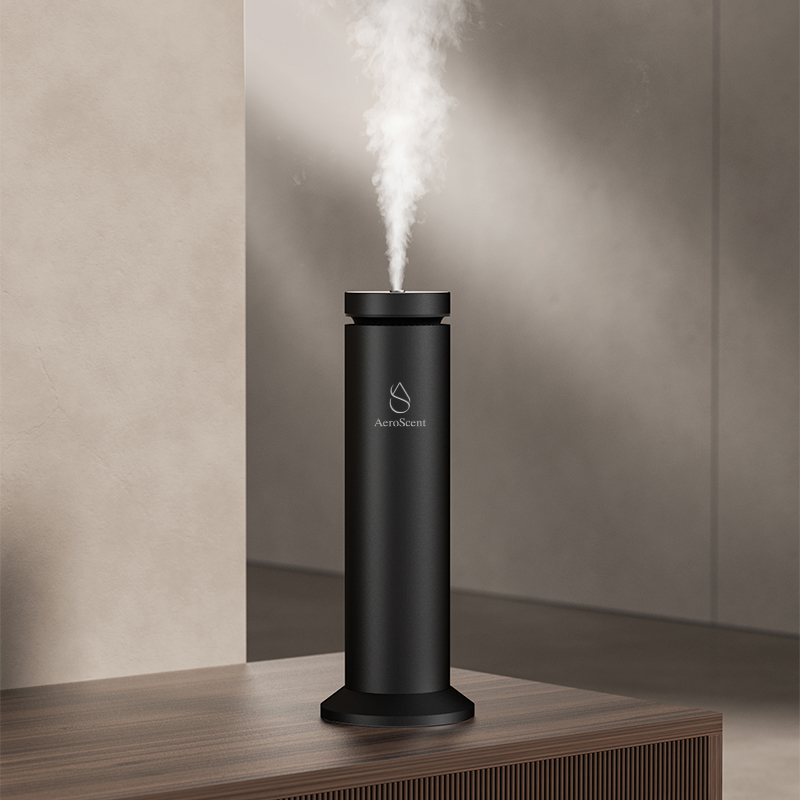
Aesthetic considerations play a major role in standalone units. Traditional nebulizers often feature hand-blown glass reservoirs and carved wood bases. While highly aesthetic, the glass components are fragile and require careful handling. Modern standalone towers are typically constructed from anodized aluminum or durable acrylic. These sleek, cylindrical designs blend seamlessly into contemporary decor and offer superior durability against accidental bumps.
When selecting a standalone unit, prioritize digital control features. Look for models with programmable daily schedules. This allows you to set the device to run only during specific hours, conserving oil when you are not home. Variable intensity settings and Bluetooth or Wi-Fi app control provide precise management over the scent density directly from your smartphone.
For whole-building coverage, standalone units are insufficient. Corporate lobbies, retail showrooms, medical offices, and multi-story luxury homes require centralized scenting. This is achieved through HVAC integration. Commercial-grade units connect directly into the building's existing ductwork, utilizing the central air system to distribute the nano-mist.
The installation process requires precision. The commercial unit is typically mounted on a wall near the air handler. A small hole is drilled into the supply duct, downstream from the fan and heating/cooling coils. A flexible PTFE tube connects the atomizer head to the ductwork. When the unit activates, the nano-mist is injected into the moving air stream. Because the particles are under 5 microns, they do not drop out of the air or coat the inside of the ducts. They travel effortlessly through the vents, providing seamless, invisible coverage across thousands of square feet.
Deploying an office scent diffuser via HVAC integration requires managing centralized scheduling. These units feature robust digital timers that align with operating hours. You program the system to activate 30 minutes before the building opens and shut down immediately after closing. Installers often wire the diffuser to the air handler's fan relay, ensuring the unit only atomizes oil when the HVAC fan is actively blowing air.
Waterless aroma diffusers represent the highest standard for scent fidelity, coverage capacity, and environmental hygiene. By eliminating water and heat, these systems preserve the chemical integrity of essential oils while projecting scent across massive areas. They are the superior choice for users prioritizing performance, safety, and operational control.
A: Yes, they consume oil faster during active operation because they atomize pure liquid without water dilution. However, the resulting scent is highly concentrated. You run the device for much shorter durations using interval timers. This efficient duty cycle balances the overall consumption rate. A bottle lasts longer than expected because the machine only sprays for a few minutes every hour.
A: No. Candle oils contain thick resins formulated for heat combustion. Personal perfumes contain high alcohol volumes that degrade internal rubber seals and plastics. You must use pure, thin essential oils or high-quality, IFRA-compliant synthetic fragrance oils specifically engineered for cold-air diffusion. Using the wrong liquid will permanently clog the micro-tubes and ruin the internal pump mechanism.
A: You control intensity by adjusting the interval timer settings on the device. Instead of running continuously, set the hardware to a specific duty cycle. For example, program it to run for one minute and pause for four minutes. This pulsing delivery prevents olfactory fatigue and keeps the ambient scent pleasant without overloading your senses.
A: They generate a slight humming or vibrating sound from the internal air pump. The noise level is similar to a small aquarium pump, typically registering between 35 and 45 decibels. While modern units feature internal insulation to dampen the sound, they are not entirely silent. The noise only occurs during the active atomization cycle and stops during the pause intervals.
A: You should clean the unit every one to two weeks. Remove the oil bottle, attach a separate bottle containing high-proof isopropyl alcohol, and run the device on its highest setting for 15 minutes. The alcohol acts as a solvent. It dissolves lipid buildup in the micro-tubes and maintains optimal atomization performance, preventing permanent clogs.


