
Views: 0 Author: Site Editor Publish Time: 2026-06-19 Origin: Site


Human financial decisions are profoundly emotional. Behavioral economics reveals an interesting reality about human purchasing habits. We often buy based on pure feeling. We then logically justify these purchases afterward. Furthermore, olfactory memory retention towers over both visual and auditory recall. Our brains map smells directly to our emotional centers. Yet, retailers routinely pour millions into dynamic visual merchandising. They spend heavily on curated audio playlists. Simultaneously, they ignore the ambient environment completely. This oversight leaves a powerful sensory touchpoint entirely underutilized. Shoppers rush through unscented aisles rapidly. This results in shorter dwell times and lost revenue opportunities.
Implementing aroma diffusion for retail spaces solves this critical sensory disconnect. It goes far beyond simply making a store smell pleasant. It serves as a highly strategic, measurable mechanism. Proper execution alters consumer time perception. It actively amplifies perceived product value. Ultimately, it drives bottom-line conversions. You simply need the right technological and psychological frameworks.
Neurological Impact: Scent directly bypasses the rational brain, triggering emotional responses that can increase dwell time and alter shopper time perception.
Thematic Congruency is Non-Negotiable: A misaligned scent creates consumer skepticism; successful retail scenting requires precise alignment between the fragrance profile and the brand identity.
Hardware Matters: Commercial scaling requires cold-air, waterless scent diffuser machines rather than consumer-grade heating or aerosol systems to maintain scent integrity and HVAC safety.
Measurable ROI: The success of retail scenting can be quantified through specific A/B testing of foot traffic, dwell time metrics, and localized revenue fluctuations.
We must first explore fundamental consumer psychology. The S-O-R (Stimulus-Organism-Response) framework maps this behavioral pathway perfectly. Ambient scent acts as an invisible environmental stimulus. It enters the olfactory bulb effortlessly. From there, it travels straight to the limbic system. This specific brain region governs emotion and memory formation. Shoppers experience an immediate physiological shift. They move toward a state of pleasure or deep relaxation. This positive organism state naturally induces approach behaviors. Customers linger longer in specific aisles. They browse deeper into various product categories. They also interact alongside your retail staff much more willingly.
Enjoyable environments warp our internal clocks significantly. Psychologists identify this phenomenon as the time distortion effect. A strategic, pleasant fragrance causes shoppers to vastly underestimate their browsing duration. Industry benchmarks highlight this extraordinary power vividly. In specific retail studies, a 60-minute shopping session felt like just 25 minutes. Shoppers simply forget the clock. They focus entirely on the immersive retail experience. They stop watching the time. Consequently, they naturally discover more merchandise.
Cognitive load heavily dictates consumer spending habits. Processing fluency measures how easily our brains decode sensory information. Simpler scent profiles often outperform highly complex ones. Crisp citrus blends or clean pine scents reduce mental friction. Shoppers process these simple aromas quickly and favorably. This frees up crucial mental bandwidth. They apply this saved mental energy toward purchasing decisions. Therefore, simple fragrances frequently lead to higher actual consumer spending. Overly complex perfumes can confuse the senses. This confusion often stalls consumer decision-making entirely.
Extra minutes spent in a scented zone translate directly into sales. Retailers observe a strong correlation between dwell time and the endowment effect. This psychological principle is incredibly straightforward. As you stand near an item longer, you develop a sense of ownership over it. You might pick the item up. You hold it closely. You feel it already belongs to you. This subtle psychological shift is incredibly powerful. It directly pushes bottom-of-funnel conversion rates higher. Prolonged dwell time transitions casual browsers into committed buyers.
Scent also acts as an invisible price tag. Specific fragrance profiles implicitly signal exclusivity to the human brain. A custom blend containing rich sandalwood communicates wealth. Warm cashmere and complex vanilla notes suggest premium comfort. Shoppers walking into these scented environments subconsciously elevate their product valuation. They display significantly reduced price sensitivity. Premium purchases feel entirely justified. The physical environment itself feels premium. This validates the higher price point perfectly.
Human perception operates in interconnected layers. Engaging multiple senses simultaneously creates an exponential brand impact. Experts call this the multi-sensory multiplier effect. Visual merchandising grabs initial consumer attention. Adding a curated scent cements the emotional bond deeper. Extensive data backs this principle up strongly. Retailers often combine dynamic visual displays alongside targeted aromas. When they do, impulse purchase likelihood surges. The overall impact heavily outpaces visual cues acting alone. Two synchronized senses create a deeply immersive commercial reality.
Fragrances must logically match their surrounding environment. We define this core concept as the congruency theory. You cannot deploy aromas arbitrarily across your floor plan. For instance, a homeware section thrives on fresh linen aromas. It instantly communicates cleanliness and domestic comfort. Conversely, a luxury auto showroom demands totally different notes. You might use rich leather, dark woods, or metallic spices. The aroma must perfectly align against the specific product category.
Misalignment causes immediate operational problems. We classify this phenomenon as olfactory dissonance. Imagine smelling sweet bubblegum inside a high-end jewelry boutique. It feels inherently wrong to the senses. Unexpected or incongruent scents trigger cognitive skepticism. The shopper feels confused, distracted, or overtly manipulated. This breaks customer trust instantly. Instead of lingering, they often leave the store faster. Arbitrary scent selection actively drives valuable foot traffic away.
Generic ambient fragrancing is no longer enough for modern retail. Forward-thinking brands now formulate a unique Signature Scent. This custom fragrance acts as an invisible olfactory logo. It translates abstract brand values into concrete sensory experiences. Customers recognize your brand entirely blindfolded. They connect deeply against your unique identity. A well-crafted signature identity fosters intense, long-term brand loyalty.
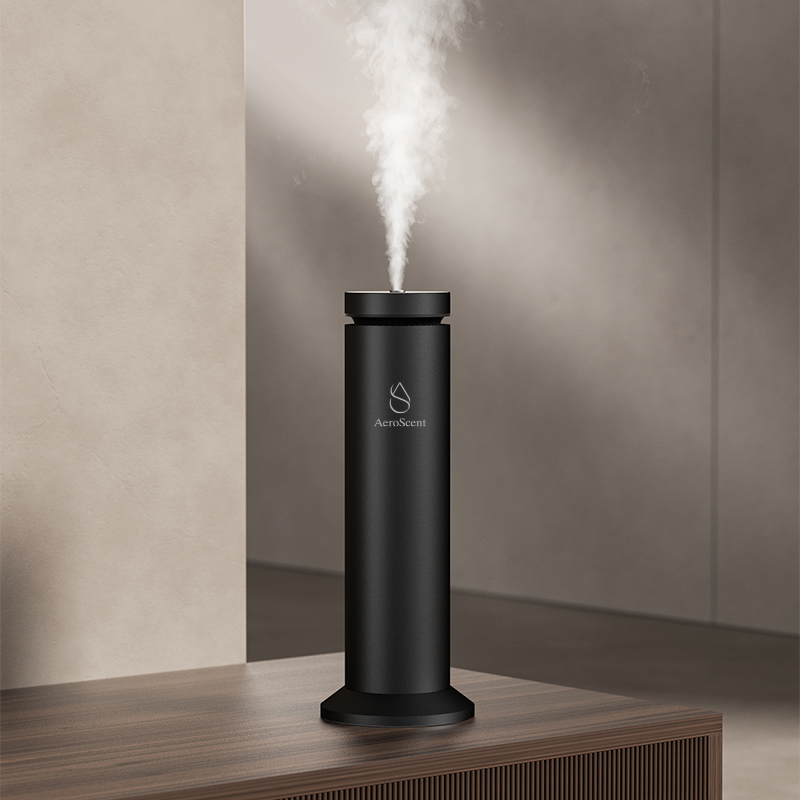
Choosing the proper hardware entirely dictates your campaign's success. You need a reliable scent diffuser machine built for commercial scaling. Commercial cold-air diffusion utilizes waterless, heatless atomization technology. You must contrast this against consumer-grade ultrasonic or heated diffusers. Heating delicate oils destroys their therapeutic properties. It alters their chemical structure negatively. Water-based systems introduce unwanted humidity and risk mold growth. Cold-air technology preserves pure essential oil integrity perfectly. Furthermore, it leaves zero oily residue on expensive retail inventory.
You must evaluate your physical deployment needs carefully. We provide a decision-stage evaluation framework below. This helps determine your ideal hardware configuration.
Hardware Deployment Evaluation Matrix | ||
Hardware System Type | Ideal Retail Application | Key Commercial Advantages |
|---|---|---|
HVAC-Integrated Diffusers | Large, open-plan department stores | Ensures uniform dispersion, discreet operation, centrally controlled. |
Standalone / Track-Light Systems | Boutiques, pop-up shops, promotional displays | Targeted zoning, easy mobility, no complex ductwork required. |
Safety constraints remain paramount during hardware deployment. Retailers must use hypoallergenic, IFRA-compliant fragrances exclusively. You also need precision-controlled diffuser settings. This ensures a healthy environment for both shoppers and retail employees. Professional systems never overwhelm the physical space. Providing a safe, pleasant workspace also yields strong endomarketing benefits. It keeps your staff focused, relaxed, and highly motivated throughout their shifts.
Scent marketing is never guesswork. You can rigorously quantify its impact on your operations. Follow these strategic steps to measure localized success accurately. We recommend a phased approach.
Establishing the Baseline: Advise your team to set a strict control period. Keep the store entirely unscented initially. Capture baseline metrics across specific store zones.
Tracking Dwell Time and Footfall: Detail how shoppers move using foot traffic counters. Implement heat mapping and dwell time monitoring software. Run these tracking tools alongside the activation of your ambient fragrance hardware.
A/B Revenue Analysis: Explain the methodology for correlating localized revenue fluctuations. Compare the scented zones against the unscented baseline data. Focus closely on average transaction value (ATV) and units per transaction (UPT).
Qualitative Data Collection: Recommend utilizing brief in-store customer perception surveys. Use them to measure shifts in brand perception objectively. Track staff interaction rates to evaluate deeper consumer engagement.
We can visualize this measurement strategy clearly. Use the chart below to establish your internal reporting dashboard.
Sample Scent Marketing ROI Measurement Chart | ||
Metric Category | Measurement Tool Required | Expected Behavioral Impact |
|---|---|---|
Dwell Time | Heat mapping software | Increase of 15-20% in scented zones |
Conversion Rate | Point of Sale (POS) data | Higher average transaction value (ATV) |
Brand Perception | In-store customer surveys | Elevated perceived luxury and product value |
By comparing these exact metrics, you build a solid business case. The numbers will quickly justify the initial marketing investment. Retail executives appreciate hard data over subjective fragrance preferences.
Aroma diffusion stands as a scientifically validated sales tool. It is decidedly not just an aesthetic luxury. Strategic scent actively alters shopper behavior. It extends store visits and reliably lifts sales numbers. It connects your brand directly to the emotional center of the consumer brain.
Retail strategists should take immediate action. Follow these practical next steps:
Map your desired customer emotion accurately before selecting any fragrance.
Audit your physical retail space to determine HVAC versus standalone hardware needs.
Request a professional scent consultation to ensure strict thematic congruency.
Launch a localized pilot program to secure baseline control data.
Your physical retail environment is your strongest asset. Engage every sense to maximize its full potential.
A: We must address this transparently. Professional systems use subtle, precisely calibrated intervals rather than constant blasting. They utilize pure, IFRA-compliant oils. Scientific studies actually demonstrate these ambient fragrances improve staff focus, morale, and overall productivity. When correctly regulated, they never cause headaches or sensory fatigue. They enhance the working environment.
A: No. Commercial cold-air diffusion produces a dry nano-mist. This advanced technology uses no heat and no water. It leaves absolutely zero moisture or oily residue behind. It remains entirely safe for high-end apparel, delicate fabrics, and sensitive high-tech electronics inside luxury showrooms.
A: Physiological reactions occur immediately. You will instantly observe relaxed customer postures and extended browsing behaviors. However, gathering measurable sales lift and reliable ROI data takes slightly longer. We strongly recommend a 30- to 60-day tracking period. This timeframe establishes clear, undeniable revenue trends.


