
Views: 0 Author: Site Editor Publish Time: 2026-08-23 Origin: Site


Environmental factors directly dictate cognitive performance and stress regulation at work. Olfactory stimuli impact how you function during long shifts. Modern workspaces suffer from stale air, lingering lunch odors, and poor ventilation. You rarely control shared HVAC systems in corporate buildings or home offices, leading to suboptimal working conditions and constant distractions. A localized intervention solves these sensory problems directly at your workstation. Deploying a desktop essential oil diffuser gives you immediate control over your micro-environment. This technical evaluation guides you through selecting the right hardware to improve personal workspace fragrance. We cover the mechanics of projecting a professional identity and boosting daily productivity. You will learn how to deploy these devices effectively without violating office etiquette, triggering coworker sensitivities, or damaging sensitive desk peripherals.
Define the success criteria for office scenting before selecting hardware. We need consistent fragrance dispersion throughout the workday. The scent must never overpower the room or distract colleagues. It must neutralize stale air effectively. The device cannot leave oily residue on monitors, keyboards, or important paperwork. Understanding the underlying technology ensures you meet these criteria.
Ultrasonic models utilize a small piezoelectric transducer. This component sits at the bottom of a water reservoir. It vibrates at high frequencies—typically around 2.4 million times per second—to agitate the water and oil mixture. This rapid vibration creates a fine, cool mist with particle sizes ranging from 1 to 5 microns. The device then blows this mist into your workspace using a small internal fan. This process provides light humidification alongside the fragrance. You must replace the water daily. Standing water breeds mold and bacteria quickly. Regular cleaning prevents these contaminants from becoming airborne in your office. We see frequent hardware failures when users neglect the transducer plate. Mineral buildup from hard water insulates the plate, reducing mist output. Always use distilled water to extend the lifespan of the internal components.
Nebulizing technology relies on the Bernoulli principle. Pressurized air forces essential oil through a very small glass tube. This action breaks the oil down into microscopic particles. The device disperses these micro-particles directly into the air. This method is entirely waterless. It delivers a highly potent and pure scent profile. You experience the unadulterated aroma of the oil. However, the essential oil consumption rate is significantly higher. Operational noise can also increase due to the internal air pump required for pressurization. Nebulizers work best in private offices where the ambient noise floor masks the pump vibration. They require regular cleaning with high-proof rubbing alcohol to prevent the micro-tubes from clogging with thick resinous oils like vetiver or patchouli.
Evaporative models rely on passive diffusion techniques. Reed diffusers, fan-assisted units, and low-heat plates fall into this category. They expose the oil to the air, allowing it to evaporate naturally. These devices require very low maintenance. They pose minimal risk in highly restricted office environments. They do not emit visible mist or require daily water changes. However, they offer much less control over scent intensity. The fragrance output diminishes steadily as the oil evaporates over time. Fan-assisted models speed up this process by blowing ambient air across an oil-soaked pad. Heat-based models use a low-voltage warming element to accelerate evaporation, but excessive heat can degrade the therapeutic properties of the botanical extracts.
Investing in workspace scenting goes beyond simple aesthetics. It provides tangible benefits for your daily work experience. You can actively manage your environment to support your professional goals. The right approach transforms a sterile desk into a supportive workspace.
Synthetic air fresheners simply mask unpleasant odors. They layer heavy, artificial perfumes over bad smells. This often creates a cloying, uncomfortable environment. Essential oils function differently. Oils like tea tree, eucalyptus, and lemongrass interact with airborne particles. They help neutralize stale office smells at the molecular level. This leaves your workspace smelling genuinely clean rather than artificially covered up. When dealing with lingering food odors from a nearby breakroom, active neutralization prevents the smell from settling into your clothes and upholstery.
You can use specific scents to manage your cognitive load throughout the day. Different botanical profiles trigger different neurological responses. You can tailor your scent selection to your current tasks.
Afternoon fatigue severely impacts productivity. Ambient distractions break your concentration. Peppermint, rosemary, and lemon oils combat these issues directly. They stimulate mental clarity during complex analytical tasks. Diffusing these oils helps you maintain focus during long periods of deep work. They provide a natural, caffeine-free boost to your alertness. Field tests in high-density data entry environments show that citrus blends reduce error rates during the final hours of a shift.
High-pressure roles demand effective stress management. Call-heavy environments elevate anxiety levels quickly. Lavender, bergamot, vanilla, and green tea offer proven calming properties. They reduce stress without inducing drowsiness. Diffusing these scents promotes overall calmness during tight deadlines. They help you maintain a steady, composed demeanor during challenging client interactions. We recommend keeping a dedicated bottle of bergamot on hand for immediate deployment after difficult conference calls.
Curating a specific office scent reflects your personal brand. It demonstrates attention to detail and care for your environment. A well-chosen scent creates a welcoming, polished atmosphere. Visiting colleagues or clients immediately notice this attention to detail in private office settings. It elevates the perceived professionalism of your workspace. A subtle cedarwood or sandalwood profile projects stability and competence in executive environments.
A localized desk aroma diffuser drastically improves how you perceive air quality. Stale, recycled office air feels heavy and uncomfortable. Introducing a light, natural fragrance makes the space feel fresh and breathable. It contributes to a more comfortable and personalized work environment. This subjective improvement significantly boosts your daily workplace satisfaction, especially in buildings with sealed windows and aging HVAC infrastructure.
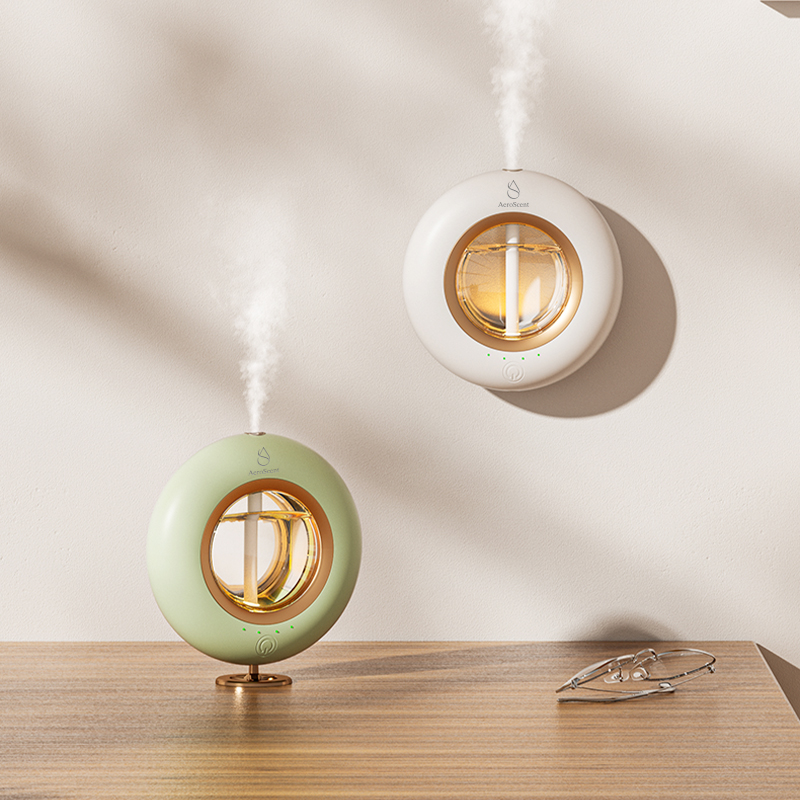
Selecting the right hardware requires careful evaluation. You must compare the primary form factors available for individual workstations. Weigh the pros of scent intensity and aesthetic appeal against the cons of maintenance and noise. Your specific office setup dictates the best choice.
Ultrasonic models offer balanced performance but require daily cleaning. Nebulizers provide strong scent but consume oil rapidly and cost more. Evaporative models are silent and low-maintenance but lack output control. You must align these characteristics with your daily workflow and office constraints.
| Diffuser Type | Mechanism | Maintenance Level | Best Office Application |
|---|---|---|---|
| Ultrasonic | Water vibration via transducer | High (Daily water changes) | Standard cubicles, dry environments |
| Nebulizing | Pressurized air atomization | Medium (Weekly alcohol flush) | Private offices, large executive suites |
| Evaporative | Fan-assisted air flow | Low (Pad replacement monthly) | Strict shared spaces, hot-desking |
| Passive Reed | Capillary action | Very Low (Flip reeds weekly) | Small reception desks, restrooms |
How you power the device impacts its usability on a crowded desk. Cable management is a primary consideration for any professional workspace.
USB-powered units offer exceptional convenience. You can plug them directly into a monitor hub, laptop, or docking station. They eliminate the need for an extra wall outlet. This keeps your cable routing clean and manageable. They are ideal for standard corporate cubicles where power strips are already overloaded with essential hardware. Ensure your USB port provides at least 5V/1A to power the internal fan adequately.
Battery-operated models provide a completely cord-free setup. This offers a significant aesthetic benefit. They reduce visual clutter on your desk. They provide excellent mobility for hot-desking environments. You can easily move them between conference rooms and your primary workstation. Automated electronic models save time compared to constantly refreshing manual passive diffusers. Look for units with lithium-ion batteries that support at least 12 hours of intermittent runtime.
Standard AC plug-in models offer maximum reliability. They do not rely on battery life or limited USB power output. They work best for permanent, dedicated home office setups. They handle long-lasting scent requirements effortlessly. They typically feature larger motors and more robust internal components, allowing for higher mist output and better coverage in larger rooms.
Desk real estate is incredibly valuable. You must establish strict criteria for the device's footprint. A viable mini diffuser must fit seamlessly into your workflow. It must not obstruct dual-monitor setups or block your webcam. It must sit securely on the desk surface. You cannot risk spilling water or oil onto sensitive peripherals, mechanical keyboards, or important documents. Choose cylindrical or low-profile designs with rubberized non-slip bases to prevent accidental knock-overs during busy shifts.
Deploying scent in a shared environment requires spatial awareness and respect for others. You must navigate potential conflicts proactively. Ignoring office etiquette leads to immediate complaints and policy violations.
Coworker complaints represent the primary barrier to adoption in corporate environments. Many HR departments maintain strict policies regarding artificial or strong scents. You must ensure your device complies with these regulations. Unregulated scent dispersion creates a hostile work environment for sensitive individuals. Always review the employee handbook before bringing any scent-emitting device into the building.
Deployment strategies differ based on your architectural environment. In a closed, private office, utilize central placement. This allows aroma molecules to rise and disperse evenly throughout the room. In open cubicles, you face strict proximity limits. You must contain the scent within your immediate workstation boundaries.
Define the ideal diffusion radius for shared spaces. It typically ranges from 3 to 6 feet. You must calibrate your output settings carefully. Ensure the scent remains strictly within your desk perimeter. Use low-output modes or intermittent timers. Never force your personal scent preferences into a neighbor's workspace. Test the radius by walking away from your desk and noting where the scent drops off.
You must establish a framework for ethical use. Survey your immediate desk neighbors before deploying any device. Ask directly about allergies or asthma. Avoid known respiratory irritants like strong cinnamon or heavy floral oils. Stick to mild, universally tolerated scents like sweet orange or light lemon. If a coworker reports discomfort, cease operation immediately and switch to a passive, localized alternative.
Office airflow patterns dictate proper placement. Observe how the air moves around your desk. Never place units directly under intake vents. The HVAC system will pull the scent in and distribute it across the entire floor. Position the device where the ambient airflow keeps the mist localized around your seating area. Keep the unit away from high-velocity supply registers that will scatter the mist unpredictably.
You must review specific technical specifications before making a purchase. Do not rely solely on aesthetic appeal. The internal hardware determines the device's viability in a professional setting.
Look beyond the marketing claims. Evaluate the acoustic profile, runtime capabilities, maintenance requirements, and visual footprint. These dimensions dictate your long-term satisfaction with the product.
Acoustic performance is a major factor. Emphasize the necessity of sub-30dB (decibel) operation. A diffuser must not be audible during important Zoom calls. It must not disrupt your deep work blocks. Listen for loud water trickling sounds or aggressive pump vibrations. A quiet motor ensures the device remains unobtrusive. Place the unit on a soft mousepad to dampen any residual vibration transfer to the desk surface.
Evaluate tank capacities carefully. Compare a 50ml tank against a 100ml tank in the context of a standard 8-hour workday. Smaller tanks require constant refilling. Intermittent diffusion settings extend the runtime significantly. Frame auto-shutoff as a non-negotiable safety feature. It prevents the device from dry-running, overheating, and potentially causing a fire hazard.
Assess the realistic cleaning schedule required. Water-based models demand regular attention to prevent bacterial buildup. You cannot ignore this maintenance. Highlight models with accessible, easy-to-wipe reservoirs. Avoid designs with complex internal baffles that trap oil residue. A well-designed office diffuser minimizes your daily cleaning overhead.
Discuss integrated LED features critically. Color-changing lights look unprofessional in a corporate setting. They create unnecessary visual distractions. Recommend models that allow users to completely disable all lighting. This maintains a sleek, professional appearance and reduces visual clutter on your desk. A single, dim indicator light is acceptable to confirm power status.
A: Peppermint, rosemary, and sweet orange stimulate mental clarity and improve focus during complex tasks. For high-stress environments, vanilla and green tea offer excellent calming properties. These scents help regulate stress without causing drowsiness, making them ideal for demanding workdays.
A: Yes, provided you operate them responsibly. You must use localized output settings to keep the scent within your immediate area. Always obtain coworker consent regarding potential allergies or sensitivities before introducing any new fragrance into a shared environment.
A: In a private office, place it centrally so aroma molecules can rise and disperse evenly. In an open-plan cubicle, keep the unit within 3 feet of your workspace. Always position it away from computer intake fans and office HVAC return vents.
A: You must follow a realistic maintenance schedule to prevent bacterial growth. Empty any remaining water and give the reservoir a quick wipe daily. Perform a deep clean with a water and white vinegar solution once a week to remove residual oil buildup.
A: Ultrasonic models emit a fine water mist that can cause moisture damage over time. You must maintain a safe distance between the diffuser and your electronics. Never place the unit directly next to keyboards, monitors, or exposed computer towers.
A: Waterless nebulizing diffusers use pressurized air to atomize pure essential oil, delivering highly potent scent without adding humidity. Ultrasonic models use water-vibration technology to create a diluted mist. Nebulizers save time through automation but require more oil and produce slightly more noise.
A: You should practice intermittent diffusion. Run the device for 30 minutes on, followed by 60 minutes off. This schedule prevents olfactory fatigue, conserves your essential oils, and ensures the fragrance remains pleasant rather than overwhelming in a confined workspace.


