
Views: 0 Author: Site Editor Publish Time: 2026-08-04 Origin: Site


Interior design requires practical solutions that address visual aesthetics and olfactory environments without cluttering physical space. Traditional room fragrancing methods present significant drawbacks in modern homes. Candles introduce fire hazards and emit soot that damages paint and degrades indoor air quality. Plug-ins lack customizable visual ambiance and rely heavily on synthetic chemicals. Standalone lighting fixtures offer no air quality improvements or aromatherapy benefits. You need a unified device that solves these issues safely and efficiently. An objective evaluation shows how a led essential oil diffuser consolidates these functions. This guide breaks down the technical mechanics behind this dual-action system. We will explore the critical criteria required to evaluate and select the right device for your specific spatial needs, focusing on hardware durability, mist output, and lighting integration.
Ultrasonic technology powers the core of these devices. A small ceramic disc, known as a piezoelectric transducer, sits at the bottom of the water reservoir. This disc vibrates at high frequencies, typically around 2.4 million times per second (2.4 MHz). These rapid vibrations create ultrasonic waves that agitate the water and essential oil mixture. The agitation breaks the liquid down into microscopic particles. The device then releases these micro-particles into the air as a fine, cool mist.
This process requires zero heat. Heat alters the chemical composition of essential oils and degrades their therapeutic properties. The cold-mist dispersion ensures the aromatic compounds remain intact and effective. The mechanical sequence operates through a precise series of steps:
Noise levels dictate where you can place a device. Ultrasonic technology operates almost silently. Most units produce sound levels below 30 decibels. This is quieter than a whisper. Mechanical fan-based units generate noticeable humming and vibration. This background noise disrupts concentration and sleep.
The near-silent operation of an ultrasonic unit makes it ideal for sensitive environments. You can place it in a bedroom, a quiet study, or a professional workspace. The only sound you might hear is a faint, rhythmic water trickling. Many users find this subtle water sound relaxing rather than disruptive. We measure acoustic output in decibels (dB). A standard refrigerator runs at 40 dB. These diffusers run at 20 to 25 dB. You will not hear the transducer vibrating. You will only hear the internal fan pushing the mist upward and the gentle movement of water.
Manufacturers integrate LED arrays directly into the base or core of the unit. These surface-mounted diodes (SMDs) project light upward. The light travels through the water reservoir and the outer shell of the device. Water acts as a natural refractive medium. It softens the light and creates a gentle, glowing effect.
The outer shell material dictates the final visual output. Frosted glass diffuses the light evenly. Perforated metal creates intricate shadow patterns on surrounding walls. Medical-grade polypropylene (PP) offers a translucent glow. This integrated design transforms a simple misting device into a dynamic visual focal point. The LEDs sit on a separate circuit from the transducer. They generate minimal heat. This ensures the water temperature remains stable during operation, protecting the integrity of the essential oils.
Advanced internal circuitry separates the misting module from the lighting module. This separation allows you to operate the functions independently. You can run the mist without the light during the day. You can use the device purely as a lamp at night without consuming water. You can also synchronize both functions for a complete sensory experience.
This technical capability maximizes the utility of an LED aroma diffuser. It adapts to different times of day, changing user preferences, and specific environmental needs. Independent operation prevents the device from becoming obsolete when you only need one of its features. If the transducer fails after years of heavy use, the lighting module often continues to function perfectly as a standalone lamp.
You must measure a device's efficacy using specific dispersion metrics. Square footage coverage and mist output rate determine performance. Mist output is measured in milliliters per hour (ml/hour). Matching the output rate to your room size prevents under-fragrancing or overwhelming the space. Airflow dynamics also play a role. Placing the unit near an HVAC return vent will pull the scent out of the room, while placing it near a supply register will help push the mist throughout the space.
| Reservoir Size | Average Output Rate | Max Square Footage | Ideal Room Application |
|---|---|---|---|
| 100ml - 150ml | 15 - 20 ml/hr | Up to 150 sq ft | Bathrooms, Office Desks, Entryways |
| 300ml - 400ml | 30 - 40 ml/hr | Up to 300 sq ft | Bedrooms, Small Offices, Nurseries |
| 500ml - 1000ml | 50 - 70 ml/hr | Up to 500 sq ft | Living Rooms, Open Kitchens, Basements |
The therapeutic outcomes extend beyond simple odor masking. The device slightly humidifies dry indoor air. It distributes volatile organic compounds (VOCs) from pure essential oils. These natural VOCs neutralize unpleasant odors at a molecular level rather than just covering them up. Inhaling specific beneficial compounds triggers the olfactory system. This system connects directly to the brain's limbic system, which controls emotions. This biological process facilitates measurable stress reduction and mood elevation.
A micro-fine moisture mist also aids in airborne allergen mitigation. The mist particles bind to floating dust, pollen, and pet dander. This binding process increases the weight of the particulate matter. The heavier particles fall to the floor rather than remaining suspended in your breathing zone. This mechanical action contributes to a cleaner, more comfortable breathing environment.
A well-designed unit functions effectively as a secondary light diffuser. You can utilize it for nightlights, mood lighting, or reading accents. Chromatherapy relies on specific light wavelengths to influence mood and energy levels. The visual impact depends entirely on the quality of the integrated LEDs and the opacity of the outer shell.
Customization features dictate the lighting utility. Adjustable brightness is mandatory for transitioning from daytime to nighttime use. Color-locking mechanisms allow you to select a single hue rather than enduring a distracting, continuous color cycle. Pay attention to warm versus cool light spectrums. Warm light (2700K-3000K) mimics sunset and promotes relaxation. Cool light (4000K-5000K) mimics daylight and enhances alertness. Controlling these spectrums directly influences circadian rhythms and room atmosphere.
Sensory stacking involves combining multiple sensory inputs to achieve a specific psychological outcome. Combining specific lighting hues with complementary scent profiles creates a measurable shift in environmental perception. The brain processes the visual and olfactory signals simultaneously. This dual processing amplifies the intended effect. A warm amber light paired with cedarwood or lavender creates an environment primed for deep relaxation.
You can apply this synergy to mood regulation and sleep hygiene. Establish a daily routine using these sensory cues. Pair dim, warm-toned lighting with relaxing oils like chamomile one hour before bed. This signals the brain to increase melatonin production. Conversely, utilize bright, cool-toned light with citrus or peppermint oils in the morning. This combination boosts energetic thoughts, increases daytime focus, and suppresses residual sleepiness.
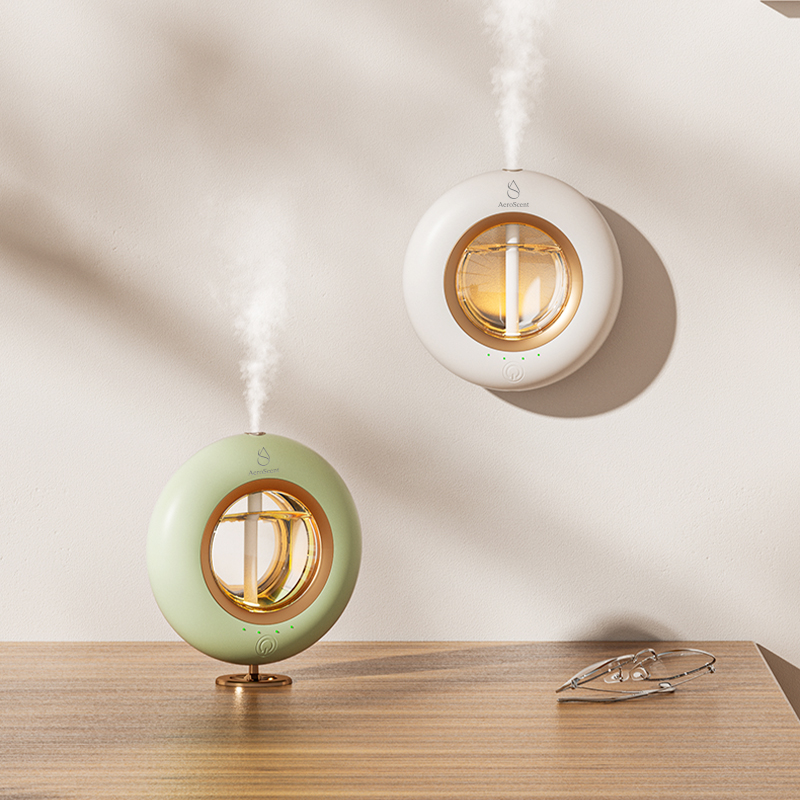
Sizing the unit to your space dictates its practical value. A compact 100ml unit runs for 3 to 4 hours continuously. These small units fit perfectly on office desks or bathroom counters. They require frequent refilling if used all day. High-capacity units holding 500ml to 1000ml run for 10 to 20 hours. These are required for open-concept living areas or overnight use in master bedrooms. You must balance the physical footprint of the device against your tolerance for refilling it.
Evaluate the misting modes before purchasing a home diffuser. Intermittent misting pauses the output at regular intervals (e.g., 30 seconds on, 30 seconds off). This extends the run time and prevents olfactory fatigue. Continuous misting provides maximum scent throw for immediate impact. Timer settings (1-hour, 3-hour, 6-hour) offer precise control. An automatic shut-off feature is non-negotiable. This sensor detects low water levels and cuts power to the ultrasonic plate. This prevents hardware damage and ensures safe, unattended operation.
Essential oils are highly concentrated plant extracts. Citrus oils contain limonene, a powerful solvent. Heavy resin oils like myrrh are thick and sticky. These compounds rapidly degrade cheap plastics. Corrosion resistance is a critical evaluation metric. The internal water tank must consist of medical-grade, BPA-free plastics. Polypropylene (PP) and Acrylonitrile Butadiene Styrene (ABS) offer excellent chemical resistance. High-end models utilize glass or ceramic reservoirs to eliminate plastic degradation entirely.
Aesthetic integration requires balancing durability with interior design requirements. The device will occupy visible space in your home. Manufacturers offer various exterior finishes to match different decors. Faux wood grain suits rustic or natural interiors. Frosted glass complements modern, minimalist spaces. Matte ceramic finishes blend seamlessly with contemporary or Scandinavian designs. Choose an exterior material that withstands accidental bumps while elevating your room's visual appeal.
The user interface determines daily frustration levels. Physical buttons offer tactile feedback and immediate response. Touch-sensitive panels look sleeker but can be unresponsive if your fingers are wet or oily. Feature verification is essential. Assess whether the device offers true dimming capabilities or just two preset brightness levels. Test the dynamic color cycling for smooth transitions. Most importantly, verify the ability to turn the light completely off while the mist continues running. This dark mode is mandatory for nighttime use in bedrooms.
The safety profile of an electronic device far exceeds that of combustible products. Traditional candles rely on open flames. This introduces severe fire hazards, especially in homes with pets or children. Candles also emit soot and particulate matter (PM2.5) into the air. This soot stains walls, clogs HVAC filters, and degrades indoor air quality. An electronic unit eliminates open flames, soot, and localized heat damage entirely. It provides scent and light without compromising safety.
Evaluate the cost over time. High-quality, non-toxic candles are expensive. They burn down and require constant replacement. The upfront cost of a reliable device and a set of pure essential oils may equal the price of three luxury candles. However, a 15ml bottle of essential oil contains roughly 250 drops. Using 5 drops per day yields 50 days of use per bottle. The recurring cost of oils is significantly lower than the recurring cost of premium candles.
Different technologies serve different primary goals. Nebulizing diffusers use pressurized air and the Bernoulli principle to atomize pure essential oils. They do not use water. This results in an incredibly strong, concentrated scent throw. Nebulizers are ideal for large spaces or clinical aromatherapy applications where maximum scent density is required.
However, nebulizers present distinct performance trade-offs. They consume essential oils rapidly, increasing operational costs. They generate noticeable noise from the internal air pump. They offer no humidification benefits. Most importantly, they lack integrated ambient lighting features. An ultrasonic model provides a balanced, multi-sensory experience. It dilutes the oil with water, extending your supply. It operates silently. It adds slight moisture to the air. It serves as a customizable light source.
| Feature | Ultrasonic LED Diffuser | Nebulizing Diffuser | Traditional Candle |
|---|---|---|---|
| Scent Concentration | Moderate (Water Diluted) | Very High (Pure Oil) | Variable (Depends on Wax) |
| Ambient Lighting | Yes (Customizable LED) | Rarely | Yes (Open Flame) |
| Safety Profile | High (No Heat/Flame) | High (No Heat/Flame) | Low (Fire Hazard, Soot) |
| Noise Level | Near Silent (<30dB) | Noticeable Pump Hum (40-50dB) | Silent |
| Humidification | Yes (Micro-mist) | No | No |
Routine maintenance dictates the lifespan of your device. Essential oils leave a sticky residue inside the water tank. This residue builds up on the ultrasonic plate. Daily maintenance requires emptying residual water and wiping the tank with a dry cloth. Never leave stagnant water and oil sitting in the device overnight. When emptying the tank, always pour the water out of the designated drainage side. Pouring water into the air vent will short-circuit the internal PCB and destroy the unit.
Weekly deep cleaning is mandatory. Follow these exact steps to protect the hardware:
Risk mitigation prevents costly replacements. Neglecting the ultrasonic plate causes immediate performance drops. The mist output will weaken significantly. Eventually, the residue hardens and causes permanent hardware failure. Furthermore, stagnant water breeds bacteria and mold. If you do not clean the tank, the device will disperse these harmful microbes directly into your breathing air. Strict adherence to cleaning protocols guarantees safe operation and longevity.
While adding moisture to the air is beneficial, over-humidification creates new problems. Condensation risks arise when you run a high-output unit in a small, unventilated room. The air reaches its moisture saturation point. The excess mist settles as dampness on wooden furniture, electronics, and flooring. This dampness ruins finishes and promotes localized mold growth. Monitor your room size. Use intermittent settings in small spaces like bathrooms or closed offices to prevent condensation.
Water quality directly impacts indoor air quality and device health. Hard tap water contains high levels of calcium and magnesium. The ultrasonic vibrations atomize these minerals along with the water. When the mist evaporates, it leaves behind a fine white mineral dust on your furniture. These minerals also calcify on the transducer disc. Always use distilled or filtered water. This prevents white dust dispersion and keeps the internal components free of hard water scale.
Toxicity awareness is critical in shared households. Animals metabolize compounds differently than humans. Several popular essential oils are highly toxic to cats and dogs. Eucalyptus, tea tree, peppermint, and citrus oils cause severe respiratory distress and liver damage in pets. Research every oil before diffusing it around animals. Ensure the room has adequate ventilation. Always leave a door open so pets can exit the room if the scent bothers them.
Placement strategy prevents accidents. The combination of water, electricity, and concentrated oils requires careful positioning. Secure the device on a stable, flat surface. Place it well out of reach of toddlers and pets. A knocked-over unit spills water and potentially damages the internal electronics. More importantly, it exposes children or animals to undiluted essential oils, which cause skin irritation or poisoning if ingested. Route the power cable safely to prevent tripping hazards.
A: Yes. Most high-quality units feature independent internal circuitry. This allows you to turn on the LED lighting module without activating the ultrasonic misting function. You can use the device purely as a nightlight or ambient lamp without consuming any water or essential oils.
A: No. They are highly energy-efficient. Ultrasonic technology and LED bulbs draw very little power. A standard unit typically uses between 12 to 15 watts of electricity. Running it for several hours daily will have a negligible impact on your monthly utility bill.
A: The scent duration depends on the reservoir size and misting mode. A 100ml tank running continuously lasts 3 to 4 hours. A 500ml tank can last up to 15 hours. Using intermittent misting settings extends the scent throw duration significantly while preventing olfactory fatigue.
A: Yes, provided the device has an automatic shut-off feature. This safety sensor detects when the water level drops too low and immediately cuts power to the ultrasonic plate. This prevents overheating and hardware damage, making it safe for unattended overnight use.
A: It does not filter the air like a HEPA purifier. However, the micro-fine moisture mist binds to airborne dust, pollen, and pet dander. This makes the particles heavier, causing them to fall to the floor. This mechanical action helps clear the breathing zone of suspended allergens.
A: A blinking light usually indicates an empty water tank or a triggered safety sensor. If the tank is full, the ultrasonic plate might be clogged with hardened oil residue. Unplug the unit, empty the water, and clean the ceramic disc with rubbing alcohol to restore normal function.


