
Views: 0 Author: Site Editor Publish Time: 2026-08-18 Origin: Site


Traditional personal fragrance methods often lack environmental control. Static room sprays, passive reeds, and topical perfumes lead to inconsistent scent profiles and rapid dissipation. Professionals and frequent travelers struggle to maintain a consistent, personalized olfactory environment in transient spaces like hotel rooms, vehicles, or shared offices without causing scent saturation or relying on synthetic chemicals. A mini portable essential oil diffuser shifts fragrance application from passive to active, allowing for precise, on-demand scent dispersal. This guide evaluates the mechanics, technical trade-offs, and selection criteria for integrating portable diffusion into daily routines.
To achieve a controlled personal fragrance experience, you must select a dispersal mechanism that aligns with your physical environment. Matching the hardware with specific oil preferences and travel habits prevents premature equipment failure. Different technologies manipulate the liquid oil using distinct physical principles. Understanding these mechanics ensures optimal scent delivery and helps you avoid purchasing hardware unsuited for your daily routine.
Ultrasonic technology relies on a piezoelectric transducer. This small ceramic disc sits at the bottom of a water reservoir. When electrical current passes through it, the disc vibrates at ultrasonic frequencies, typically around 2.4 million times per second. These rapid vibrations create a standing wave in the water. The surface tension breaks, and the water and essential oil blend shatters into microscopic droplets measuring about 5 microns in diameter. A small internal fan then pushes this mist out of the chassis and into the room.
This method provides a localized humidity boost alongside the fragrance. It operates quietly, usually registering below 25 decibels. However, you must carry a water reservoir. If the unit tips over in a bag or on a car seat, it leaks. The scent profile also remains diluted because the oil is suspended in a much larger volume of water.
Waterless atomization, commonly known as nebulizing, operates entirely differently. It uses a micro-air pump and relies on the Bernoulli principle. The pump forces pressurized air through a narrow restriction. As the air accelerates, it creates a low-pressure zone. This vacuum pulls pure essential oil up from the attached bottle through a secondary glass or plastic capillary tube. When the oil hits the high-velocity air stream, it atomizes into ultra-fine particles, often smaller than 1 micron. A baffle inside the nozzle catches larger droplets and returns them to the bottle. Only the finest vapor escapes into the room.
You get undiluted, potent fragrance. You eliminate water spills completely. The ultra-fine particles stay suspended in the air significantly longer than heavier water-based mists. The trade-offs include a higher oil consumption rate and the mechanical hum of the air pump, which typically registers between 30 and 40 decibels.
Low-tech alternatives include USB-heated pads and fan-blown evaporative units. Evaporative diffusers use a small fan to blow ambient air past a fibrous pad saturated with essential oil. This causes the lighter chemical components of the oil to evaporate first, while the heavier components evaporate later. This fractional evaporation alters the intended scent profile over time. You smell the top notes immediately, but the base notes linger on the pad for days. These approaches lack the active dispersion needed for consistent, even coverage across a room.
Heat-based units degrade the delicate chemical profiles of essential oils. Essential oils have specific flash points. When exposed to high temperatures, the therapeutic integrity of the oil diminishes rapidly. Heat alters the molecular structure, destroying beneficial compounds and often producing a burnt, synthetic odor. Active atomization and ultrasonic methods remain the industry standard because they operate at room temperature. This preserves the original oil structure and ensures consistent scent delivery without thermal degradation.
Understanding how hardware features translate to tangible user outcomes helps optimize daily scenarios. You manipulate your immediate environment to support your current task, whether that involves deep focus at a desk or relaxation in a hotel room.
Creating a localized scent bubble requires strategic output management. A mini aroma diffuser targets the immediate 10 to 50 square feet around the device. Think of the driver's seat of a vehicle, a standard office cubicle, or the area right next to a hotel bed. These devices are engineered for proximity, not for saturating a 1,000-square-foot open-concept living room.
If you run a nebulizer on continuous high output in a car, you will saturate the cabin within minutes. This leads to olfactory fatigue, commonly known as nose blindness. Your olfactory receptors become overwhelmed, and your brain simply stops registering the scent. To prevent this, you must use intermittent timers. A standard work cycle might be 10 seconds of diffusion followed by 50 seconds of rest. The ultra-fine particles from a nebulizer stay suspended in the air for hours. The rest period allows the ambient concentration to drop slightly before the next burst, keeping your receptors responsive and preventing the fragrance from overwhelming a shared space.
Medical literature details how olfactory receptors interact directly with the limbic system. When you inhale an essential oil, odor molecules travel up the nasal cavity and bind to olfactory receptors. These receptors send electrical signals directly to the olfactory bulb. The olfactory bulb then transmits these signals to the amygdala and hippocampus, the brain regions governing emotion, memory, and behavior. You must separate verifiable physiological responses from exaggerated health claims.
Proven benefits include relaxing and unwinding to alleviate travel-induced stress. Oils containing high levels of linalool, such as lavender and clary sage, demonstrate mild sedative properties in clinical settings. Olfactory stimulation can boost overall mood. Citrus oils rich in d-limonene, like sweet orange and grapefruit, often elicit uplifting responses. Peppermint and rosemary are frequently used to enhance cognitive alertness and improve focus during deep-work sessions. Maintain realistic expectations regarding these outcomes. They serve as supportive environmental modifications.
Synthetic air fresheners emit high levels of volatile organic compounds (VOCs), including phthalates and formaldehyde. Prolonged exposure to synthetic fragrances in enclosed spaces like cars or small offices can cause headaches, nausea, and respiratory irritation. Pure essential oil diffusion offers a cleaner alternative, relying on plant-derived compounds rather than lab-created chemicals.
Customizing scent blends on the go allows you to match specific circadian rhythms. You can tailor the fragrance to support relaxation at night or productivity during the day. A traveler might use a eucalyptus and tea tree blend to clear their sinuses during a morning flight. Later, they can switch to a cedarwood and chamomile blend to promote sleep in an unfamiliar hotel room. This level of customization remains impossible with static, single-scent synthetic air fresheners.
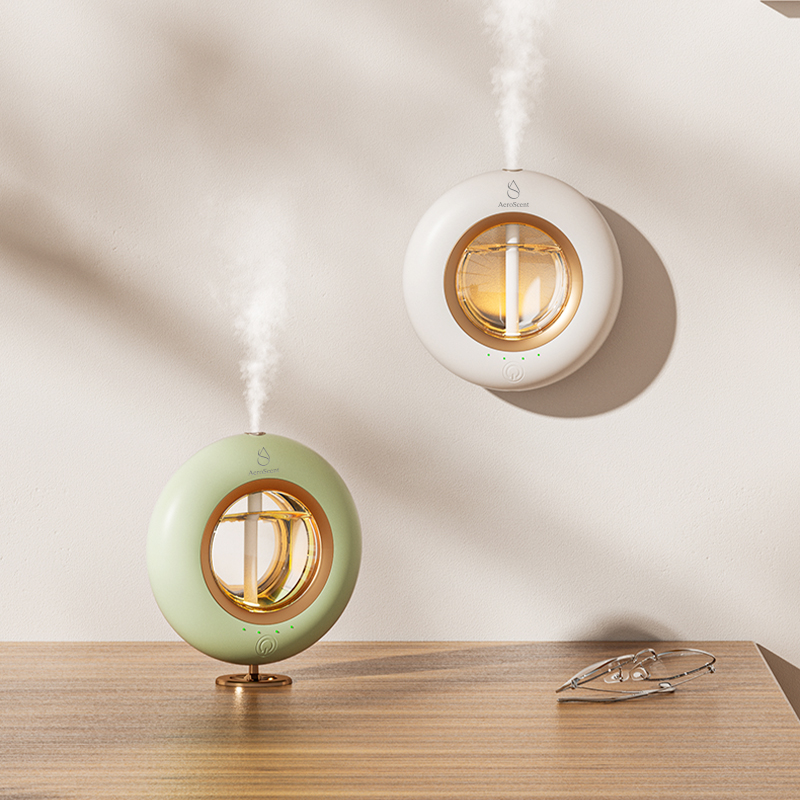
Evaluating hardware before purchase ensures long-term satisfaction and usability. The physical design, internal components, and battery architecture dictate how well the device survives daily transit and physical abuse.
Battery architecture dictates field reliability. Most modern portable units utilize lithium-ion cells, specifically 18650 cylindrical cells or custom lithium-polymer pouches. You want a device with a minimum capacity of 2000mAh. This capacity generally yields 8 to 12 hours of runtime on an intermittent setting. Continuous operation will drain a 2000mAh battery in about 3 to 4 hours. Lithium-ion batteries handle frequent charge cycles better than older nickel-metal hydride (NiMH) batteries and maintain consistent power output as the charge depletes.
Look for USB-C charging ports. USB-C supports faster charging protocols and eliminates the need to carry proprietary barrel-jack cables. Universal charging compatibility is non-negotiable for frequent travelers who need to minimize cable clutter in their bags.
Chassis materials matter because essential oils are highly corrosive. Citrus oils contain high concentrations of d-limonene, a natural solvent. If a manufacturer uses cheap ABS plastic, the d-limonene will melt the chassis over time, causing the device to warp or leak. You need hardware constructed from high-density polypropylene (PP), polyethylene terephthalate (PET), or anodized aluminum alloys. Aluminum provides the best durability for a travel diffuser and withstands the physical impacts of being thrown into luggage.
Analyze the footprint and stability of the unit. The base diameter should measure between 2.5 and 2.75 inches to fit standard automotive cup holders securely. Anti-slip silicone bases are essential. They provide grip on smooth surfaces, preventing accidental knocks on work desks, airplane tray tables, or hotel nightstands.
Establish decibel thresholds for acceptable operation. A quiet device is critical for shared offices and bedrooms. Compare the operational noise of the internal fan or pump against ambient room noise. A quiet library registers around 40 decibels, while rustling leaves register around 20 decibels. Ultrasonic devices operating below 25 decibels generally blend into standard background noise. Nebulizing units tend to be slightly louder due to the mechanical action of the air pump. If you plan to use the device primarily for sleep, prioritize ultrasonic models or nebulizers featuring specific acoustic dampening enclosures around the pump assembly.
| Feature | Ultrasonic Technology | Waterless Nebulizing Technology |
|---|---|---|
| Dispersal Method | Piezoelectric transducer and water | Micro-air pump and Bernoulli principle |
| Scent Potency | Subtle (diluted with water) | Strong (undiluted pure oil) |
| Spill Risk | High (requires water reservoir) | Low (draws direct from oil bottle) |
| Oil Consumption | Low to Moderate | High (requires intermittent timers) |
| Noise Level | Very Quiet (< 25 dB) | Faint Humming (30-40 dB) |
Addressing the practical challenges of daily adoption ensures seamless integration into your routine. Proper maintenance, usage strategies, and travel compliance maximize the lifespan of your hardware and prevent frustrating field failures.
Waterless units consume oil faster than water-based models. Because they do not dilute the oil with water, every burst releases pure fragrance. Calculate the estimated oil usage rates to manage costs effectively. A standard nebulizer running continuously on high output can deplete a 10ml bottle in three to four days.
Mitigate high consumption by utilizing low-output or intermittent timer settings. Setting the device to run for 10 seconds and pause for 50 seconds maintains adequate air suspension of the scent while extending a standard 10ml bottle for several weeks of daily use. Continuous operation is rarely necessary and wastes expensive essential oils.
Resin buildup is a reality of active diffusion. Thick, viscous oils like vetiver, patchouli, and sandalwood easily clog the micro-tubes inside nebulizers. Even thin oils like lemon or peppermint leave behind a sticky resin as their volatile compounds evaporate. If you ignore maintenance, the pump will work harder to push air through restricted tubes, draining the battery faster and eventually burning out the motor.
Implement a strict step-by-step mitigation routine to dissolve hardened resin.
Perform this alcohol flush after every 10 to 14 days of regular use, or immediately after using a particularly thick resinous oil.
| Oil Viscosity Category | Examples | Nebulizer Compatibility | Cleaning Frequency Required |
|---|---|---|---|
| Thin (High Volatility) | Lemon, Sweet Orange, Peppermint, Eucalyptus | Excellent. Atomizes easily into fine vapor. | Standard (Every 10-14 days) |
| Medium (Moderate Volatility) | Lavender, Rosemary, Chamomile, Tea Tree | Good. May require slightly higher pump output. | Standard (Every 10-14 days) |
| Thick (Low Volatility / Resinous) | Vetiver, Sandalwood, Patchouli, Myrrh | Poor. Prone to clogging capillary tubes quickly. | High (Immediate flush after every use) |
Navigate liquid restrictions carefully when flying. The TSA 3-1-1 rule applies when transporting essential oils alongside a compact diffuser. All liquids must be in containers of 3.4 ounces (100ml) or less. Essential oil bottles typically range from 5ml to 15ml, easily complying with this rule. You must place all oil bottles inside a single quart-sized, resealable clear plastic bag for security screening.
Follow strict best practices for packing hardware. Empty all water reservoirs completely before packing ultrasonic models. For nebulizers, never pack the device with the oil bottle attached. Airplane cabins are pressurized, but the pressure still fluctuates during ascent and descent. These fluctuations will force the oil up the capillary tube and out of the nozzle, flooding the internal electronics and ruining your luggage. Always detach the bottle, secure the original cap tightly, and pack the empty device separately from the oils.
Take these immediate steps to optimize your portable fragrance setup:
A: Battery life varies based on capacity and output settings. Most models equipped with a 2000mAh lithium-ion battery run for 8 to 12 hours on intermittent settings. Continuous high-output modes drain the battery much faster, typically lasting 3 to 4 hours. Intermittent settings significantly extend runtime, making them ideal for full-day travel or office use.
A: Yes, but proximity management is mandatory. Use low-output or intermittent settings to maintain a localized scent bubble within your immediate cubicle. This respects colleagues' sensitivities and prevents the fragrance from overwhelming the shared environment. Always choose universally pleasant, mild scents like sweet orange or peppermint in communal areas.
A: Mini diffusers feature a smaller footprint, operate on rechargeable lithium-ion batteries, and cover micro-environments of 10 to 50 square feet. Standard home diffusers require a dedicated wall outlet, feature much larger water reservoirs, and possess the output capacity to saturate entire rooms or open-concept living spaces.
A: It depends entirely on the internal technology. Ultrasonic travel models require water to create a mist via a vibrating transducer. Waterless nebulizing diffusers do not require water. They use a micro-air pump to atomize pure essential oil directly from the bottle, making them spill-proof and better suited for transit.
A: Wipe down the exterior chassis after every oil change to prevent plastic degradation. Perform a deep clean by running 70% isopropyl alcohol through the device every 10 to 14 days of regular use. If you use thick, viscous oils like sandalwood or vetiver, you must flush the system immediately after use to prevent clogs.
A: Yes, provided you ensure adequate ventilation by cracking a window or running the climate control. Avoid overly sedating oils like heavy chamomile or clary sage while driving. Opt for alerting scents like peppermint or citrus. Always use a device with a base diameter of 2.5 to 2.75 inches to fit securely in standard cup holders.
A: You can use passive methods like applying oil to cotton balls or using unheated reeds. However, these methods lack environmental control and suffer from fractional evaporation. Active diffusion is required to achieve consistent, even coverage and targeted therapeutic benefits over an extended period without the scent profile degrading.


